|
This week's headlines and highlights |
|
Welcome to the UKRI bulletin, featuring the latest news, funding announcements and stories about research and innovation in action. |
|
THIS WEEK's TOP STORY: New maritime research hub launched to decarbonise the UK shipping industry |
|
The Maritime Minister Baroness Vere has announced a new maritime research hub to decarbonise the shipping industry and support green economic growth.
The UK-MaRes Hub, led by Durham University, will carry out innovative research in sustainable marine fuels and their safe use, low-carbon power and propulsion systems for shipping, decarbonised port operations and infrastructure, improved maritime operations and vessel efficiency.
Funding for the hub includes £7.4m from EPSRC and Department for Transport. Matched funding from project partners is being secured, increasing to more than £10m by the end of the hub.
Find out more
|
|
 |
|
Fastest underwater flow on Earth recorded by scientists. An international research team has shown how the collapse of a major volcanic eruption into the ocean triggered the fastest underwater flows ever recorded. The team, led by scientists from the National Oceanography Centre, received urgent funding from NERC to record the Hunga Volcano in January 2022.
|
|
|
 |
|
MRC innovation funding to tackle hard-to-treat cancers. MRC has announced £2m funding to understand and treat cancers with exceptionally poor survival rates, including of the brain, lung and oesophagus. Four research innovation teams will each receive £500,000 to work across disciplines on high-risk, high-reward projects towards improving outcomes of hard-to-treat cancers.
|
|
|
STFC recently took the BBC Sky at Night team to the European Southern Observatory’s Paranal Observatory to get a behind-the-scenes sneak peek of what science on the frontier looks like. The episode was broadcast on 10 September at 09.30pm (BST), available on iPlayer.
|
|
More UKRI research and innovation in action |
|
 |
|
UK battery industry boosted by initiatives worth £3.2m. The Faraday Battery Challenge, delivered by Innovate UK, has appointed three leading universities to share £3.2m in funding and support the UK’s regional battery sectors. Coventry University, University College Birmingham and Newcastle University share funding to support regional battery sectors, workforce development and the UK’s transition to electrification.
|
|
|
 |
|
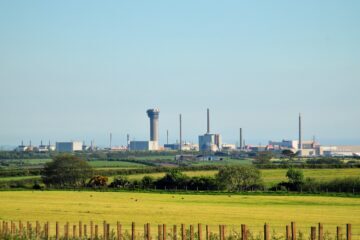
UK-Japan partnership to develop new tech for nuclear waste disposal. New research that will develop technologies to detect and process radioactive waste has been awarded £1m funding by the UK – delivered by EPSRC – in partnership with the Japanese government. The research will support work to decommission Sellafield Nuclear Plant in the UK and remove radioactive debris from the Fukushima nuclear accident in Japan.
|
|
|
 |
|
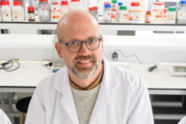
Resilient crops, back to the root. A Horizon Europe guarantee grant is maintaining UK involvement in a vital EU-funded project, looking at making crops more resilient to climate change. The EU-funded Root2Resilience project is trying to understand this vital question: how are the roots that sustain plants, including the crops that feed us, likely to cope with the effects of climate change?
|
|
|
 |
|
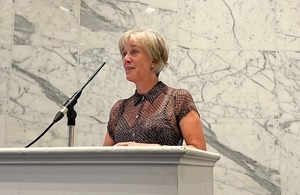
New one-stop shop to find the topics government is interested in researching. A new tool which brings together all Areas of Research Interest documents from across government departments is now live. This new database – developed by The Government Office for Science and ESRC – allows anyone accessing it to search for areas of research interest, and find out the main research questions facing government departments.
|
|
|
 |
|
Experimental art exhibition curation project for under-threes. A pilot project of experimental exhibition curation is to consider the museum experiences of children aged under three and their families. Led by researchers at Manchester Metropolitan and supported by AHRC, ‘Things of the Least’ will generate a series of innovative gallery and live public experiences at Manchester Art Gallery.
|
|
|
 |
|
3D genome analysis reveals secrets to antibody diversity. Researchers at the BBSRC-supported Babraham Institute have discovered a mechanism which brings together different combinations of genes into close physical proximity to generate unique antibodies in each B cell. With further research, their findings could give insight into why antibody diversity declines with age.
|
|
|
The climate stripes, created by Professor Ed Hawkins, show how the Earth’s climate has changed since the 1870s. But what happens if we zoom out even further? If we look at a wider time period we can see that while the Earth’s climate has changed many times throughout the history, the warming caused by human activity is having an impact. Watch to learn more UKRI (@weareukri) • Instagram photos and videos
|
|
|
|