|
This week's headlines and highlights |
|
Welcome to the UKRI bulletin, featuring the latest news, funding announcements and stories about research and innovation in action. |
|
THIS WEEK'S TOP STORY: UKRI welcomes Horizon Europe deal |
|
UK Research and Innovation (UKRI) Chief Executive Professor Dame Ottoline Leyser said: “The UK has a long track record of mutually beneficial participation in previous EU schemes and this decision enables us to build on those highly successful collaborations to maximise the opportunities membership of Horizon Europe provides.”
|
|
 |
|
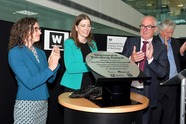
A £500 million upgrade for Diamond Light Source will see the construction of a new, giant microscope that will continue to provide vital breakthroughs in some of our biggest challenges. Science, Innovation and Technology Secretary, Michelle Donelan visited the part-STFC-funded facility. Find out more. Image:Diamond Light Source. |
|
|
 |
|
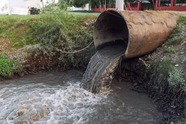
In the News - the BBC's report on water firms illegally spilling sewage on dry days quotes Dr Linda May at the NERC-supported UK Centre for Ecology and Hydrology. (UKCEH). Without rainwater, sewage is likely to be less diluted - leading to build-ups of algae which produce toxins, "that can be fatal to pets and pose a health risk to swimmers", says Dr May. |
|
|
 |
|
A new approach to flexible working is needed according to new research. A report from ESRC-funded ReWAGE says remote working is here to stay, but there are both issues and benefits.
One finding is that flexible working needs to be expanded for the majority of the workforce who cannot work remotely, to prevent widening inequalities. Find out more.
|
|
|
|
ON THE BLOG: Space sector collaboration is key to growth
|
|
|
In the latest in our Voices series we hear how working together is key to delivering big science and helping the UK to profit from the rapidly expanding space sector.
Mark Thomson, Executive Chair of STFC, also explains how the advanced technologies we are developing now for space missions, will filter down into new applications.
Detectors developed for particle physics and space science have become a game-changer for understanding structural biology. Find out more.
|
|
More UKRI research and innovation in action |
|
 |
|
Air pollution prevents bees finding flowers. A new study shows air pollution reduces pollination. It degrades the scent of flowers, making it harder for pollinators to find them. The UKCEH and the Universities of Reading, Surrey and Birmingham were part of the research team. |
|
|
 |
|
Transport contributes hugely to greenhouse gas emissions. It needs evolving to meet climate change challenges like flooding and extreme heat. Image: Adam Gasson.
|
|
|
 |
|
The Healthy Ageing Catalyst Accelerator round two winners have been announced. A ground-breaking device for Parkinson’s patients and a smart lighting system for people with dementia are two of seven age-related solutions to be chosen. It’s all part of the Healthy Ageing programme funded by Innovate UK and ESRC. |
|
|
 |
|
UK's largest Lithium deposit is being developed. With support from Innovate UK, an existing mine near St Austell in Cornwall is set to become the UK’s first integrated producer of battery-grade lithium carbonate. The resource is estimated to be enough to equip 500,000 electric cars per year, by the end of the decade. |
|
|
AND FINALLY: Opposites don't attract |
|
|
It turns out the age old-adage of “opposites attract” isn’t so accurate afterall.
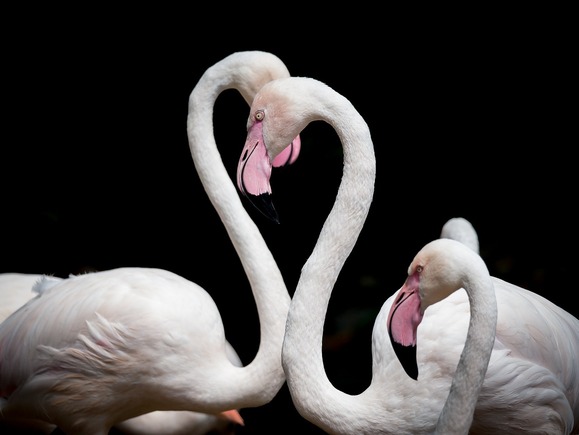
New research has shown that in fact, when it comes to romance, people are more likely to pick someone with similar traits to them.
A study looked at more than 130 factors in millions of couples over more than a century and found that “birds of a feather are indeed more likely to flock together” (first author Tanya Horwitz).
In more than 80 percent of the traits analysed – ranging from political leanings to substance use habits, partners were more likely to be similar.
This study used data from MRC-funded UK Biobank.
|
|
|
|