|
This week's headlines and highlights |
|
Welcome to the UKRI bulletin, featuring the latest news, funding announcements and stories about research and innovation in action. |
|
|
THIS WEEK's TOP STORY:
Drivers on auto-pilot tested via eye movement
|
|
|
New research shows how eye movement can be used to assess how readily a driver can take back control of a car when it is in auto-pilot mode but needs attention.
In cars with a ‘driverless’ auto-pilot mode, which are in private and commercial use in some countries, drivers can do other activities, but need be ready to take over when a warning is sounded.
UCL-led researchers tested how drivers’ attention levels shifted when going back to driving and found both response times and eye movement patterns were affected by different tasks.
Find out more. The research was funded by Jaguar Land Rover and EPSRC.
|
|
 |
|
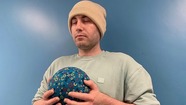
A ‘breathing ball’ that moves with a person’s breath has been invented by a University of Bath computer science student with funding from EPSRC. The ball helps users focus on their breath to regulate emotions and to pay closer attention to guided meditations leading to a 75 percent reduction in anxiety. Image: University of Bath.
|
|
|
 |
|
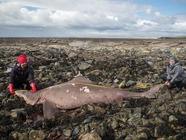
A 14ft smalltooth sand tiger shark that washed up in County Wexford earlier this year, is the first of its species to be found in Ireland’s waters. Researchers from Trinity College Dublin say unseasonably warm waters likely caused the Odontaspis ferox to stray. Supported by NERC and Research England. Image: Dr Nick Payne and Jenny Bortoluzzi (credit) with the washed up shark.
|
|
|
 |
|
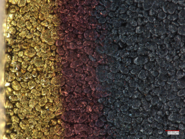
A battery breakthrough could lead to faster electric vehicle charging. A Queen Mary University of London-led study shows a way to prevent lithium plating which is known to damage batteries, shorten their lifespan and cause short-circuits that can lead to fire. The results are published in Nature Communications and include support from EPSRC and the Faraday Institution. Image: QMUL. |
|
|
 |
|
In the media: Smart socks that look and feel like normal socks are helping to reduce falls in people with dementia. Sky News reports on University of Exeter research, funded by Innovate UK, that shows the socks can track distress levels, giving insight into the wearer’s wellbeing. Image: Imperial College London
|
|
|
THE FILM TO WATCH: 101 jobs from beauty to laser targets |
|
|
In the latest in our 101 jobs series, we hear from Donna at the top of her field as a microtarget fabricator and how that wasn’t always her plan.
Donna started out as a beauty therapist but now works at STFC’s Central Laser Facility. She makes tiny complex structures by hand from parts that are smaller than the width of a human hair. These structures are used as targets for lasers to strike during experiments.
Find out more about Donna’s career journey in our new film
|
|
More UK Research and Innovation in Action |
|
 |
|
MRI scans improve prostate cancer diagnosis. Using MRI as a screening test alongside prostate specific antigen (PSA) density allowed detection of cancers that would have been missed by blood tests alone. New MRC-funded research is the first to use MRI scans with PSA density to assess the need for further standard NHS tests. |
|
|
 |
|
Loss of sea ice causes catastrophic breeding failure for emperor penguins. Researchers from the British Antarctic Survey think there is a high chance no chicks survived from four of the five known emperor penguin colonies in the central and eastern Bellingshausen Sea. Satellite images show the loss of sea ice at breeding sites, well before chicks would have waterproof feathers. |
|
|
 |
|
Synthetic particles engineered to mimic living cells. UKRI-funded researchers have engineered new types of synthetic cell particles that can replicate key behaviours in living cells, including movement and response to environmental signals. Creating new systems could enable scientists to develop cells with tailored functions that are easier to handle than biological cells. |
|
|
 |
|
Revealing inequalities in the prevalence of disability. New research by the ESRC-funded Institute for Fiscal Studies finds that inequalities in the prevalence of disability, and the differences in the way in which they emerge over the life course, are substantial when looking across education groups. There are also significant differences by gender, age or birth cohorts, and regions.
|
|
|
 |
|
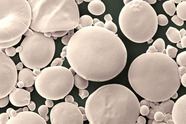
Starch research benefits brewing, baking and milling. BBSRC-funded research shows how starch granules form in the seeds of wheat, barley, and rye crops.The aim is to create starch plant variations for different food and industrial applications rather than using costly and often environmentally unfriendly modification processes to achieve specific starch properties.
|
|
|
 |
|
Seeing how ions move could offer opportunities for electrochemical devices. Findings from a new EPSRC-funded study by University of Cambridge researchers could transform the future of electrochemical devices by revealing how ions move. The results provide new opportunities for the development of advanced materials and improved performance in fields such as energy storage, brain-like computing, and bioelectronics.
|
|
|
AND FINALLY: Was a planet collision behind the formation of a newly discovered planet? |
|
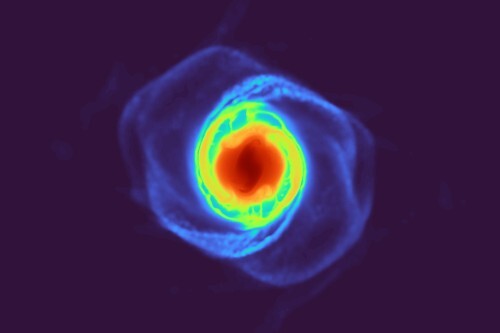
A crash of planets could be why a newly discovered giant planet has formed with twice the mass of any other known similar-sized planets.
An international team including the University of Bristol has discovered a Neptune-sized planet denser than steel that has a much higher proportion of rock than expected. A planetary collision could be behind it.
The study, part-funded by STFC, is reported in Nature.
|
|
|
|