|
This week's headlines and highlights |
|
Welcome to the UKRI bulletin, featuring the latest news, funding announcements and stories about research and innovation in action. |
|
THIS WEEK’S TOP STORY: £13 million to help transform medicines manufacturing |
|
£13 million from the Innovate UK Transforming Medicine Manufacturing programme will allow innovative technologies to create genetic building blocks and deliver medicines inside cells.
The funds will also enable digital and automated methods to produce medicines more quickly.
The projects taking the research forward were winners from a series of competitions focusing on nucleic acid medicines manufacturing, intracellular drug delivery and digitisation and automation.
|
|
 |
|
AI can work out an “accurate” heart age from MRI scans and routine ECGs. Doctors and researchers at MRC’s London Institute of Medical Sciences have developed a new tool. It can pinpoint heart ageing genes and predict the risk of future disease. Watch the BBC’s Pallab Ghosh have his heart age measured. |
|
|
 |
|
Plans for the UK’s first menopause education programme have been launched by UCL. 90 percent of women didn’t learn about the menopause at school and only sought information when symptoms set in. It’s hoped an ESRC-funded programme will allow women reaching menopausal age to understand more about what’s happening to their bodies. |
|
|
 |
|
Professor Patrick Chinnery has been appointed as the next Executive Chair of the MRC. On making the appointment, the Secretary of State for Science, Innovation and Technology Michelle Donelan described Professor Chinnery’s wealth of experience as a practicing clinician and already valued member of MRC.
|
|
|
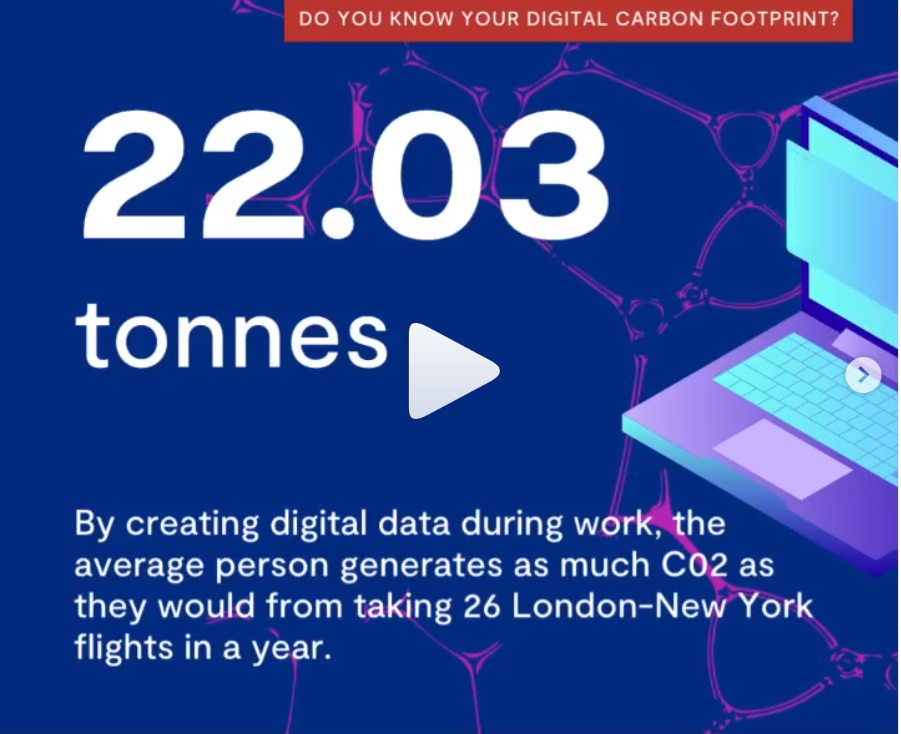
How often do you save something to the cloud and never look at it again?
What impact does saving information to the cloud have on the environment? While it may seem intangible the data is actually being stored in physical servers in data centres. These are run continuously and require a lot of energy.
Researchers from Loughborough University estimate that a typical data-driven business with 100 employees contributes around 2,203 tonnes of CO2 emissions each year just from the creation of new data.
|
|
More UKRI funded Research and Innovation in Action |
|
 |
|
UK infrastructures’ resilience to climate change will be boosted after funding for eight UK-based projects. £1.4 million will help protect the UK from extreme floods and droughts, and other challenges such as energy failures and sewer flooding, through computational modelling, supported by UKRI. |
|
|
 |
|
How to improve your biological age. Your body can be younger than you are, says Richard Faragher from the University of Brighton, who receives funding from BBSRC and MRC. While we all grow older, we don’t all lose functional capacity at identical rates, he says. |
|
|
 |
|
In the media: A music venue map has been created to encourage Glasgow gig-goers to cycle. The NERC-funded map contains information on over 220 spaces that host live music, layered with sustainable transport infrastructure such as cycle hire stations, parking racks and the city's recommended cycle paths. |
|
|
AND FINALLY: Proof music is good for the mind |
|
The new study, funded by Age UK and ESRC, backs up earlier findings that revealed people who had played a musical instrument most of their lives did slightly better in tests of their cognitive ability than those who had not.
Lifetime experience of playing a musical instrument is linked with slightly higher performance levels on particular cognitive tests at various ages after 70.
|
|
|
|