|
UKRI Headlines and Highlights |
|
Welcome to the weekly UKRI bulletin, featuring the latest news, funding announcements and stories about research and innovation in action. |
|
£25 million funding boost for research into long term health conditions
Evidence shows 14 million people are affected by MLTC. Older people are more likely to be affected than younger populations and younger people will be living with complex care needs for longer.
New funding from EPSRC and NIHR will bring together different communities, health researchers, and engineers, enabling a whole systems approach to improving quality of life for those affected, and their carers. Find out more.
|
|
 |
|
Older people are some of those worst affected by climate change. UKRI-funded researcher Gary Haq, from the University of York, explains that older women and those with disabilities tend to be the most vulnerable to the effects of climate-related extreme weather. Pre-existing health conditions and mental wellbeing are also factors. |
|
|
QUOTE OF THE WEEK: Reversing hearing loss in mice |
|
“Seeing the once-deaf mice respond to sounds after treatment was truly thrilling. It was a pivotal moment, demonstrating the tangible potential to reverse hearing loss caused by defective genes".
Dr Elisa Martelletti, King’s College London.
New research has shown hearing loss can be reversed at certain frequencies, in mice with a defective Spns2 gene, using a genetic approach to fixing deafness.
It’s hoped the work, part-funded by MRC, will lead to further study into reversing hearing impairments in people.
|
|
More UK Research and Innovation in action |
|
 |
|
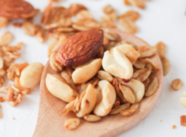
Eating a handful of nuts every day is associated with a 17% lower risk of depression, according to data gathered from the UK Biobank, an MRC-funded online database of medical and lifestyle records of around 500,000 Britons. The study compared people with and without nut consumption after a five-year follow up, across a large sample of middle-aged and older UK adults. |
|
|
 |
|
New technology that can arrange human cells into extremely thin layers could boost the development of lifelike layered human tissue, such as blood vessels, in the lab. Super resolution cell layering is a step towards lab-grown tissue. New research supported by EU Horizon 2020, EPSRC and BBSRC, and others tells us more. |
|
|
 |
|
Vitamin A levels could be controlled by the brain. Scientists have identified that the brain has a role in vitamin regulation. Previously it was thought to be down to other organs. The BBSRC-funded find, could be important for diagnosing and treating diseases. |
|
|
 |
|
Pig and poultry waste to generate clean energy. It may sound unpleasant, but researchers believe there is huge potential for farmers to tackle climate change by generating energy from farm waste. Funding from Innovate UK will enable a new study to explore renewable energy generation and waste management. |
|
|
 |
|
Rebecca Fairbairn revealed as next REF director. Rebecca, whose experience includes several roles at ESRC and UKRI, will join Research England at the start of September to lead the team responsible for the development and delivery of 2028 Research Excellence Framework (REF). |
|
|
AND FINALLY: Over to Instagram |
|
|
UKRI (@weareukri) • Instagram photos and videos
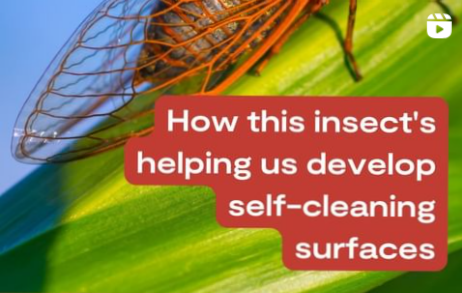
It turns out the noisy cicada insect could be the secret to self-cleaning surfaces. Cicada wings are dotted with thousands of wax-coated nanocones or nanopillars. When they get water on their wings it will just roll or fall off – taking any dirt with it. Researchers have been using supercomputer simulations to analyse the precise way contaminants are removed on a cicada’s wings, which could help us develop and improve self-cleaning surfaces like window coatings, car windscreens and solar panels.
|
|
|
|