|
UKRI Headlines and Highlights |
|
Welcome to the weekly UKRI bulletin, featuring the latest news, funding announcements and stories about research and innovation in action. |
|
HEALTHCARE TECHNOLOGIES: Smart watches could detect Parkinson’s before symptoms appear |
|
Smart watches could identify Parkinson’s disease up to seven years before hallmark symptoms appear and a clinical diagnosis can be made, new research reveals.
The study was led by scientists at the MRC-funded UK Dementia Research Institute at Cardiff University and Dr Kathryn Peall, an MRC Clinician-Scientist Fellow at Cardiff University.
The researchers analysed data collected by smart watches over a seven-day period measuring participants’ speed of movement.
They found that they could accurately predict, using artificial intelligence, those who would go on to later develop Parkinson’s disease.
Researchers say this could be used as a new screening tool for Parkinson’s disease, which would enable detection of the disorder at a much earlier stage than current methods allow.
Find out more.
|
|
HEALTHCARE: New £14 million investment targets rare diseases |
|
|
MRC and the National Institute for Health and Care Research are investing £14 million in the UK Rare Disease Research Platform.
The new platform brings together UK strengths in rare diseases research to improve diagnosis and treatment through better understanding of rare diseases.
It will also enable greater collaboration between patients and those working across academic, clinical and industry research.
A rare disease is one that affects fewer than one in 2,000 people. However, there are thousands of these conditions, with around one in 17 people in the UK being affected at some point in their lifetime.
More than 30% of children with a rare disease die before they are five.
Find out more.
|
|
INNOVATION: Innovate UK invests £13 million in transformative technologies |
|
|
Innovate UK has awarded funding of up to £50,000 each to 270 UK-based small companies whose activities will help to transform our economy, society and environment for the better.
The awards will provide crucial cash flow to help accelerate innovation and are expected to help the companies create new revenue streams, hire new employees and secure further investment.
Each company awarded funding has never previously received funding support from Innovate UK.
The initiative builds on Innovate UK’s fast start programme.
Since 2020, Innovate UK has supported close to 2,000 UK companies in this way.
Find out more.
|
|
|
SPACE SCIENCE:
Euclid lifts off on a mission to map the evolution of the Universe
|
|
|
The Euclid Space Telescope has successfully launched on board a SpaceX Falcon 9 spacecraft from Cape Canaveral in Florida.
Setting out on its mission to study how gravity, dark energy and dark matter shaped the evolution of the Universe.
Alongside a £37 million investment from the UK Space Agency, STFC contributed to design and development work on Euclid instrumentation, and played a key role in funding UK astronomy teams who will be analysing the data coming from the mission.
Find out more.
|
|
|
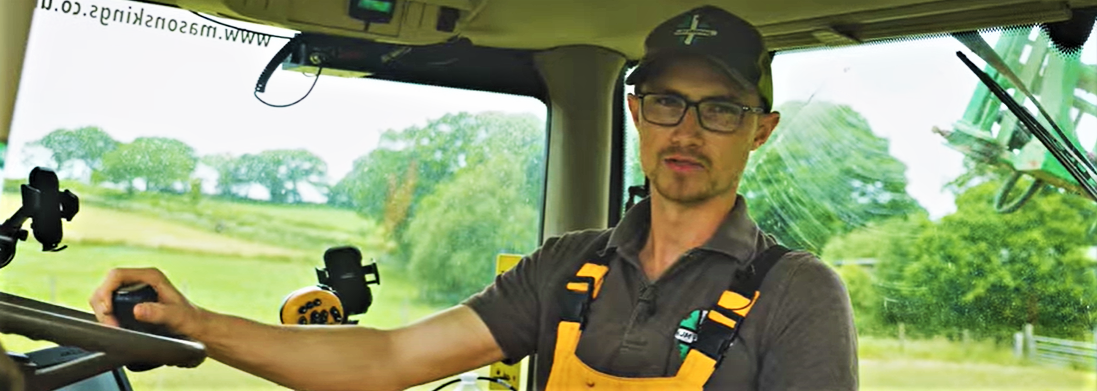
Josh Misselbrook, better known to YouTube as @JMFarming, is the son of a research scientist, but always wanted to work in agriculture.
Academia wasn’t for him – he just wanted to be outside all the time. He got a job at a local dairy farm and, in Josh's words, his "A-levels went out the window".
But his farming skills have brought him back into the research ecosystem, as a Livestock and Field Technician at the BBSRC-supported Rothamsted Research, where his father once worked.
The work of Josh and the technical team, who have the practical ability to make an experiment happen, are fundamental to the research endeavour.
Josh is the latest person to feature in our 101 Jobs that save the world series on YouTube.
Find out more.
|
|
|
Two billion tonnes of CO2 a year from the atmosphere could be removed globally by 2050 if the world adopted the practice of adding crushed rock dust to farmland.
This estimation was made by Professor David Beerling from the University of Sheffield, who is leading the first trial of a process known as Enhanced Rock Weathering on upland grasslands in the world.
The trial is based on the knowledge that silicate rocks such as basalt have been absorbing greenhouse gases for millions of years.
Now, with funding from UKRI, scientists from the NERC-supported UK Centre for Ecology and Hydrology and Rothamsted Research have applied 56 tonnes of finely ground waste basalt rock from quarries to three hectares of farmland in Plynlimon, Powys.
The dust particles, which are less than 2mm in size, absorb and store carbon at faster rates than occur with the breaking down, or weathering of the naturally occurring rocks at the sites, reducing the timescale from decades to just months.
Find out more.
|
|
THE BIGGER PICTURE: Fluorescent imaging helps to remove the guesswork from painting conservation |
|
|
A new technology that could revolutionise the process of restoring historic paintings has been developed by scientists from King’s College London and the University of Edinburgh.
With funding from BBSRC and EPSRC, the team have developed highly sensitive camera and imaging software that reveals remnants of old varnish on a painting.
This technique allows the residue to be removed with greater levels of accuracy than ever before, paving the way for a more precise approach to conservation.
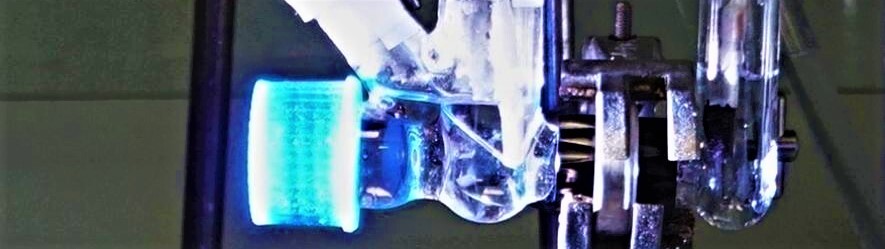
Working with The Courtauld Institute of Art, the team created a photon sensitive camera with a novel imaging technology.
Using a technique called macroscopic fluorescence lifetime imaging in a first of its kind for art conservation, the 25,000-pixel camera harnesses the natural fluorescence of centuries-old varnish to map it against other painting components like paint, binders and canvas, enabling conservators to remove it with greater precision.
Find out more.
|
|
|
NET ZERO:
Clean, sustainable fuels made ‘from thin air’ and plastic waste
|
|
|
Researchers have demonstrated how carbon dioxide can be captured from industrial processes – or even directly from the air – and transformed into clean, sustainable fuels using just the energy from the sun.
The researchers, from the University of Cambridge, developed a solar-powered reactor that converts captured CO2 and plastic waste into sustainable fuels and other valuable chemical products.
Unlike earlier tests of their solar fuels technology, the team took CO2 from real-world sources – such as industrial exhaust or the air itself. The researchers were able to capture and concentrate the CO2 and convert it into sustainable fuel.
The research was supported in part by the Weizmann Institute of Science, EPSRC, the EU and the Winton Programme for the Physics of Sustainability.
Find out more.
|
|
|
"Our estimates suggest that about 180,000 people aged 20-plus had an autism diagnosis as of 2018, meaning that most autistic adults in England were undiagnosed." Elizabeth O’Nions, UCL
Elizabeth, who is leading first-of-its-kind research into undiagnosed autism, and her team say the true number of autistic people in England may be more than double the number often cited in national health policy documents.
The team drew their conclusions after calculating the number of people who had received an autism diagnosis, from anonymised data from more than 5 million individuals registered at GP practices in England between 2000 and 2018.
They then compared these figures with a lower (c.1%) and upper (c.3%) estimate of how common autism really is in the population.
The research was funded by Dunhill Medical Trust, ESRC, MRC, NIHR, Wellcome and the Royal College of Psychiatrists.
Find out more.
|
|
TOOLS OF THE TRADE: Leica TRK700 Evo |
|
|
The Leica TRK700 Evo is a vehicle-mounted mobile mapping system capable of capturing two million data points every second to a resolution of 1mm.
A first for the UK, the state-of-the-art device will be used to expand Virtual Bradford, the digital twin of the city.
The TRK is one of several new mobile mapping devices bought by the university through AHRC's Capability for Collections Fund, which paves a way towards enhanced national capability for conservation and heritage science, amongst other applications.
Find out more.
|
|
UKRI VOICES: Science must hear itself and find new ways of working |
|
|
The latest in our new series of personal insights into topical research and innovation themes from voices across UKRI is written by Alison Robinson, Deputy Executive Chair, NERC.
She writes: 'Science and innovation help us to understand and tackle climate change but we also need new ways to do this valuable work without harming the planet...'
Find out more and subscribe.
|
|
|
MEANWHILE, ON INSTAGRAM:
We're sharing positive science stories for this summer
|
|
|
Summer of science: From the incredible amount of carbon (13 billion tonnes) that's stored by fungi to store carbon, to AI software that can spot cancer, here are four fresh new discoveries that could make the world a better place.
All these studies received funding from UKRI. Which means if you’re a UK taxpayer, you helped make them happen.
Want to know more? Head to our Good news Story highlight for links to the full stories.
weareukri.
Photography: Nas Mato on Unsplash.
|
|
ONLINE: Business Live covers a project that aims for a global centre of rail excellence in South Wales boosted with a £15 million rail innovation project. The project has secured £8 million from Innovate UK. |
|
UKRI TWITTER: Do you have exciting ideas that could help solve today's big challenges? Share your ideas for moonshots with us. Your vision could help identify ambitious research and innovation priorities for the UK. |
|
ONLINE: There is widespread coverage across national and regional titles including BBC News online and The Guardian of a recent report from the ESRC-funded Institute for Fiscal Studies about households’ living standards, with a focus on the impact of Covid-19. One of the report's findings is that half of older adults who left the UK workforce in the first year of the pandemic are now living in relative poverty. |
|
ONLINE: Business in the Midlands reports on the news that one of the world’s largest IT and business consulting firms has pledged £2.6 million of support to a Research England-funded research project, bringing together industry and academics to drive forward the evolution of the UK space sector. |
|
UKRI-supported research and innovation |
|
|
University of Cambridge scientists have identified a signature in the blood that could help predict how well an individual will respond to vaccines. The discovery may explain why, even among vulnerable patient groups, some individuals have better responses to vaccines than others. The research was funded by MRC, the Medical Research Foundation, and The Evelyn Trust.
Orangutans can make two separate sounds simultaneously, much like songbirds or human beatboxers, according to a study led by the University of Warwick. Academics say the findings provide clues around the evolution of human speech, as well as human beatboxing. The research was supported by a UKRI Future Leaders Fellowship.
RRS Sir David Attenborough, the flagship vessel of NERC's British Antarctic Survey, is using hydrotreated vegetable oil (HVO) for the first time as an alternative to conventional diesel fuel, as part of a trial to reduce carbon emissions. HVO has the potential to reduce CO2 emissions by up to 94% compared to conventional diesel fuel.
Extreme weather events such as wildfires and droughts will accelerate change in stressed systems leading to quicker tipping points of ecological decline, according to a new study involving a number of UK universities. The research is supported by NERC, ESRC and MRC.
A study by Imperial College London researchers has found that measures to reduce congestion and air pollution from vehicles in major cities can have a beneficial impact on health outcomes, a new review finds. The research was funded by MRC, NIHR and a research partnership between Imperial College London and the UK Health Security Agency.
|
|
ONE MORE THING: Exercising at least once a month is linked to better brain function in later life |
|
|
Exercising at least once a month at any time in adulthood is linked to better cognitive functioning in later life, a new study led by UCL researchers has found.
Lead author Dr Sarah-Naomi James, from the MRC Unit for Lifelong Health & Ageing at UCL, says: “Our study suggests that engaging in any leisure-time physical activity, at any point in adult life, has a positive effect on cognition.
"This seems to be the case even at light levels of activity, between one and four times a month. What’s more, people who have never been active, and then start to be active in their 60s, appear to have better cognitive function than those who were never active.
“The greatest cognitive effect was seen for those who stayed physically active throughout their life. The effect is accumulative, so the longer an individual is active, the more likely they are to have higher later-life cognitive function.”
The research was supported by Alzheimer’s Research UK and MRC.
Find out more.
|
|
|
|
|