|
UKRI Headlines and Highlights |
|
Welcome to the weekly UKRI bulletin, featuring the latest news, funding announcements and stories about research and innovation in action. |
|
|
PANDEMIC PREPAREDNESS:
Scientists find a key human gene that defends against avian flu
|
|
|
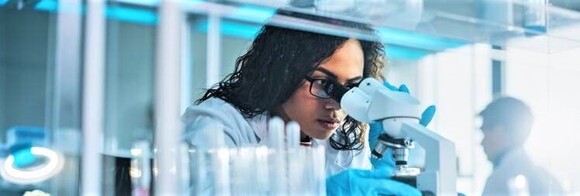
Researchers led by the MRC-University of Glasgow Centre for Virus Research have found a key human gene that defends against avian flu.
The BTN3A3 gene, commonly expressed in our airways, is vital to protecting humans against avian flu as most strains of the virus cannot get past its defences.
The research team conducted a series of extensive tests as part of an international study into the pandemic potential of avian flu.
Keen to know why some avian flu transmission does occur in humans, they compared the behaviour of hundreds of genes normally expressed by human cells during a viral infection with either human seasonal viruses or avian flu viruses.
The study showed that the BTN3A3 gene, commonly expressed in our airways, is able to block the replication of avian flu in human cells, providing vital protection against the disease, which cannot get past its defences.
Find out more.
Photography: Mark Mallett
|
|
CLIMATE CHANGE: Greenhouse gas emissions at ‘an all-time high’ |
|
|
Human-caused global warming has continued to increase at an “unprecedented rate” since the last major assessment of the climate system published two years ago, say 50 leading scientists.
The research found that human-induced warming averaged 1.14°C over the last decade and a record level of greenhouse gases is being emitted each year, equivalent to 54 billion tonnes of carbon dioxide.
The remaining carbon budget – how much CO2 can be emitted to have a better than 50% chance of holding global warming to 1.5°C – has halved over three years.
In an initiative being led by the University of Leeds, the scientists have developed an open data, open science platform – the Indicators of Global Climate Change and website. It will update information on key climate indicators every year.
The research has been supported by the Horizon 2020 Framework Programme, H2020 Excellent Science, the H2020 European Research Council and NERC.
Find out more.
|
|
|
HEALTHCARE:
Research platform to transform treatment of traumatic brain injury
|
|
|
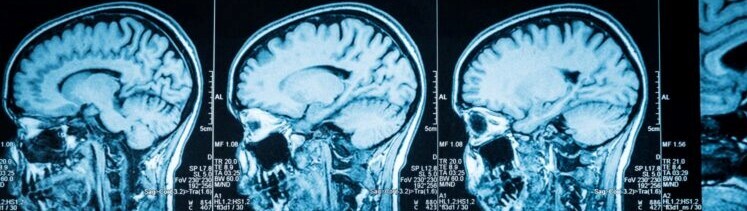
A £9.5 million research platform is set to transform the way survivors of traumatic brain injury are diagnosed and treated in the UK.
Traumatic brain injury, or TBI, is a leading cause of death and disability in people under 40 in the UK. It can cause a range of serious and lifelong health issues for people who survive, including dementia, epilepsy and poor mental health.
Until now, data collected by individual research projects investigating TBI has rarely been used outside the original study.
This lack of coordinated use of data has slowed progress in treating and caring for people experiencing TBI.
The new research platform will address this problem. It is funded by MRC, the National Institute for Health and Care Research, the MoD and Alzheimer’s Research UK.
Find out more.
|
|
|
NET ZERO:
Tidal stream research to cut carbon and boost energy security
|
|
|
The powerful tides that surround the UK remain underutilised but have huge potential as a source of greener power.
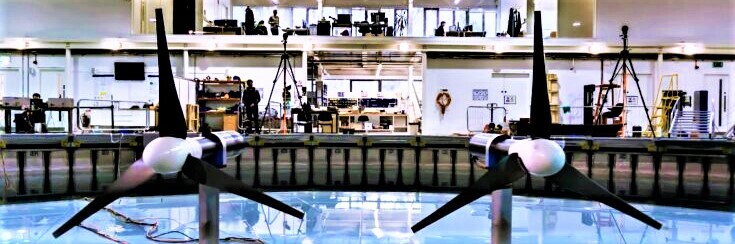
Now, EPSRC is investing £7 million in a new tidal energy research project that will help make renewable energy generation from ocean tides cheaper, more reliable and scalable.
Unlike the wind and the sun, tides ebb and flow at predictable times every day and so have the advantage that they can provide power that is both renewable and reliable.
The CoTide project will develop state-of-the-art tidal stream turbine systems as well as integrated engineering tools and solutions, together with concept designs complemented by laboratory demonstrators.
Find out more.
|
|
HEALTHCARE TECHNOLOGIES: UCL spin out Quell Therapeutics joins forces with AstraZeneca in $2billion deal |
|
|
Quell Therapeutics, a UCL spin-out company that develops cell engineering technology to treat autoimmune diseases, is to collaborate with biopharmaceutical giant AstraZeneca in a deal worth over $2 billion (£1.6 billion).
The partnership with AstraZeneca takes Quell a step closer towards developing life-changing treatments for patients with type-1 diabetes and bowel disease, with more in the long-term future.
Quell will receive $85 million upfront and is eligible to receive over $2 billion for further development and commercialisation milestones, if successful, plus tiered royalties.
The company was founded in 2019 by Professors Emma Morris and Hans Stauss to bring their MRC-supported research to market. It was formed in partnership with leading experts in Treg cell therapies, cell engineering and solid organ transplantation and autoimmune diseases.
Find out more.
|
|
THIS WEEK'S BIG NUMBER: 10% |
|
|
10%: of NHS healthcare workers experienced suicidal thoughts during the first year of the COVID-19 pandemic, finds a new University of Bristol-led study.
The research team analysed responses from healthcare workers (clinical and non-clinical), students and volunteers in 18 NHS Trusts across England. Responses from 12,514 participants were completed at baseline, and 7,160 participants at six months follow up, between April 2020 and August 2021.
The study was funded by MRC, ESRC, Wellcome, Rosetrees Trust, and the National Institute for Health and Care Research (NIHR).
Find out more.
|
|
|
"One of the targets is to have off-the-shelf products for the human body. We go to Asda or Sainsbury’s and take items off the shelf. We could be doing the same in a hospital with organs." Dr Farshid Sefat, University of Bradford
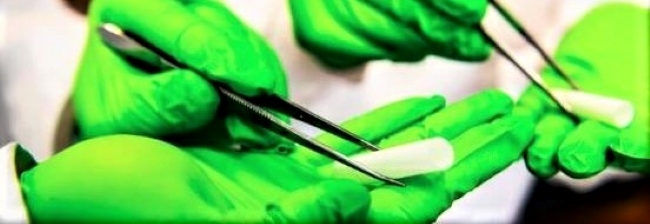
Dr Sefat works with colleagues at the UKRI-supported Polymer Interdisciplinary Research Centre, one of the biggest polymer centres in Europe, to create artificial organs.
He has devised a replica blood vessel (pictured), which is now being tested in the lab, and believes manufactured organs could be key to the future of healthcare.
He says: "It’s just like going to a mechanic for your car. When something goes wrong, you can order a part to replace it."
Find out more.
|
|
|
THE FILM TO WATCH:
The Bristol homeowners helping track microplastics
|
|
|
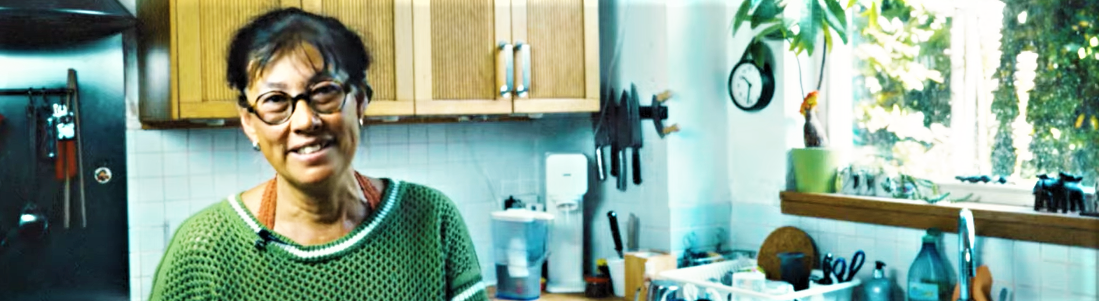
Meet Ronnie Wright. She's part of a group of citizen scientists who are leading a BBSRC-funded project to investigate airborne microplastics in the home.
|
|
MEANWHILE ON INSTAGRAM... |
|
|
This International Women In Engineering Day, meet Professor Susan Bernal Lopez – a materials engineer helping to make our future homes and buildings more carbon friendly and durable.
As a child, Susan always enjoyed creating and repairing things. Today, she holds an EPSRC Early Career Fellowship and leads a research team at the University of Leeds, designing and developing alternatives to cement and concrete.
Concrete manufacturing is responsible for 8% of our global carbon emissions.
Susan’s UKRI-supported research is developing and testing ‘alkali-activated cements’ made from industrial waste and bi-products, which could lower carbon emissions associated with concrete production by 40 to 80%.
Find out more.
weareukri.
|
|
|
THIS WEEK'S LISTEN:
Can we make the economy greener and still be productive?
|
|
|
Can we make the economy greener and still be productive? Or even better, can productivity help us to make the economy greener?
These are some of the questions in the latest episode of Productivity Puzzles, the podcast of ESRC's The Productivity Institute.
Hosted by the institute's Principal Investigator, Professor Bart van Ark, the podcast examines what climate change and the transition to a Net Zero means for productivity.
It also asks whether the challenges to green the economy make it even harder to raise productivity.
Crucially, can productivity help to make the economy greener? Can green technology and innovation be used more productively than other technologies?
Find out more and read the transcript.
|
|
ONLINE: The news that scientists have picked up shock waves from the orbit of supermassive black holes as they begin to merge was reported on extensively, including by the BBC. This may be the first direct evidence of giant black holes distorting space and time as they spiral in on each other. STFC provided some of the funding for this international endeavour. |
|
PODCAST: In the first instalment of UKRI's Future Leaders Fellows Development Network podcast, Dr Laura Carter explores how human medicines end up in our food. Join us as we unravel the mysteries of food origins and the impact on our health. |
|
ONLINE: The Daily Mail, and some regional outlets reported on a Canadian research project that used data from UK Biobank to warn that a glass of wine each night won't benefit your health. MRC is a co-founder and supporter of UK Biobank. |
|
ON TV: A project using artificial intelligence to monitor dairy cows at Harper Adams University and The University of Nottingham has featured on BBC One’s Countryfile. The AI learns to recognise individual cows and logs their behaviour such as their eating and their milking efficiency. It can then analyse the data to warn of possible signs of illness. Watch the film. |
|
UKRI TWITTER: "I'm writing a narrative CV but I'm unsure where to start." "How should my organisation use narrative CVs to make funding decisions?" "We want to use narrative CVs in recruitment, what should we consider?" Find guidance in our new Résumé Resources Library. |
|
|
Three drugs that could help stave off the effects of ageing have been discovered by University of Edinburgh researchers using artificial intelligence. A trio of chemicals that target faulty cells linked to a range of age-related conditions were found using the pioneering method, which is hundreds of times cheaper than standard screening methods, researchers say. The study was supported by MRC, Cancer Research UK, UKRI and the Spanish National Research Council.
Drug taking at football matches has superseded alcohol as a major safety concern, according to new research led by health and behaviour experts at the University of Stirling. The ESRC-funded research, which sought to explore the relationship between football fans and alcohol, found that both match-goers and organisations involved in match safety had noticed an increased use of cocaine by supporters.
University of Cambridge researchers have developed a new design for computer memory that could both greatly improve performance and reduce the energy demands of internet and communications technologies, which are predicted to consume nearly a third of global electricity within the next 10 years. The research was supported in part by the US National Science Foundation and EPSRC.
A University of Cambridge study of the DNA of more than 55,000 people worldwide has shed light on how we maintain healthy blood sugar levels after we have eaten, with implications for our understanding of how the process goes wrong in type 2 diabetes. The research was supported by Wellcome, MRC and NIHR.
The University of Cambridge has launched a project to develop the first governance framework for research involving stem cell-based human embryo models in the UK. The initiative is supported by a BBSRC Impact Acceleration Account and the University of Cambridge Impact and Knowledge Exchange fund.
STFC's Daresbury Laboratory is to host a multi-million pound national AHRC programme designed to boost heritage science across the UK. The RICHeS programme will create a network of UK heritage clusters of excellence that will unlock the potential for heritage assets to contribute to innovation in areas such as digital twins; artificial intelligence; robotics and bioimaging.
|
|
|
ONE MORE THING:
The first British baked beans could soon be on the menu
|
|
|
A pioneering research project has developed innovative farming techniques tailored specifically to the UK cultivation of haricot beans – better known as baked beans.
Around 48% of the food we eat in the UK is imported, and baked beans are predominantly sourced from overseas markets due to specific climate and soil requirements. This racks up food miles.
Now, by harnessing the latest agricultural technologies and insights from the University of Warwick, Lincolnshire farmer, Andrew Ward, has become the first in the UK to grow a full crop of baked beans.
Growing haricot beans on a commercial scale in the UK wouldn't just reduce food miles. It would also improve soil structure and help extend farm rotations by offering a short-season, nitrogen-fixing crop desired by UK growers.
The project builds on BBSRC-funded research.
Find out more.
Photography: Pablo by Buffer
|
|
|
|
|