|
This week's headlines and highlights |
|
Welcome to the UKRI bulletin, featuring the latest news, funding announcements and stories about research and innovation in action. |
|
CREATIVE INDUSTRIES: £75.6 million to support research and innovation across the creative industries sector |
|
ARTIFICIAL INTELLIGENCE: £54 million to develop secure AI |
|
|
The UK’s position as a pioneer in artificial intelligence technology has been strengthened by the announcement of a series of investments in the field.
They include:
- £31 million for a consortium to create a UK and international research and innovation ecosystem for responsible and trustworthy AI
- £2 million for 42 projects’ feasibility studies in businesses as part of the BridgeAI programme
- £13 million to fund 13 projects to help the UK meet its net zero targets
- £8 million for two Turing AI World Leading Researcher Fellowships
The investments will be delivered by EPSRC and Innovate UK working with all councils on behalf of UKRI.
Find out more.
|
|
|
QUANTUM TECHNOLOGIES:
£45 million investment to further advance research and innovation
|
|
|
UKRI is investing £45 million to further advance UK quantum technology research and innovation.
Funded through the UKRI Technology Missions Fund, the investments will build upon the country’s National Quantum Technologies Programme which has been running for nearly a decade.
The funding includes:
- £8 million to fund 12 projects exploring quantum technologies for position, navigation and timing (PNT)
- £6 million for 11 projects working on software enabled quantum computation
- £6 million for 19 projects’ feasibility studies in quantum computing applications
- £25 million for seven projects quantum-enabled PNT via the Small Business Research Initiative
Find out more.
Above: One of the projects supported through the investment aims to harness quantum physics to develop a new type of sensor technology that can be used underwater or underground. An Imperial College London research team is partnering with Transport for London to test the technology on trains.
|
|
THIS WEEK'S BIG NUMBER: 81% |
|
|
81%: The proportion of men in the UK aged 65-74 who are now overweight or living with obesity.
This is one of the findings from a University of Southampton research project which has shown that genes linked with a longer life are less active in the muscles of older men who are overweight or living with obesity.
Obesity is a problem affecting all age groups. Excessive loss of muscle strength and mass is a common cause of frailty, fractures and falls in later life.
Find out more.
|
|
|
"The findings in this study (also) run counter to the common expectation that home-working reduces energy use and carbon emissions." Yao Shi, University of Sussex Business School
Shi is a research student and lead author of a new paper which has shown that people who work from home in England have significantly higher emissions than those who work in traditional settings like offices.
Even when transport is taken into account, working from home three to five days a week still increased carbon emissions by over a quarter.
The researchers say that confining heating to a single room can limit the increase in emissions to 16% compared to those who work in an office.
The research is funded through the EPSRC Centre for Research on Energy Demand Solutions.
Find out more.
|
|
ARCHITECTURE: House of moveable wooden walls promises a cheaper, greener alternative to ‘knocking through’ |
|
|
House-owners the world over consider ‘knocking through’ walls to achieve more open-plan living or changing layouts to accommodate new arrivals or circumstances.
The results may be impressive, but they come at a sizeable financial and environmental cost.
But what if it wasn’t necessary to demolish internal brick and/or plaster walls and build new ones?
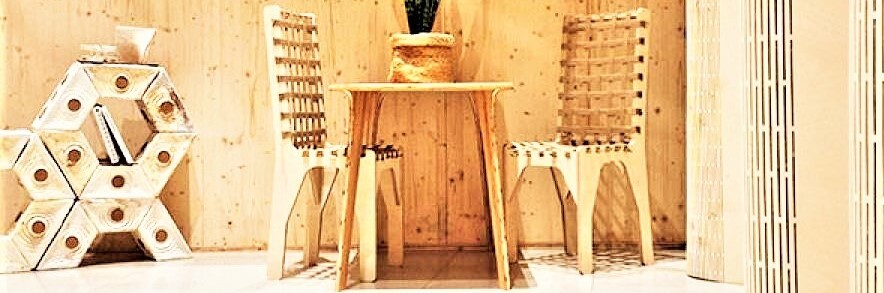
Now, researchers at the University of Cambridge’s Centre for Natural Material Innovation with partners PLP Architecture have launched Ephemeral, an innovative alternative using engineered wood.
The prototype home is constructed with flexible wooden partition walls which can be shifted to meet the changing needs of residents.
The invention aims to reduce waste and carbon while also improving living conditions for those who cannot afford expensive refurbishments.
The project is supported by PLP Architecture, The Laudes Foundation, the Future Observatory and the AHRC Design Accelerator.
Find out more.
|
|
|
MEANWHILE ON INSTAGRAM...
A swarm of bees looks alarming, but bee-lieve us, they mean no harm
|
|
|
Swarming is a natural process that happens when the bee colony outgrows its home and it's too populated for the queen to keep the bees under control.
The worker bees signal to swarm and the colony splits in two, with the queen bee leaving with about half of the colony to find a new home...
Honeybee swarms can contain up to 30,000 bees, and University of Bristol scientists have discovered that they can produce as much electric charge as a storm cloud – around 1,000 volts per metre.
The denser the swarm, the stronger the electric field. This charge is created from the friction of air molecules against the bees rapidly beating wings – 230 beats per second – and researchers think it’s used to help bees, and other swarming insects, find food.
Find out more. weareukri
Photography: Dustin Humes on Unsplash.
|
|
CLIMATE CHANGE: Global warming is causing the majority of sea fish populations to relocate towards colder waters nearer the poles |
|
|
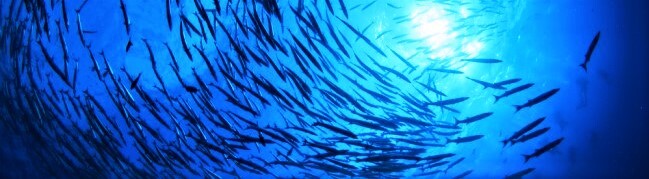
The majority of fish populations in the sea are responding to global warming by relocating towards colder waters nearer the north and south poles, according to new research at the University of Glasgow on the impact of climate change on our oceans.
This latest study examined data on 115 species spanning all major oceanic regions, totalling 595 marine fish population responses to rising sea temperatures – the first time such a comprehensive global analysis has been undertaken.
Professor Shaun Killen, a senior author of the paper about the research, was supported by a NERC Advanced Fellowship and a NERC Standard Grant.
Find out more.
|
|
THE LIFE SCIENTIFIC: Anne-Marie Imafidon, founder of Stemettes and Research England Council Member |
|
|
This week, in a special edition of BBC Radio 4's The Life Scientific, broadcast from the Cheltenham Science Festival, Anne-Marie Imafidon, who sits on Research England's Council, shared her remarkable story with Professor Jim Al-Khalili.
A former child prodigy, Anne-Marie has enjoyed a glittering career spanning industry, academia, social enterprise and the media.
Ten years ago she founded Stemettes, a not-for-profit social enterprise introducing girls to STEM (science, technology, engineering and mathematics) ideas and careers in fun and accessible ways.
Her work at Stemettes, for which she was awarded an MBE, has helped to inspire and support over 60,000 young women and young non-binary people into STEM.
If that weren't enough, she is the President of the British Science Association and featured as the Temporary Arithmetician on Channel 4’s Countdown during Rachel Riley’s maternity leave.
In 2022 she released her book She’s in Ctrl.
Find out more and listen to the programme.
|
|
ON TV: BBC 4's The Sky at Night explored the STFC RAL Space National Satellite Test Facility. The item included an interview with Programme Manager Sean Stewart on the challenges of recreating the conditions that satellites will experience in outer space. (Starts from 10mins 10secs). |
|
ON TV: NERC's autonomous research submarine Boaty McBoatface and its mother ship RRS Sir David Attenborough were featured on BBC 2's Great Coastal Railway Journeys when host Michael Portillo visited the NERC-funded National Oceanography Centre in Southampton (From 2mins.29sec). |
|
ONLINE: Mail Online and Daily Express report on a study that found women who used the contraceptive pill as teenagers are more likely to develop depression in their adult life. The study used data of 265,000 women from UK Biobank, which is co-funded by MRC. |
|
ONLINE: Oldham Evening Chronicle reports that a Mossley arts centre hopes to become the UK’s most eco-friendly venue by powering its gigs using water. The project is funded by UKRI and delivered by The Young Foundation. |
|
UKRI-supported research and innovation in action |
|
|
A new research hub is being created to explore ways in which local places can be empowered to meet the needs of their communities. Led by the University of Birmingham, the hub will investigate the social, community, economic and environmental priorities that contribute towards inclusive sustainable economic growth. It is funded by ESRC, Innovate UK and AHRC.
The prospect of a cure for a type of epilepsy could be one step closer following research at the University of Glasgow on materials which may help new types of probes be safely implanted in the brain. Researchers have investigated new dissolvable coatings which could help safely guide flexible implants into brains to help regulate temporal lobe epilepsy. The research was supported by the EU’s Horizon 2020 programme, the University of Glasgow, EPSRC and the European Commission.
Influenza pandemics cause a persistent increase in influenza mortality risk, lasting around two decades, according to new research at the University of Glasgow analysing historical data from the 19th and 20th centuries. Funders of this research include ESRC and MRC.
Clinicians at Queen Mary University of London and Barts Hospital have identified a gene variant that causes a common type of hypertension (high blood pressure) and a way to cure it. In most people with hypertension, the cause is unknown, and the condition requires life-long treatment by drugs. Funders of the research include MRC.
|
|
|
The country may be enjoying a spell of glorious sunshine, but our star is doing more than warm the Earth – it's making us switch on the aircon.
This has a cost to our pockets and our planet. Air conditioning accounts for around 10% of global electricity usage – and comes with associated carbon emissions.
Now, University of Bristol spin-out company Albotherm is helping redress the balance, starting with the common-or-garden greenhouse and its commercial cousins.
Around 25% of greenhouse crop yields is destroyed by excess heat and light, while commercial greenhouses may also have to install active cooling systems so as to maintain optimal conditions for growing produce.
Albotherm has developed a heat sensitive coating for greenhouse glass that automatically maintains optimum temperatures all year around and removes the annual cost of applying and removing shading.
The company says the coating has the potential to enhance food productivity in commercial greenhouses by up to 34%.
The idea for the coating emerged during Albotherm co-founder Sian Fussell’s EPSRC-funded PhD at the Bristol Centre for Functional Nanomaterials.
The material was developed with support from Innovate UK through an ICURe grant awarded to Albotherm co-founder and CEO Molly Allington (above right with Sian).
The company recently secured a further £1.6 million from a range of investors to develop and scale up its technology, with a view to bringing the first products to market by 2025 – and ultimately providing coatings for households and businesses.
Find out more.
|
|
|
|
|