|
UKRI Headlines and Highlights |
|
Welcome to the weekly UKRI bulletin, featuring the latest news, funding announcements and stories about research and innovation in action. |
|
ENVIRONMENT: Almost half the species on Earth are undergoing declines in their population sizes |
|
|
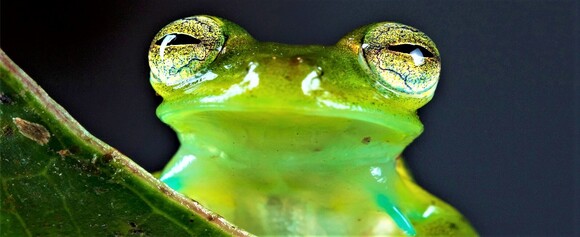
Almost half the species on Earth are currently undergoing declines in their population sizes; only 3% of them are actually increasing.
These are some of the findings of a Queen's University Belfast-led study which looked at changes in the population densities of over 70,000 species of animals over time from all over the surface of the planet.
To conduct their study, the researchers undertook a global-scale analysis of a different measure of extinction risk.
PhD Catherine Finn co-led the research. She says: "To make matters worse, many of the animal species that are thought to be non-threatened from extinction (33%), are in fact progressively declining.”
The study is the most comprehensive research of its kind to date. It was funded by the NERC QUADRAT Doctoral Training Programme. Find out more.
|
|
THE FILM TO WATCH: 4,000 year old plague DNA discovered by researchers |
|
Researchers at the MRC-supported Francis Crick Institute have identified three 4,000-year-old British cases of the bacteria causing the plague, Yersinia pestis. This provides the oldest evidence of the plague in Britain to date. The research carried out with the University of Oxford, the Levens Local History Group and the Wells and Mendip Museum is reported in Nature Communications. It could help to understand the spread of infectious diseases. Watch the film. |
|
COVID-19: Needle-free coronavirus vaccine begins clinical trials |
|
|
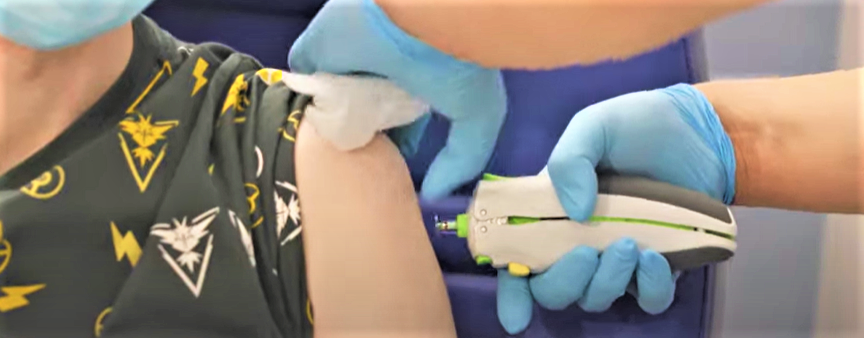
Scientists at the University of Cambridge have developed a revolutionary new needle-free vaccine to protect against COVID-19 and future coronaviruses.
Now, recruitment is under way for volunteers to take part in clinical trials of the vaccine – known as DIOS-CoVax – in Cambridge.
The vaccine was developed by Professor Jonathan Heeney and spin-out company DIOSynVax. He says: "If you’re someone who hates needles, our vaccine could be the answer as it’s delivered by a jet of air, not a needle."
The DNA-based vaccine is relatively cold chain free, meaning it doesn't need to be transported at extremely cold temperatures or in liquid nitrogen, making it broadly accessible to low and medium income countries.
If the trials are successful, the vaccine, which was developed with funding from Innovate UK, could be scaled up and manufactured as a powder to boost global vaccination efforts.
Find out more and watch the film.
|
|
TARGETING NET ZERO: UKRI Horizon Europe guarantee funding puts wind in the sails of UK shipping innovator |
|
|
The picture above is not what you might think at first glance – a ship running on steam power, complete with mighty Brunelesque chimney stacks.
It is, in fact, a sailing vessel, and the tall cylinders fixed on its decks are ‘rotor sails’ or Flettner rotors, developed by UK wind propulsion company Anemoi.
The sails can be installed on new vessels or retrofitted to existing ones. When the wind blows, the rotor sails are driven to spin with on-board energy.
Thanks to what's known as the Magnus effect, the rotor sails propel the ship, giving an additional thrust that reduces net fuel consumption and lowers emissions.
Now, a UKRI Horizon Europe guarantee grant is enabling Anemoi to be part of Optiwise, an EU-funded Horizon Europe project involving partners from seven European countries that could reduce energy use in commercial shipping by up to 50%.
This kind of innovation is vital, as carbon emissions from the global shipping industry continue to grow - it already accounts for 3% of emissions.
Find out more.
|
|
HEALTHCARE: Age and sex influence the health benefits of dieting |
|
|
Dieting affects males and females differently in young adulthood – but the variations disappear with age, according to a new study.
University of Edinburgh researchers found that males on reduced calorie diets showed greater fat loss and improvements in blood sugar levels compared with females.
The findings suggest that oestrogen, one of the main female sex hormones, may play a role in determining the health benefits of dieting.
Experts say this could help to identify those most likely to benefit from a restricted calorie diet.
Find out more.
|
|
THE EXHIBITION TO ATTEND: Global first - the resilience and innovation of 19th-Century China is revealed in a major new exhibition |
|
 Between 1796 and 1912 Qing China endured numerous civil uprisings and foreign wars, with revolution ultimately bringing an end to some 2,000 years of dynastic rule.
This period of violence and turmoil was also one of extraordinary creativity, driven by political, cultural and technological change.
Now, the resilience and innovation of 19th-Century China is being revealed in a major new exhibition at the British Museum.
In a global first, the exhibition brings to life the stories of remarkable individuals – at court, in armies, in booming cosmopolitan cities and on the global stage – in the shadow of the seismic events.
The exhibition is underpinned by a four-year research project supported by AHRC and led by the British Museum and London University, in collaboration with over 100 scholars from 14 countries.
Find out more.
|
|
|
“There were over 600 people in the consortium and everyone of them was really valuable in what they contributed...
"Before, it was very much a research tool; now we have to see it as a proactive tool – for example, (to be used in) the next pandemic." Professor Sharon Peacock, professor of public health and microbiology at Cambridge University, whose life and work were celebrated on BBC Radio 4's Desert Island Discs.
Professor Peacock, in a matter of days, created the blueprint for and set up the UKRI-supported COVID-19 Genomics UK Consortium (COG-UK) to map the genetic sequence of the virus as it spread and mutated.
Professor Peacock was also awarded the MRC Millennium Medal.
Find out more and listen to her story on Desert Island Discs.
|
|
THE BIGGER PICTURE: The first public exhibition of its kind about dying while experiencing poverty opens this month |
|
|
A new photography exhibition that reflects the experiences of people at the end of life facing financial hardship and deprivation in Scotland is going on display at the Mitchell Library in Glasgow (19 June-19 August), and later the Scottish Parliament.
The Cost of Dying exhibition, which features the work of Margaret Mitchell, is based on Dying in the Margins, an ESRC-funded study led by Dr Naomi Richards from the University of Glasgow with support from Marie Curie.
This study used a range of visual methods including digital storytelling to enable participants to tell their own story in their own words and images.
The imagery and digital stories will inform public conversations around end-of-life care improvements, specifically for people experiencing poverty and structural disadvantages at the end of life.
It is the first time an exhibition on this particular subject has been displayed in the UK.
Find out more.
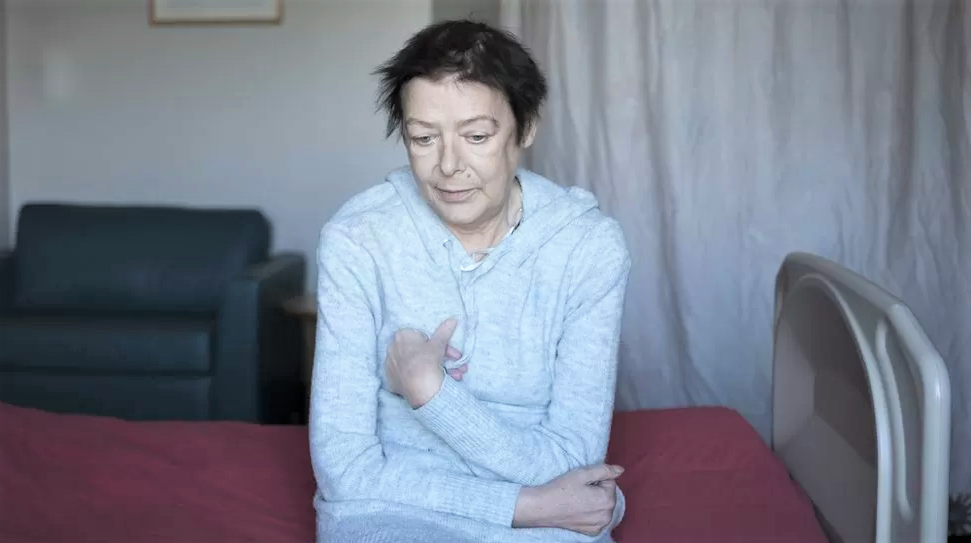
Above: Margaret, 64 , photographed in a hospice, attributed her cancer diagnosis to air pollution. “I’ve never claimed unemployment benefits, ever. Talking about national insurance stamps, I’m fully booked up. I’m going to lose my old-age pension which I never, ever received.” (Photography - Margaret Mitchell).
|
|
THIS WEEK'S BIG NUMBER: £8.3 billion |
|
|
£8.3 billion: The annual NHS cost of wound management in 2017-18, with diabetes-related foot ulcers making up between £837 and £962 million of the cost.
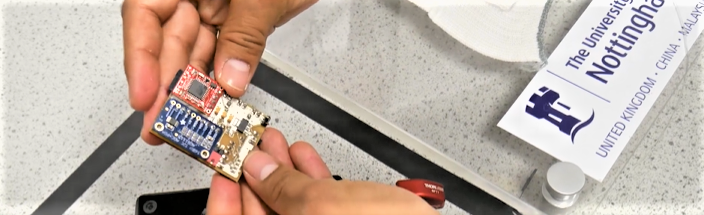
Now, with funding from MRC, University of Nottingham scientists are developing a smart wound dressing which addresses the challenge of regular wound dressing by assessing whether affected tissue is healing or infected.
They have incorporated optical fibre sensors into the dressing, which can remotely monitor multiple factors associated with wound management, such as temperature, humidity and gases associated with healing and infection.
Hard-to-heal wounds, such as diabetes-related foot ulcers, are a focus for the project, as better monitoring has the potential to reduce the 7,000 plus lower limb amputations for people with diabetes in England every year.
The dressing is being trialed at University Hospitals of Derby and Burton NHS Foundation Trust.
The trust's Clinical Director of R&D, Professor Fran Game, says: "If we knew that a wound was healing well without having to use healthcare professionals' time just to visually inspect it, it would make a huge difference to the NHS."
Find out more.
|
|
MENTAL HEALTH: Gene in the brain can put brakes on anxiety |
|
|
A gene in the brain that drives anxiety symptoms has been identified by an international team of scientists. Critically, modification of the gene is shown to reduce anxiety levels, offering an exciting novel drug target for anxiety disorders.
In the study, led by the universities of Bristol and Exeter, researchers sought to identify the molecular events in the brain that underpin anxiety. They focused on a group of molecules, known as miRNAs, in animal models.
The team found that one of these molecules, miR483-5p/Pgap2, activated anxiety-reducing effects. This offers huge potential for the development of anti-anxiety therapies for complex psychiatric conditions in humans.
Dr Valentina Mosienko, one of the study’s lead authors and an MRC Fellow and Lecturer in Neuroscience, says: "The miR483-5p/Pgap2 pathway we identified in this study, activation of which exerts anxiety-reducing effects, offers a huge potential for the development of anti-anxiety therapies for complex psychiatric conditions in humans.”
The research was funded by MRC, Academy of Medical Sciences, Leverhulme Trust, Marie Sklodowska-Curie and the Polish National Science Centre.
Find out more.
|
|
 |
|
The Met Office and the Natural Environment Research Council (NERC) are investing £11 million to improve the forecasting of extreme weather events.
Met Office data shows extreme weather events are increasing, impacting our health and infrastructure, and that the need for accurate weather forecasts and climate projections is only going to rise.
|
|
|
 |
|
Fifty successful innovative projects have been announced from four key competitions under the Department for Environment Food and Rural Affairs’ (Defra) Farming Innovation Programme.
The projects, awarded through a competition delivered by Innovate UK’s Transforming Food Production challenge will each receive funding to help address some of the key issues facing the farmers and growers in England.
|
|
|
 |
|
UKRI has invested £23 million in Local Policy Innovation Partnerships to help address issues that matter to local people and communities.
The scheme aims to support local and national policymakers in driving sustainable and inclusive economic growth, reducing disparities in the UK.
|
|
|
ON TV: BBC 2’s Great Coastal Railway Journeys features an item on the STFC Boulby Underground Laboratory, the UK’s deep underground science facility. It is located 1.1km below ground in Boulby mine, a working potash, polyhalite and salt mine in the North East. The section starts at approximately 00.19.45 into the programme. |
|
 |
|
ONLINE: The Herald Wales reports on a £1million Innovate UK project that aims to reduce the 4 million tonnes of soya the UK imports every year.
The ‘Pea Protein’ project uses a gene for flavourless peas that was first discovered in the 90s at the BBSRC-supported John Innnes Centre. The gene could provide the basis for pea protein becoming a reliable alternative to soya.
|
|
|
 |
|
ONLINE: Future Scot reports on the underwater robot technology that will be able to repair and maintain offshore wind turbines remotely.The aim of the EPSRC-funded work, being developed at Heriot-Watt University, is to reduce the need for potentially hazardous maintenance missions conducted by crewed support vessels. |
|
|
 |
|
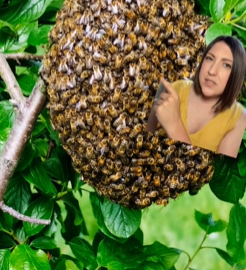
What’s really going on with bee swarms? Swarming is a natural process that happens when the bee colony outgrows its home and is too populated for the queen to keep the bees under control. The workers bees then swarm and the colony splits in two, with half going off to find a new home. When the queen bee finds a new place to live, she will give off pheromones that tell the swarm to cluster around her in a big clump. To learn some more bee facts including what a ‘waggle dance’ is, keep reading. |
|
|
NEWS IN BRIEF : UKRI-supported research and innovation in action |
|
|
A new progress report on the Hartree National Centre for Digital Innovation (HNCDI) shows that the centre is generating increasingly substantial economic and societal benefits for the UK across many sectors.
The five-year collaboration between STFC, Hartree Centre and IBM is enabling companies to adopt digital technologies such as in AI and quantum computing, to overcome challenges ranging from precision medicine to flood risks.
Not all in conscientious objectors during World War 2 refused to support the war effort, according to Dr Linsey Robb from the University of Northumbria. Indeed, many still played an active role - for example, as ambulance drivers or medics, or through agricultural activity. Now, with funding from AHRC, Dr Robb is examining the impact conscientious objection had on their lives in what is the first major study of the subject.
A study led by experts from Manchester, St Andrews, Essex and Nottingham universities suggests that people from ethnic and religious minority groups are more likely to be interested in politics than White British people. The research is funded by ESRC.
Young children with ear, nose and throat problems relating to the ears, hearing and upper respiratory system, were found to be more common in those with a subsequent diagnosis of autism or who demonstrated high levels of autism traits finds a new study. The research, by Bristol and Aston universities, is supported by MRC and Wellcome.
|
|
ONE MORE THING: Cool for cattle – tackling dairy cow heat stress |
|
|
At high temperatures, dairy cows are known to suffer heat stress, which can reduce milk yield, impair fertility, and negatively affect their overall welfare. Such problems are likely to be compounded by temperature increases due to climate change, experts say.
Now, a collaboration between the universities of Exeter, Reading and Cardiff and Writtle University College, is undertaking a new BBSRC-funded research project to address the problem of dairy cow heat stress.
The project brings together experts in animal and dairy sciences, mathematical modelling and statistics, and building design engineering.
Combining animal tracking data with continuous sensor monitoring of barn microclimates will enable the team to model and predict cow behavioural choices and their housed environment.
The gathered data will inform development of housing designed to reduce heat stress and improve welfare.
Find out more.
Photography: Daniel Quiceno on Unsplash.
|
|
|
|
|