|
UKRI Headlines and Highlights |
|
Welcome to the weekly UKRI bulletin, featuring the latest news, funding announcements and stories about research and innovation in action. |
|
|
BIOSCIENCE:
BBSRC funds new research at leading bioscience institutes
|
|
|
BBSRC has announced a new portfolio that will significantly enhance the UK’s capability to deliver strategically important world-leading research with socio-economic impact.
The investment will bolster the UK’s ability to provide solutions to some of the greatest challenges facing society.
The research will be supported by £376 million funding from BBSRC over the next five years, which will be led by the following specialist institutes it supports in the UK:
- Earlham Institute
- Institute of Biological, Environmental and Rural Sciences (IBERS)
- John Innes Centre
- The Pirbright Institute
- Quadram Institute
- The Roslin Institute
- Rothamsted Research
The investment comes following a major review of the institute research programmes BBSRC funds that is carried out every five years.
Find out more.
|
|
PROSPERITY PARTNERSHIPS: UK businesses and academia invest £149 million in cutting-edge research |
|
|
EPSRC is co-investing £149 million with UK businesses and academia in 19 cutting-edge research projects through its Prosperity Partnerships initiative.
The projects are a significant investment in the UK’s future and are expected to make a real difference to people’s lives. Projects include:
- A new type of fibre optic cable that will increase the speed of data transmission by 50% (University of Southampton and Microsoft)
- A new magnetic resonance imaging (MRI) scanner that will improve the diagnosis of lung diseases (University of Sheffield and GE Healthcare)
- A new type of knee replacement that will be more affordable and durable (University of Leeds and Invibio Ltd)
- A new generation of air travel technologies that will help to decarbonise aviation (University of Bath and GKN)
- Robots to repair offshore energy systems (Heriot-Watt University and Fugro GB Marine)
EPSRC is investing £57 million in the initiative, which has been boosted by £4 million from BBSRC and MRC.
This public funding is being matched by a further £88 million from academia and business.
Find out more and read the book of case studies.
|
|
|
HEALTH RESEARCH:
UK Biobank in £127.6 million move to Manchester Science Park
|
|
|
UK Biobank, the world’s most significant source of data and biological samples for health research, is set to receive £127.6 million to fund a move to a larger, faster and more efficient purpose-built facility at Bruntwood SciTech’s Manchester Science Park.
This follows an application by MRC, one of UK Biobank's founders and core funders, to the UKRI Infrastructure Fund to support UK Biobank’s development.
UK Biobank’s biological samples, laboratories, headquarters and around half of its 250 staff will move to the new facility.
The funding will cover a latest-generation robotic freezer four times faster than the existing facility, to store and retrieve 20 million biological samples that have been donated by UK Biobank’s 500,000 volunteer participants.
The facility is being developed with the support of The University of Manchester, and will enable new projects to turn the samples into data and drive discoveries into how to prevent and treat a wide range of diseases.
Find out more.
|
|
NATURAL ENVIRONMENT: NERC invests £25 million in new studies to tackle key unanswered questions about our planet |
|
|
NERC has invested £25 million in a host of high risk, high reward research projects to tackle critical environment challenges.
The 44 projects cover the full spectrum of environmental science including geology, atmospheric science, biodiversity and ecology. The research will, for example:
- Improve our understanding of volcanic activity such as eruptions and lava flows
- Age the Earth’s solid inner core
- Investigate historic mass extinction events
- Predict future changes to carbon storage and biodiversity of the Amazon rainforest
- Study new microbes capable of consuming methane – a powerful greenhouse gas
Lasting three to four years, each project has received up to £1.3 million to conduct the research, which is a key part of NERC's investment portfolio.
Find out more.
|
|
HEALTHCARE TECHNOLOGIES: Scientists use 3D printing to create infection-fighting materials for use as medical implants |
|
|
Scientists have developed a new way of using 3D printing to create infection-fighting materials for use as medical implants.
The team, from the University of Bath, working with colleagues at the University of Ulster, used electrically responsive ferroelectric materials, which give the implants infection-fighting properties.
This makes them ideal for biomedical applications such as heart valves, stents, and bone implants – reducing the risk of infection for patients.
An image created by the researchers to illustrate the research (a section of which is featured above), was a finalist in the Science as Art competition at the Materials Research Society 2023 Spring Meeting & Exhibit.
The research was supported by EPSRC, DST Innovations Ltd and the Annette Trust.
Find out more.
|
|
THE FILM TO WATCH: Thermal insulation paint developed for home insulation is the perfect icekeeper |
|
|
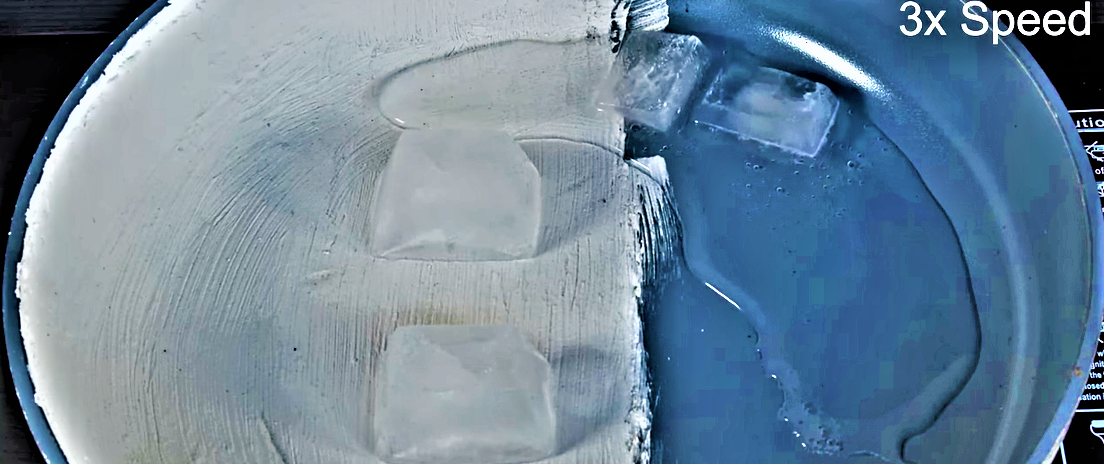
They say there's nothing so boring as watching paint dry. But what if you were watching paint protect against extreme heat?
In this absorbing film, one half of a frying pan is coated with a new thermal paint product, and the other half is not protected. When ice cubes are added to the mix, the cubes in the coated side of the pan stay remarkably intact, whereas those in the other half... don't.
The coating was developed through an Innovate UK-funded Accelerated Knowledge Transfer Partnership pilot scheme between scientists at Liverpool John Moore's University and SME Zenova.
The paint, called ZENOVA IP, has been developed to insulate homes, and has thermal insulation, thermal reflection, anti-condensation, and anti-mould properties.
It can be used on any exterior and interior surface to provide insulation against cool and hot environments, as well as protect against thermal and infrared radiation.
Find out more and watch the film.
|
|
UKRI FUNDING: Project role types revised |
|
|
Role types for UKRI-funded projects are being simplified and harmonised across all nine UKRI councils to reduce bureaucracy and simplify funding.
A new role called ‘project lead’, which replaces the principal investigator title, is among the changes applied to new funding opportunities in the new UKRI Funding Service from 22 May 2023.
The changes support UKRI’s five-year strategy and our commitment to ensuring recognition and career development pathways for everyone involved in delivering research and innovation.
Find out more.
|
|
|
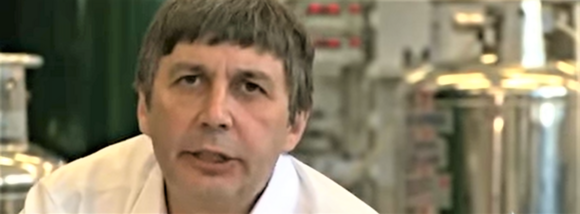
"There are many, many things around which remain to be discovered if you are adventurous enough. Just take stuff a little bit sideways." Professor Sir Andre Geim, from The University of Manchester, in conversation with Professor Jim Al-Khalili this week for BBC Radio 4's The Life Scientific.
True to this philosophy, Professor Sir Andre Geim is one of the world's great scientific adventurers.
Together with Kostya Novoselov and with funding from EPSRC, in 2010 he won the Nobel Prize for Physics for his isolation of wonder material graphene, and is one of the pioneers in this line of research.
Beyond his Nobel Prize-winning work on graphene, he has explored new ideas in many different areas of physics throughout his career – from levitating frogs to exploring the new world of two-dimensional materials, of which graphene is one.
Find out more.
|
|
POLICY: UKRI updates its Open Access Policy |
|
|
From 1 January 2024, our new Open Access Policy will apply to long-form publications like monographs, book chapters and edited collections that acknowledge UKRI funding.
The Open Access Policy has applied since April 2022 for peer-reviewed research articles acknowledging UKRI funding.
The policy aims to ensure that findings from research UKRI funds with public money can be accessed and built on by the research and innovation community and wider society.
We've published updated guidance on our website to help our communities prepare.
Find out more.
|
|
|
GLASTONBURY:
New app delves into the abbey's archaeology, myths and legends
|
|
|
As music fans prepare their annual pilgrimage to Glastonbury, University of Reading archaeologist Professor Roberta Gilchrist has helped to launch a new augmented reality (AR) app called Glastonbury Stories.
The app, which delves into the world of Glastonbury Abbey and its archaeology, myths and legends, is designed with teens and families in mind.
Using their mobile devices to uncover portals to the past, pilgrims will hear conversations from the abbey’s medieval inhabitants, discover lost artefacts rendered in 3D, and even glimpse some of the grand buildings that formerly existed onsite.
The app, one of the first of its kind to be used at a UK heritage site, is a collaboration with the University of Reading and industry partners Arcade and Thread.
The project is funded by AHRC and it builds on previous AHRC-funded research.
Find out more.
|
|
THIS WEEK'S BIG NUMBER: 90% |
|
|
90%: The reduction in carbon emissions from existing iron and steel furnaces that could be made using a novel adaptation developed by researchers from the University of Birmingham.
This radical reduction is achieved through a ‘closed loop’ carbon recycling system, which could replace 90% of the coke typically used in current blast furnace-basic oxygen furnace systems and produces oxygen as a biproduct.
The system has been devised by Professor Yulong Ding and Dr Harriet Kildahl, who have shown that, if implemented in the UK alone, could yield cost savings of £1.28 billion in five years while reducing overall UK emissions by 2.9%.
The research is funded by EPSRC.
Find out more and watch the film.
|
|
ON TV: ESRC-funded UK Parliament Thematic Research Lead, Dr Tamsin Edwards, appeared on the BBC Newscast programme on BBC 2 (from 21:00 min). She discussed global warming and the 1.5 degree target; she also championed her role as a UK parliament thematic research lead. |
|
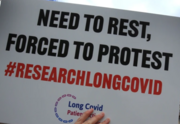
MAINSTREAM PRESS: The Week reports almost 2 million people in the UK are estimated to be living with long Covid and quotes research by the ESRC-funded Institute for Fiscal Studies that suggested long Covid may have resulted in the loss of 4.4 million working hours per week in the UK. |
|
ONLINE: City AM ran an interview with nuclear physicist Professor Kara Lynch on girls in STEM. She says without the support of STFC she would not have been able to prepare a successful application for a senior physics fellowship which kick-started her research career. |
|
ONLINE: The National and The Herald both report that Professor Philip Wookey, from the University of Stirling, is leading an investigation into whether global warming causes increased carbon emissions from ecosystems in the Arctic. The research is funded by NERC’s Pushing the Frontiers programme. |
|
RESEARCH AND INNOVATION AROUND THE UK |
|
|
Cranfield University and Cranfield Airport are spearheading the development of permanent ‘drone zones’ – designated areas of airspace where drones and crewed aircraft can safely co-exist. This will pave the way for drones becoming part of everyday life, undertaking tasks such as medical supply deliveries, or monitoring air quality in real-time. The project is funded through UKRI's Future Flight Challenge.
Writing in The Conversation, Dr Jacques Wels, from the MRC Unit for Lifelong Health & Ageing at UCL, shares his new research which found home working was not detrimental to mental health in the early stages of the pandemic, but was associated with negative effects later on.
Newcastle University researchers have found the nervous system of people with post-Covid fatigue was underactive in three key areas. Fatigue is one of the most common symptoms of long Covid. With funding from MRC, and building on previous research, they are examining whether stimulating the vagus nerve with a small electrical current can improve symptoms.
Military veterans involved in chemical warfare agent research at Porton Down faced a 6% higher mortality rate than similar veterans who were not involved, according to new research at King’s College London, in partnership with Lancaster University. The research is supported by MRC.
|
|
|
ONE MORE THING:
Gene activity and digit structure define fingerprint pattern
|
|
|
Scientists have discovered how fingerprints are formed, and how their unique characteristics are shaped, in a new multidisciplinary study led by the Roslin Institute.
The researchers have found that fingerprint formation is initiated by a specialised molecular process, influenced by the anatomy of the developing hand.
Findings from the study could aid understanding of health disorders, including congenital conditions, which affect development of structures including skin, hair and sweat glands.
The Roslin Institute receives strategic investment funding from BBSRC and is part of the University of Edinburgh Royal (Dick) School of Veterinary Studies.
Find out more.
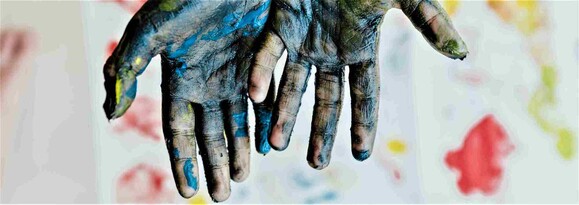
Photography: Bernard Hermant on Unsplash.
|
|
|
|
|