|
This week's headlines and highlights |
|
Welcome to the UKRI bulletin, featuring the latest news, funding announcements and stories about research and innovation in action. |
|
|
INTERNATIONAL:
UK and India commit to research and innovation collaboration
|
|
|
The UK and India have strengthened their partnership with £16 million for vital joint research and innovation to tackle challenges ranging from earthquakes and environmental sustainability to food security and AI.
The £16 million of new investment from UKRI is matched by the Government of India, and the two nations have also reinforced their commitment to collaborate on global issues.
The new co-investment and memorandum of understanding will pave the way for more joint research and innovation, which will drive sustainable growth and prosperity in the years ahead.
Find out more.
|
|
HEALTHCARE: University spin-out secures €72 million to tackle diseases including leading cause of blindness |
|
|
Complement Therapeutics GmbH, a company formed to bring MRC-funded research at The University of Manchester to market, has announced the completion of a €72 million finance deal to develop the treatment of a leading cause of blindness.
The Germany-based company specialises in disorders that affect the part of the body's immune system called the complement cascade.
Dr Richard Unwin, one of the co-founders of the company, says: "This is a hugely exciting step forward .
"It will allow us to take observations we have made in the lab here in Manchester and move them towards developing new treatments for a range of common and serious complement-mediated diseases.
“By combing new therapies with our bespoke precision medicine platform we have the potential to make a real difference to the lives of patients with these debilitating disorders."
Find out more.
|
|
|
ANIMAL HEALTH RESEARCH:
BBSRC and Defra invest in zoonotic livestock disease research
|
|
|
BBSRC and Defra are investing £4 million in 10 innovative projects focused on international animal health research.
The projects will support cross-cutting research and innovation to better our understanding of how diseases are passed between wildlife and livestock.
They will also develop novel vaccine and diagnostics technology platforms to improve animal health and welfare.
This research forms an important part of our efforts to control some of the most difficult animal health diseases the world faces, including avian influenza and bovine TB.
Find out more.
|
|
|
Analysing changes to DNA in the blood can improve the ability to predict a person’s risk of developing type 2 diabetes within a decade. University of Edinburgh scientists looked at the influence of these changes – known as DNA methylation – alongside other risk factors in almost 15,000 people to predict the likelihood of developing the condition years in advance of any symptoms developing. The findings could lead to preventative measures being put in place earlier, reducing the economic and health burden caused by type 2 diabetes.
Find out more.
|
|
|
THE FILM TO WATCH:
Low-cost robotic hand less prone to drop the ball
|
|
|
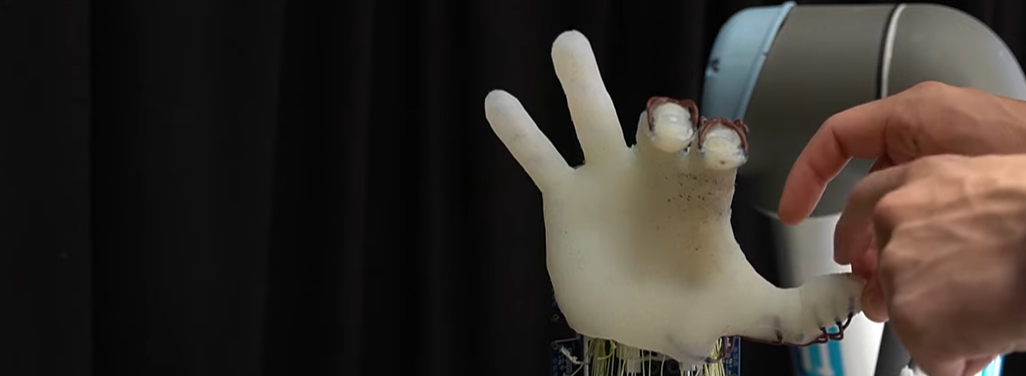
Grasping objects of different sizes, shapes and textures is a problem that is easy for a human, but challenging for a robot.
For example, we know instinctively how much pressure to apply when picking up an egg. Robots, on the other hand, can't crack it – or, rather, they usually do crack it.
Now, researchers from the University of Cambridge have designed a low-cost robotic hand that can grasp a range of objects – and not drop them – using just the movement of its wrist and the feeling in its ‘skin’.
The soft, 3D printed robotic hand can even predict if it is going to drop the object, and adapt accordingly. Because the hand doesn't need complex motors for each finger, it's more energy efficient, too.
The project builds on research funded by EPSRC.
Find out more and watch the film.
|
|
|
"Neutron imaging has many important applications in 21st century science.
"This study shows that it can also shed light on the inner structure of complex archaeological objects, including their manufacturing techniques and contents." Dr Anna Fedrigo, STFC ISIS Neutron and Muon Source.
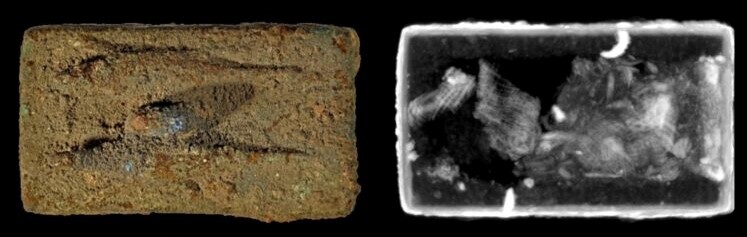
Dr Fedrigo is part of an STFC research team working with colleagues from the British Museum who joined forces to conduct pioneering research into 2,500-year-old ancient Egyptian lizard mummies.
Using advanced neutron imaging techniques, which are more effective than X-ray imaging, the team were able to scan the inside of a group of six sealed first millennium BC animal coffins from ancient Egyptian sites.
In doing this they were able to produce detailed images of their contents without damaging the containers or the materials inside them.
Neutron imaging is a process by which powerful beams of subatomic particles called neutrons are directed at materials so that scientific instruments can infer details about these materials based on the path that neutrons take through them.
Find out more.
|
|
AGRICULTURE: Fresh approach needed to tackle insect resistance to biopesticides |
|
|
Insect pests which attack crops have extraordinary powers to develop resistance to greener pesticides, and a new way to manage resistance risks is needed, according to analysis by University of Stirling scientists.
They suggest that farmers can help manage resistance risks by planting a wider diversity of crops and use multiple biopesticides derived from natural organisms.
This will reduce the spread of resistance and help keep biopesticides effective in the long term.
The study was funded by a joint Newton Fund international partnership between BBSRC, the São Paulo Research Foundation and the Swedish Research Council.
Find out more.
|
|
|
7,200 litres: The amount of air that passes through each child's body every day while at school.
But there is a problem. The air often contains pollutants, impacting pupils' health and concentration, and affecting attendance and attainment.
Now, a massive citizen science project involving scientists from six institutions across the UK has been launched to help schools monitor classroom air quality.
It is hoped that over 1,500 schools will sign up to the SAMHE network, which is Supported by the Department for Education and mainly funded by EPSRC.
Schools get a free high spec air quality monitor that measures CO2, volatile organic compounds, particulate matter, temperature and relative humidity.
Teachers and pupils can access their data through an interactive web app, seeing how air quality changes over the course of hours, days or weeks and months.
The project is led by the Stockholm Environment Institute at the University of York, Imperial College London, and the University of Cambridge.
Find out more and visit the SAMHE website.
|
|
MEANWHILE ON INSTAGRAM... |
|
ON TV: STFC RAL Space's Harwell campus was featured on CBCC's Blue Peter when Bethany, the teenage winner of the show's Awesome Orbit competition, was given a guided tour of the facility and watch her winning artwork featured on a satellite being developed at RAL Space (starts after 05 mins). |
|
ON THE AIRWAVES: BBC Radio 4's PM programme featured an interview with Professor Dame Wendy Hall, who co-chaired the government's AI review in 2017. She discussed the government's announcement of a new AI task force with host Evan Davis. Professor Hall has received funding from EPSRC throughout her career. |
|
ONLINE: Professor Ed Hawkins, from the NERC-funded National Centre for Atmospheric Science, was interviewed by the BBC about his research into Storm Ulysses of 1903. The storm "produced some of the strongest winds the British Isles have ever witnessed". |
|
UKRI-supported research and innovation around the UK |
|
|
Shielding vulnerable people was central to the response to COVID-19, but there is no evidence that it benefited the vulnerable people it was meant to protect, a new study of health data led by Swansea University on behalf of UKRI has revealed.
A University of Bath research team are developing a 'game-changing' new aircraft electrical power system using liquid hydrogen as fuel. The research is led by Dr Xiaoze Pei, who is supported by a five-year EPSRC Open Fellowship.
New research from the University of Stirling has found that dangerous bacteria are able to survive the journey from sewage treatment plants to beaches on microplastic pollution. The NERC-funded research was led by PhD student Rebecca Metcalf.
In a survey into public attitudes to trade, when asked to rank the most important objective overall for trade policy, people in the UK valued economic growth the most. However, when asked about trade-offs, the majority prioritised workers’ rights, human rights, data privacy and maintaining food standards over more trade. Read the report, by the ESRC-funded Centre for Inclusive Trade Policy, and watch the film.
Visitors to Avebury stone circle will have the chance to experience the site’s history in new and immersive ways using interactive games on their phones and other mixed reality experiences. The technology is being developed by experts from Bournemouth University with funding from UKRI and the European Union’s Horizon programme.
|
|
ONE MORE THING: A modified form of Botox could give long-term pain relief to patients |
|
|
A modified form of Botox could give long-term pain relief to patients with chronic nerve injury pain, according to a new study.
With funding from MRC, scientists from the universities of Sheffield, Reading and UCL and US-based biopharmaceutical company Neuresta have created a new neurotoxin which can alleviate chronic pain without risk of paralysis or addiction.
Currently, painkillers can only relieve chronic pain temporarily and often have unwanted side effects.
The method could potentially allow a form of chronic pain relief which could last as long as a single Botox injection – around four to five months – potentially helping as much as 20% of the population who are thought to be living with chronic pain
Find out more.
|
|
|
|
|