|
UKRI Headlines and Highlights |
|
Welcome to the weekly UKRI bulletin, featuring the latest news, funding announcements and stories about research and innovation in action. |
|
|
DEXAMETHASONE/RECOVERY TRIAL:
Two years on, the COVID-19 treatment that saved millions
|
|
|
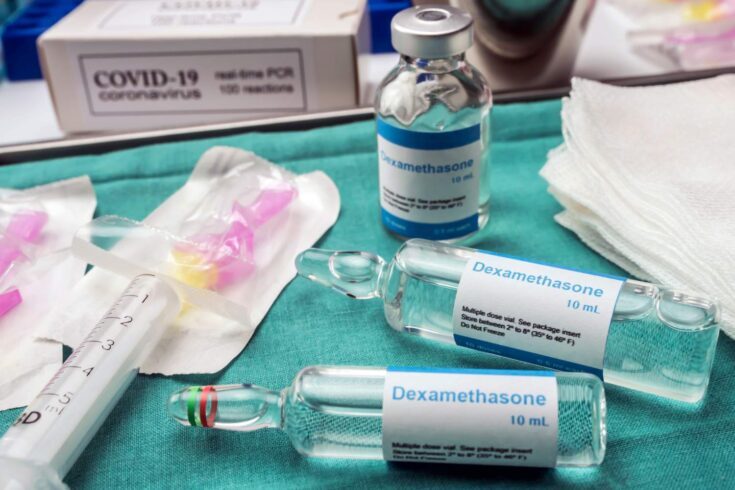
Two years ago this month, dexamethasone, an inexpensive, readily available steroid, was announced as the first-ever life-saving treatment for COVID-19.
In the following nine months, dexamethasone saved an estimated one million lives worldwide, including 22,000 in the UK.
The treatment was discovered through the RECOVERY trial, one of the world’s fastest-recruiting treatment trials in medical history.
RECOVERY was primarily funded by UKRI and the National Institute for Health and Care Research with a joint investment of £2.1 million.
This funding enabled the trial to be announced on the first day of the UK lockdown (23 March 2020). Within 15 days of the announcement, more than 1,000 participants around the UK had joined the trial. Five weeks later, that number had risen to 10,000.
In the first 100 days alone, RECOVERY produced two more highly significant results. The antimalarial drug hydroxychloroquine, which had been suggested as a possible treatment, was shown to have no clinical benefit. The antiviral treatment lopinavir-ritonavir was shown to be ineffective at preventing deaths in hospitalised patients.
You can read The inside story of RECOVERY, a specially commissioned article to mark the second anniversary of the trial, on UKRI's Medium channel.
Also on Medium, find out how dexamethasone saved the life of critically ill Covid patient, John Hanna.
Find out more and watch the film.
|
|
|
ALZHEIMER'S RESEARCH:
Single brain scan can diagnose Alzheimer’s disease
|
|
|
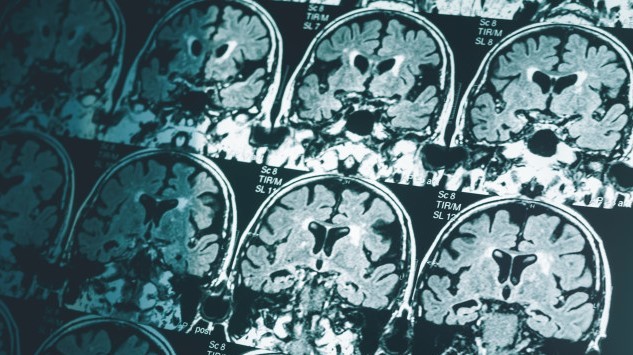
A single MRI scan of the brain could be enough to diagnose Alzheimer’s disease, according to new research by Imperial College London.
The research uses machine learning technology to look at structural features within the brain, including in regions not previously associated with Alzheimer’s.
The advantage of the technique is its simplicity and the fact that it can identify the disease at an early stage when it can be very difficult to diagnose.
Although there is no cure for Alzheimer’s disease, getting a diagnosis quickly at an early stage helps patients. It allows them to access help and support, get treatment to manage their symptoms and plan for the future.
Being able to accurately identify patients at an early stage of the disease will also help researchers to understand the brain changes that trigger the disease, and support development and trials of new treatments.
The research is funded through the NIHR Imperial Biomedical Research Centre at Imperial College London and by MRC.
Find out more.
|
|
DRIVING INNOVATION: £30 million Smart Grant programme will fast-start small-business innovation and boost UK economy |
|
|
Innovate UK is launching a new series of small business grants worth £30 million to fast-start innovation and boost the UK economy.
Fast Start: Innovation grants will give hundreds of UK small and micro-businesses the opportunity to grow and realise their ideas faster.
The grants, of up to £50,000 each, will provide a fast way to boost cash flow, helping to propel those highly innovative ideas that have a clear route to commercialisation.
Grants will back innovations in one or more of the seven technology areas outlined in the government’s Innovation Strategy.
Businesses offered grant funding will also be offered tailored business support through Innovate UK EDGE.
Applications for Fast Start grants run from 11 to 26 July.
Find out more about the programme and how you can apply.
|
|
|
ARTIFICIAL INTELLIGENCE:
£8.5 million programme to transform AI ethics and regulation
|
|
|
AHRC has launched a major £8.5 million research programme on the ethics and regulation of artificial intelligence (AI).
AI is unlocking enormous benefits across our economy and society. However, with this come new and accelerated risks, not least from lack of public trust in the technology.
The new AHRC programme, delivered in partnership with the Ada Lovelace Institute and the largest of its scale in the UK, aims to build public confidence in AI.
The investment will enable collaborations between researchers, industry and policymakers to tackle some of the biggest ethical questions posed by AI and its applications – from biometrics and facial recognition to diagnostics in healthcare.
This will help to ensure the UK remains at the global forefront of the research, development and deployment of AI technology.
Find out more.
|
|
|
THE BIGGER PICTURE:
Engineering Net Zero: results from the EPSRC photography competition
|
|
|
MEANWHILE, ON INSTAGRAM...
Smart socks can tell you when you're stressed
|
|
|
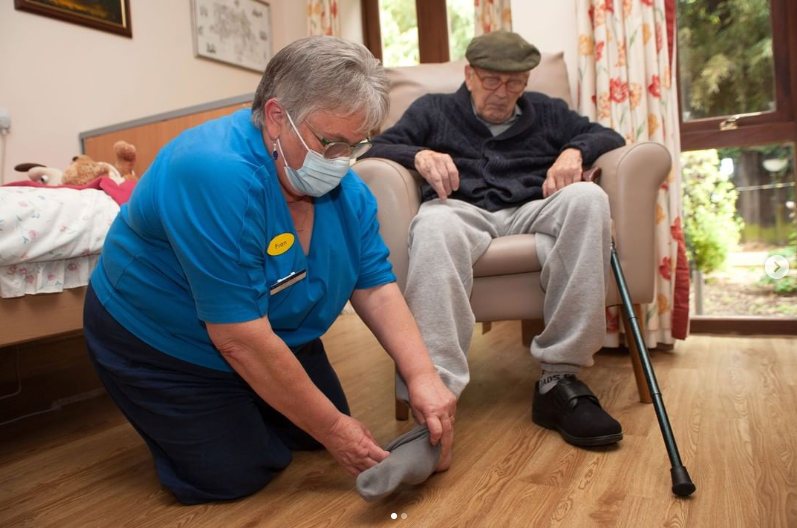
These are no ordinary socks. These socks can tell when you're stressed.
They look and feel like normal socks, but they have sensors in them to measure heart rate, sweat levels and motion – the physical signs of stress. Data is sent to an app where carers can monitor the wearer’s wellbeing and offer support before they become distressed.
They're the brainchild of Dr Zeke Steer, who witnessed his beloved great-grandmother's progressive cognitive decline.
Zeke's company, Milbotix, is working with the Alzheimer's Society to develop the socks further and test them with people who have mid to late-stage dementia. The socks could also help people with autism.
Jake studied for a PhD in Robotics & Autonomous Systems at the EPSRC-funded FARSCOPE Centre for Doctoral Training.
@weareukri
|
|
|
“Understanding, and ultimately interrupting, the process by which bacteria share their abilities to evade antimicrobial drugs will go a long way to helping stall the spread of resistance”
Professor Gad Frankel, MRC Centre for Molecular Bacteriology and Infection, Imperial College London
One of the primary ways harmful bacteria acquire resistance to antimicrobial drugs is by receiving DNA from already resistant bacteria.
Now, Professor Frankel and his team have uncovered new details about how bacteria 'hook up' to exchange DNA.
In addition to paving the way for scientists to work out how to stall the spread of bacterial resistance, the new knowledge generated by the team could help predict the spread of emerging resistance among bacterial pathogens.
The study was supported by MRC, BBSRC and the Wellcome Trust.
Find out more.
|
|
|
THE FILM TO WATCH: PIPEBOTS
New kids under the block could help save the UK billions
|
|
|
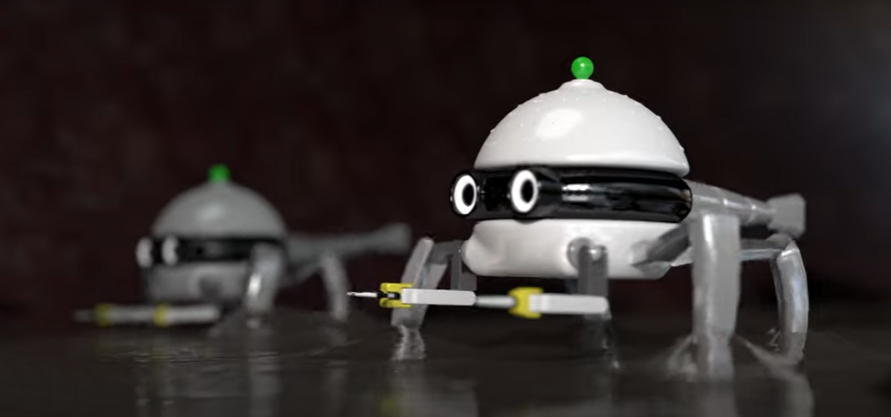
There's a new force on patrol in the UK's underworld of buried water and wastewater pipes – Pipebots.
Connected, capable and kind of cute, these miniscule smart robots, just 20mm wide, are more than just a pretty face.
They've been created to independently monitor the condition of vital yet often hazardous underground utilities, including the UK's 600,000 kilometers of water pipes.
Trouble is, there is a lack of workable knowledge about the condition of our buried pipes. This results in unforeseen failures; 1.5 million road excavations annually; and many thousands of full or partial road closures. This costs at least £7 billion every year.
Developed with funding from EPSRC, Pipebots, which can swim, self-navigate, communicate with each other and work together, could change all that.
No more pointless roadworks
Equipped with onboard sensors, their mission is to locate, diagnose and scan potential faults and relay the data wirelessly to a human engineer on the surface. Decisions are then made to deploy a repair team – only when and exactly where it's needed.
Created by a multidisciplinary team from the universities of Sheffield, Bristol, Leeds and Birmingham, together with utility companies and industry bodies, Pipebots are one of the successful outcomes from the EPSRC-funded TWENTY65 research consortium.
Involving six universities and 40 international water industry partners, TWENTY65 is shaping the way we use and manage our water resources and infrastructure.
Find out more and watch the film.
|
|
UKRI-supported research and innovation in action |
|
A new multi-university study, led by the University of London and supported by UKRI, is the first to show that intimate partner violence (IPV) in England is strongly associated with self-harm and suicidality in both men and women across all ages. While IPV is a recognised risk factor for psychiatric disorders, there had previously been little evidence on IPV and self-harm and suicidality. |
|
Palaeontologists in the UK and China have shown that the natural world bounced back vigorously following the extinction-level event that did for the dinosaurs. Among their findings, the University of Bristol-led team reveal that predators became meaner, and prey animals adapted rapidly to find new ways to survive. The research was supported by NERC, the EU and the Chinese Academy of Sciences. |
|
Using biochemistry and atmospheric chemistry, University of Cambridge researchers have quashed the long-held theory that the atmosphere of the planet Venus could support life. Any life form in sufficient abundance is expected to leave chemical fingerprints on a planet’s atmosphere, as it consumes food and expels waste. However, the Cambridge team, co-funded by STFC, found no evidence of these fingerprints on Venus. |
|
This year’s bird flu outbreak has been the largest and longest ever experienced in the UK and in many parts of Europe. Now, some of the UK’s top scientists are to set to join forces in a major new research consortium, headed by the Animal Plant Health Agency, in the UK’s battle against bird flu. The eight-strong consortium has received £1.5 million from BBSRC and Defra. |
|
Tackling climate change and threats to our environment |
|
To coincide with its Engineering Net Zero Week, EPSRC has published a booklet showcasing some of the remarkable sustainable research and innovation it supports. Projects include zero-emission hydrogen-powered buses; using waste CO2 to create valuable chemicals; developing low-carbon cements produced from simple industrial waste; and a free tool to map the carbon footprint for every neighbourhood in England. Download the booklet here and watch the film. |
|
Tackling the climate crisis can only be achieved by "placing people at the heart of climate action", according to research led by the University of Exeter. The ESRC-funded team warns against relying solely on climate science and technology, and say social science can help ensure a green transition that also promotes goals such as wellbeing and fairness. |
|
THIS WEEK'S BIG NUMBER: $162 billion |
|
|
$162 billion (US dollars): The estimated minimum cost of invasive species globally, according to an international research project funded by NERC.
But the monetary cost pales against the effect that invasive species are having on the world's ecosystems.
The researchers say invasive species are one of the greatest threats to biodiversity globally and are the main cause for the extinction of vertebrates in the last century.
Furthermore, the absence of native predators facilitates the spread of invasive species, leading to the extinction of native species throughout the world.
All, however, may not be lost.
The researchers found that restoring native predators to their natural environment could provide a solution to a variety of the most damaging invasive species globally.
Apparently, native predators would have the upper hand against invasive species, which are evolutionary naive by comparison, among crucial weaknesses.
The study involved researchers from Queen’s University Belfast, the University of Aberdeen, Heriot-Watt University, Cornell University and the National University of Ireland, Galway.
Find out more.
|
|
COVID-19 research and innovation |
|
Closing schools and workplaces appear to have been the most effective strategies to mitigate deaths from COVID-19 in the early days of the pandemic’s first wave. This is the key finding from a study of 130 countries by researchers from The University of Manchester and Imperial College London. Jonathan Stokes, the study's lead author, is supported by an MRC fellowship. |
|
People infected with the Omicron variant show poor immune boosting against future SARS-CoV-2 infection, according to the findings of a multi-university/healthcare provider study funded by UKRI. The analysis also finds that Omicron provides a poor natural boost of COVID-19 immunity against re-infection with Omicron itself, even in people who are triple-vaccinated. |
|
EPSRC-funded researchers from the University of Cambridge and Imperial College London have found that there is no ‘safest spot’ to minimise the risk of COVID-19 transmission on trains. The team developed a mathematical model to help predict the risk of disease transmission in a carriage, and found that, in the absence of effective ventilation systems, the risk is the same along its entire length. |
|
|
GLASTONBURY FESTIVAL:
UKRI-supported science draws the crowds
|
|
ONE MORE THING: Sideways is best for human echolocation |
|
|
Just like bats, humans are able to locate targets based on echoes – just not nearly so well.
Now, researchers have discovered for the first time that we can better echolocate targets placed off to the side, at an angle of 45°.
The team made their findings after working with nine adults who are blind and who use echolocation based on mouth clicks on a daily basis.
They discovered that better sideways echolocation might be explained by the difference in intensity of the echoes between the two ears.
The findings indicate that human echolocation and human regular spatial hearing might be governed by different principles.
The results also provide useful guidance for echolocation instructors and new users, so that they can locate objects and targets more accurately by turning their heads.
The research was led by scientists from the University of Durham working with the University of Birmingham, Eindhoven University of Technology, and World Access for the Blind, Placentia, USA.
It was funded by BBSRC, the British Council and the Department for Business, Innovation and Skills.
Find out more.
|
|
|
|
|