|
This week's headlines and highlights |
|
Welcome to the UKRI bulletin, featuring the latest news, funding announcements and stories about research and innovation in action. |
|
HEALTH: Yearly checks make a life-saving difference to people with a learning disability |
|
|
New evidence shows that annual health check-ups are associated with reduced deaths for people with autism or Down’s syndrome.
Twelve-monthly health checks for people with a learning disability, who are more likely to experience other co-existing health conditions, were introduced in Wales in 2006. Until now, there was a lack of evidence about the long-term health benefits of these checks.
A team of researchers from the National Centre for Population Health & Wellbeing Research at Swansea University, looked at the medical records of 26,954 people with a learning disability in Wales between 2005 and 2017.
The researchers, from both Swansea and Cardiff universities, found that annual checks improve survival for people with autism or Down’s syndrome.
Along with partners, the work was supported by the Health Data Research UK which is part funded by Medical Research Council (MRC), Engineering and Physical Sciences Research Council (EPSRC) and Economic and Social Research Council (ESRC).
Read the full story.
|
|
MANUFACTURING BOOST: £50 million data innovation hub to boost productivity, growth and sustainability |
|
|
UK manufacturers will be in an even stronger position to compete thanks to a new data innovation hub and testbed led by Ulster University.
UKRI is co-investing £50 million in the digital manufacturing hub aimed at helping small and medium-size UK manufacturers capture and better utilise their data. This in turn will lead to increased productivity and competitiveness.
Nearly 10,000 manufacturers are expected to benefit from the new smart factory and testbed, which will support 13,000 jobs. The aim is to help to boost economic growth through the adoption of digital technologies, such as the Industrial Internet of Things and artificial intelligence.
The hub is backed by £20 million from UKRI’s Made Smarter Innovation challenge and £30 million of business co-investment.
Find out more.
|
|
MEANWHILE, ON INSTAGRAM... |
|
|
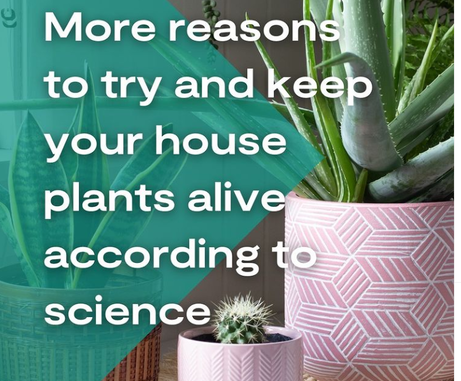
Could plants make the air in your office cleaner?
A new study by @unibirmingham and @The_RHS found that potted plants could reduce levels of nitrogen dioxide (NO2), a common air pollutant, in our homes and offices by as much as 20% in some conditions.
Find out more.
|
|
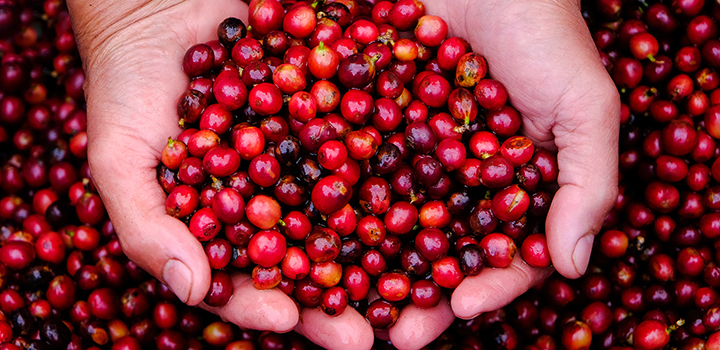
HEALTH: Cranberries could help improve memory and brain function |
|
HEALTH: Ultra-powerful MRI scanners may unlock new treatments for people with Parkinson’s disease |
|
|
THE BIGGER PICTURE:
World's first rapid testing facility for tidal turbine blades opens
|
|
|
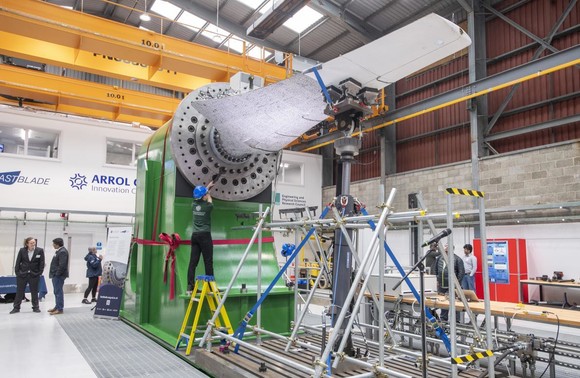
The world’s first rapid testing facility for tidal turbine blades, which researchers say can speed up development of marine energy technologies while helping to reduce costs, has opened at the University of Edinburgh.
FastBlade is a partnership between the University and engineering company Babcock International, and is supported by a £1.8 million grant from the UK Government, via the EPSRC.
|
|
THE FILM TO WATCH: 101 Jobs - Hannah Price |
|
|
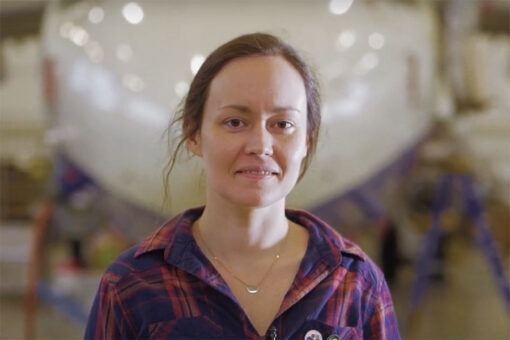
Hannah Price is an instrument scientist at the Facility for Airborne Atmospheric Measurements (FAAM).
FAAM operates a BAe 146 aircraft fitted out with specialist instrumentation for studying the atmosphere that researchers use to collect data about the atmosphere at different altitudes and locations around the world.
The aircraft is used to study everything from the particles released by volcanic eruptions, to the impact of climate change on our atmosphere. Hannah is an expert on FAAM’s instruments, and it’s her job to keep it in perfect working order.
Our 101 jobs campaign highlights some of the many roles that contribute to the success of the research and innovation system. This update provides links to the latest films and profiles.
You can see all the latest 101 jobs that change the world profiles on our website.
|
|
SHORT TAKES: UKRI-supported climate change & environment research and innovation |
|
Taking a huge step towards net zero, the University of Nottingham has been awarded £2 million to test how electric machines can be used within research institutes and facilities to boost carbon neutrality. The funding has been awarded by Research England, with the Higher Education Funding Council for Wales, and Scottish Funding Council. |
|
 |
|
A new research and innovation facility based at Swansea University has received a funding boost of nearly £2.5 million from the UK Research Partnership Innovation Fund (RPIF). It is to host a project that will trial innovative emission reduction strategies for the semiconductor industry to help the sector deliver on Net Zero ambitions. |
|
|
 |
|
Cranfield University has been awarded £3.1 million to advance its sustainable aviation research, both into developing low-carbon aircraft, and decarbonising airport logistics. The funding from Research England will also have an immediate impact on reducing or eliminating greenhouse gas emissions from flying and airside operations at Cranfield University, amounting to 305 tonnes of CO2e (carbon dioxide equivalent) per year. |
|
|
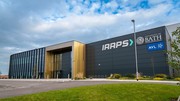
The UK’s first green hydrogen production and storage facility will become operational in Spring 2023 at the Institute for Advanced Automotive Propulsion Systems (IAAPS), made possible by £2.5 million of UKRI funding. |
|
 |
|
In a project led by the Science and Technology Facilities Council (STFC), engineers are designing a green ammonia plant that can reliably and efficiently generate ammonia using only intermittent renewable energy as the source of power. The team aims to use its funding to create a complete and ready-made design for industry. |
|
|
“The UK was one of the first global economies to enshrine in law a mandate for reaching net zero by 2050.”
Derek Craig, EPSRC Deputy Director for Cross-Council programmes
BLOG: Engineering Net Zero
Derek Craig introduces EPSRC’s Engineering Net Zero (ENZ) week – a hybrid programme of in person and online events highlighting how research is vital to achieving net zero.
Read to find out more about the week and how to get involved
|
|
SHORT TAKES: UKRI-supported research and innovation |
|
An expert panel will lead a review of the role of metrics in research management and assessment as part of the Future Research Assessment Programme. It has been jointly awarded by Research England, together with the Higher Education Funding Council for Wales and Scottish Funding Council. |
|
 |
|
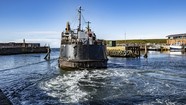
UK immigration loopholes are allowing the fishing industry to exploit migrant fishers by leaving them open to deportation and being paid well below the minimum wage. These are some of the findings detailed in a new report following research into the UK fishing industry by the University of Nottingham’s Rights Lab. This work was funded by the Nottingham Research Fellowship and the ESRC Impact Acceleration Award. Responses were collected from June 2021 through to February 2022. |
|
|
THIS WEEK'S BIG NUMBER: 1,000 Square metres |
|
|
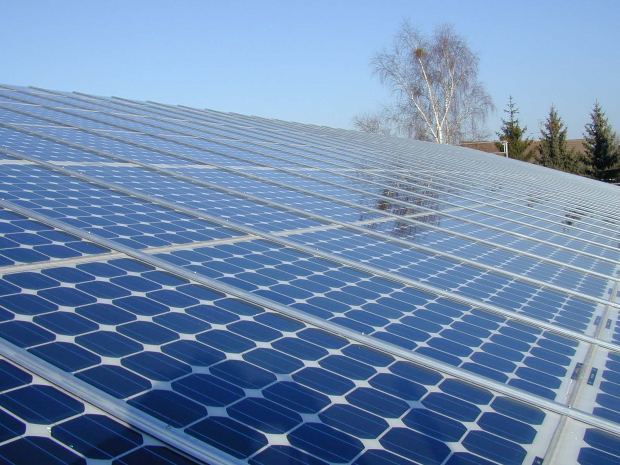
A solar panel farm covering an area of over 1,000 square metres - or the size of two basketball courts - will be built by the University of York’s Institute for Safe Autonomy, creating a ‘living lab’ to test how robots could inspect and maintain solar farms.
Funded through the UK Research Partnership Investment Fund (UKRPIF), the facility will enhance the Institute’s research capabilities by providing a 'living lab', which will allow researchers to safely develop and use robots to inspect and maintain the solar farm.
|
|
ONE MORE THING: First net zero transatlantic flight to take to the skies in 2023 |
|
|
Secretary of State for Transport has announced plans for a net zero transatlantic flight.
The world’s first net zero emissions transatlantic flight could be delivered by the UK government and industry as early as next year.
The pioneering flight, on an aircraft powered by 100% sustainable aviation fuel, is expected to take off in 2023.
Innovate UK is partnering with the Department for Transport to deliver the net zero flight fund competition.
|
|
|
|
|