|
UKRI Headlines and Highlights |
|
Welcome to the weekly UKRI bulletin, featuring the latest news, funding announcements and stories about research and innovation in action. |
|
ENGINEERING BIOLOGY: £20.6 million UKRI/Dstl investment |
|
|
UKRI and the Defence Science and Technology Laboratory are investing £20.6 million in over 30 innovative Engineering Biology projects and initiatives across the UK.
Adventurous, yet focused on commercial application, the projects cut across a host of sectors such as healthcare, manufacturing and agriculture, and reflect the rapidly-growing importance of Engineering Biology to society, the economy and wellbeing. They include:
- Engineering microbes to recover metals from the environment
- Designing synthetic cells for cancer drug delivery
- Engineering molecular constructs for improved control of insect diseases
- Reducing carbon emissions in fermentation processes
- Bioengineering cells and systems.
The new investment also provides supplementary funding for six Synthetic Biology Research Centres, previously established through UKRI’s Synthetic Biology for Growth programme.
Ultimately, the new investments will bolster interdisciplinary research, build communities, and drive the UK’s ambition to retain and sustain a world-leading capability in Engineering Biology.
Find out more.
You can learn more about Engineering Biology and Synthetic Biology, and find out how UKRI-supported Engineering Biology research is creating solutions to real-world problems both in the UK and around the world by downloading our new brochure.
|
|
DISASTER PREDICTION: Space-based system using GPS satellites could warn of incoming tsunamis |
|
|
A new method for detecting tsunamis using existing GPS satellites orbiting Earth could serve as an effective and low-cost warning system for countries worldwide, according to a new study by an international team led by UCL researchers.
Looking at GPS data at the time of the devastating Tohoku-Oki earthquake and tsunami that struck the Japan's east coast in 2011, they found that, using their system, a tsunami warning could have been issued with confidence at least 10 minutes prior to the first tsunami hitting land.
The disaster went on to kill 20,000 people, destroy more than 100,000 buildings and trigger a nuclear catastrophe.
How it works
Initial tsunami waves are typically a few centimetres high but nonetheless cause a disturbance in the Earth’s upper atmosphere by pushing up air and creating an acoustic wave that is amplified as it goes higher.
This leads to a change in the ionosphere, 300km above the surface of the Earth, in which the density of electrons in the area is reduced.
This in turn affects radio signals sent by GPS satellites to GPS receivers on the ground, delaying or speeding up different parts of the signal, or changing the signal’s direction, depending on frequency.
The research team of statisticians and space scientists have developed a new way to detect this dip in electron density, and hence detect a tsunami incident, from the altered GPS signals.
Low-cost and global
The new method, which was developed with funding from EPSRC and the Japanese government, is low-cost, as it relies on existing GPS networks, and could be implemented worldwide.
The researchers say that, in the case of the Tohoku-Oki disaster, a warning could have been issued using data from only 5% of Japan’s 1,200 GPS receivers – meaning that the method could be used in countries with a sparser GPS network than Japan’s.
Find out more.
|
|
FUTURE FOODS: Grassburgers cut out the middleman |
|
|
Researchers at the University of Bath and Harper Adams University are investigating ways to create low-carbon meat and dairy substitutes using grass.
The project aims to develop a range of new vegan and vegetarian food alternatives to meat and dairy.
The process begins with harvesting grass using mechanical assisted extraction, which requires lower energy and less use of solvents than traditional techniques.
The processed grass is then treated with a novel yeast to make additional protein and oils, such as a palm oil substitute.
It is this combination of technologies that will unlock the enormous potential of grass as a direct food source.
Grass is the UK’s largest crop, covering 70% of agricultural land. While a significant proportion of grassland is hilly, and so only suitable for feeding livestock, estimates suggest that over a third of the land land – more than 4 million hectares – could be used for harvesting.
The researchers say new vegan and vegetarian products derived from grass would also dramatically reduce both agricultural emissions and deforestation. For example, the ingredients used in grass-based products would replace ingredients commonly grown in direct competition with tropical rainforest, such as soy and palm oil.
The project team estimates that repurposing grass for direct consumption could easily produce enough edible material to match UK output of cereals, which include wheat, barley and oats.
The project is funded by BBSRC through UKRI's Transforming Food Systems Strategic Priorities Fund.
Find out more.
|
|
UKRI initiatives and investments |
|
|
UKRI has launched a new integrated website that merges the websites of all seven research councils, Innovate UK, and Research England into one site. The new site, which will provide a strong unified voice for UKRI and its councils, has been developed through extensive consultation and user testing, leading to a system that provides a simpler, more efficient way for users to find what they need.
After a highly competitive recruitment round, eight members have been appointed to the new UK Committee on Research Integrity. Hosted by UKRI, the committee will have a national role in promoting and championing research integrity.
Funding finder - Your shortcut to the latest funding opportunities.
#WeAreUKRI - Sign up to UKRI's Instagram page, @weareukri, and discover how the wonders of science and innovation are helping to create a better future.
|
|
|
MEANWHILE, ON INSTAGRAM...
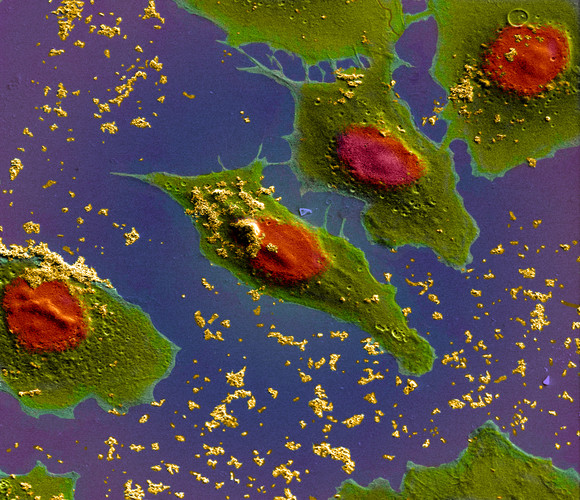
These nano-carriers are delivering cancer drugs directly to infected cells
|
|
|
HEALTH:
Vitamin B3 research could lead to new skin products and cosmetics
|
|
|
"We want the robots to understand the concept of taste, which will make them better cooks"
Dr Arsen Abdulali, University of Cambridge Department of Engineering
Working in collaboration with domestic appliances manufacturer Beko, Dr Arsen Abdulali and his colleagues have trained a robot 'chef' to taste a dish at different stages of the chewing process, assessing whether it is sufficiently seasoned, imitating a similar process in humans.
Their results could be useful in the development of automated or semi-automated food preparation by helping robots to learn what tastes good and what doesn’t, making them better cooks.
Find out more and watch the film.
|
|
|
THE FILM TO WATCH:
First-ever flight of UK-designed and built all-electric aircraft
|
|
|
A project managed by Cranfield University to advance electric aviation has achieved a significant milestone with what is thought to be the first-ever flight by a British designed and built, all-electric conventional aeroplane.
Funded by UKRI through its Future Flight Challenge and by a consortium of partners, the single-seat eKub is part of a wider project aimed at developing safe, viable, and environmentally-efficient aeroplanes.
Developed by Cranfield University, TLAC, Flylight Airsports and CDO², the aircraft will serve as a learning platform that can directly advise microlight builders and aviation regulators on both design best practice and new certification standards for the new era of electrified flight.
Find out more and watch the film.
|
|
UKRI-supported research and innovation in action |
|
An international team which includes University of Manchester scientists has for the first time demonstrated that nerve signals are exchanged between clogged up arteries and the brain. The MRC-supported study of mice found that new nerve bundles are formed on the outer layer of where the artery is diseased, so the brain can detect where the damage is and communicate with it. |
|
NERC-supported scientists at the University of Bristol have discovered that body size is more important than body shape in determining the energy economy of swimming for aquatic animals. One key finding of this research is that the large necks of extinct elasmosaurs did add extra drag, but this was compensated by the evolution of large bodies. |
|
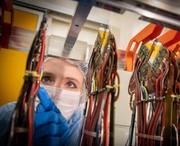
The 41-million-pixel Vertex Locator, an all-new detector scientists hope will help to unlock some of the most enduring mysteries of the Universe, including why it exists at all, has completed the first leg of its journey. Developed in the UK with funding from STFC, the instrument is now established at the Large Hadron Collider experiment at CERN, awaiting installation. |
|
THIS WEEK'S BIG NUMBER: 60,000
60,000: The approximate increase in the number of secondary school students whose depressive symptoms would surpass a clinical threshold, according to a new UCL study.
The researchers attribute the increase to the COVID-19 pandemic, noting that depressive symptoms increased and life satisfaction decreased among secondary school children in England, particularly among girls.
The researchers estimate that, had the pandemic not occurred, there would be 6% fewer adolescents in England with high levels of depressive symptoms such as low mood, loss of pleasure and poor concentration, compared to what would have been expected based on existing trends.
The research, which was supported by the Department for Education, was co-led led by Dr Rosie Mansfield, from the UCL Centre for Longitudinal Studies and Dr Praveetha Patalay, from the UCL Centre for Longitudinal Studies and MRC Unit for Lifelong Health and Ageing at UCL.
Find out more.
|
|
Tackling climate change and threats to our environment |
|
Newcastle University scientists have found new types of plastic-loving bacteria that stick to plastic in the deep sea that may enable them to ‘hitchhike’ across the ocean. This mobility enhances microbial connectivity across seemingly isolated environments, highlighting the emerging ecological impacts of plastic pollution. The research was funded by EPSRC. |
|
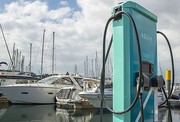
The UK’s first e-marine hub of shore-side charging facilities for electric maritime vessels has been unveiled in Plymouth. The charging network has been created through the Marine e-Charging Living Lab (MeLL) initiative, funded by the Department for Transport and delivered by Innovate UK. |
|
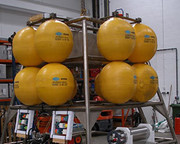
The University of Nottingham is leading a new project to investigate the potential of ammonia to fuel and decarbonise the long-haul shipping industry, and to boost the UK’s powertrain sector. The EPSRC-funded MariNH3 project aims to develop new and disruptive engine technology that will one day cut pollution emitted by today’s diesel-powered marine vessels. |
|
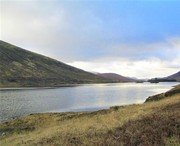
Research by the UK Centre for Ecology & Hydrology, a NERC strategic delivery partner, has shown that climate change is already causing a rapid and extensive warming of Scotland’s lochs and reservoirs. The report warns that the risks to biodiversity and water quality are expected to increase with projected higher air and water temperatures in the coming decades. |
|
COVID-19 research and innovation |
|
A computer model developed at the Quadram Institute could help to reveal how some diseases, including COVID-19, trigger an overactive immune response in certain patients, which can lead to serious complications or even death. The research, funded by BBSRC, sheds new light on how SARS-CoV-2 infects the gut, which "has been overlooked due to the focus on the lungs". |
|
Multiple pressures faced by host cities reduced the effectiveness of measures taken against transmission of COVID-19 at Euro 2020 matches, according to ESRC-supported research at the University of Stirling. The team noted a lack of spectator compliance, challenges in the implementation of COVID-19 mitigation measures, and friction between the governing body and local organisers. |
|
ONE MORE THING: Poo transplants reverse hallmarks of ageing |
|
|
Some people swear by Botox, others say you're as young as you feel, but the secret to eternal youth could actually lie within each and every one of us – our poo.
Scientists at the Quadram Institute and the University of East Anglia have provided evidence, from research in mice that transplanting faecal microbiota from young mice into old mice can reverse hallmarks of ageing in the gut, eyes, and brain.
To see if the opposite is true, the team reversed the experiment, and found that microbes from the droppings of aged mice induced inflammation in the brain of young recipients and depleted a key protein required for normal vision.
The findings show that gut microbes play a role in regulating some of the detrimental effects of ageing, and open up the possibility of gut microbe-based therapies to combat decline in later life.
The research was funded by BBSRC.
Find out more.
|
|
|
|
|