|
This week's headlines and highlights |
|
Welcome to the UKRI bulletin, featuring the latest news, funding announcements and stories about research and innovation in action. |
|
|
FIRST CONTACT
Our first encounter with COVID-19’s spike protein shapes our immune response against current and future variants
|
|
 New research shows that the first SARS-CoV-2 spike protein a person encounters, be it through vaccination or infection, shapes their subsequent immune response against current and future variants.
It is known that antibody levels wane over time following infection or vaccination. But this new research shows that an individual’s protective immune responses are also affected by which strain or combination of strains they have been exposed to.
Nearly two years into the pandemic, people across the world have very different patterns of immunity to the SARS-CoV-2 virus, based on their exposure.
The study, by researchers at Imperial College London and Queen Mary University of London, is funded by UKRI.
|
|
UKRI initiatives and investments |
|
|
THE MAIN EVENT
Audio planetarium to inspire young, visually impaired astronomers
|
|
|
THE FILM TO WATCH
'Naturally intelligent' robots inspired by bee brains could be a search and rescue game changer
|
|
|
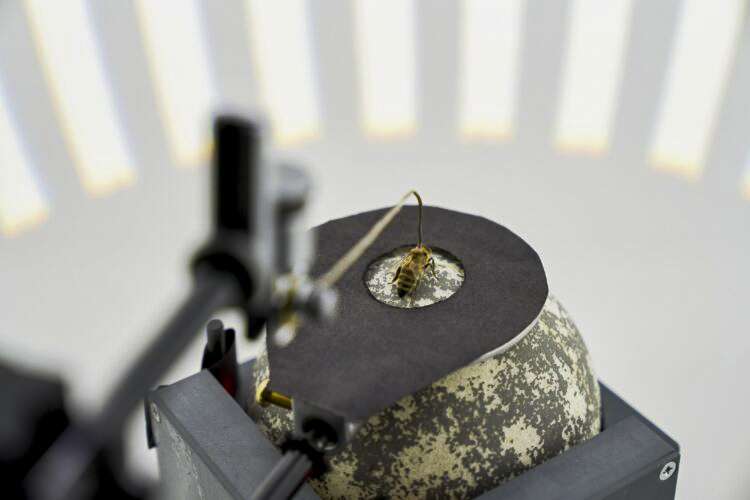
You're looking at a still image from a remarkable EPSRC-funded project aimed at developing 'naturally intelligent' robots.
The Brains on Board team are harnessing the incredible navigational skills and learning ability of honeybees to drive the research.
The film takes you through the stages of the research. These include:
This mapping of the honeybee brain and the possible commercial applications for the technology led to the creation of University of Sheffield spin-out company, Opteran.
Opteran's co-founder and Chief Scientific Officer, Professor James Marshall, who leads the Brains on Board project, says: "Insect brains will teach us how to make truly intelligent robots."
Among its many potential industrial and consumer applications, the technology could be used in search and rescue operations, during which robots would be able to quickly learn the most efficient route to survivors.
Find out more and watch the film.
|
|
|
THE BIGGER PICTURE
A 66-million-year-old mollusc is visualised in 3D
|
|
|
A research team led by scientists from Cardiff University has provided the first-ever 3D visualisation of an ammonite – a marine mollusc group that became extinct with the dinosaurs around 66 million years ago.
The new images have allowed the team to analyse an ammonite's muscles and organs for the very first time, casting new light on how the cephalopod mollusc was able to swim through the oceans and defend itself from predators.
The research team used a combination of cutting-edge facilities, including the ISIS Neutron and Muon Source at STFC's Rutherford Appleton Laboratory in Harwell and the Henry Moseley X-ray Imaging Facility at the University of Manchester, to digitally reconstruct the inside of a ‘virtual ammonite’.
The work was carried out by a multi-institutional and interdisciplinary research team from Cardiff University, Imperial College London, the Natural History Museum, The University of Manchester, STFC and the University of Birmingham.
|
|
|
THIS WEEK'S BIG NUMBER
25 years
|
|
25 years: The length of time the gender pay gap in the UK has stayed roughly the same once increases in women’s education are taken into account. |
|
|
CLIMATE WATCH
UKRI-supported climate change & environment research and innovation
|
|
Most of the methane emitted from the Amazon's wetland regions is vented into the atmosphere via tree root systems. Significant emissions occur even when the ground is not flooded. These are the findings of a University of Birmingham project funded by NERC, the Newton Fund, the Royal Society and Brazilian agencies. |
|
EPSRC-funded engineers from the University of Southampton and conservationists at Marwell Wildlife park have successfully trialled the use of drone technology to assist conservation efforts. The goal is to employ these technologies in remote areas where threatened animal populations are difficult to monitor. |
|
"If we do nothing by 2050, 10 million deaths a year will be attributed to antibiotic resistance" |
|
|
Dr Gerald Larrouy-Maumus, from the MRC Centre for Molecular Bacteriology and Infection at Imperial College London.
Dr Larrouy-Maumus invented the technology behind a test now available that could help to rapidly determine whether a bacterial infection is resistant to antibiotics of last resort.
The test kit has been developed by Bruker Daltonics, a global mass spectrometry and diagnostic company. It can be used to test hospital patients on-site for bacterial infections resistant to some members of the antibiotic family known as polymyxins.
Polymyxins are used as a last resort antibiotic because they are often effective even against superbugs that are otherwise antibiotic-resistant.
Find out more.
|
|
UKRI-supported research and innovation in action |
|
New research from the University of East Anglia and the Quadram Institute reveals how our immune cells use the body’s fat stores to fight infection. The research, funded by BBSRC and MRC, could help develop new approaches to treating people with bacterial infections, including infections in vulnerable and older people. |
|
Research and innovation in brief |
|
|
ONE MORE THING
Could carpet spills become a thing of the past?
|
|
|
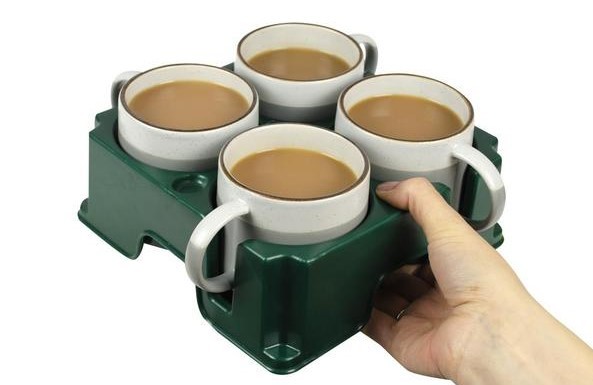
Introducing muggi, which has been described as the ‘world’s most versatile drinks carrier’. But could it be much more than that?
Conceived by Cornish innovator, David Trotter, while he was trying to transport multiple hot drinks around a ship during a force seven gale, muggi could be the saviour of a million office and living room carpets around the globe.
It could also prevent many trips to the burns unit.
Built from recycled marine, household and other plastics, this award-winning tray has been designed to ensure stability in challenging environments. It comes with handy spill catchers, non-slip feet and an 88-year guarantee, locking the carbon in for a lifetime.
Now, with support from Innovate UK Edge, which provides bespoke support to help innovative businesses grow and scale-up, muggi has revamped its business strategy, secured a business loan and expanded into the US market.
Find out more.
|
|
|
|
|