|
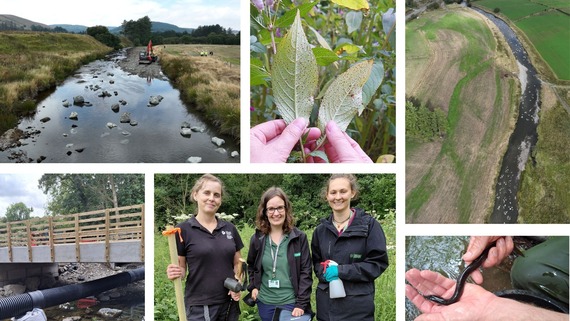 It’s been a busy summer for the Upper Wye Catchment Restoration Project, with some of our larger river restoration projects moving from planning into delivery, alongside continued work with farmers and landowners across the catchment.
In this edition, we take a look at two major pipe bridge replacement projects that will reconnect more than 18km of river habitat, and head to Llangurig where the first phases of an ambitious project to return boulders to the River Wye are underway.
Hilary shares some promising early results from our Himalayan balsam rust fungus trials, as well as an update on the other invasive plants we’ve been tackling. And, as we move from an exceptionally hot and dry summer towards autumn and winter, Bridie shares some practical thoughts on preparing farms for the change in conditions.
We’re also inviting you to come and meet the team at our upcoming Conversations with NRW event at the Royal Welsh Showground on 22 September.
Read on to find out more.
By Nickie and Susie
Two major pipe bridge replacement projects are underway that will reconnect more than 18km of river habitat, improve fish passage and restore more natural river processes.
We’re working in partnership with Powys County Council to replace two existing pipe or ‘Irish’ bridges on the rivers Cammarch and Duhonw, near Builth Wells, with new clear-span bridge structures.
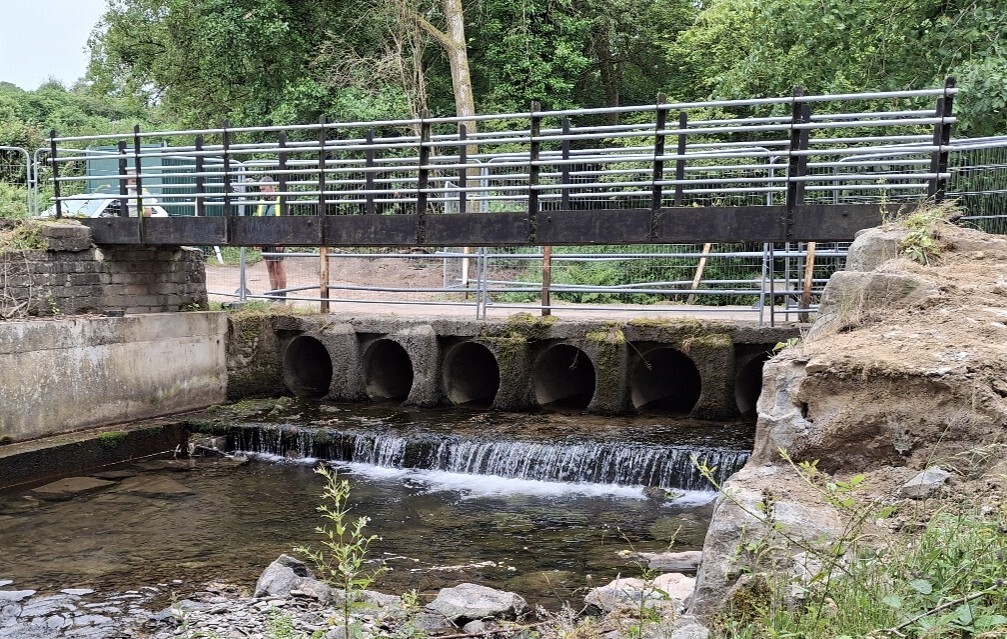 Photo: Wern Wyn before
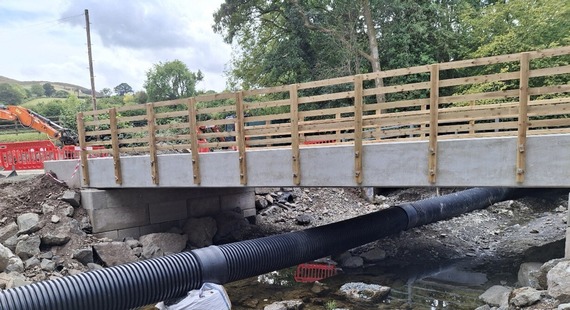 Photo: Wern Wyn – new clear span bridge during construction – black pipe carries the river water through the work site
The existing pipe bridges restrict the movement of fish and sediment and require ongoing maintenance due to gravel and woody debris blockages during high flows. The Wye and Usk Foundation have undertaken clearance for many years. Replacing the pipes with clear-span bridges will remove these barriers, allowing the rivers to function more naturally while also providing more resilient crossings for landowners.
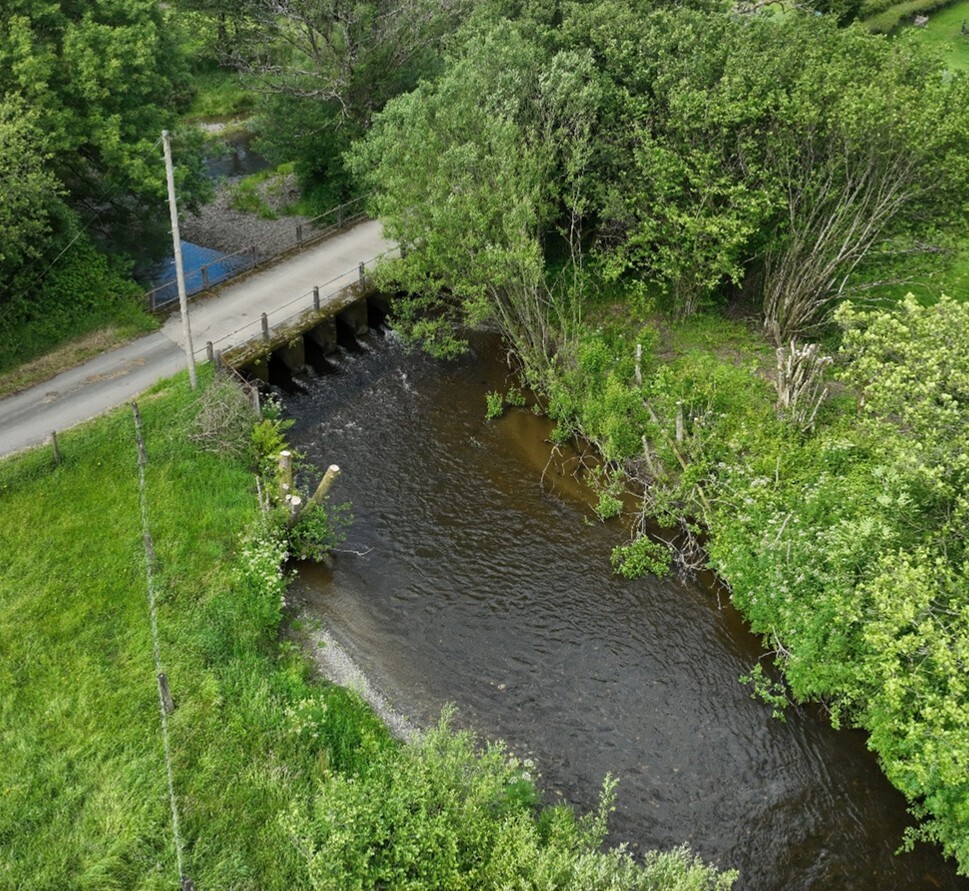 Photo: Lywn y Brain Pipe Bridge on the Cammarch before works began
The upper reaches of these Wye tributaries are vital spawning grounds for important and threatened species such as Atlantic salmon. Together, the projects will reconnect more than 18km of upstream habitat for species including Atlantic salmon, lamprey and bullhead, while restoring the natural movement of gravel and helping provide the clean riverbed habitat needed for successful egg survival.
Before construction began on the Duhonw at Wern Wyn, we needed to make sure the fish living within the work area were safely moved before the river was temporarily diverted.
Using electrofishing, our trained team carefully captured the fish, allowed them to recover and relocated them to suitable habitat downstream. We found 5 Atlantic salmon parr, 12 bullhead, 2 eels and around 50 trout fry and parr.
It was brilliant to see so many fish in this small area. It also demonstrated exactly why removing barriers like these matters. Once the new bridge is in place, fish will be able to move freely to use the habitat upstream.
These improvements are particularly important in light of the recent NRW assessment, which found that Welsh salmon remain in crisis, with all monitored rivers now considered at risk, highlighting the urgent need to restore access to vital spawning and nursery habitats.
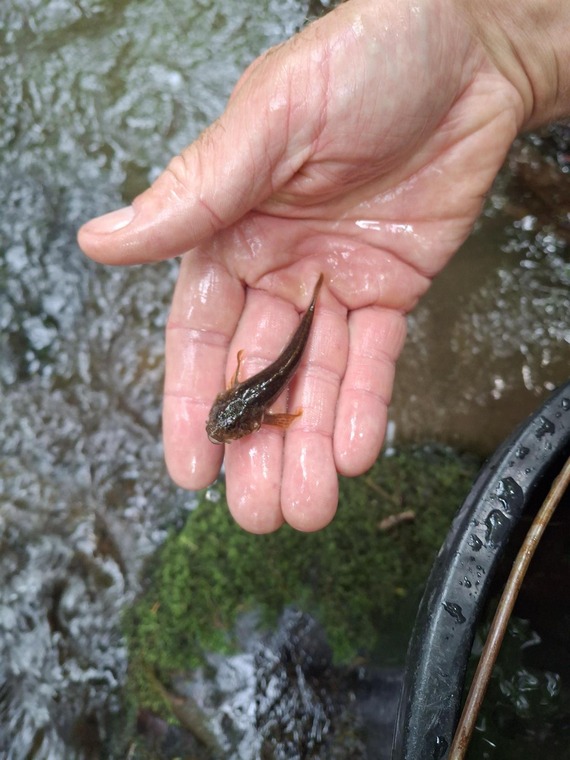 Photo: Bullhead found during the fish rescue
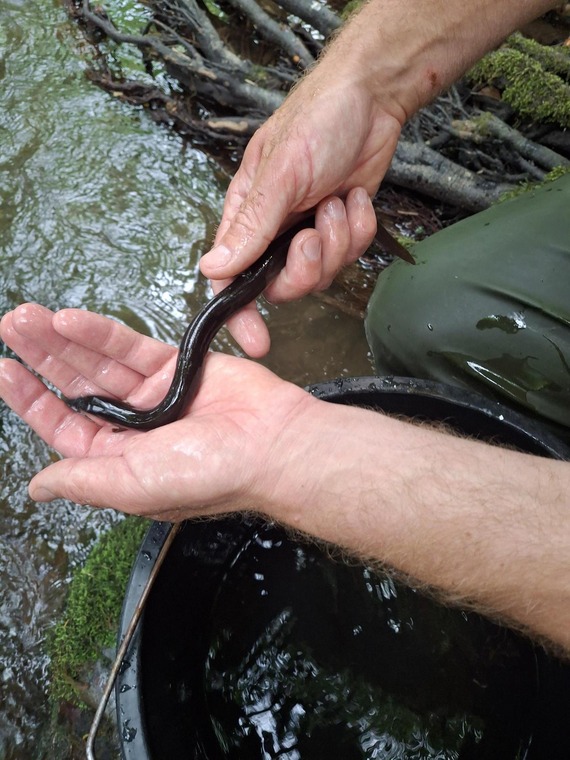 Photo: Eel found during the fish rescue
|
|
|
By Bridie
After a summer which has broken records for being one of the hottest, sunniest and driest since records began, it’s hard to imagine a return to rain-drenched pastures, bank-full rivers and mud underfoot… but it will come!
As we head into autumn, now is a good time to think about what can be done to prepare your farm for the wetter months ahead.
Weather-proof your soils
Well-structured soils act as a sponge, holding onto water and nutrients and helping prevent runoff.
Now is a good time to check soil structure and consider aeration in fields where compaction is limiting yields. For longer-term resilience, think about adding deep-rooting herbs and legumes and using rotational grazing management to allow soil biology and roots to do more of the work.
The Temporary Habitat Creation grant, opening in November, could also provide an opportunity to fund a multi-species ley next spring.
Plant trees and hedgerows
Trees and hedgerows provide valuable shade and shelter, improving livestock welfare and productivity as well as benefiting the wider environment.
Consider hedgerow planting across slopes to intercept water flow pathways and trees along riverbanks to provide shade.
For farms in the Sustainable Farming Scheme, a Tree and Hedgerow Planting Opportunity Plan is required by the end of this year. The Capital Environment grant in November could also support hedgerow planting and restoration and small-scale tree planting.
Secure your water supplies
After the summer we’ve just had, it’s also worth thinking about how you can make better use of the water that arrives over winter.
The Small Infrastructure grant, open now, can fund rainwater harvesting tanks – slowing the flow in winter while storing excess water for summer use.
The grant can also fund solar water pumps that feed multiple troughs, giving farmers more flexibility with grazing management and helping keep stock out of streams and rivers, with benefits for biosecurity too.
What could work on your farm?
Every farm is different, and there’s no one solution that will work everywhere. Farming Connect can provide lots of useful help and advice as well as support in accessing grants.You can find business advice and support through Farming Connect on the Business Wales website.
Our team can also help identify opportunities that suit your farm, your land and your business, while also helping improve the resilience of the Upper Wye, so please get in touch.
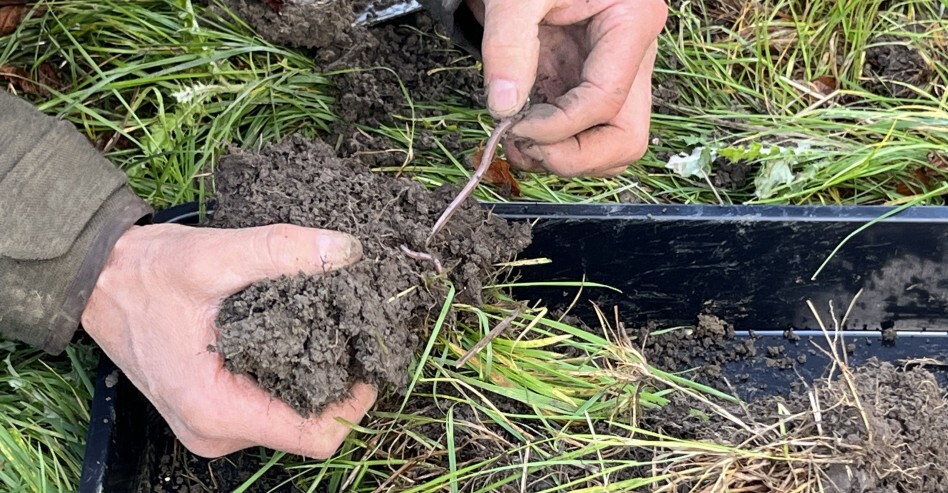 Photo: The Nature Friendly Farming Network launched The Weatherproof Farm in Wales early this year with practical ways to improve soil, pasture and productivity on your farm to boost resilience in the face of extreme weather. Their information booklet can be accessed by members and membership is free.
|
|
|
By Hilary and Nickie
This summer we’ve been trying something a little different in our efforts to tackle Himalayan balsam in the Upper Wye – a microscopic rust fungus from the plant’s native range in the Himalayas.
We’ve begun trials with specialists from CABI to see whether this biological control could help us manage Himalayan balsam over the longer term. The rust is specific to Himalayan balsam and, if it successfully establishes, can reduce the vigour, density and seed production of the plant, giving native vegetation a better chance to recover along our riverbanks.
In June, CABI joined Nickie and me in the field to train us in the inoculation and monitoring procedures at our two trial sites in the Irfon and Aran catchments. It was great to spend a day with their specialists and to try something a little different as part of our invasive species work.
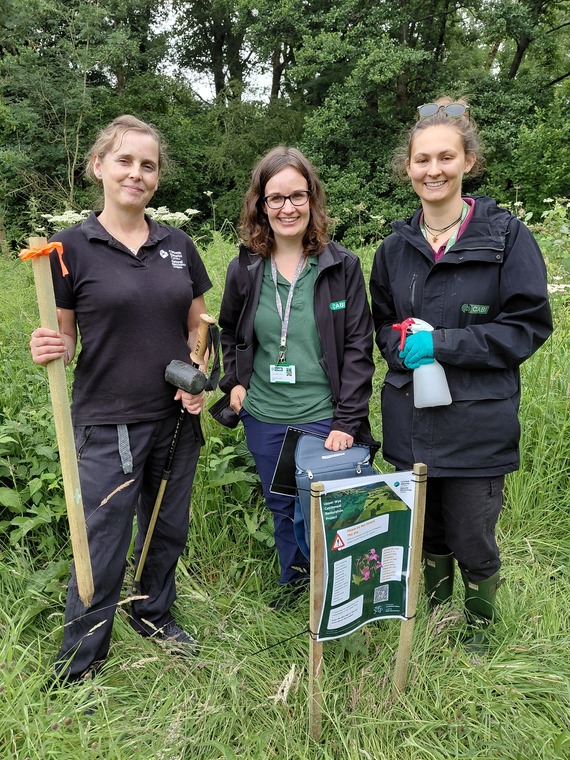 Photo: Hilary with the CABI team at the first inoculation site in June
We’ve now completed two rounds of inoculation and monitoring and we’re thrilled to have seen a good rate of initial infection.
There’s still a long way to go. Crucial next steps include seeing whether the rust spores can overwinter within fallen leaves, infect Himalayan balsam seedlings next spring and gradually spread beyond the original trial plots.
The trial will run over three years, so it’ll be a while before we know if it has been fully successful, but the signs so far are promising. We look forward to bringing you another update in the spring!
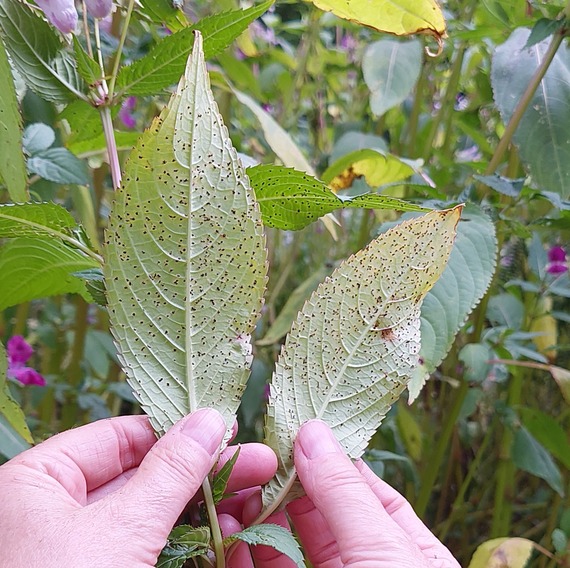 Photo: Leaves with a high infection rate of rust pustules during the August monitoring visit
Tackling Japanese knotweed on the Cammarch
This September, our contractors from the Wye & Usk Foundation have been getting their steps in!
The team has been out and about across the Cammarch catchment, a tributary of the Afon Irfon, treating more than 50 sites affected by Japanese knotweed.
Covering such a large area is no small task, so a big thank you to the Wye & Usk Foundation and the many landowners involved for helping us tackle one of the most invasive plant species in the Wye catchment.
If you spot Japanese knotweed around the Afon Cammarch, get in touch with us at RestoreUpperWye@NaturalResources.Wales, with the location and ideally some close-up photos of the leaves and stems.
American skunk cabbage
We’ve also continued tackling American skunk cabbage, with before and after photographs showing the results of the work so far.
We’re not finished yet. Smaller plants growing as offshoots from the main plant will continue to be targeted, and we expect these younger plants to die back more easily when we return to tackle them next year.
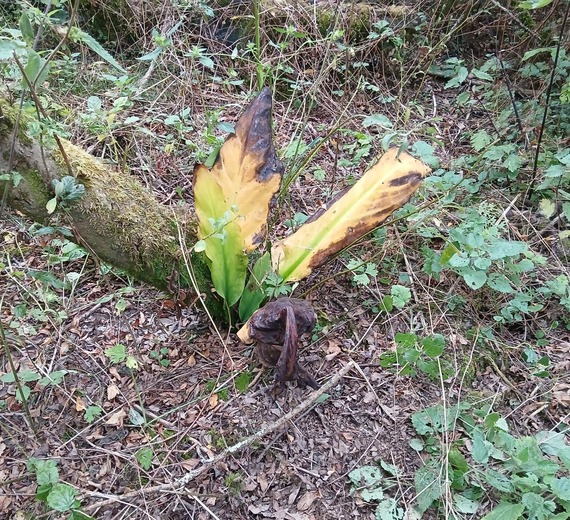 Photo: American Skunk Cabbage plant on the Marteg catchment dying back after herbicide treatment
|
|
|
By Brendan and Henry
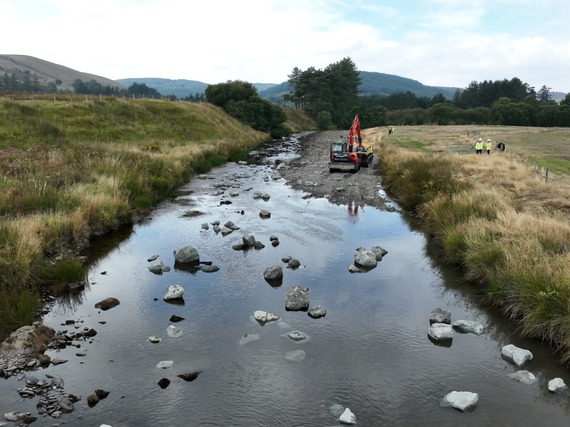
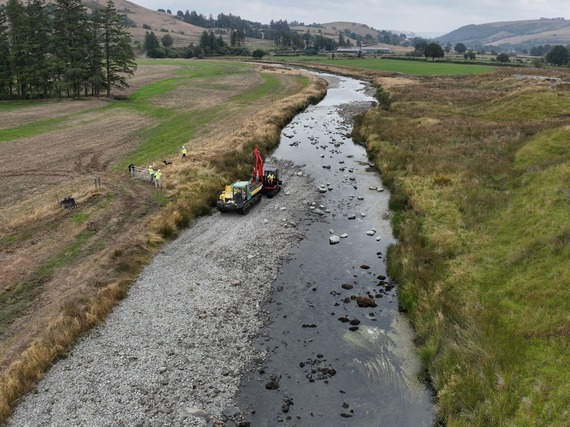
After two years of planning and baseline monitoring, it’s great to finally see boulders going back into the River Wye at Llangurig.
We’re restoring an important seven-kilometre stretch of the Wye by reintroducing large quantities of local rock as various sized boulders. Boulders are a natural feature of upland rivers, but many were historically removed from this stretch, leaving sections with simplified flows and fewer natural habitats.
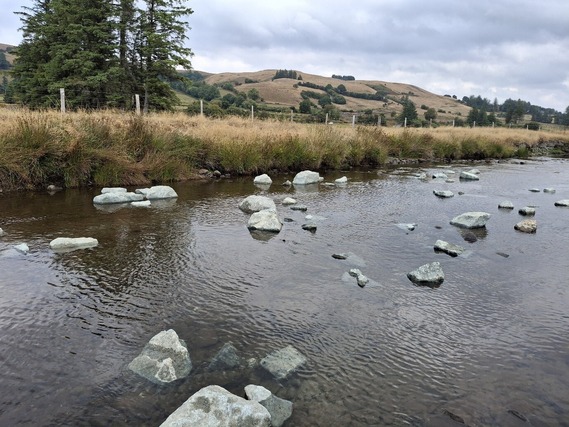 Phase one is now complete, with approximately 95 tonnes of boulders reintroduced. They’ve been placed in an irregular pattern, emulating nature to create a varied channel with riffles, pools, faster currents and areas of quieter water.
 For us, one of the really interesting parts of this work is what it could mean for young salmon. Our monitoring has found abundant salmon fry in the area, but poor survival into the older parr stage. A lack of boulder cover and varied habitat contributes to limiting their ability to feed, shelter and grow.
 By breaking up the flow, boulders create shelter from strong currents and predators, feeding areas and deeper pockets of water. These provide refuge for fish and other wildlife during both summer low flows and winter floods, while the greater variety of habitat also benefits aquatic plants and invertebrates that fish rely on.
We’ve spent two years gathering baseline information, so now we’ll be able to monitor what happens next and see whether the restored habitat makes a difference to juvenile fish survival.
And the boulders are only one part of the story at Llangurig.
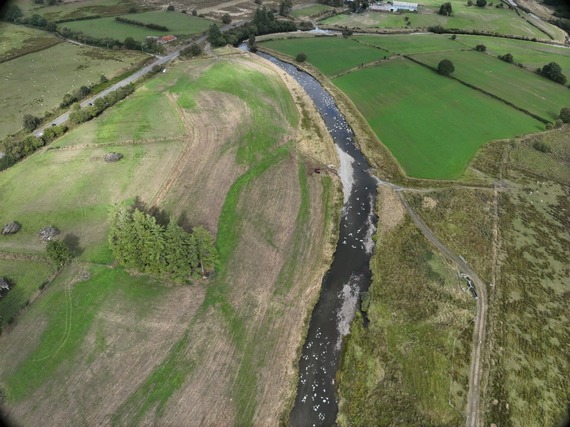 Photos: Boulders going back into the River Wye at Llangurig
We’ve also been working with farmers and landowners along this stretch on riverside tree planting, fencing and buffer strips, helping protect riverbanks, provide future shade and reduce soil, nutrients and pollutants entering the Wye.
Nearby at Welsh Government’s Tarenig Forest, we’ve also been slowing the movement of water through drains and ditches using forestry offcuts.
Together, all these measures are tackling different pressures on the same stretch of river – working on the surrounding land as well as within the channel itself.
Phase two gets underway this month, adding further boulders in the areas where they are lacking, with more phases to follow.
|
|
|
By Daisy
Fancy coming to talk to us about what’s happening in the Upper Wye, or another environmental issue that matters to you?
Our next Conversations with NRW event is taking place at the Royal Welsh Showground in Builth, and our Upper Wye Catchment Restoration Project team will be there.
-
Date: Tuesday 22 September 2026
-
Time: 4:30pm–6.30pm
-
Location: International Pavilion Upstairs, Royal Welsh Showground, Llanelwedd, Builth Wells, LD2 3SY
It’s an informal, marketplace-style event where people from across mid-Wales can speak directly with NRW staff and Board members, ask questions, share ideas and concerns, and talk about the environmental issues affecting their local area.
For our Upper Wye team, it’s also a chance to catch up with people we’re already working with and meet some new faces.
Whether you’re a farmer or land manager, represent a local organisation or community, already know our project well or simply want to find out more, come and have a chat with us.
We’re keen to hear about the challenges and opportunities you’re seeing on the ground, talk about the work happening across the Upper Wye and explore where we may be able to work together.
There’s no need to stay for the whole event – just drop in at any point between 4.30pm and 6.30pm. Parking is available on site.
We hope to see you there!
From new bridges and hundreds of tonnes of boulders to microscopic rust fungi, this edition gives a good sense of just how varied river restoration can be.
What links all of this work is collaboration. Whether we’re replacing a barrier, restoring habitat within the river, tackling invasive species or making changes on surrounding farmland, we rely on farmers, landowners, contractors, local organisations and communities to make it happen.
A big thank you to everyone who has worked with and supported the project over another busy summer.
There’s plenty more planned as we head into autumn and winter, and we’ll keep sharing progress along the way.
|
|
|
The Upper Wye Catchment Restoration Project #RestoreUpperWye is funded by Welsh Government’s Nature and Climate Emergency Fund, part of the Water Capital Programme, to restore the condition of the upper River Wye.
The overall aim of this project is to protect species and enhance habitats by addressing a range of pressures affecting the river.
If you’d like to be added to our mailing list for future updates, please let us know via the email below.
If you’d prefer a paper copy of the newsletter, do get in touch.
Email: RestoreUpperWye@NaturalResources.Wales
Web: Upper Wye Catchment Restoration Project Website
Social Media: Facebook, Instagram, X
And if you’d rather speak to us face-to-face, don’t forget to come and find us at Conversations with NRW on Tuesday 22 September.
|
|
|
|
|