|
 Spring is here, and with it comes new shoots, spring lambs and higher water levels along the upper Wye. In this edition, we bring you a snapshot of work happening across the catchment: planning for drier months, invasive species control, tree planting with Coed Cadw, the Woodland Trust in Wales and an introduction to our new Agri Officer, Bridie.
As always, the articles below are written by members of the project team — sharing updates from the riverbanks, farmyards and forests where this work is happening every day.
Spring is a key time for putting measures in place that help both farms and rivers cope with the warmer, drier months ahead.
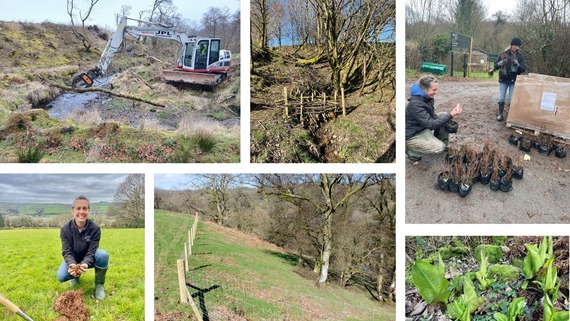
Along the upper Wye near Llangurig, our recent work on farms has focused on holding more water in the landscape and improving resilience to changing conditions. This includes tree planting, fencing, habitat creation and a range of measures designed to slow the flow of water.
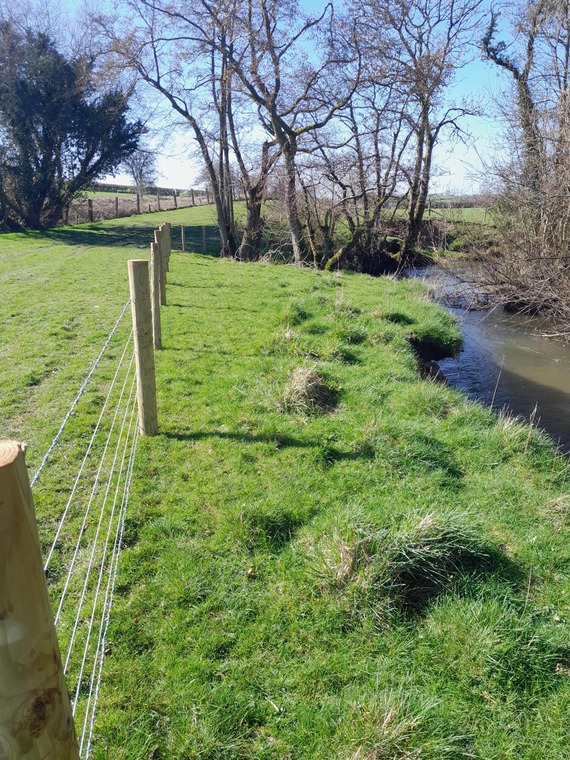
At one farm, over 2,000 native trees have been planted within a fenced buffer zone, helping to stabilise riverbanks, provide shade and create habitat. At their neighbouring farm, further tree planting and over a kilometre of fencing are protecting riparian areas while improving farm management.
Innovative techniques are also being used to tackle erosion. Sections of riverbank have been reinforced using live willow stakes, which will take root and provide long-term stability in areas where fencing is not suitable.
Further across the catchment, ‘slow the flow’ measures are being delivered to retain water on the land for longer. These include placing wood in small watercourses, creating ponds and swales, and intercepting runoff through bunds and planting.
On a farm on the River Ithon, a series of interventions — including leaky dams, wetland creation and drain blocking — have been installed to reduce peak flows and store water within the landscape.
These measures help soils retain moisture, supporting grass growth and maintaining flows in rivers during dry periods. Alongside this, good soil management and vegetation cover remain key to building long-term resilience on farms.
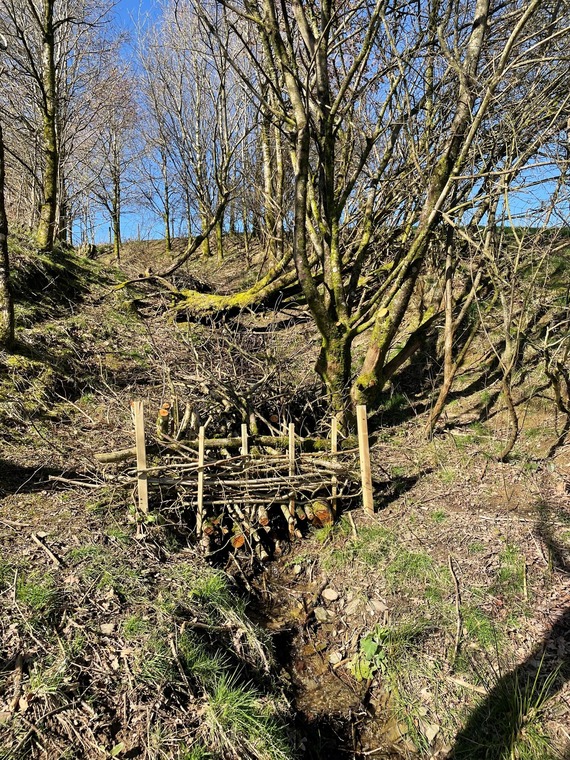 Photo: Installing leaky woody dams to slow high flows and trap sediment
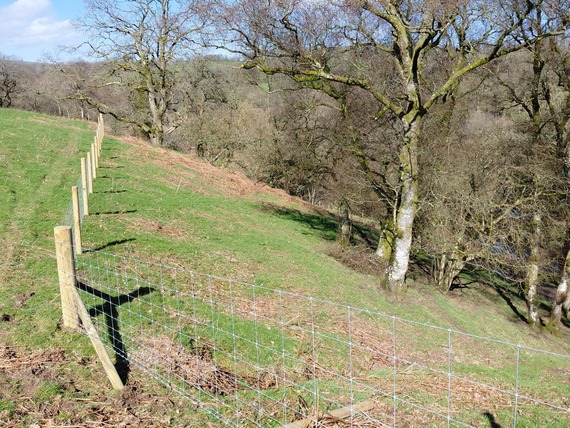 Photos: Newly fenced buffer zones helping to stabilise riverbanks, provide shade and create habitat, while keeping stock out of the channel
|
|
|
As the first signs of spring emerge, so too do invasive non-native plant species — and with them, the start of a busy season of control work.
Following extensive survey and treatment over the past two years, we now have a clear and targeted programme of work for the summer ahead. Our approach focuses on locations where intervention can deliver the greatest long-term benefit, particularly in preventing the spread of high-risk species into the main River Wye.
A major focus remains the control of American skunk cabbage, particularly in the headwaters of the River Marteg where it has become well established. Work will also continue at smaller, isolated sites across the catchment to contain and reduce its spread.
Elsewhere, targeted treatment is planned for giant hogweed near Builth Wells and Japanese knotweed on the Cammarch. Himalayan balsam will once again be a key priority, with manual removal planned on both the Cammarch and the River Aran.
This year, we’re also looking to build more community involvement in this work. Tackling Himalayan balsam in particular relies on people power and we are currently developing a volunteer day for later this summer — more details will be shared soon!
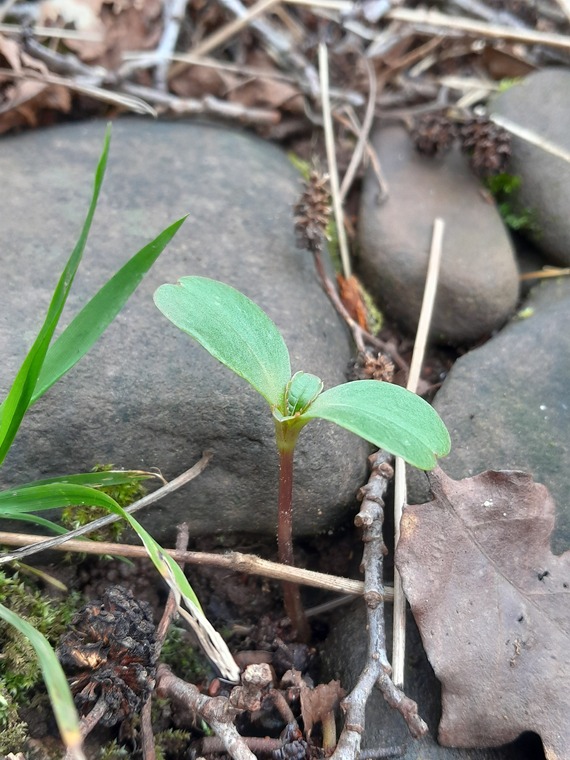 Photo: Himalayan Balsam seedling emerging in early spring
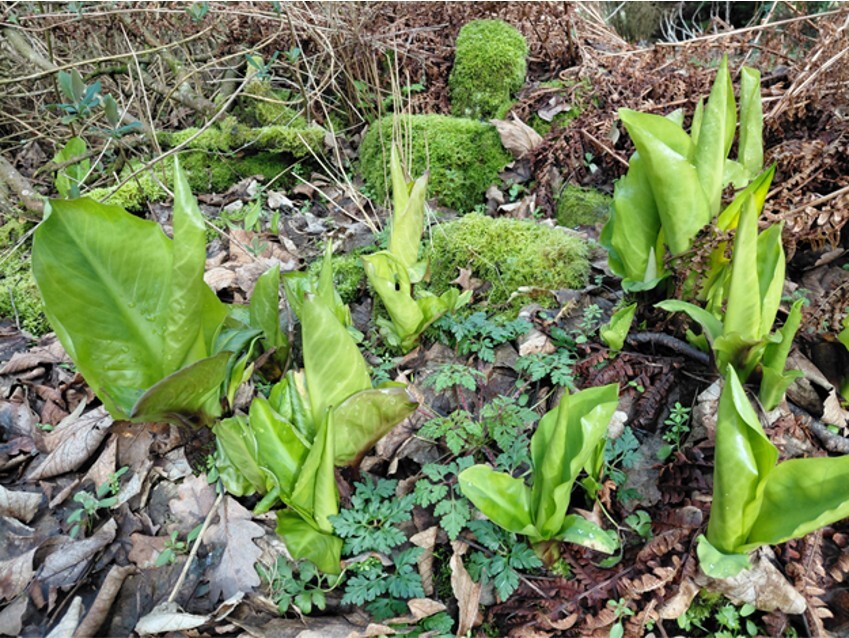 Photo: American Skunk Cabbage emerging during early spring
|
|
|
On 14 March, Natural Resources Wales marked the International Day of Action for Rivers — a global moment to recognise the importance of healthy rivers and the need to protect them.
Across Wales, rivers are under increasing pressure from climate change, pollution, habitat loss and barriers to fish movement. In response, NRW is delivering a programme of restoration projects that work with natural processes to improve river health at a catchment scale.
Here in the Upper Wye, that work is being delivered in partnership with farmers and landowners. Since the project began, a wide range of improvements have been carried out — from tree planting and riverbank protection to habitat creation and slow the flow measures.
This work forms part of a wider effort across Wales, including restoration projects on rivers such as the Dee, Teifi, Tywi and Usk. While each project is rooted in its local landscape, all share a common goal: to restore rivers so they can better support wildlife, communities and the challenges of a changing climate.
International Day of Action for Rivers is a reminder that this work matters — and that long-term, collective action is essential to securing the future of our rivers.
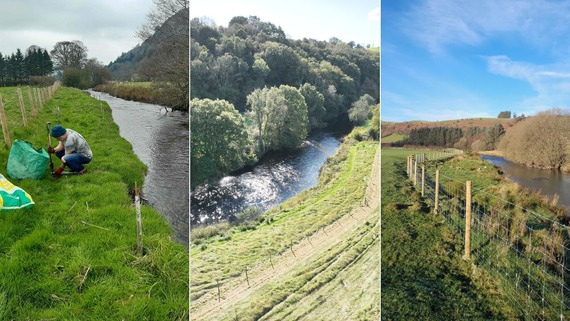 Photo: NRW river restoration — from left to right: LIFE Dee River, Four Rivers for LIFE, and the Upper Wye Catchment Restoration Project
|
|
|
Bridie joined the project in January as our new Agriculture Officer, bringing a background in farming and a passion for working with landowners to support the environment.
Having grown up on a dairy farm on a tributary of the River Wye, Bridie has a deep understanding of the challenges and opportunities facing farm businesses. Her career has included running her own free-range egg enterprise, working with the Soil Association as a farm inspector, and more recently advising farmers across the Wye catchment with the Wye and Usk Foundation.
Her work on the project focuses on supporting farmers to deliver practical improvements to land management that benefit both the farm and the river. This includes advice on soil health, nutrient management and resilience to changing weather conditions.
The Upper Wye Project has fully funded the supply and installation of two weather stations on the Ithon catchment, and Bridie has been supporting Dŵr Cymru Welsh Water to locate these on farms in their water stewardship groups. The weather stations will provide accurate local data to help farmers make informed decisions and reduce the risk of nutrients being lost to the river.
As Bridie explains, “The joy of working on projects like this is finding the win-wins — where what’s good for the river is also good for the farm.”
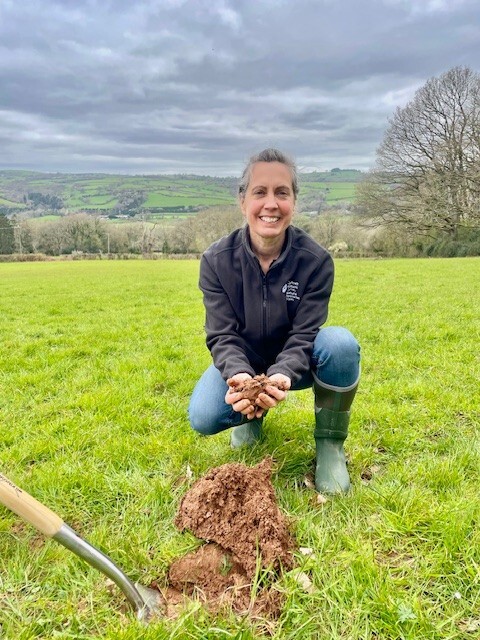 Photo: Bridie, our new Agri Officer
|
|
|
With Senedd elections approaching in May, it’s a good moment to reflect on how the Upper Wye Catchment Restoration Project is helping to turn Welsh Government priorities into practical action on the ground. Our work aligns closely with NRW’s Corporate Plan to 2030, which aims for “nature and people thriving together.”
These national priorities are reflected in the way we work locally — through partnership, co-design and a focus on long-term outcomes. Across the catchment, this means working directly with farmers to deliver tailored, fully funded improvements that benefit both the river and the farm business.
How we translate priorities into local action:
- Climate resilience: ‘Slow the flow’ measures, pond creation and riparian tree planting slow water flows, reduce flood peaks and buffer against drier months.
- Nature recovery: Restoration of riverbanks, wetland features and native tree planting improves habitats for fish, amphibians, invertebrates and birds.
- Sustainable Farming Scheme (SFS): Advisory visits and practical interventions help farms reduce nutrient loss, improve soil health and enhance landscape resilience. Any changes that are implemented can support and contribute to SFS actions.
Taken together, this work shows how national policy can be delivered in a way that is practical, collaborative and grounded in the realities of managing land in the upper Wye.
Our catchment-scale approach ensures that these priorities are not just policy statements but visible, tangible improvements for our rivers, wildlife and communities.
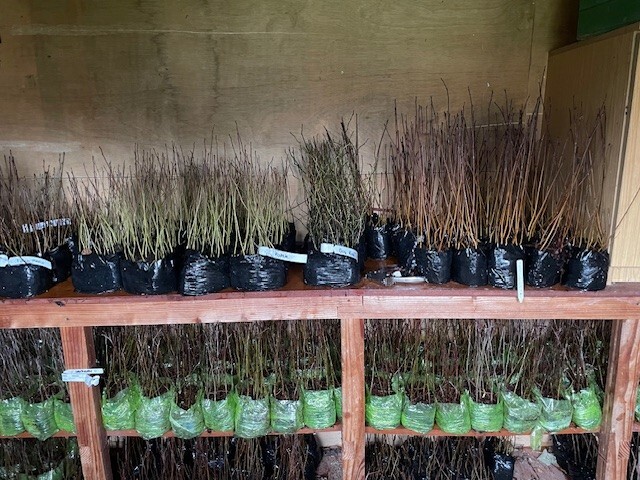
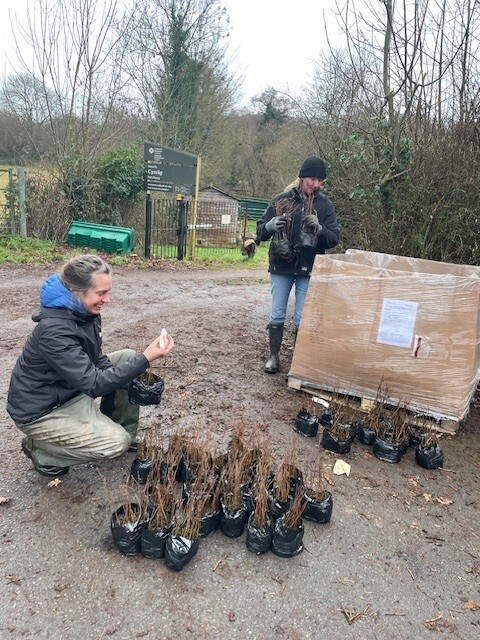 Photos: Thanks to our new partnership with Coed Cadw, the Woodland Trust in Wales, thousands of young trees arrived this spring — shown here being unloaded and stored ready for planting on farms across the catchment
|
|
|
The Upper Wye Catchment Restoration Project #RestoreUpperWye is funded by Welsh Government’s Nature and Climate Emergency Fund, part of the Water Capital Programme, to restore the condition of the upper River Wye.
The overall aim of this project is to protect species and enhance habitats by addressing a range of pressures affecting the river.
If you’d like to be added to our mailing list for future updates, please let us know via the email below.
If you’d prefer a paper copy of the newsletter, do get in touch.
Email: RestoreUpperWye@NaturalResources.Wales
Web: Upper Wye Catchment Restoration Project Website
Social Media: Facebook, Instagram, X
|
|
|
|
|