|
|
Welcome to the winter issue of the LIFE Dee River newsletter
Our progress to date...
- 20,000 trees planted
- 8,430 tonnes of gravel, boulders and woody material introduced into the river
- 840 metres of natural bank stabilisation
- 46.5km of riverside fencing completed
- 14 forest drain culverts upgraded
- 13 barriers removed or altered
- 1 new forestry river crossing installed
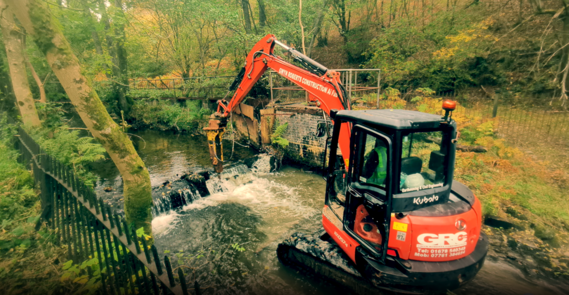
One of the main aims of the project is to improve fish passage for migratory fish, such as salmon and sea trout, to and from their spawning areas by removing or modifying obstacles such as weirs in the River Dee and its key tributaries.
Our River Restoration Officer identified one such obstacle as a weir on the River Teirw flowing into the River Ceiriog, and an associated smaller secondary weir on an adjacent side stream. These weirs have been redundant for over 30 years, formerly part of a water conveyance scheme, piping clean water down to the villages of Pandy and Glyn Ceiriog.
The two weirs impact fish passage and other aquatic biodiversity, and stop the movement of river gravels and sediment. The aim was therefore to restore natural river processes along this stretch of the River Teirw. During a visit with the contractor prior to the work, two fish were seen trying to jump the main weir but failing, proof of the difficulty for fish passage here.
Both weirs were removed to bed level using a machine with a pecker and excavator bucket. The location is remote from any dwellings or roads. As such, there will be no impact while the channel bed adjusts to its new level following the removal of each weir. A section of fencing and a swing gate over the river were also installed to prevent sheep movement in the watercourse.
The work was done under Notice and through an Ordinary Water Course Consent with Wrexham County Council. The cooperation of the council and the local landowners is gratefully acknowledged, as is the efficient and neat work of the contractor.
These were additional weirs to the initial project objectives - their removal demonstrates the effectiveness of a dedicated team and skilled contractors able to deliver in-river works.
|
|
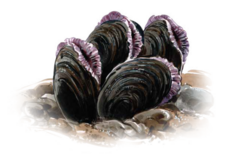
Freshwater pearl mussels are extraordinary creatures that can live for over 100 years. They help keep rivers clean by filtering up to 50 litres of water a day, but sadly, they’re now critically endangered in Europe. In the Dee catchment, only a tiny population remains. No young mussels have been seen for years, due to poor water quality and loss of habitat.
This fragile population, one of the last remaining in Wales, is too small to recover on its own and requires captive rearing and release to help it survive in future. We’ve taken adult mussels to a special hatchery where they can breed safely, until they are ready to be released back into the river.
In preparation for when the young mussels return, we’ve restored a 300 metre section of the River Alwen at Llanfihangel Glyn Myfyr by creating a habitat rich in gravels, boulders and woody material to help them grow and thrive. They need clean, fast flowing water with a stable riverbed and plenty of structure such as stones and logs, which will provide pockets of protected habitat to shelter from high flows.
Working closely with the landowner, large woody material was fixed in the channel and 60 tonnes of gravel was placed at the upper end of the site ready for the winter flows to distribute it naturally downstream. In addition to the material placed in the channel, the whole section was fenced out with heavy duty panel fencing to prevent access to the river as its adjacent to a picnic and play area. The site is now ready for the reintroduction of freshwater pearl mussels in late spring or early summer this year.
By restoring these natural features, we’re giving the freshwater pearl mussel a fighting chance. This work doesn’t just help one species, it benefits the whole river ecosystem, making it healthier and more resilient for generations to come. You can listen to our Project Officers explaining the fascinating lifecycle of the pearl mussel here.
With many thanks to Llanfihangel Glyn Myfyr Community Council for their cooperation in delivering this project.
|
|
|
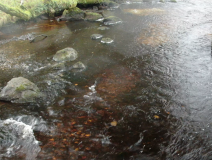
We have exciting news from the Afon Tryweryn! For the fourth year running, salmon have been seen spawning on the gravel that we’ve been regularly introducing in this section of the river as part of the project. You may remember us mentioning in our last newsletter that in the autumn we were introducing several hundred tonnes of gravel here, which is vital for fish spawning as it provides a clean, well-oxygenated environment to bury eggs and creates sheltered habitat for fry to develop safely. We’re delighted to see that these efforts are making a difference, and that salmon are indeed spawning in these areas.
This winter is the first time we’ve managed to capture drone footage of fish spawning here, but we didn’t want to get too close to avoid disturbing them so it may be tricky to spot clearly in the video. The light patches of gravel on the riverbed are the redds - the areas which have been disturbed by a hen (female) salmon as she creates a depression in the riverbed into which she will lay potentially several thousand eggs.
This is great news for the project, and shows how important it is to have the continuous introduction of gravel below a reservoir to ensure good quality spawning habitat.
|
|
|
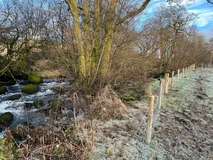
Riverside corridors are very effective at excluding stock from poaching the banks and reducing sediment and nutrients from entering the Dee. The corridors act as buffer strips that protect the river as well as encouraging the riverside ecosystems to flourish.
This winter, a total of 2.6 kilometres of riverside corridor has been created in the upper catchment. This includes 1,000 metres of fencing extending from our previous work on the Afon Mynach, and the installation of a solar pump water system which will exclude all livestock from this section of river.
In addition to the Mynach work, a small un-named tributary which enters the Afon Tryweryn some 100 metres below the Mynach confluence has been completely fenced off. The landowner here will provide an alternative water supply to livestock in the surrounding fields. This type of small tributary is very important to the catchment as trout and sea trout use these areas to spawn. Fish up to 3lb have been seen spawning in this stream in the past!
The last section of fencing in the upper Dee this winter is a 500 metre stretch on the main river at Ty Isaf. This riverside corridor is a continuation of previous fencing we’ve completed here with other landowners, and we’re pleased to say that this now means the whole area upstream of Bodweni has been fenced all the way to Bala. This recent scheme also includes a solar powered watering system, and will exclude dairy cattle from entering the watercourse.
With thanks to all the landowners we’ve worked with in this area to achieve such an extensive length of continuous fencing in the upper catchment.
|
|
|
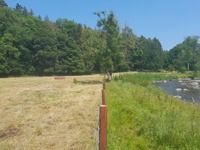
Having worked on the LIFE Dee River project as Land Management Officers for four years, we asked Tom and Ifor to summarise some of their highlights during the project and share a snapshot of their day to day roles, from farm yard improvements to culvert upgrades, and installing forestry crossings to creating natural bank stabilisation.
“Working as a Land Management Officer on the LIFE Dee River project gave me the chance to spend a lot of time out on the ground, working directly with farmers, foresters, and partner organisations across the Dee catchment. The role was varied and practical, combining site visits, problem-solving, and organising delivery, all with the shared aim of improving water quality and supporting more sustainable land management.
“Much of my time was spent identifying where small, targeted changes could make a real difference - whether that was improving farm infrastructure, reducing run-off into rivers, or upgrading forestry tracks to better manage water during heavy rainfall. It was a role that required flexibility, good communication, and an understanding of how environmental goals fit into day-to-day land management…”.
|
|
|
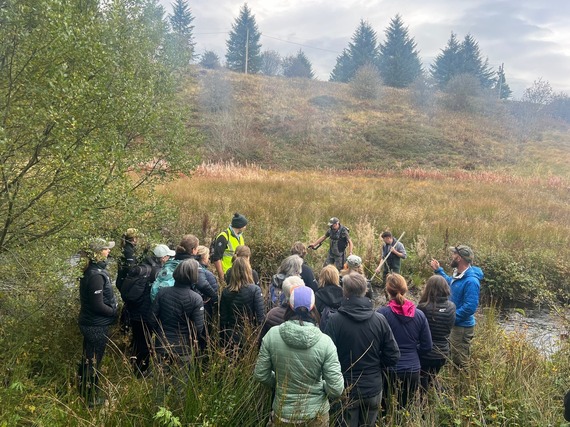 Dee Conference
In October, we hosted a joint event with cross-border partner organisations at Storyhouse in Chester - ‘Working Together for the Dee: A Riverwide Environmental Conference’. The aim of the conference was to drive forward the recovery of the Dee through collaborative working across the entire catchment, sharing knowledge and identifying new opportunities to work together. Read more about the conference here.
National Parks Ecologists’ Conference
One of our project partners, Eryri National Park Authority, hosted the National Parks Ecologists’ Conference in Bala last October, and we were thrilled that they chose to focus their field visit on the work of the LIFE Dee River project.
We had a fantastic day welcoming over 20 ecologists from across the UK to explore our sites and see first-hand how we’re restoring habitats, improving river connectivity, and supporting biodiversity along the Dee. Take a look at the highlights video through the button below.
Dam Removal Europe Case Study
Thank you to Dam Removal Europe for featuring our weir removal work at Erbistock as a detailed case study on their website. You can read the full case study here.
Eryri Ambassador Scheme
The Eryri Ambassador Scheme is an unique training opportunity to learn about what makes Eryri exceptional and playing a part in protecting the National Park for generations to come. We’re pleased that the work of the LIFE Dee River project has been included within the Diverse Landscapes module in the training course, which can be accessed here.
|
|
 2026 promises to be a very exciting year as we start work on three key fish passage schemes, all of which have been several years in the planning phase.
- The first of these is the creation of a bypass channel at Horseshoe Falls, following planning permission approval in late 2025. We are looking forward to improved fish passage at this site for the first time in over 200 years. We expect the work to take several months on site and have been working closely with the landowners and fishing club to minimise disruption.
- The second scheme to be delivered this year is Chirk weir. We will be installing a Larinier fish pass and better screening at the site, to improve fish passage for salmon and sea trout.
- Finally, we will be improving lamprey passage at Manley Hall gauging weir. Following surveys last year, it was clear that this is now the upstream barrier for river and sea lamprey, so improving passage past this point is vital to the future survival of these SAC species.
Visit our webpage for all the latest news about the project, or follow @LIFEAfonDyfrdwy on Facebook and Instagram to find out what we’ve been up to recently.
Email: lifedeeriver@cyfoethnaturiolcymru.gov.uk
|
|
|
|
|