|
Don’t wait for bad weather to get ready for flooding - think about what you would do in a flood, to plan and take action.
- Do you know how to turn your gas, water and electricity off?
- Think about how water would enter your house, and what you could do to stop it. For example, what could you use to block any air bricks, toilets, sinks or drains?
- Think about the damage water could cause if it entered. Could you move rugs, furniture or sentimental items out of the way, just in case? Where would you put them, and would you need help?
- If you have flood protection equipment in your house, read the manufacturer’s instructions, familiarise yourself with how it works and if you need to do anything to check it’s working correctly.
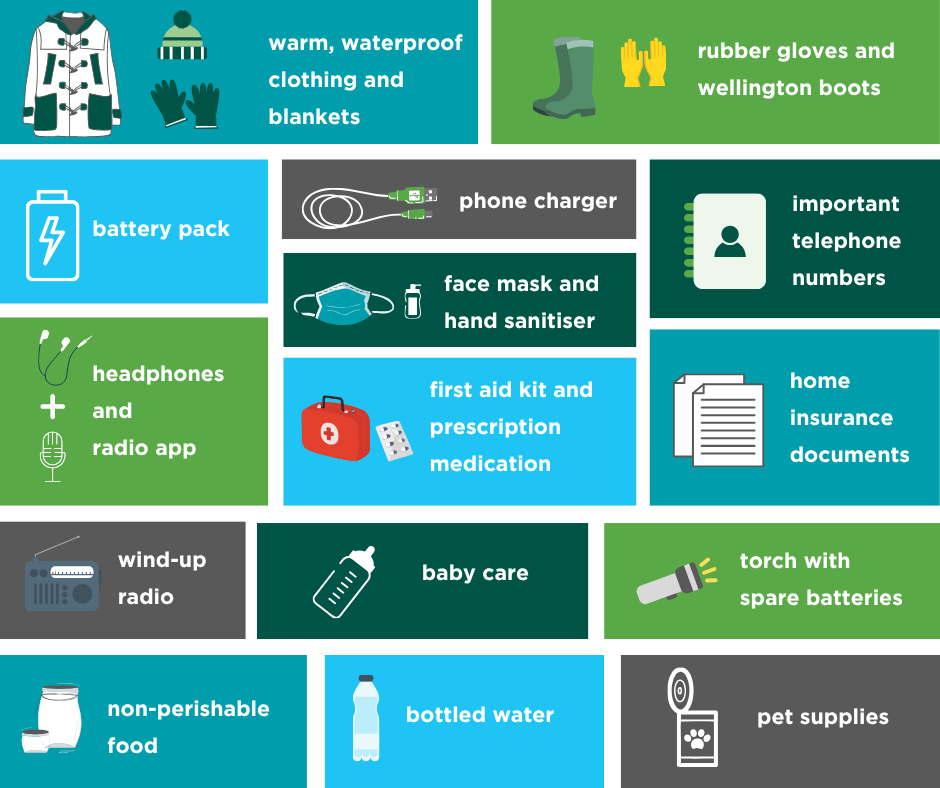
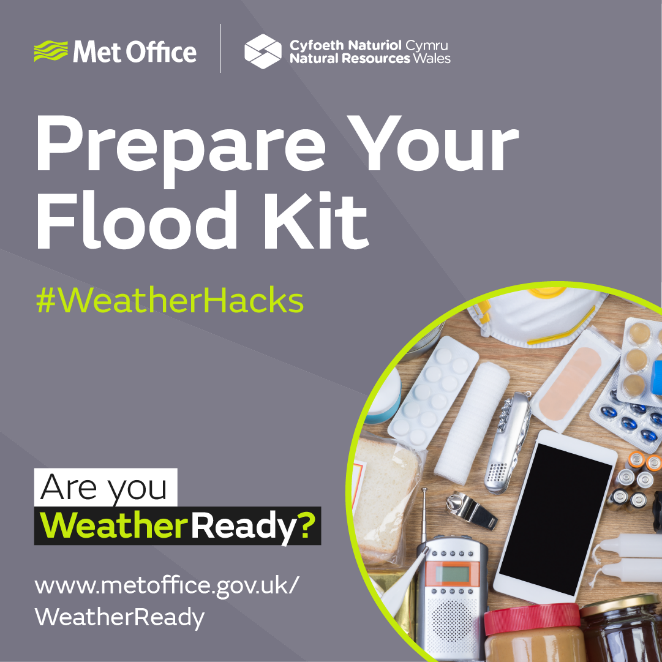
- Prepare an emergency kit of important items you would need if you had to leave your home. What would you need if you couldn’t go back home for some time?
 You should never walk or drive through floodwater.
Turn around and find another route if a road is flooded, and respect road closure signs.
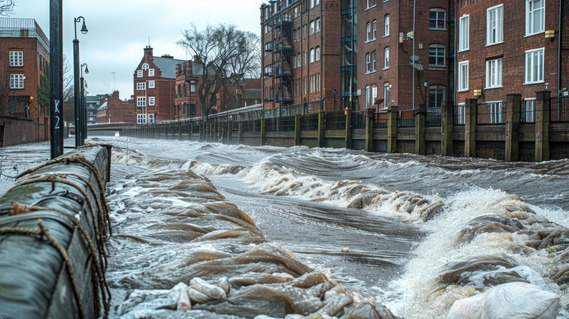
Driving through floodwater is not only dangerous for yourself, but it can also worsen the problems of flooding in an area, as a vehicle driving pushes waves of floodwater towards buildings.
Plan ahead and check disruptions with:
- Local authorities for roads
-
Traffic Wales for motorways and trunk roads or call 0300 123 1213
-
Traveline Cymru for trains and buses or call 0800 464 0000
The Met Office have shared advice from the experts at National Highways, RAC and the Institute of Advanced Motorists about driving in severe weather.
A 1 in 100 year flood does not mean that we will only see this event every 100 years.
It is derived theoretically and means that the area has a chance of flooding of 1% in any one year.
We estimate flood risk based on the likelihood of flooding for an area, including the presence of any defences in an area.
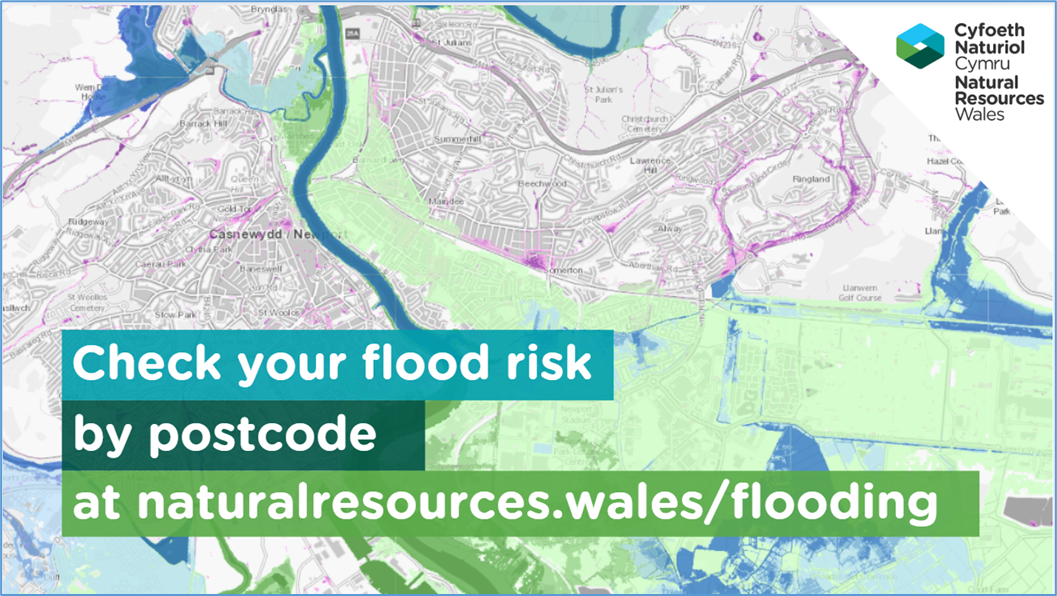
Check your flood risk online at naturalresources.wales/flooding
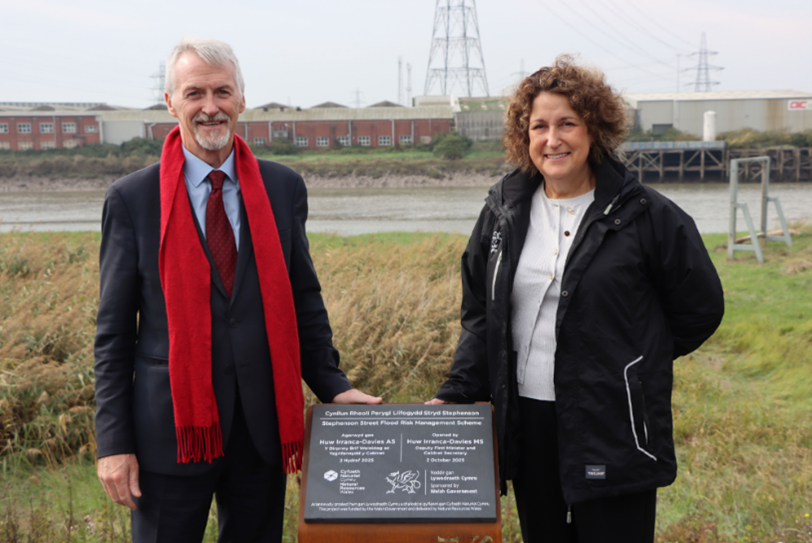
On Thursday 2 October, the £25 million Stephenson Street Flood Risk Management Scheme in Newport was officially opened. This was a major milestone in NRW’s work to make communities more resilient to the accelerating impacts of climate change.
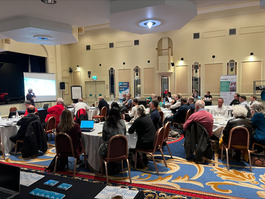
The scheme was officially opened by Deputy First Minister Huw Irranca-Davies MS, with guests including those involved in delivering the scheme, local elected representatives, businesses, media, and civil engineering students from Coleg Gwent.
 The scheme reduces flood risk to more than 2,000 homes and businesses in the Lliswerry area and includes strengthened embankments along the River Usk, over 700 metres of sheet piling, new flood walls, a flood gate, and a new highway to improve resilience and access during a flood event. You can read more here.
Naturesave Trust is offering grants to promote biodiversity. Grants of up to £5,000 are available to charities, social enterprises, and community groups for projects that connect communities with nature, aiming to improve physical and mental wellbeing while fostering positive action on climate change. Eligible initiatives may include arts and cultural activities, community gardening, green gyms, mental health support, conservation volunteering, green skills training, and efforts to enhance access to urban and natural green spaces. Applications are open until 12pm on 27 November 2025. Check the guidelines and apply online.
Below are messages provided on behalf of others, which may be of interest to you.
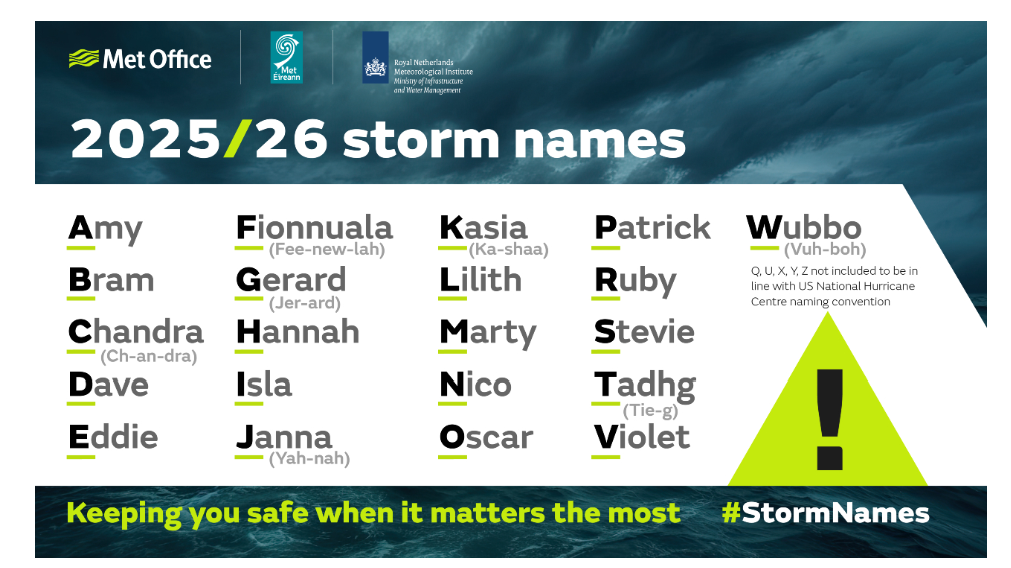
At the start of September, the Met Office announced new storm names for the 2025/2026 storm season, with the entire list of names suggested by the public.
By naming storms, it is easier for the media and the public to talk about severe weather and understand how people could be impacted by it. For example, for Storm Éowyn in January, the UK’s most powerful windstorm for over a decade, post-event surveys suggest that 99% of people within the red warning area were aware of the warnings, and 95% of them took action based on the information.
The 2024/2025 storm season finished with six named storms. In November, Storm Bert brought significant impacts to South Wales, including severe flooding affecting hundreds of homes and businesses, and heavy rain and strong winds causing disruption to transport. Only a month later, Storm Darragh brought very strong winds to western parts of England and Wales, prompting a Met Office Red National Severe Weather Warning.
The first named storm of this season, Storm Amy, arrived in early October, providing a timely reminder to us all to be prepared for severe weather.
 The Met Office’s WeatherReady campaign provides comprehensive advice from expert partner organisations so that people can prepare for, and respond effectively to, whatever the weather brings. Top tips and advice on flood preparedness, created in collaboration with Natural Resources Wales, can be found on the Met Office’s WeatherReady website, with guidance including how to prepare flood plans and sign up for flood alerts, and what not to do when faced with flooding in a vehicle.
Find out more about what you can do to get yourself ready for any type of weather, or join the conversation on social media, using #WeatherReady.
What will my insurance cover?
Storm and flood damage is covered by most standard home insurance. Commercial business policies cover damage to premises and stock in line with your policy and if you’ve purchased business interruption insurance, this covers certain additional trading costs.
Buildings insurance will typically arrange temporary accommodation if your home is uninhabitable - if you rent, contact your contents insurance provider and talk to the property owner about their insurance.
It’s important to regularly review your insurance policy and speak with your provider to clarify what is and isn’t covered. For example, storm damage to fences isn't typically included in standard policies.
Preparing for winter weather
Insurance policies usually require your property to be well maintained. A few simple steps can help limit damage, including clearing gutters, fixing loose tiles, safely removing overhanging tree branches and fixing leaks or cracks in doors and windows.
If you live in a flood risk area, consider fitting property resilience measures such as flood gates or air brick covers.
Make sure you have your insurer’s emergency contact numbers handy.
If you suffer damage
Contact your insurer as soon as possible to start the claims process. Most have 24-hour emergency helplines to give advice and arrange repairs as quickly as possible. If you’ve been flooded, ask your insurer about the Build Back Better scheme, which helps pay for flood resilience measures during the repair process.
If necessary, arrange temporary emergency repairs to stop any damage getting worse, but speak to your insurer first and keep any receipts. Don't rush to throw away damaged items unless they are a danger to health.
Your insurer may appoint a loss adjuster to assess the claim and project manage the repairs, and you should expect to hear from them soon after contacting your insurer. If you’re approached separately by an independent loss assessor or claims management company offering to make the claim on your behalf, make sure to ask about their fees, as you’ll be responsible for paying these.
For more details, read the ABI’s Responding to Floods Guide.
- What would you like to see in future issues of this newsletter?
- Is there something you’d like to know more about?
- Would you be willing to share your experiences of flooding or as a community volunteer?
- Get in touch if you missed any of our previous issues, and we can share them with you.
|