|
This project’s Invasive Non-Natives Species (INNS) work focuses on the 3 most invasive plants in the Wye catchment – Himalayan balsam (Impatiens glandulifera), Japanese knotweed (Fallopia japonica) and American Skunk Cabbage (Lysichiton americanus). These are actively spreading with ever increasing impacts on wildlife and river resilience, on our economy and lifestyle.
Over this winter these plants have been out of sight and dormant, either as thousands of seeds in the soil, mud or shingle banks, as with the balsam; as deep roots in banks like the knotweed; or as both like the skunk cabbage.
Other than the dried remains of last year’s tall balsam or knotweed stems, the presence of these INNS is evident only by the absence of any native vegetation and the stretches of bare riverbank - these large annuals literally overshadow all other plants and prevent their growth, securing their own chance of successful germination or emergence the following spring.
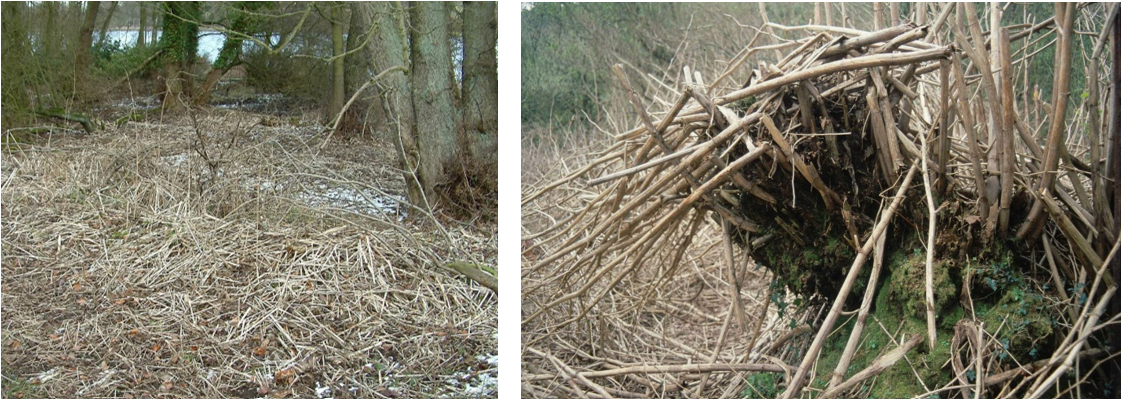 Left: Dried Himalayan Balsam thatch in winter (RPS Group Plc) | Right: Dried Japanese Knotweed canes in winter (GBNNSS)
High rainfall and floods can easily erode these bare banks. This is bad news for river life as habitats become choked by sediment, but the erosion actually benefits our three prolific spreaders - floodwaters carry their seeds or plant fragments downstream, where they settle out and take root in new backwaters and floodplains.
However, there’s still a lot of room for optimism. If we work together we can help to halt their spread and restore our river ecosystems, and, the sooner we act, the lower the costs – environmental, economic and social - will be.
What to look out for
As the weather warms, this is what we will start to see around river corridors and floodplains:
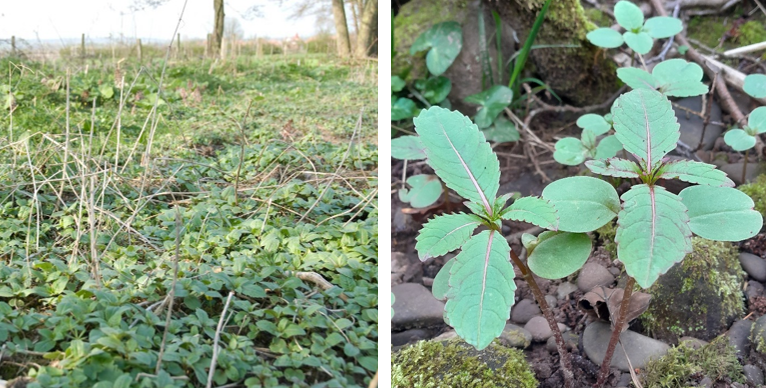 Left: Masses of Himalayan Balsam seedlings in April (GBNNSS) | Right: Himalayan Balsam seedlings (leaves approx. 2cm long)
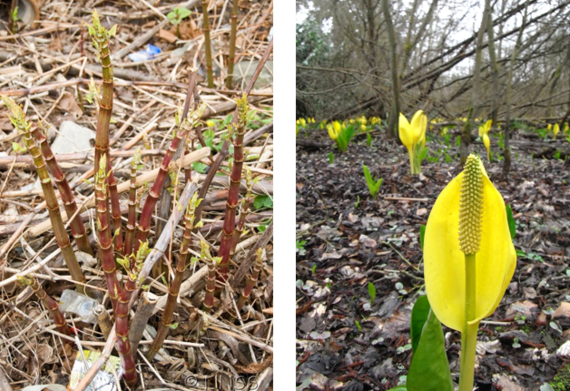 Left: Emerging Japanese Knotweed shoots (GBNNSS) | Right: Emerging yellow American Skunk Cabbage flowers (Dick Shaw)
Four Actions for this Spring
1. Let’s get recording – this spring the team will be out recording these species around target catchments, particularly making note of the upstream limit of these plants, and planning management actions for the year ahead. But we do need your help to get the full picture – the upper Wye is a huge area!
Included below are ID sheets and a link to the INNS Mapper website where you can add new records. Or you can install the INNS Mapper app on your mobile phone to log records when you’re out and about.
ID Sheet - Impatiens glandulifera (Himalayan Balsam)
ID Sheet - Lysichiton americanus (American Skunk Cabbage)
ID Sheet - Fallopia japonica (Japanese knotweed)
INNS Mapper website: https://innsmapper.org
With landowner permission:
2. Live-head American skunk cabbage flowers – live-heading the yellow flowers as soon as they appear will stop yet more seeds from building up in the soil – the seeds are viable for up to 8 years! If cut before the seeds mature, the flowers can be left on site. Remember to clean off your footwear before leaving the site, scraping the treads where seeds can get lodged and transported.
3. Get those balsam seedlings while they're small! – hoeing is a really effective way of uprooting large areas of balsam seedlings which then die. Best done on a dry day. It’ll need to be repeated, but it’s easier tackling seedlings than 2 metre tall adult plants. Important to brush off your kit before leaving the site as seeds are easily transported on equipment and in boot treads.
4. Help us to find suitable sites for Balsam Rust Trials – rust fungus is a biological control specific to Himalayan balsam which weakens the balsam, allowing native plants to establish. Working with CABI, we are looking for several trial sites that meet key criteria. If you’re an upper Wye landowner with balsam and interested in hosting a trial, please get in touch to see whether your site fits the criteria.
A Date for your Diary
This year Invasive Species Week is 12-18 May 2025. To find out more visit Invasive Species Week » NNSS. We are planning one or two local activities, joining a long list of events that’ll be taking place across the UK, so watch this space!
|