|
|
We are delighted to announce that restoration work has finished on the #Mynys river near Llanwrda to ease fish passage.
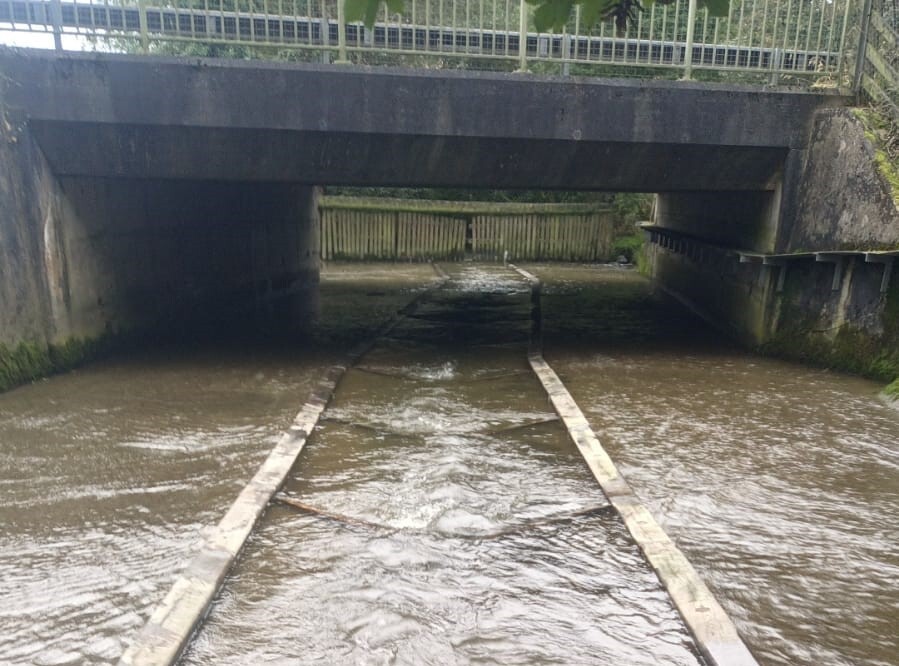
The Mynys is a tributary of the #Tywi river and a concrete apron underneath the A40 road bridge created a significant barrier to fish movements due to shallow fast flows over the smooth surface.
The new oak beams and chevron baffles (see below image) were installed to concentrate flows towards the centre of the structure, providing depth and low velocity areas for fish to pass up and downstream.
This will facilitate passage of migratory salmon and sea trout, as well as a range of weaker swimming species.
A highlight of the project was when the Contractor said he spotted a bullhead fish in the pass as it was being built, so reconnecting of populations is already happening!!
Thank you #PaulsPlantHire for the great work.
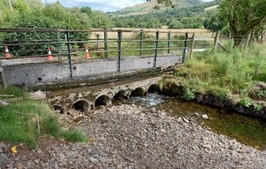
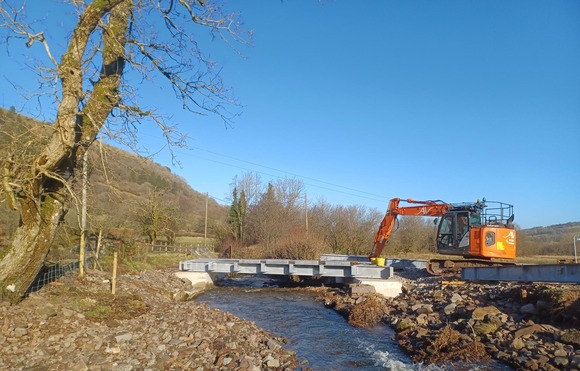
Work is progressing on the #Senni river to replace an old broken pipe bridge with a new small clear span steel bridge.
The pipe bridge was blocking gravel supply and obstructing fish like salmon and trout from swimming further up the river to spawn.
|
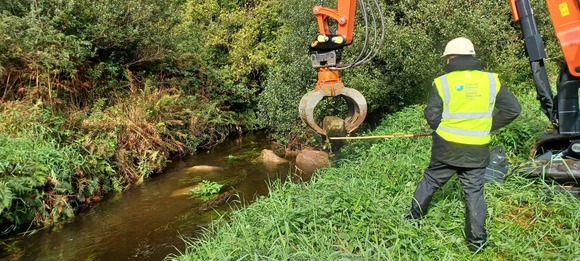
The #WesternCleddau was straightened, widened, and deepened along its length in the 19th and 20th century.
Large boulders were removed to allow water to flow freely in the channel, and these were placed on the riverbank, and this is where they stayed until October 2023!
The below image shows a machine placing the boulders back into the river. This work will create greater flow diversity, by pinching the river and creating areas of scour and gravel deposition.
This work will benefit fish such as bullhead and lamprey, as well as otter and plants like water crowfoot.
Llangloffan Fen is a lowland wetland in the upper part of the Western Cleddau river SAC and can be located up stream of Letterston village.
The fen is a national nature reserve managed in parts by the Wildlife Trust of South and West Wales (WTSWW), Natural Resources Wales (NRW) and some private landowners.
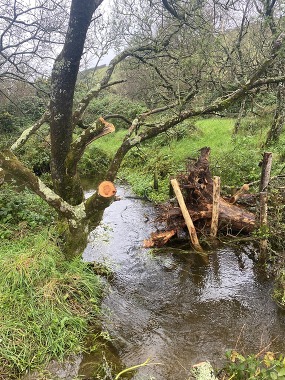
The aim of this work is to introduce wood into the river (see left image) to create structures that ‘pinch’ the flow and force the river to meander again.
This restoration work started in September 2023 and mimics the natural processes that happen when trees fall into rivers. The water forces its way around the wood causing localised erosion and creating new meander bends.
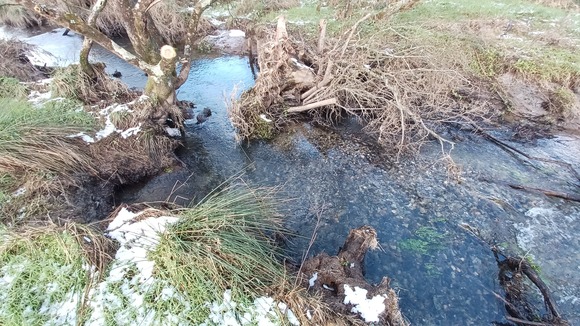
This method creates new habitats, as material from this erosion deposits in the flow shadow of the wood creating new gravel sand and silt bars.
These habitats are great areas for important fish such as lamprey and trout, as they provide shelter from fast flows, shade (and cooler water), cover from predators, territory markers, feeding opportunities, and spawning and nursery sites.
Below image: Only four months after completion of the work you can see gravel and silt bars developing in the flow shadow of the wood that was introduced.
|
|
|
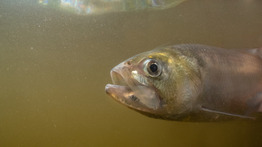
What does 'monitoring' mean and why is it important for restoration projects like ours?
Read the latest blog from Senior Monitoring Officer Sophie Gott where she talks about the project’s monitoring activity, specifically focusing on her recent work surveying a fish species called shad (see right image).
Read the full blog here
|
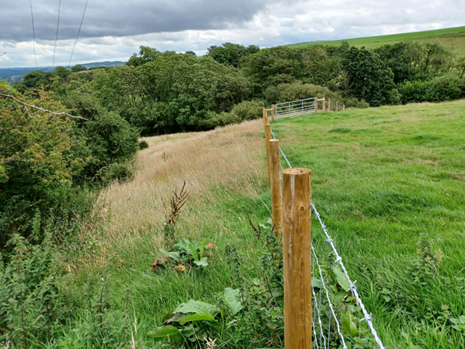
Our land management team have been hard at work visiting over 100 farms and fencing over 9 miles of riverbank on 10 farms.
Fencing benefits the rivers by creating buffer zones that act as a buffer between farm land and the river.
The buffer zones absorb and reduce sediment and nutrient run off from farm land from entering the river.
The image above shows some of the fencing work on the #Dulais river (a tributary of the Tywi) near Llandeilo.
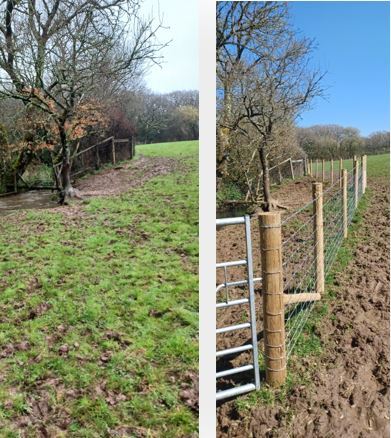
Fencing work has also been completed at Fenton Brook, a tributary of the #Cleddau river in Pembrokeshire (see before and after images below).
|
|
|
|
Livestock was accessing Fenton Brook for drinking water, causing sediment and soil run off into the river.
On this site we have installed:
-
600 metres of riparian (riverbank) fencing
-
5 water troughs as drinking water for livestock
This is a great outcome, as less sediment and soil in the river means cleaner, better oxygenated gravels for the fish and invertebrates.
We hope to plant native trees in the buffer zones that have been created here in the near future.
Over time as the trees grow they will stabilise the riverbank and will also provide cover and refuge for fish in the river and homes for birds and other wildlife.
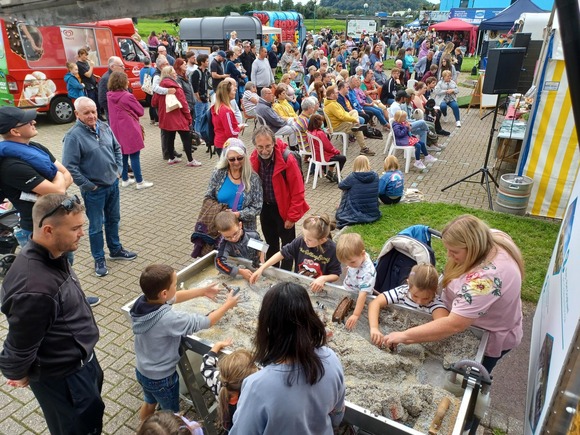
Waweee! What a summer! Hundreds of people turned up to the Carmarthen River Festival at the end of August (see image below), and the river model was a big hit with families, kids and adults alike!
 We rolled up in the new trailer to the Usk and Brecon Shows, and could be found next to our project partner Dŵr Cymru Welsh Water.
This worked well as we were able to share knowledge and information about the project, and also answer water quality questions from the public with the Dŵr Cymru Welsh Water staff who were happy to provide answers and help.
It is important to explain the work that is happening by both organisations to restore and protect our rivers. We will continue to work closely with Dŵr Cymru Welsh Water at this years' events.
We have also been presenting at several stakeholder group meetings from the Floodplain Meadows Partnership, Save the Teifi community group, Pembrokeshire Anglers Association, Carmarthen Together community group and FUW members to name but a few.
If you are a community group in the Teifi, Tywi, Cleddau and Usk rivers catchment and would like to know more about our project and want us to present, please get in touch by emailing 4AfonLIFE@cyfoethnaturiolcymru.gov.uk
|
|
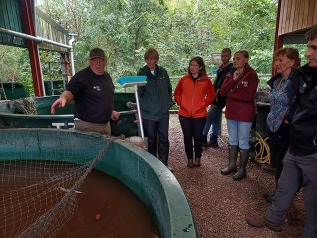
Thank you to the Cynrig Hatchery staff and River Restoration Centre (RRC) for their help in organising the first RRC site visit in September last year.
Such a fascinating day and so much great working going on there, in particular the #4RiversforLIFE Freshwater pearl mussel breeding work.
Thank you to everyone who attended and thank you again to the RRC for organising the visit for their members.
To find out more please read Ann Skinner, RRC Board of Directors’ blog here.
|
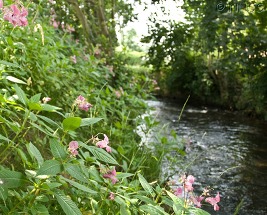
The project is working closely with the Centre for Agriculture and Bioscience International ( CABI ) to trial a biological control agent for Himalayan Balsam.
CABI has been assessing the effectiveness of a rust fungus (Puccinia komarovii var. glanduliferae), native to the Himalayas, as a potential control option.
The rust is a fungus that infects the stem and leaves of Himalayan balsam throughout the growing season.
It decreases the plant's fitness, limits growth and reduces seed production. Although the rust does not eradicate the plant, it reduces its vigour and extent, allowing native vegetation to regain dominance.
Read more about this work in our latest blog from Four Rivers for LIFE Senior River Restoration Officer, Leila Thornton.
Image credit: Himalayan balsam - GB NNSS.
|
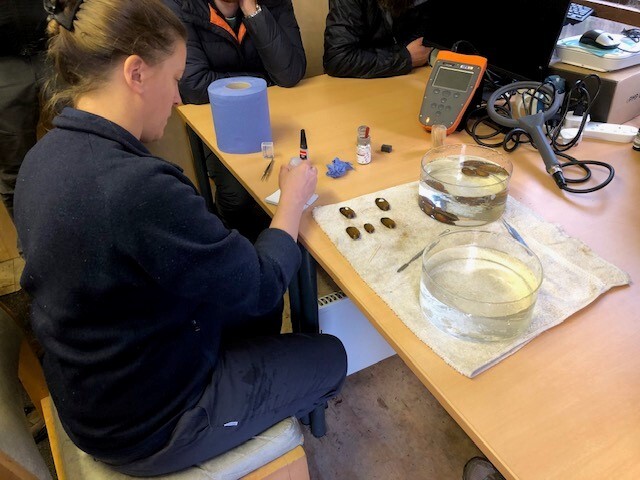
In early November 2023 we visited the LIFE R4ever Kent team in Cumbria to learn about their project and share knowledge.
On the first day we visited #DubbsBeck where they are restoring the river for white-clawed crayfish.
We then went on to visit the Freshwater Biological Association Species Recovery Centre (left image above showing tagging of freshwater pearl mussels) in the afternoon to learn more about their work and research into freshwater pearl mussels.
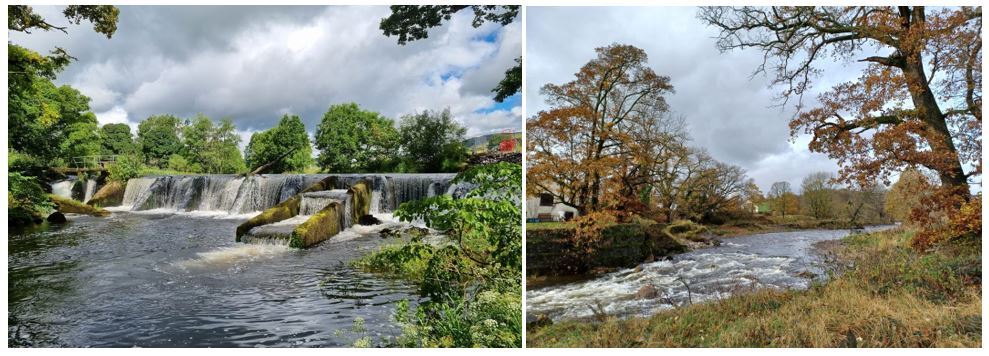
On the second day we visited #BowstonWeir which was demolished in June 2023 (see before and after images below).
After 150 years blocking the #RiverKent the three-metre-high weir was removed and was the largest river barrier removal project in the UK last year!
The work has re-naturalised the river, reconnected it to its natural floodplain and last but not least improved fish passage further upstream.
Find out more on their website here
|
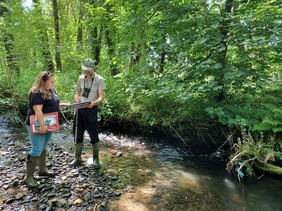
A new partnership project has been set up with the West Wales Rivers Trust calling for volunteers to help protect the Teifi, Tywi and Cledddau.
The project will use volunteers help to control the impact of invasive species on the rivers.
If you would like to get involved or want to find out more please email 4AfonLIFE@cyfoethnaturiolcymru.gov.uk
|
|
|
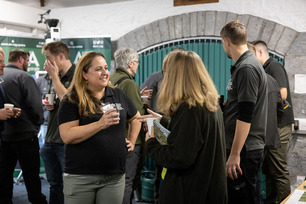
The 2024 RRC Annual Network Conference will be held at Venue Cymru, Llandudno from April 24th - 26th.
Early-bird rates to book a place at the conference close February 29th!
Visit the website to book your place now https://www.therrc.co.uk/rrc-annual-conference-2024
|
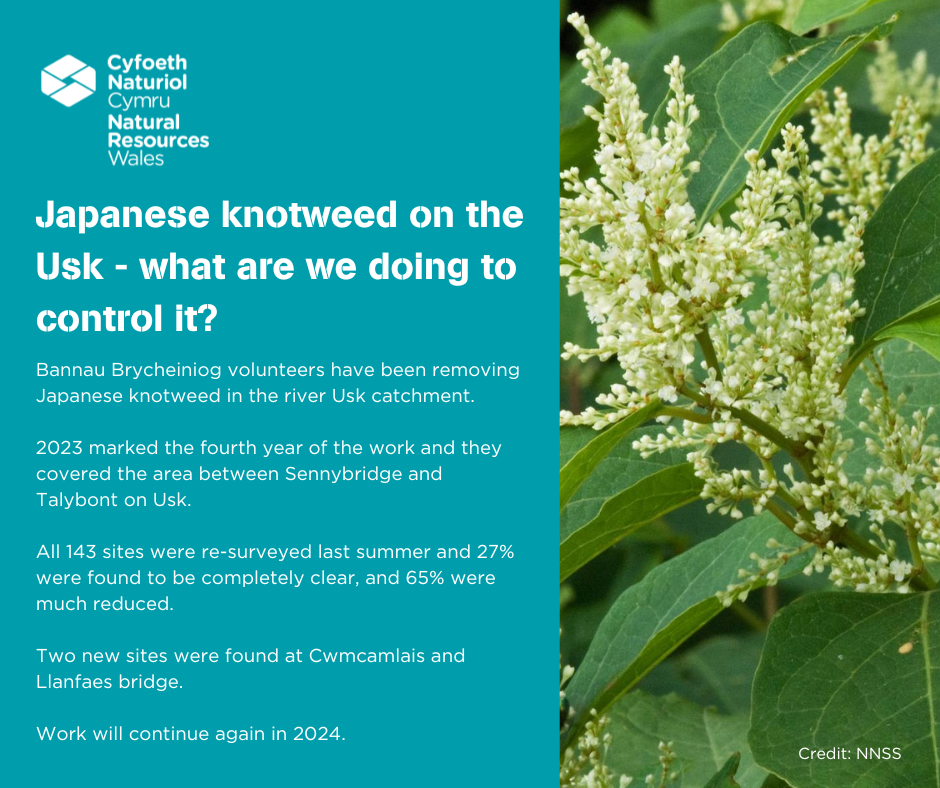 If you are interested in joining the Bannau Brycheiniog volunteer team and would like to find out about current opportunities, please visit the website here
|
|
|
What's coming up in the next newsletter:
How we can help farmers - our new video showing how we can support farmers and land owners to farm sustainably will be ready and available to watch!
River restoration - the method behind the restoration work, and how we've put this into practice with our completed projects so far.
Spotlight on the river Usk - read more about the work taking place on this river.
Remember you can follow us on as Facebook, Twitter and Instagram for project updates.
Project Partners:

|
|
|
|
|