|
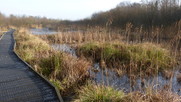
We've signalled our ambition to tackle the intrinsically linked climate and nature emergencies with the launch of the LIFEquake project.
Funded by EU LIFE and supported by Welsh Government, LIFEquake is a five-year project which aims to restore peatland, quaking bogs and their wider supporting wetland landscapes to favourable conservation status.
The main focus are ‘quaking bogs’ – so called because when conditions are right the ground ‘quakes’ underfoot.
Over the lifetime of the project almost 50 km of fencing and other infrastructure will be installed across the sites which will allow the right levels of sustainable grazing to take place. Mowing, scraping and excavation will take place to remove vegetation and undesirable invasive species currently smothering the important plants and mosses that create these ‘quaking bogs’.
Martyn Evans, Head of South West Wales Operations said:
“The forthcoming peatland action on the LIFEquake project not only enhances a local amenity for present and future generations, but is also an important part of Wales’ contribution to address climate change globally.”
|
|
|
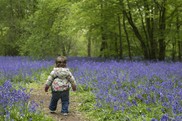
We've been one of the major contributors to the Welsh Government commissioned 'Biodiversity Deep Dive' to assess how nature recovery across land and sea can best be accelerated.
The group has now set out its recommendations. In welcoming these Ceri Davies, our Executive Director for Evidence, Policy and Permitting who was part of the Deep Dive said:
"Nature benefits everyone, which is why it must be restored and made resilient. Without a healthy and valued natural environment, we threaten our food supply, our health, our jobs, our economy and our sense of place.
"The recommendations in this deep dive will drive the changes needed to ensure a nature rich Wales.
"We are delighted to be part of this shared effort to deliver a decade of action on our ambition to become nature positive, setting the foundations for people and wildlife to benefit for generations to come."
|
|
|
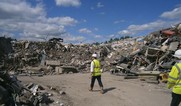
We've launched a consultation on our plans to update the charges for some of our permits and licences, which are designed to work better for business and the environment and to reduce the reliance on the taxpayer.
The current charges, which include permitting and ongoing compliance and monitoring no longer reflect the full costs of delivering the services, meaning taxpayer funds have been used to fill the deficit.
Under proposals laid out in the consultation, charge-payers pay for the full services they use, leading to a better-managed environment for current and future generations.
The review of fees and charges has considered all our regulatory functions - including those activities not historically charged for.
Nadia De Longhi, Head of Regulation & Permitting Regulation said:
“We have taken this step to review the charges we set for our regulatory services to ensure they are more closely linked to the actual cost of delivering these activities and to ensure charge-payers, not the public, bear the expense.
“We want to recover all of the costs of our regulation so that we can reinvest resources in more compliance activity and in preventing pollution happening in the first place. The outcome should be a fairer and more transparent charging system which will result in more effective protection and improvement of our natural environment.”
|
|
|
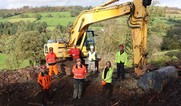
A pioneering tree felling operation engineered to remove diseased trees while preserving ancient Roman mine workings at Dolaucothi Goldmines Forest, in Carmarthenshire, has been completed successfully.
The Dolaucothi Goldmines Forest is leased to us by the National Trust and forms part of the adjacent Roman goldmines. It is rich in archaeology with designated Scheduled Monuments including Roman leats, water tanks, hushing gullies and quarry works intersecting the site.
Nine hectares of the forest were infected with larch disease and needed removing. The trees were standing dead and posed a safety threat to members of the public and the archaeological features.
The site presented many challenges as there was no access to take timber out of the forest and it was really important to make sure the important historic features were not accidentally damaged by heavy machinery.
Caroline Riches, Forest Works Manager for the Dolaucothi Goldmines site, said:
“Strong partnership working, and the development of a sensitive harvesting method has resulted in us being able to safely remove the diseased trees and successfully preserve the Scheduled Monuments at Dolaucothi.”
|
|
|
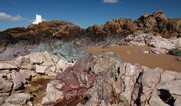
A small corner of Anglesey has been named among the best geological sites in the world.
Ynys Llanddwyn, part of Newborough National Nature Reserve and Forest, has been named in the First 100 Geological Heritage Sites list – key geological sites of international scientific relevance with a substantial contribution to the development of geological sciences through history.
Ynys Llanddwyn and Newborough Forest are formed from a chaotic mixture of rocks, including limestone, cherts and pillow lavas thought to be at least 500-600 million years old.
Raymond Roberts, Lead Specialist Advisor for Geodiversity, said:
“This is fantastic recognition for Ynys Llanddwyn and Newborough which means it stands among other important and iconic geological sites across the world and recognized by the geoscience community for its impact in understanding the Earth and its history."
|
|
|
We are now the single environmental regulator for the Kronospan site in Chirk and will conduct all future regulatory functions in relation to its permit.
We've completed the variation and consolidation of the two regulators’ permits. The final permit and our detailed decision document are available on our on-line public register.
Lyndsey Rawlinson, Head of Operations for North East Wales, said:
“The future regulation of Kronospan has always been an important issue for the local community. Becoming sole regulators for the site allows us to ensure that the operators comply with relevant standards thereby protecting human health and the environment. This will also help ensure consistency whilst offering a single point of contact for the operator, local community and stakeholders.
"The permit includes a number of improvement conditions for the operator to implement over the next 18 months. We will be working closely with Kronospan to ensure that these improvements are made.”
|
|
|
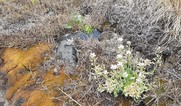
Work to re-create new habitat to help tackle the decline in rare metal loving species has been successfully completed by our Conwy Environment team.
The work is one of a suite of projects carried out by us as part of the Welsh Government’s Nature Networks Programme.
The work took place on two units within the Gwydyr Forest Special Area of Conservation in the heart of the Snowdonia National Park, which is home to nationally important populations of metallophytes such as Lead Moss and Alpine Pennycress.
Caroline Bateson, Natura 2000 officer said:
“Plants like Lead Moss and Alpine Pennycress are metallophytes which need high levels of heavy metals in the soil to exist.
“These species are in decline as scrub has spread to all but the most toxic areas. To tackle this, we have hand dug experimental scrapes to re-create suitable habitat."
|
|
|
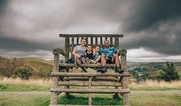
Bwlch Nant yr Arian and Ynyslas visitor centres have both retained their prestigious status as Quality Assured Visitor Attractions by Visit Wales.
The coveted stamp of approval is only awarded to attractions which achieve high standards across a range of requirements including the quality of staff, the information available for visitors and cleanliness.
Jenn Jones, Visitor Centre Team Leader in Mid Wales said:
“In visiting a Quality Assured Visitor Attraction, you can be sure that you will have a great day out, come rain or shine. Achieving high standards is hard work but being able to maintain it over time is the mark of excellent and dedicated staff."
|
|
|
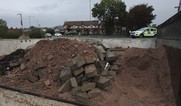
Enforcement operations have been held in the Caernarfon and Bangor areas to clamp down on illegal waste carriers and illegitimate waste sites.
We worked in partnership with North Wales Police and the Driver and Vehicle Standards Agency (DVSA) to target criminals who use the roads to commit waste offences.
If any waste offences were found to have been committed, our officers used the most appropriate enforcement response, which included issuing advice and guidance notices.
Euros Jones, Operations Manager for North West Wales, said:
“Working in partnership with the DVSA and North Wales Police sends out a strong message to those who seek to profit by breaking the law, that we will not tolerate any harm to North Wales communities or damage to the environment.
“Illegal waste carriers can have a detrimental effect on legitimate waste businesses that invest and obtain the correct environmental permissions."
|
|
|
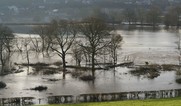
A year of drought, extreme storms, and wildfires has underlined that Wales facing the rising tide of climate change. This is our warning as we urge people to be vigilant, not complacent, about their flood risk this winter.
With 1 in 8 (around 245,000) properties in Wales at risk of flooding, and with the climate emergency bringing more extreme weather, it is more important than ever before that people understand their flood risk and how to prepare for and deal with flooding.
Jeremy Parr, Head of Flood and Incident Risk Management said:
"Extreme weather and its impacts are the heaviest footprints of the climate crisis. The variations in weather conditions we have seen this year illustrate the unpredictable climate challenge we face and has brought the importance of resilience into sharp focus.
“Right now, our teams are working with the Met Office and our partners to prepare for what the weeks and months ahead might bring. But we will never be able to stop all flooding. While Wales remains at drought status, it does not mean that we’re no longer at risk of flooding, which is why we are urging people to be vigilant, not complacent about their future flood risk."
|
|
|
|
|
|