|
|
Welcome to Issue #8 of the New LIFE for Welsh Raised Bogs Project Newsletter. In this issue we will share project success stories with you and the work we're doing across Wales.
|
|
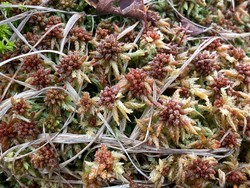
Sphagnum medium (see image) has been recorded for the first time at Rhos Goch National Nature Reserve (NNR).
It is also a first 10-km record for SO14 (the UK is divided into 10 km squares with individual numbering, usually two letters followed by two numbers as in SO14).
It is also a first for lowland Radnor according to the National Biodiversity Network.
Image credit: Dave Reed, Natural Resources Wales.
|
|
|
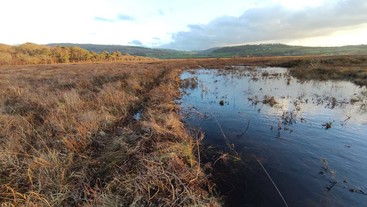
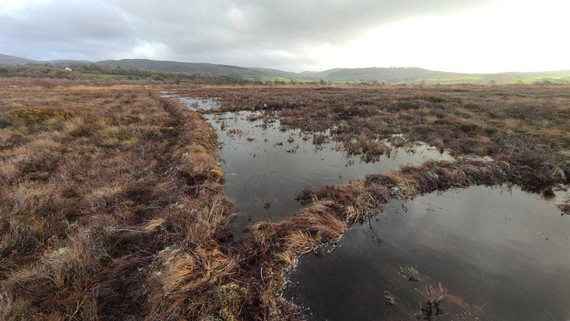
Despite lockdown restrictions in Wales and across the UK last winter, restoration work continued on two of our sites in Ceredigion.
With the support and hard work of our contractors the project has created over 18,000 metres (11 miles) of peat bunds.
The work aims to restore more natural water levels at Cors Fochno and Cors Caron National Nature Reserves (NNR), two of the best and least damaged raised bogs remaining in the UK.
The peat bunds, or low-level banks of peat as they are also called, are approximately 25cm high and follow the natural contours of the raised bogs domes (see images).
The bunds are designed to slow the loss of water in the upper layer of the raised peat dome, holding the natural water level on the bog for longer.
After only a few months there are already encouraging signs that a more natural water level is starting to form.
Click here to read more about the work.
|
|
|
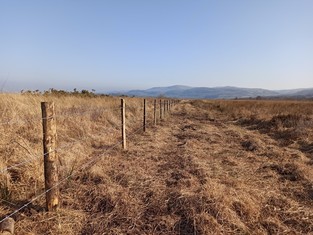
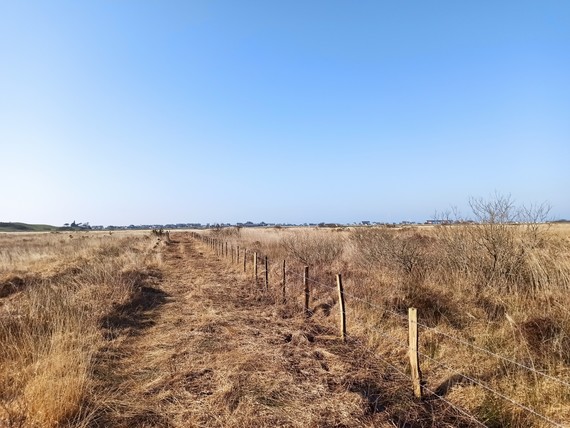
We have recently created a new grazing area on the margins of Cors Fochno raised bog by creating a new fence (see pics), the area has suffered in the past due to a result of drainage.
Recently scrub within this area has been treated and rhododendron removed. This area is due to be mown soon with the wetland harvester machine, after which we’ll introduce livestock to graze the area in late spring and through summer.
This marginal part of the site has been inundated with brackish water in the past which has allowed a unique vegetation type to establish, called maritime mire. This would have naturally covered the margins of Cors Fochno when high tides would occasionally inundate the margins.
These works will create more open areas where important bog plants can grow and thrive, helping to keep the peat boggy and wet and store more carbon.
Go to our Facebook or Twitter pages to read the latest updates about the projects’ work.
|
|
|
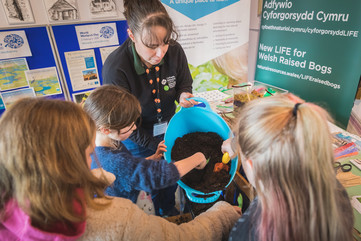
Aimed at KS2/3 educators we’ll be running a virtual course in April to share activity ideas and information about these ancient landscapes.
The training offers attendees increased knowledge of how to use the outdoors as a context for learning, as well as increased confidence in how to deliver across the Curriculum for Wales 6 AoLE’s through the topic of peatlands.
Dates:
23 April 2021 from 11am-12.30 the session will be delivered through the medium of Welsh on Microsoft Teams.
23 April 2021 from 4.15pm-5.45pm the session will be delivered through the medium of English on Microsoft Teams.
To book please visit the Tocyn Cymru website.
|
|
|
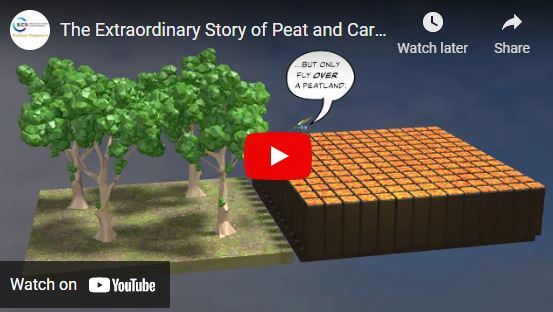
We wanted to share this simple but VERY effective video explaining the value of peat in storing carbon!
This video is the most recent addition to the suite of training materials produced by Richard Lindsay from the University of East London, and the IUCN UK Peatland Programme, working in partnership for peatlands.
Click on the above link to watch the video and to find a range of training resources.
|
|
|
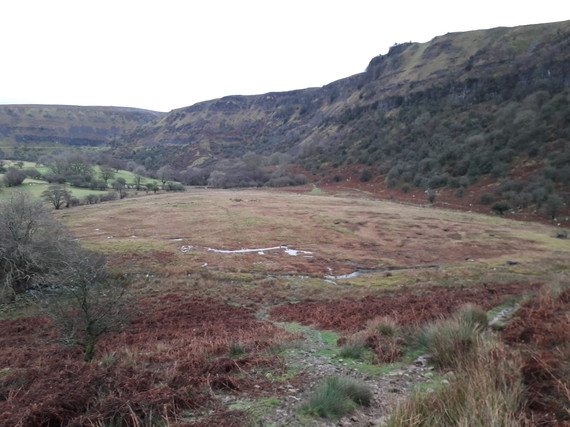 Over the last few months we have taken part in two Brecon Beacons Park Society meetings, and we would like to say a big thank you to the members for their warm welcome and interest in the project.
The evenings were focused on sharing information about Waun Ddu raised bog (see image), which is located near Crickhowell and within the Brecon Beacons National Park. We talked about how raised bogs developed, the project and its restoration plans for the site.
GET IN TOUCH: If you are a member of a community group or society and would like us to present as part of your meetings please get in touch with us by emailing LIFEraisedbogs@cyfoethnaturiolcymru.gov.uk as we are always keen to raise awareness about the project and our work.
|
|
|
|