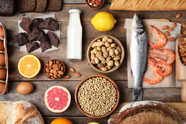
It’s important to know what to do if you serve a customer who has a food allergy, because these allergies can be life-threatening. By law, you must tell your customers if certain food allergens are in the food you prepare.
You need to ensure that you know what is in the food you provide by recording allergen ingredient information in a written format.
Lincolnshire Trading Standards will be able to offer further advice on this requirement. They can be contacted by calling 01522 552490 or by emailing tsbusiness@lincolnshire.gov.uk
Making ‘free from claims’ for meals require strict controls of ingredients, how they are handled and prepared. This is because a free-from claim is a guarantee that the food is suitable for all with an allergy or intolerance.
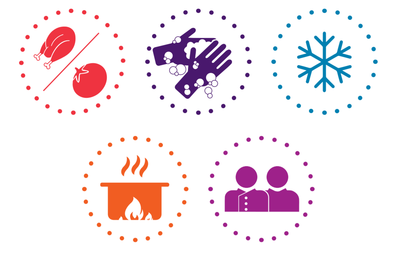
The Food Standards Agency have updated the Safer Food Better Business packs in recent months, with helpful new references to allergen controls, acrylamide (a chemical that has the potential to cause cancer in humans and is formed naturally when some foods are cooked at high temperatures) and greater clarification of the shelf life of high risk foods.
Safer Food, Better Business packs are available for:
For each individual pack, you can download the full pack or download specific sections as you need them. Download them here.
If you prefer, you can buy a hard copy of the Safer Food Better business packs, which are £15 with the diary or £12 without the diary (including P&P)
Officers will be encouraging you to have the latest pack when your next routine inspection is undertaken, to ensure you can demonstrate you have considered all aspects of food safety carefully, so get ahead of the game and do it now.
The importance of adequate cooling and storage procedures
Food poisoning due to the bacteria Clostridium perfringens occurs relatively rapidly after consumption of contaminated food (6 – 24 hours). Outbreaks of Clostridium perfringens food poisoning do occur in the UK. One such outbreak happened in the East Midlands in October 2018 when a group of 32 elderly people became ill with diarrhoea following a pub lunch. Following sampling of leftover food, extremely high levels of Clostridium perfringens were found in shepherd’s pie which the group had consumed.
Another incident involved 62 individuals reporting symptoms of food poisoning after eating at a hotel restaurant.
In March 2018, 186 people became ill with Clostridium perfringens food poisoning after eating roast meat from a carvery restaurant in the south west of England on Mothers’ Day. Lamb, beef and turkey samples were found to contain high levels of Clostridium perfringens.
Stews, rolled roasts and pies are foods commonly associated with food poisoning of this nature, but are difficult to cool quickly.
Remember...
- If you have cooked food that you will not serve immediately, chill it down as quickly as possible and then put it in the fridge. Harmful bacteria can grow in food that is left to chill slowly.
- Avoid cooking large quantities of food in advance, unless you need to.
- Cut joints of meat in half to speed up cooling.
- Take stews out of the cooking pan and pour them into a shallow tray - spreading the food out will help it cool more quickly.
- To cool pies or lasagna try placing an empty metal tray in the freezer to get it cold, take it out and put ice in the bottom, then place the container of pie or lasagna on top to chill more quickly.
It is recommended that fridges and chilled display equipment should be set at 5°C or below.
This is to make sure that chilled food is kept at 8°C or below. You should check the temperature of your fridges at least once a day. To make sure equipment is working properly, check temperatures in-between packs of chilled food using a clean, disinfected probe thermometer.
 Are you a breastfeeding friendly business?
Businesses wishing to support our Breastfeeding Friendly initiative should get in touch with the Partnerships Team. You will then receive a sticker to display in your window to show you are a 'Breastfeeding friendly' business.
|