|
|
#Patientfirst
|
August 2026
|
|
|
Trust's specialist weight loss surgery service treats 500th patient
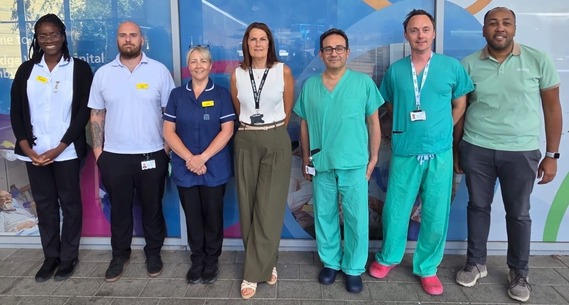 Our Bariatric Service reached a significant milestone last month when surgeons treated their 500th patient.
Bariatric and metabolic surgery is a specialist weight loss treatment for people living with severe obesity. The procedure changes how food and nutrients pass through the body and are absorbed, affecting how quickly someone feels full.
Losing weight can increase life expectancy by eight to 10 years and may prevent or improve a range of conditions, including type 2 diabetes, high blood pressure, sleep apnoea, infertility and joint problems.
Patients from Kent, Medway and parts of Sussex are referred to the service after completing a tier 3 weight management programme, and can access a range of specialist weight management treatments at the Trust.
These include sleeve gastroplasty, gastric bypass and sleeve gastrectomy, enabling care to be personalised to each patient’s needs and preferences.
|
|
Welcoming the next generation of doctors
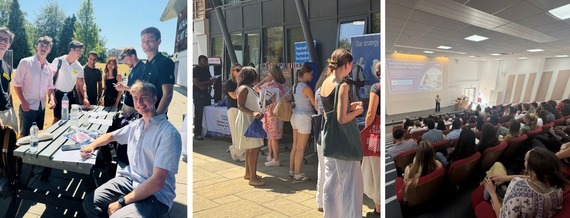 We are welcoming our new cohort of resident doctors to the Trust this month!
Resident doctors are qualified doctors who are continuing their training while caring for patients under the supervision of experienced senior clinicians.
Our new colleagues are completing a two-year Foundation Programme and will help support services across the Trust while gaining experience in a range of specialties.
After completing the programme, they will be able to apply for further study and specialist training in areas including medicine, surgery and general practice.
The latest cohort includes graduates from Kent and Medway Medical School, City St George’s, University of London and King’s College, London.
In the coming weeks and months, we will be welcoming other resident doctors at different stages of their training, further strengthening our clinical teams.
|
|
Meet the team behind 10,000 results every day
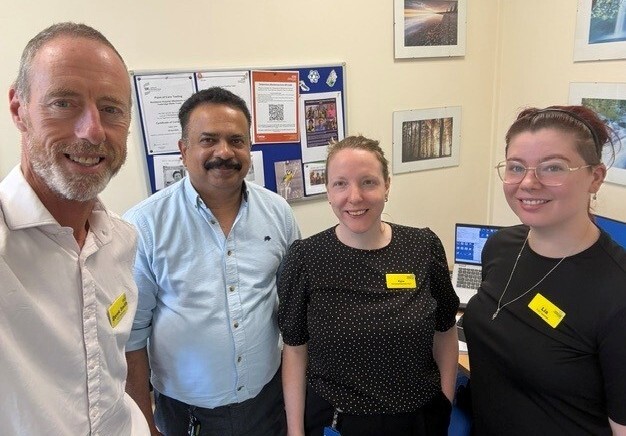 Delivering around 10,000 results every day and supporting around three million tests each year, the Point of Care Testing (POCT) team play a vital role in ensuring patients receive safe, timely and effective care.
POCT are tests carried out at a patient's bedside, in a clinic or on a ward, rather than in a laboratory. This enables rapid results so clinicians can make decisions more quickly, reducing delays in treatment.
Behind each test is a team of just nine people who make sure equipment is working correctly, results are accurate and staff are properly trained. Thousands of doctors, nurses and other patient-facing staff carry out POCTs across the Trust, and the team supports them in using the equipment safely and correctly.
The POCT team’s commitment to quality has been recognised nationally, with MTW among the first organisations in the country to achieve independent accreditation for several point of care testing services.
|
|
Master's achievement in medical education
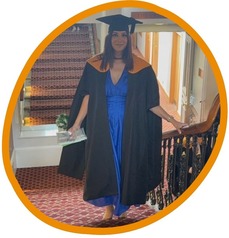
Anita Mann, Medical Education Manager at the Trust, graduated from the University of Kent last month with a Master of Science (MSc) in Medical Education Management.
Anita, who was awarded a Merit, was part of the first cohort to complete the MSc in Professional Practice (Medical Education Management). She studied for the qualification over the past three years alongside her full-time role at MTW.
The qualification will support the continued development of medical education and training at the Trust, helping ensure future doctors receive high-quality support throughout their training.
Speaking after Anita’s graduation, Head of Medical Education, Chris White, said: “This is a fantastic achievement and reflects Anita’s passion for professional development in Medical Education. Her unwavering commitment to supporting learners and educators makes a significant contribution to our team and the wider organisation."
|
|
|
Cardiology teams strengthen skills with specialist training |
|
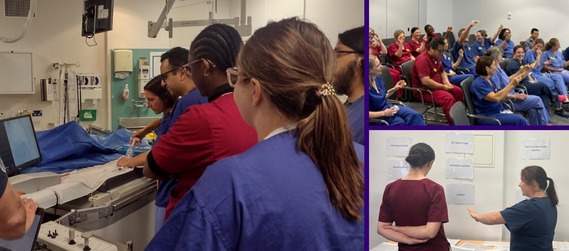 Staff working in the Trust's specialist heart procedure unit recently took part in a training programme designed to strengthen their skills in recognising and managing complications during procedures.
The Cardiac Catheter Laboratory (Cath Lab) is a specialised hospital room with advanced X-ray and imaging technology to diagnose and treat heart conditions, like blocked arteries and rhythm disorders, using thin tubes called catheters.
The course gave staff the opportunity to enhance their knowledge and confidence in recognising complications earlier and responding more effectively, supporting safe patient care.
During the course, attendees visited four learning stations covering key aspects of practice.
One station focused on recognising deteriorating electrocardiograms, helping identify abnormalities and understand their meaning. Another used simulation technology to recreate minimally invasive cardiac procedures and potential complications.
A third station explored heart anatomy and the coronary arteries while the fourth examined real-life complication cases, discussing how to identify and manage them.
|
|
Theatres recycling project supports sustainable healthcare

The Theatres team at Tunbridge Wells Hospital has saved more than 600kg of CO2 emissions as part of a recycling initiative.
The project involved collecting waste for recycling rather than sending it for incineration, helping to reduce harmful carbon emissions.
The team collected 45 containers of waste, saving enough CO2 emissions to power 66 CT scans!
The recycled material will be repurposed into household items such as benches and fence panels, supporting a sustainable approach to care by minimising waste and reducing our carbon footprint.
|
|
|
|
|