|
Royal recognition for voluntary work
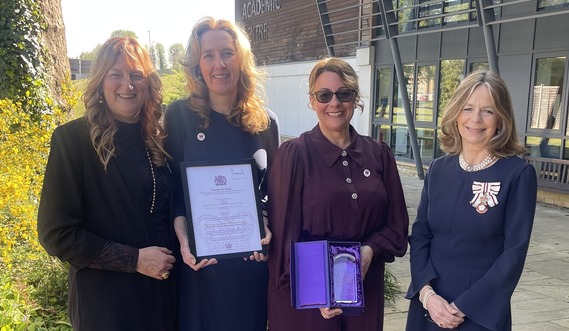 Vickie Gadd, the Trust’s Lead CNS for Gynae Oncology Genetics and Family History, is part of a volunteer group that has been recognised for its work in supporting women living with BRCA1 and BRCA2 gene alterations.
The King’s Award for Voluntary Service was recently presented to BRCA Kent by His Majesty’s Lord Lieutenant of Kent, The Lady Colgrain, at Maidstone Hospital. The award is the highest given to local volunteer groups in the UK, equivalent to an MBE.
BRCA Kent supports women across the country who are living with a faulty BRCA gene and face up to a 72% lifetime risk of developing breast cancer and up to 44% risk of ovarian cancer.
Drawing on her clinical knowledge and experience, Vickie plays a key role in the group by guiding, informing and supporting women facing difficult decisions about their health and future.
|
|
World-first for Neonatal Unit
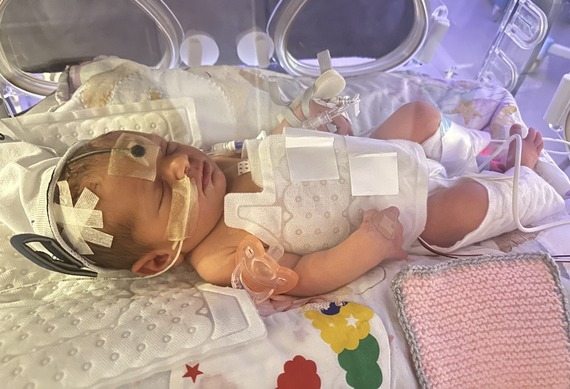 Tunbridge Wells Hospital has become the first level 2 neonatal unit in the world to recruit to a research study aiming to improve outcomes for babies with brain injuries at birth.
Shortly after baby Eliza’s birth last October, her parents, Casey and Ryan, were told she may have mild hypoxic ischaemic encephalopathy (HIE) after staff noticed rapid breathing and a delay in her reflexes.
HIE is a type of brain injury that occurs when a baby experiences lack of oxygen at birth, which can result from placenta issues, prolonged labour or maternal infection.
Staff quickly made Casey and Ryan aware of the Cooling in Mild Encephalopathy (COMET) study, which is examining if cooling therapy can reduce brain injuries in babies who have experienced HIE.
Run by Imperial College London, the study involves a special cooling blanket or mattress which carefully lowers a baby’s temperature for the first three days after birth, and assesses how well this can help to prevent later disability.
Eliza, who is now doing well and achieving her developmental milestones, will have check-ups at Tunbridge Wells Hospital before being invited to Imperial College to check on her development.
|
|
New water bottles for patients awaiting surgery
|
|
|
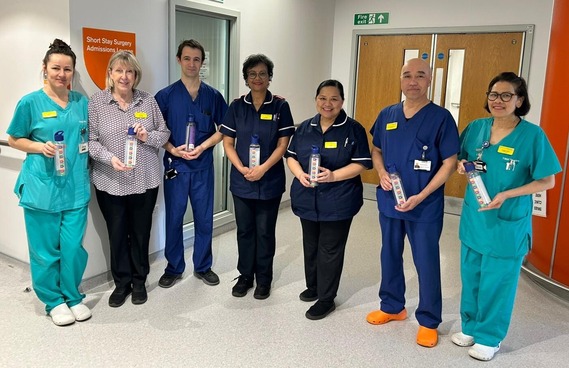
New re-usable drinking bottles have been introduced to support patients having non-emergency surgery.
Patients are not usually allowed to eat any solid food for at least six hours before an operation, but research has shown that sipping water can help them feel more comfortable.
‘Nil by mouth’ guidance previously stopped patients from drinking water two hours before their procedure, but unpredictable timings of going into theatre could sometimes mean patients would be without a drink for longer than this.
Funded by our MTW Hospitals Charity, the new bottles are designed with markings that guide patients in safely sipping a small amount of water every hour until their procedure, ensuring they stay hydrated and reducing headaches, nausea and anxiety.
|
|
Innovative treatments in breast cancer care
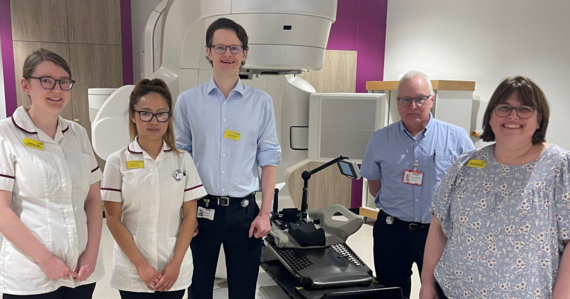 Cancer patients across Kent and Medway are set to benefit from more advanced and personalised breast radiotherapy, following the introduction of volumetric modulated arc therapy (VMAT) alongside simultaneous integrated boost (SIB).
The first VMAT breast radiotherapy session was successfully delivered at the Kent Oncology Centre at Maidstone Hospital in March, marking the beginning of a new chapter in advanced radiotherapy at the Trust.
VMAT is a significant step forward from standard radiotherapy techniques. Instead of delivering radiation beams from a series of fixed positions, it delivers treatment continuously as the machine moves in a smooth arc around the patient. This allows clinicians to shape the radiation dose with exceptional precision to both the primary tumour site and surrounding areas, such as lymph nodes.
The advanced treatment works alongside simultaneous integrated boost (SIB), which changes how the radiation dose is given. In the past, different areas – such as the whole breast and the tumour site – were treated one after the other. With SIB, both areas are treated at the same time, with a higher dose focused on the tumour during each session.
This approach shortens the overall course of treatment, improves local control of the disease, and lowers the risk of cancer returning, while protecting vital organs and reducing side effects.
|
|
Patient feedback shapes future stroke care |
|
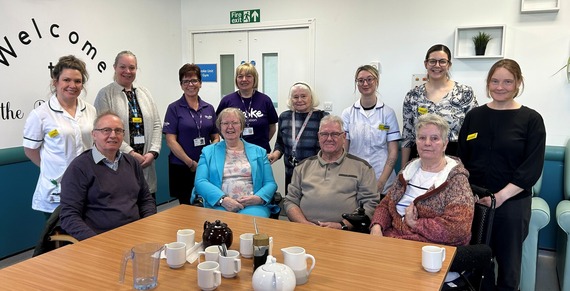 The Stroke team recently welcomed some familiar faces, as past patients who were cared for on the unit returned to Maidstone Hospital.
The stroke survivors were invited to give their feedback on the development of the Acute Stroke Unit lounge, where patients can spend time with their families away from the ward, and the day room, where they can re-learn everyday skills including making a cup of tea.
The visitors were joined by members of the West Kent Stroke Association, who also provided input into the areas to benefit future stroke patients and their families.
From suggesting furnishings with rounded edges to calming design schemes that bring the outside indoors, the group gave invaluable insights that will ensure the rehabilitation areas are improved to enhance patients’ lives after stroke and aid their recovery.
Following the success of the stroke survivor visit, the Stroke team will be launching the Stroke Advisory Group, a forum bringing together people who have experienced stroke care at MTW, including patients, family members and carers, and members of the Stroke team.
|
|
National award for results of pioneering knee surgery trial
The results of a trial where pioneering reconstructive knee surgery is offered to young patients who have torn their anterior cruciate ligament (ACL) has received an award at the British Association for Surgery of the Knee conference.
The ACL is a band of tissue inside the knee which helps it move and stay stable. ACL injuries happen if you hit or twist your knee or quickly change direction or speed when running or walking, and are often seen in people who play sports such as football, netball or skiing.
MTW is the only trust in the UK offering a new type of surgery as part of the LivD-ACL study, where children have their ACL reconstructed using a parent’s hamstring.
Excellent outcomes have been reported for the first patients, all aged between 10 and 17, who have returned to sport at the same level as before their injury.
Six months after surgery, all the donor parents scored their leg function the same as it was before the operation, with one even completing an ultramarathon!
|
|
|
Bringing comfort to families in palliative care
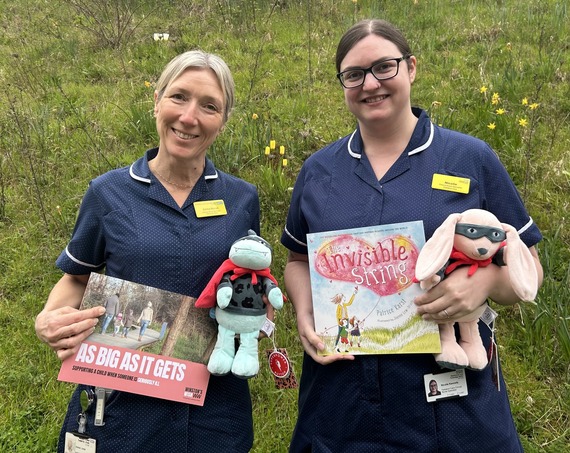 Supporting a patient receiving palliative care means also caring for the family around them, including any children and grandchildren visiting them who may be struggling to understand what is happening.
Thanks to funding from our MTW Hospitals Charity and national clothing brand Scamp & Dude, children and their parents have been given books specially designed to offer reassurance and explanations on separation, loss and grief, helping families to have open conversations about what's to come.
The children have also received 'Sleep Buddies' toys, comforting companions that can bring a sense of safety and familiarity to them at a time when things can feel overwhelming and uncertain.
|
|
|
|
|