News and views for the public health sector
September 2020
Updates, news and information for all those concerned with protecting and improving the public’s health. Visit our website for more information.
Public health news
 |
|
Flu campaign launches for biggest flu vaccination programme to date
Public Health England, the Department of Health and Social Care, and NHS England and Improvement have launched this year's flu vaccination campaign to promote the flu programme 2020 to 2021. Together, we are calling on all eligible people to get their flu vaccination this winter.
|
The programme is the biggest to date; up to 30 million people will be offered the vaccine this year, and eligibility been expanded to include:
- household contacts of people on the NHS Shielded Patient list;
- children in school year 7;
- and all health and all social care workers who have direct contact with the people they care for.
 |
|
Health and Social Care Workers flu campaign
The flu vaccine is the best way for Health and Social Care Workers (HSCWs) to protect themselves, their family and those they care for from the flu. This year, with coronavirus in circulation, it is more important than ever that frontline HSCWs get their flu vaccination. The HSCWs flu vaccination campaign will encourage the uptake of flu vaccinations by frontline staff. Campaign materials, including posters, leaflets and digital assets, are live on the Campaign Resource Centre ready to order, download, adapt or print locally.
|
 |
|
Health Matters: delivering the flu immunisation programme during the COVID-19 pandemic
The 2020/2021 national flu immunisation programme will be the largest to date, in part due to the co-circulation of COVID-19. The latest edition of Health Matters focuses on the delivery of the programme during the pandemic, and looks at uptake, trends, eligibility and much more.
|
The resources and information contained in this edition are aimed at public health professionals, CCG commissioners and frontline health and social care workers, and provide calls to action for the wider health economy and local authorities.
 |
|
NHS COVID-19 app
The NHS COVID-19 app has been launched in England and Wales to help control COVID-19 transmission alongside national and local contact tracing.
|
The Department of Health and Social Care announced the introduction of the app, and emphasized that user privacy and data security would be at its heart, and that features include:
- contact tracing using Bluetooth
- risk alerts based on postcode district
- QR check-in at venues
- symptom checker
- test booking
The launch coincided with the announcement that businesses are now required by law to display the official NHS QR code posters, so people can check-in at different premises with the app.
Anyone can now download the free NHS COVID from the following providers:
 |
|
Stoptober
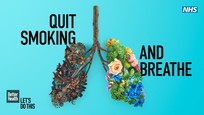
This Stoptober, smokers in England are being encouraged to put their lungs first, strengthen their immune system and breathe easier ahead of flu season by joining more than 2 million smokers who have made a quit attempt since 2012 with the annual campaign.
|
This national campaign encourages the nation’s smokers to make a quit attempt for the month of October and beyond, and this is based on the evidence that if a smoker can quit for 28 days, they are five times more likely to quit for good.
To support the campaign, the PHE Partnerships Marketing Team have produced resources that can be downloaded now from the Campaign Resource Centre. This includes a poster in a range of formats, digital screens, social media assets, web banners and an email signature to help you amplify the campaign.
 |
|
Calorie Guidelines
Public Health England published a technical report outlining calorie reduction guidelines for industry earlier in September. The report sets out the calorie reduction ambitions for all food industry sectors, including the approach to calorie reduction and reformulation, the different ambitions set across food industry sectors, food products included in the categories, baseline figures for the different food sectors, and a timeline and next steps for PHE. Read the accompanying blog.
|

Salt reduction
Earlier this month we published two sets of targets for levels of salt in food products and drinks. Businesses are expected to work towards achieving these targets as part of a wider reformulation programme, one of the main commitments in 'Advancing our health: prevention in the 2020s' - the Salt Reduction: targets for 2024 can be found here.
PHE has also published a second report assessing progress towards meeting the 2017 salt reduction targets, principally for the food industry and public health bodies. Find out more about the salt reduction programme in the accompanying blog.
Impact of COVID-19 on people living with obesity
Evidence on the impact of COVID-19 has rapidly accumulated to demonstrate that people living with obesity are at higher risk of severe illness from the virus. PHE commissioned a rapid review to gain an understanding of how the pandemic affected people in lockdown, changes to weight management delivery and commissioning, and how services need to adapt in response to the recovery strategy. Focusing on the first Phase of the lockdown period (March-June 2020), "Supporting weight management services during the COVID-19 pandemic" aims to evaluate the impact of the virus on children, young people and adults living with overweight and obesity during lockdown.
New mental health campaign to support children and young people
Public Health England has launched a new NHS approved campaign directly targeting young people aged 13-18 and parents/carers of children and young people from 5-18, with additional engagement provided via school resources.
The campaign aims to equip parents/carers and young people to take action to protect and improve children and young people’s mental wellbeing, build mental resilience to navigate the COVID-19, and provide support for those children at greater risk of worsening mental health.
You can now access marketing and communications materials on the Campaign Resource Centre to help support and promote the campaign, including:
No child left behind
Public Health England has published resources to help leaders and practitioners in health and local government to improve health and wellbeing outcomes for the most vulnerable children. No child left behind - a public health informed approach to improving outcomes for vulnerable children offers opportunities to reduce inequalities by preventing vulnerability, intervening early when problems arise and creating an environment throughout the life course where negative impact is mitigated.
Health Equity Assessment Tool (HEAT)
PHE's Health Inequalities team has launched the Health Equity Assessment Tool (HEAT), a self-assessment framework designed to support public health colleagues and professionals across the system to address health inequalities in their strategic priorities, programmes and services. The resource was created in response to requests for a robust, practical assessment to support action on health inequalities.
Available in a full or simplified format , the tool forms part of a suite of resources, including an interactive e-learning module developed with Health Education England. Find out more about the Tool on the Public Health Matters blog.
Enhanced tuberculosis surveillance systems: 2000 to 2019
PHE has published the annual tuberculosis (TB) report, outlining TB case rates across the UK between 2000 and 2019. It highlights that England had both a higher case rate than that of the devolved administrations and the most number of cases.
In 2019, the number of people notified with TB in England increased by 2.4% from 2018 – the first annual increase since 2011. Despite this, England has remained below the World Health Organization’s definition of a low-incidence country for a third consecutive year.
Latest PHE blogs
|