 This newsletter aims to update and inform people about the Herefordshire Natural Flood Management (NFM) project which is being delivered by Herefordshire Council within seven priority sub-catchments.
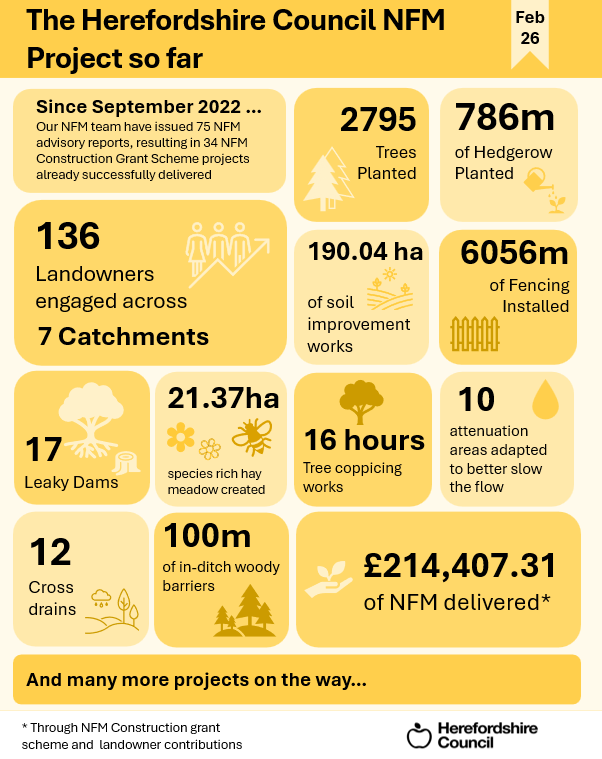
As a project, we feel it's important to showcase the hard work that our catchment advisors and engaged landowners have been carrying out, creating a landscape which slows and stores water. Below is our February 2026 summary of Natural Flood Management works implemented since the project's launch in 2022.
February 2026 Summary of NFM works delivered
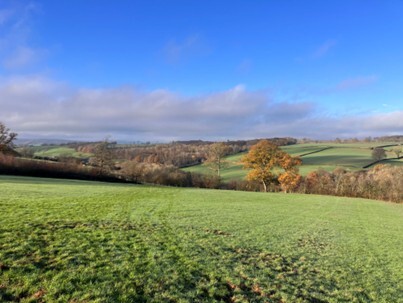
Sunny, cold December morning at Bitterley Hyde Farm (Photo - NFM Team)
On Wednesday 3rd of December 2025, the team joined Herefordshire Meadows for their annual winter management and seedling identification day, which this year was hosted at Bitterley Hyde Farm. The event brought together multiple landowners who had received guidance and support from Herefordshire Meadows to create or restore hay meadow habitats.
With help from Herefordshire Meadows and our catchment advisor from the Wye and Usk Foundation for the Bodenham Brooks catchment, the Herefordshire Natural Flood Management Project was able to fund seed for 14.32 ha of hay meadow restoration at Bitterley Hyde.
Birds foot trefoil (Photo - NFM Team, June 2024)
Creating meadows, particularly those on sloped land adjacent to a watercourse, is an excellent option for intercepting surface water runoff and improving water quality. Meadows have a diverse soil structure with plenty of air pockets to hold water. By restoring these priority habitats, improving the soil’s structure and organic content, we hope that flood risk will be reduced to communities downstream.
The group went on a walk of the recently seeded meadow to try and spot some of the key species you might expect to see starting to sprout through the soil. These include:
Wetlands and wet grasslands are considered one of the UK’s priority habitats due to their importance in carbon and water storage, as well as their many ecological benefits. However, these key habitats have declined by 90% over the last century along with many other priority habitat types.
Wet grasslands are seasonally flooded grassland habitats dominated by grasses and sedges. These semi-natural habitats are common across floodplains, marshes and riparian zones, and support a wide variety of birds such as Curlew and Lapwing. Wetlands are usually permanently or seasonally wet ecosystems and can encompass wet grassland habitats as well as fens, marshes and peat bogs. Because of the broad range of habitats within wetlands, they support a wider range of species than wet grasslands.
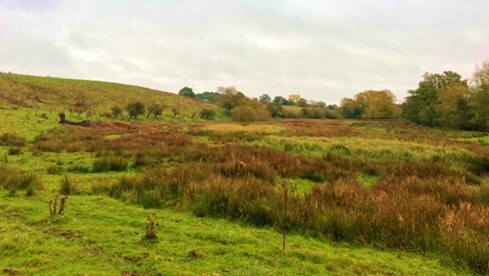
Wetland (Photo - NFM Team)
As the name suggests, wetland and wet grassland habitats are excellent at storing water. Their soils are more porous and contain high levels of organic matter which absorb and retain water for longer periods of time. Because of their high water table and often low-lying position in the landscape, wetlands drain very slowly making them an ideal option for Natural Flood Management. During high flows, wetland and wet grassland habitats will intercept more sediment and debris, improving water quality.
The Herefordshire NFM Project aims to create or enhance a minimum of 7.04 ha of wetland and wet grassland across Herefordshire by 31 March 2027, with a view to exceeding this. So far, as a project, we have delivered 10 attenuation areas across the seven priority catchments, with many more planned.
Late winter and early spring can be the busiest time of year for farmers, with many occupied with lambing and calving around the clock. It can also be an important period for habitat and garden maintenance, as well as for sowing a wide variety of seeds.
Early spring is a great time to sow vegetables such as carrots, beetroot and lettuces, and the latest point in the year to plant bare-root trees before the following autumn. If you have apple or pear fruit trees, prune these before the buds emerge; this will help encourage new growth and improve fruit production.
If you have a meadow, it’s important to remove any invasive or dominant species such as nettles and thistles as early as possible, and remove any debris that may have accumulated over winter. |
|
 |
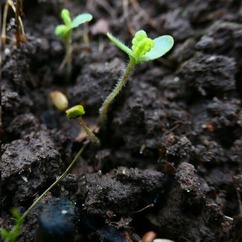
Rory Johnson from Herefordshire Meadows suggests that those with meadows should look out for Yellow rattle (Rhinanthus minor). These seedlings, identifiable by their lance-shaped leaves, are an indicator that it is time to shut up the meadow from grazing livestock until the hay cut in July. This is particularly important in restoration meadows, where these bright, yellow wildflowers help to suppress grasses in the first few years.
Yellow rattle seedling (Photo curtesy of Herefordshire Meadows)
How to help new life emerge in your garden!
-
Provide your garden birds with energy-rich food such as fat balls and sunflower hearts as nesting season begins.
-
If you have a pond, amphibians will sure to be nearby! Consider adding some pond plants to provide safe spaces for eggs and shelter from predators.
-
Keep a source of clean, fresh water available and ensure it does not freeze over. If you have a pond, consider adding a ramp , to give hedgehogs and other small animals safe, easy access.
-
Avoid disturbing log piles, as they provide important shelter for insects, amphibians and small mammals.
-
Put up some nesting boxes. If you already have some hanging up around the garden, give these a thorough clean!
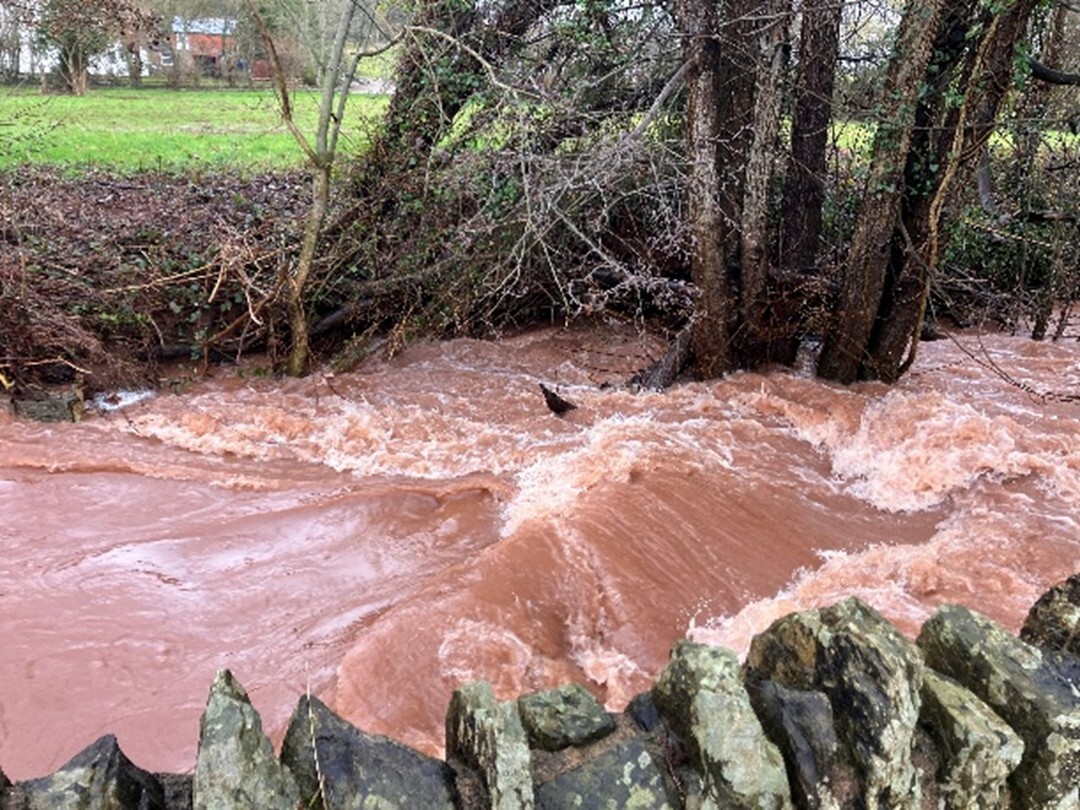
This winter has certainly been a cold, wet one. The Met Office has issued its monthly summary for January 2026, noting that the country has been experiencing temperatures 0.5°C below average and rainfall that far exceeded the long-term average.
High flows in the Dulas brook, Ewyas Harold (Photo – NFM Team)
January alone has seen three named storms: Goretti, Ingrid and Chandra. According to the Met Office, the Southwest of England and Wales received an average of 23.5 days of rain, equating to 215.3 mm of rainfall - that’s 156% of the long-term average for the region! With prolonged periods of rain like those we are currently experiencing, the ground has become saturated, resulting in a near‑constant flood risk across the country.
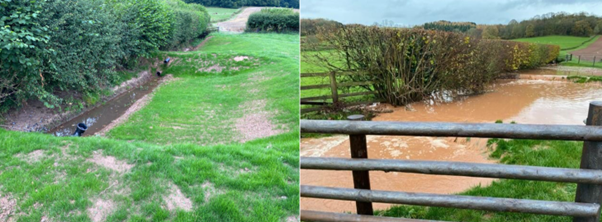
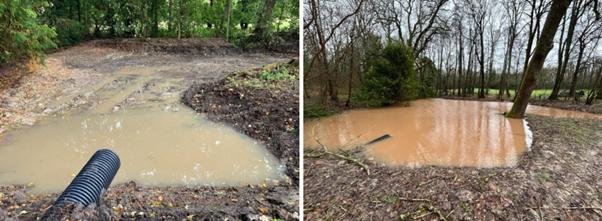
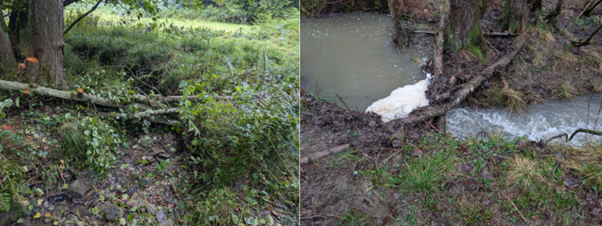
Our catchment advisors often receive updates from landowners showing their natural flood management features in action during storm events. See the photos below to observe how attenuation ponds and leaky dams have been storing increased volumes of water over the winter period.
Attenuation area in the Bodenham brooks catchment (Photo- NFM Grant Scheme recipient)
Attenuation area in the Tedstone brooks catchment (Photo - NFM Grant Scheme recipient)
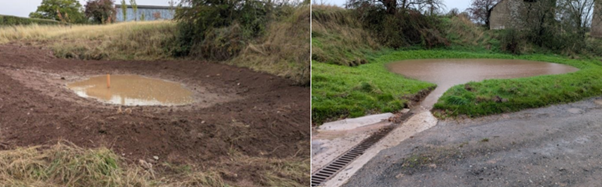 Attenuation area in the Cheaton, Cogwell and Ridgemoor brooks catchment (Photo - NFM Grant Scheme recipient)
Leaky dams in the Brimfield catchment (Photo – Jacob Loughran)
We would like to thank all of the landowners who have engaged in the project so far, and for sharing images of their completed works in action and ‘slowing the flow’.
If you have pictures of your Natural Flood Management features in action on your farm or land, why not send them in to our NFM inbox: NFM@herefordshire.gov.uk
The Get flood warnings service on GOV.UK website offers a simpler, more flexible way to manage alerts.
Users now log in with a one-time passcode instead of a password and can register up to 15 locations and multiple contacts for email, text, or phone notifications.
It includes interactive maps, clearer warning descriptions, and automatic ‘all clear’ messages when alerts end. You can also tailor which contacts receive flood alerts or warnings and add locations within 500m of a warning area.
If you’ve previously signed up to the old service, your details will have been migrated automatically, so there’s nothing you need to do. But it’s worth checking your account to confirm your locations and preferences.
Get free tailored NFM Advice
Catchment Advisors from the Wye and Usk Foundation and Severn Rivers Trust are available to give free tailored advice about the NFM opportunities on your land. The advisors are also able to advise and support you in securing funding to deliver the recommended NFM opportunities.
If you'd like to get some advice or find out more, please email: nfm@herefordshire.gov.uk
|
Get funding to deliver NFM
The Herefordshire NFM Construction Grant Scheme offers financial support to landowners within the seven NFM Catchment areas to deliver NFM measures on their land.
Apply now to get funding for NFM projects containing any of the measures detailed in the table below.
|
Key contacts:
|