 This newsletter aims to update and inform people about the Herefordshire Natural Flood Management (NFM) project which is being delivered by Herefordshire Council within seven priority sub-catchments.
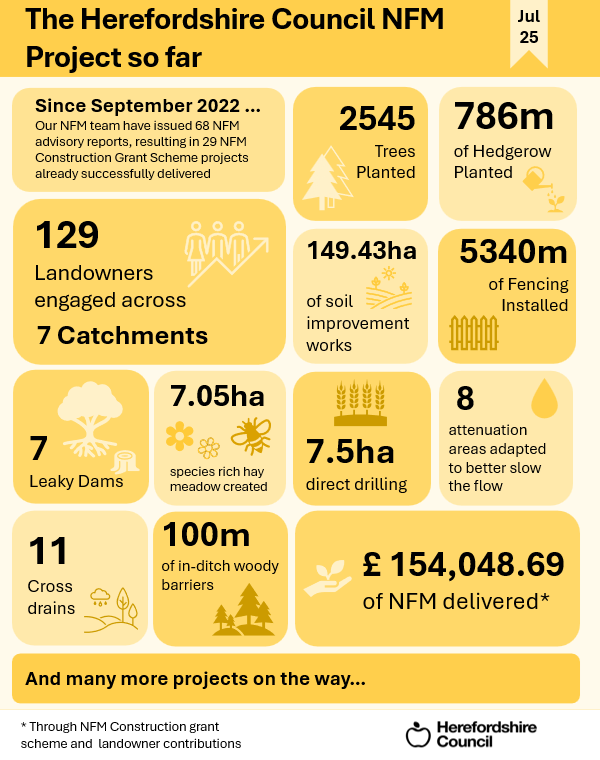
As a project, we feel it's important to showcase the hard work that our catchment advisors and engaged landowners have been carrying out, creating a landscape which slows and stores water. Below is our July summary of Natural Flood Management works implemented since the project's launch in 2022.
Figure 1: Natural Flood Management Grant Scheme summary – July 2025
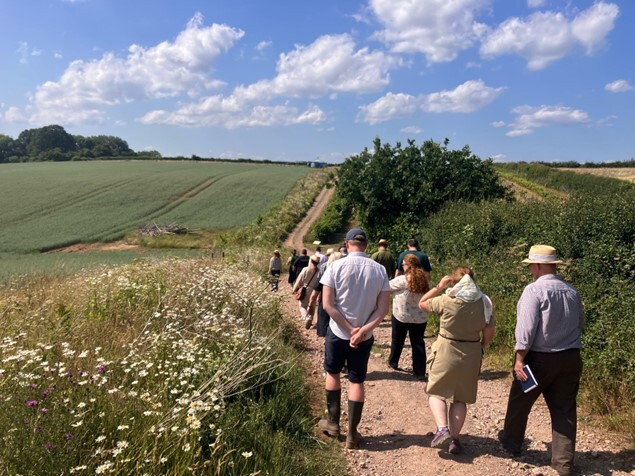
Figure 2: RegenBen takes Herefordshire Council on a tour of Townsend Farm
On the 18th of June 2025, the NFM team paid a visit to Townsend Farm in Brampton Abbotts, home of RegenBen, a pioneer in regenerative agriculture.
So, what is regenerative agriculture? Well, there is no simple definition, but to Ben, it follows 5 key principles of soil health:
Living roots - Maintaining living roots ensures that photosynthesis is maximised.
Limited disturbance - Ben aims to mimic natural processes in his farming practices. He believes nature did not intend for soil to be cultivated and disturbed frequently (including the extensive use of pesticides), and as such, has reduced practices that may disrupt this complex and vital resource.
Armour – To maintain healthy soils, ensure they are consistently covered. If you need to remove the cover for harvesting, replace it immediately. Exposed soil heats up significantly from solar radiation, experiencing temperatures 16 degrees Celsius higher than a soil that is covered. Exposed soil will lose more water via evaporation and is more susceptible to run-off. One way to cover your soil is by applying mulch. This helps ensure the survival of beneficial microbes and is a natural and cost-effective fertiliser.
Diversity - Whether it’s biological or social, Ben believes that diversity is an integral part of the success of his farm. Genetic diversity is a simple yet overlooked practice. ‘Boats’ as Ben calls it (or beans and oats), increases crop yield dramatically - 126% yield when combined! Natural habitats are never monocultures, and Ben’s farm reflects this.
Integrated animals - Mixed farming systems need animals. This includes mixing livestock such, as putting sheep with cattle to create a 'Flerd' (Flock and Herd).
Ben believes, like many, that soil is one of a farmer’s greatest assets. If soil is cared for, life on the farm will all thrive. Soil has been under immense pressure as machinery has advanced. Previously, horse-drawn ploughs could only reach shallow depths, but newer, larger ploughs can now disturb deeper into the soil layer.
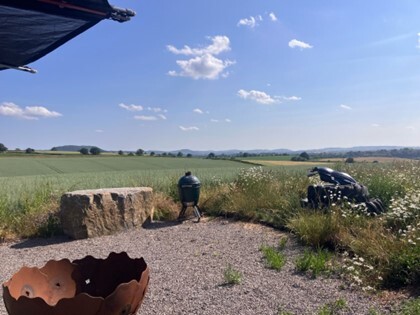
Figure 3: Looking over Townsend Farm from the 'Shade Haven'
Ben took the group on a whistle-stop tour of his farm: from his diverse agroforestry field, containing an array of berries, olive and other fruit trees, to his Hands Off Vineyard, which produced around 8000 bottles of wine in its best year, and is managed by sheep! He also showed us his 4 different types of compost methods on the farm, including an anaerobic bokashi compost that ferments food waste as opposed to carrying out decomposition. The bacteria thrive in the oxygen lacking environment, which results in a healthy, sustainable compost created in much less time than traditional composting.
One of RegenBen's ethos' is to get more people on his land to see the work his family is putting into the farm for both education and wellbeing. He believes that people thrive in open spaces and that farms like his can benefit people's physical and mental wellbeing through what he calls his 'Natural Health Service'.
We then finished the tour at the top of the farm in the cow "shade haven" for a delicious, cold drink of Ben's Apple and Raspberry juice, which was much needed during the June heatwave! Thank you to Ben for taking us on a tour of Townsend Farm and to his family for being great hosts and to those who kindly organised this event.
If you would like to learn more about RegenBen and his inspiring story, visit his webpage.
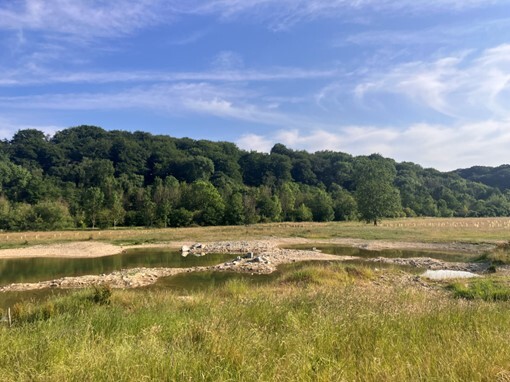
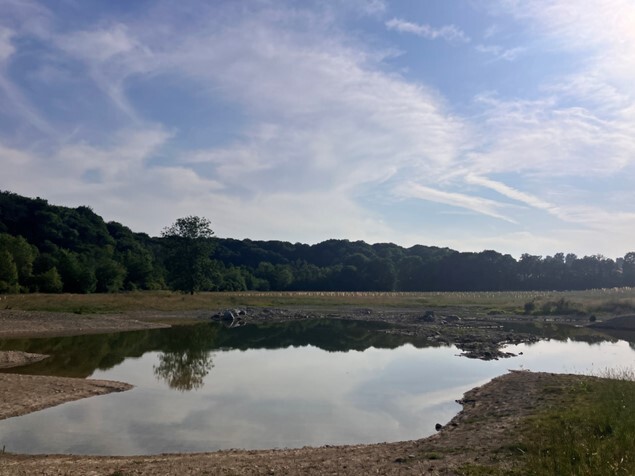
Figure 4: Mowley Valley's recently installed scrapes
On the 19th of June 2025, some of the team went on a tour of Mowley Valley. Located near Staunton-on-Arrow and Titley, Herefordshire, Mowley Valley is a private 168-acre expanse of species-rich, wildflower meadows, woodland (both ancient and young plantations), and riparian habitats teeming with life. The project, overseen by Catherine Janson, Tony Norman, Sarah Cadwallader, and David Griffith, began in 2019, with the aims of creating a complex mosaic of habitats that would both boost biodiversity and improve the valley's flood resilience by creating healthy soils that can store more water. As such, the valley provides many ecosystem services and products, such as carbon sequestration and flood risk reduction, as well as timber, hay, seed, and space for grazing.
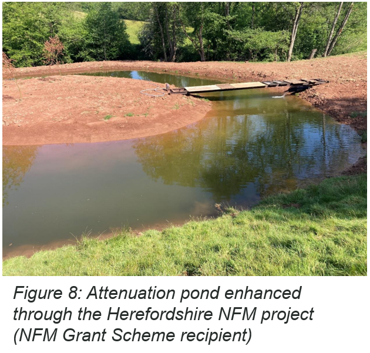
The project has received funding from numerous grants including the Environment Agency, which helped plant 10ha of trees. Within this recently planted field, a series of 7 scrapes (shallow ponds less than 1m deep, that temporarily store water) and ephemeral ponds were designed and installed to store water and slow the flow to the nearby River Arrow. The pond sides have an incline of 3 degrees which creates a steady transition between the water and grassland which can be inhabited overtime by an array of plant life. This also creates easy access for invertebrates and mammals alike, of which many dragonflies were seen darting across the pools in the heat of a mid-June evening, when we were lucky enough to visit this beautiful site.
Figure 5: Mowley Valley's scrapes and recently planted trees in the background
On the walk, Catherine highlighted some of the challenges they had faced as a project, a big one being the constant battle of removing invasive species such as Giant hogweed (Heracleum mantegazzianum) and Himalayan balsam (Impatiens glandulifera). Despite this, the valley is home to a plethora of species from common pioneers to rare and uncommon species that had not been seen in Herefordshire in over 50 years or ever recorded, such as Ephemeratum recurvifolium and moths such as Apeira syringaria.
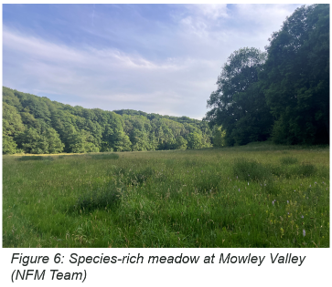
Moths in particular have been exceptionally prevalent on the site, with more than 550 species identified - that’s over 1/5 of the UK's known moth species! The species-rich grassland, in particular, has 25 species of grasses and flowering plants per square meter. Yellow rattle (Rhinanthus minor) has particularly taken to the grassland, which the team collect with a seed vacuum to avoid species dominance, and sell it on for seed mixes.
|
We would like to extend our thanks to Cllr Phillips for organising this event and to the team at Mowley Valley for taking us on a tour and showing us how all their hard work has paid off!
What are attenuation areas?
Attenuation areas temporarily store water during high rainfall or flow events, encouraging the slow infiltration of water into the soil. These features include ponds, bunds, grass swales, scrapes, and any measure that aims to store water.
Benefits of attenuation areas
As well as temporarily storing flood water, attenuation areas have proven beneficial for both people and nature.
Here are just a few examples:
- Reduce pollution and sediment runoff into rivers – improving water quality
- Groundwater recharge – improving resilience to drought
- Enhance biodiversity - Features such as scrapes have shallow, sloping sides which allow small mammals to access the water safely to drink. Fish, amphibians, and invertebrates such as dragonflies rely on these littoral zones for shelter and breeding.
- Enhancing recreational green spaces for public well-being
Design
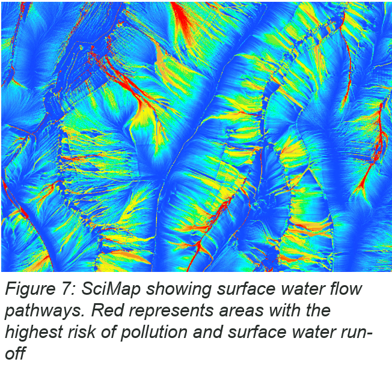
When designing an attenuation area, many factors must be considered, including surface water flow pathways, the size and volume of the feature, soil and geology type, and any designations already in place such as tree protection orders or SSSI’s.
 |
|
First, our advisors look at a SciMap, a map designed by Durham University to show surface water flow lines and potential pollution run-off hotspots. The advisors can use this software to identify potential attenuation area locations. Areas with high runoff will generally benefit from runoff management. These are shown in red on a Scimap (left). |
They then use Scalgo to map the attenuation area. This software allows users to manipulate the landscape’s terrain to see how water will flow or be stored during different rainfall scenarios. The farm advisor will also ensure that a site walkover is conducted. Here, they will look for evidence of flowing water and check if there are any dangers to the area downstream of the attenuation area if the feature is installed.
Attenuation areas are unique to each site, and there is no specific 'one size fits all' design. Not all features will require excavation, with some attenuation areas being as simple as leaky, woody barriers across a flow pathway on a grassland, to encourage the pooling of water behind the structure. Some can be implemented as a series of ponds or scrapes, whilst others can be stand-alone features.
|
The Herefordshire NFM grant scheme funds multiple types of attenuation areas:
- NFM06 Grass swales
- NFM07 Sediment Trap
- NFM08 Attenuation area
- NFM09 Earth bund
|
|
 |
Attenuation areas result in a change to the watercourse and can require excavation work. Because of this, consents are required. The Herefordshire NFM Project has created a series of consenting flowcharts for each natural flood management feature, including attenuation features, which highlight our best understanding of the consents and permissions needed prior to installing NFM. The NFM consenting flow charts can be requested via the Council's webpage.
It is important to be aware of the rules surrounding the ownership of a watercourse. See the Gov.UK website for more details.
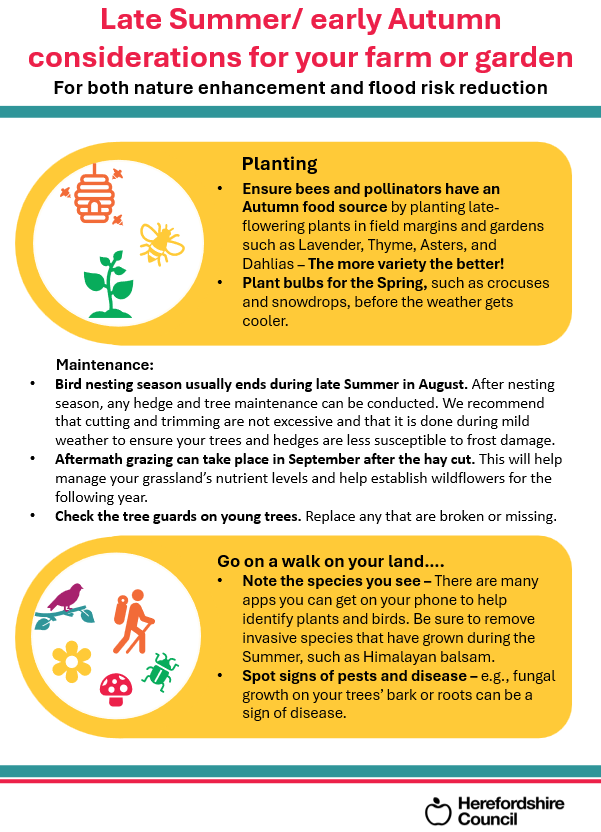
Figure 9: Considerations for nature enhancement on your farm or in your garden during late summer
The Herefordshire Flood Risk Management and Drainage (FRMD) Team has recently expanded, welcoming two new Principal Flood Risk Management and Drainage officers and one Flood Risk Management and Drainage assistant. Keep reading to learn a bit more about the team!
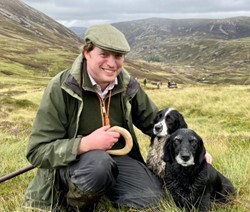
Henry Snell joined Herefordshire Council in May 2025, bringing with him over twelve years of experience in flood risk management. He comes from a Herefordshire farming family and has a strong personal connection to the local landscape and rural communities. A Chartered Civil Engineer, Henry previously worked for a private consultancy, where he helped deliver a broad range of flood alleviation schemes—from large-scale flood defences on the Humber Estuary to smaller natural flood management and catchment-based projects. He supports the team in developing and delivering solutions to help reduce flood risk for communities across Herefordshire, promoting sustainable and resilient approaches to water management.
|

Tom Barratt joined Herefordshire Council in April 2025, having previously worked at Stroud District Council. His career has focused on flood risk management within local authorities, with experience in planning, consenting, and enforcement, flood response, and post-incident investigations. He supports the team in delivering LLFA functions. He has a BSc in River & Coastal Engineering. Outside of work, he is a keen runner, preferring trails to tarmac, and re-enacts early medieval history in a national society.
|

Zara Preece joined Herefordshire Council in June 2025 and is typically the first point of contact for the team. They support the administration of the team’s work and help direct queries and concerns to the appropriate channels. Outside of work, Zara enjoys hiking and paddleboarding.
|
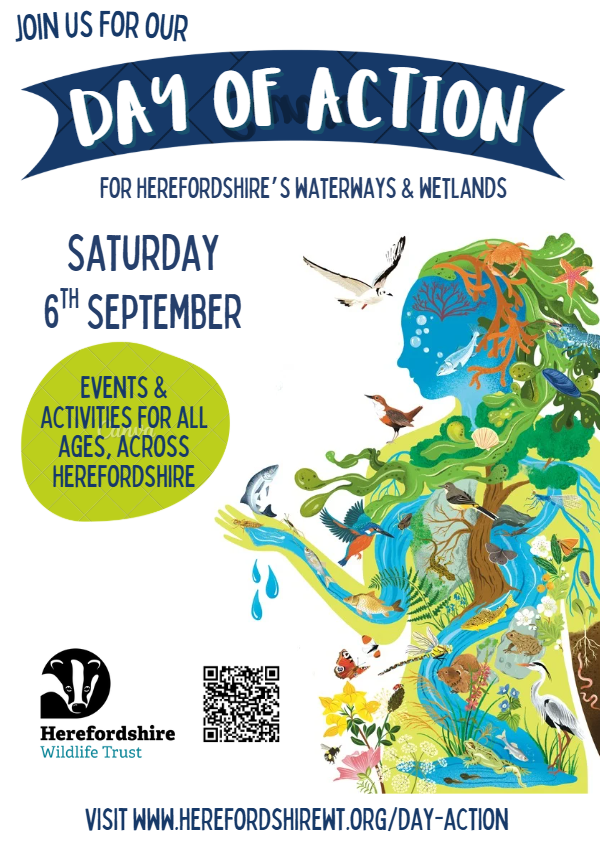
Herefordshire Wildlife Trust - Day of Action for Herefordshire's waterways and wetlands - Saturday the 6th of September 2025
The Herefordshire Council NFM team will be hosting an event for the day. More details to come soon.
Keep an eye out on the Herefordshire Wildlife Trust events page to find out more about what's going on across the county and how you can get involved!
Get free tailored NFM Advice
Catchment Advisors from the Wye and Usk Foundation and Severn Rivers Trust are available to give free tailored advice about the NFM opportunities on your land. The advisors are also able to advise and support you in securing funding to deliver the recommended NFM opportunities.
If you'd like to get some advice or find out more, please email: nfm@herefordshire.gov.uk
|
Get funding to deliver NFM
The Herefordshire NFM Construction Grant Scheme offers financial support to landowners within the seven NFM Catchment areas to deliver NFM measures on their land.
Apply now to get funding for NFM projects containing any of the measures detailed in the table below.
|
Key contacts:
|