March 2025
Focusing on continued improvements

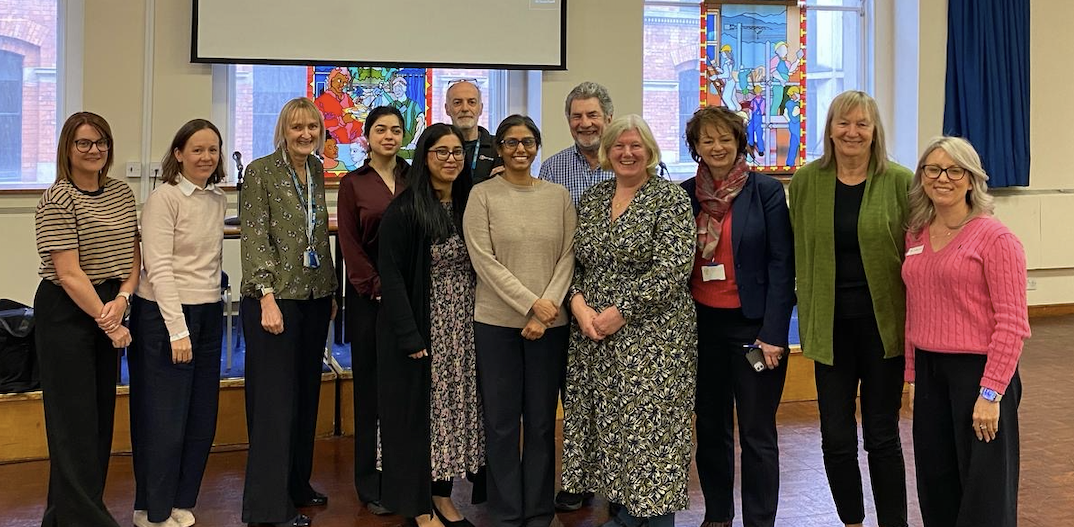
Pictured above: some of the attendees at the recent Children and Young People Stakeholder Forum, including clinical lead Easwari Kothandaraman (sixth from right), Strategic Clinical Networks director Julie Cheetham (third right) and medical director Dr Peter Elton (fifth right).
Recently announced reforms from Government will see the abolition of NHS England and a significant reduction in resources available to functions presently undertaken by NHS England and integrated care boards. This will be challenging.
We do not know how these changes will affect the work of the Strategic Clinical Networks (SCNs) yet.
Our clinicians and the staff at the SCNs feel proud of the work they are continuing to undertake to improve the health of our local community.
We are determined to drive forward our work for the foreseeable future. Any changes that we have to make will be done in consultation with the clinical community.
This latest newsletter illustrates the importance of the improvements we have carried out since 2013, and hope to progress over the next few years, with lots of great examples of the power of our projects.
The blog by consultant vascular surgeon Naseer Ahmad is a good case in point. Hundreds of people have not needed a lower limb amputation thanks to the efforts he and his colleagues have made with the support of the SCNs.
Also in this month’s newsletter:
Palliative and end of life care: Network supports hospices’ funding visit to Parliament.
Children and young people: latest stakeholder forum discusses issues which impact on young people.
Cardiovascular: new pathway designed to save lives gets underway. Survey launched to improve education resources.
Maternity: two events in one day to discuss perinatal loss and pre-term birth.
Neurorehabilitation and stroke: safe fasting guide for people during Ramadan. Annual training report published.
Staff news: Farewell to Gill Bailey.
Thank you again for your continued support.
Best wishes


Support for hospices on Parliamentary visit
The Network travelled to Parliament to support hospices in Greater Manchester who are asking the Government to reform their funding model.
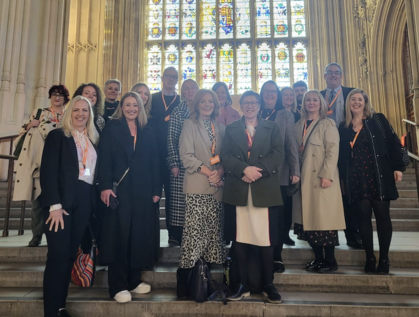
The Network's clinical lead, Dr David Waterman, and senior programme manager, Elaine Parkin, joined leaders from the city region’s hospices to explain to MPs the importance of the care they offer.
The Greater Manchester Hospices Provider Collaborative, made up of adult and children's services, is asking MPs to sign a joint letter to the Minister of State for Health and Social Care, calling for the Government’s new 10-year health plan to include commitments to improving palliative and end of life care, and reforming the hospice funding model.
Since 2020 hospices in Greater Manchester have seen their total costs increase by 33%, with most of this cost having to be met by fundraising from the local community. Currently, £11.7bn is spent on people in the last year of their life, but hospice care only receives 4% of the funding.
Elaine said: “Hospices play a crucial part in the delivery of palliative care services and the GM system work towards the ‘Greater Manchester Commitments to Palliative and End of Life Care’.
“They are well embedded in the local community and can offer a level of support in the hospice or in the patient’s own home to support the individual and those closest to them.”
Martin Foster, programme lead for the collaborative, said the Network’s support had been invaluable. He added: “The wider context they were able to provide added enormously to the richness and impact of the wider conversation.
“The MPs in the room really appreciated hearing from the experts about rises in the volume and complexity of palliative patients, and how enabling equitable access to good palliative care can be a key part of improving patient care and delivering on the Government's priority of shifting care from hospital to community.”
Demands on hospice services are only set to increase and the current funding model means they need to ask more and more of their communities every year - at a time when the cost of living is at an all-time high.
The Government has made a commitment to invest £100m nationally in additional capital spend in hospices over the next two years, which has been welcomed by Greater Manchester’s hospices, but only offers a short term solution.
Photo top: Representatives from Greater Manchester hospices, together with the Network's Dr Waterman and Elaine Parkin, inside Parliament.
|

Forum addresses key issues for young people
Young people joined health and social care professionals to discuss a wide range of issues which impact on their lives.
More than 40 people attended the latest Greater Manchester Children and Young People’s Stakeholder Forum, where topics included asthma, diabetes and epilepsy.
Highlights included:
- Implementation of a national diabetes transition and young adult pilot in Stockport which engaged with 234 young adults in its first year, 32 of whom had been disengaged for more than 18 months, and with input from the service showed a significant improvement in clinical outcomes.
- Working with Oldham and Stockport diabetes teams, and partners ABL Health, to test a risk stratification tool for type 2 diabetes (T2D), for children in weight management services. This will enable us to develop referral and care pathways.
- A national healthcare youth worker pilot hosted by Manchester Foundation Trust, and delivering youth work to young people in Oldham and Rochdale, engaged with 79 young people with epilepsy between May and December 2024, enabling them to benefit from a range of youth work activities including sailing and climbing.
- Between February 2024 and January 2025 there were 1,400 unplanned hospital admissions for asthma for Children and Young People aged 0-18 years in Greater Manchester. We have been working to implement the Digital Health Passport which provides self-management support for asthma and the city region has the highest number of users in the country at 720.
|
The forum also discussed the pending NHS 10 Year Plan, the Royal College of Paediatrics and Child Health (RCPCH) report on transforming child health services in England: a blueprint, Lord Darzi’s report on the NHS in England and the Joint Forward Plan for Greater Manchester.
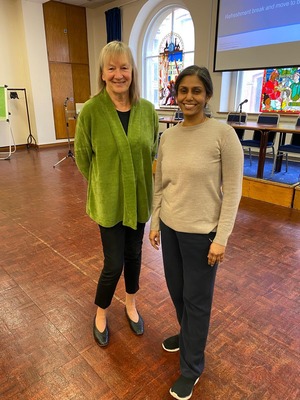
The session was chaired by the Network’s clinical lead, Dr Easwari Kothandaraman, who welcomed her predecessor, Dr Carol Ewing, to provide the context for the forums, recapping on previous events through to the current time (both pictured above).
The forums were established to support delivery of the objectives of the GM Children and Young People Health and Wellbeing Framework and continue to address key issues for health and wellbeing, as well as the inequalities in health access and outcomes, particularly in asthma, epilepsy and diabetes.
Dr Kothandaraman said: “It was a very positive meeting and great to see so many people engaging and wanting to contribute and make a real difference.
“Ideas have been shared that may not need great funding, but will make a real difference to the care of children and young people with long term conditions.”
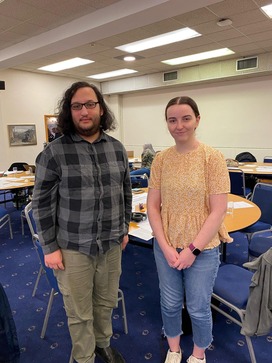
Two young people who attended were Rohan and Hannah (pictured above left). When Dr Peter Elton, the SCNs' clinical director, asked how services could be improved, Rohan said he would like to see youth crisis cafes, which could reduce the number of people going to emergency departments and decrease pressure on frontline services.
|


Pan-Greater Manchester out-of-hospital cardiac arrest pathway launched
A new pathway designed to save lives, and led by the Network, is set to be launched.
From April 1, a new procedure will see all patients who have a cardiac arrest in Greater Manchester transferred to one of two heart attack centres for specialist treatment.
Until now, most people were taken to the nearest emergency department.
A pilot held in 2023-2024 has shown this approach increased a patient’s chances of survival and has a minimal impact on emergency department (ED) pressures and bed capacity.
When a patient has an out-of-hospital cardiac arrest they will be taken to either Manchester Royal Infirmary or Wythenshawe hospital, depending on which is the nearest, or, if outside daytime hours (5.30pm-8am), whichever is the on-call site for the specialist treatment.
Clinical lead Professor Fath-ordoubadi Farzin said: "We are pleased to announce the extension of this service across the entire Greater Manchester region.
"This enhanced service is made possible through a collaborative effort within the cardiac network, involving the North West Ambulance Service, emergency departments, intensive care units, and the cardiology teams at Manchester University NHS Foundation Trust.”
The Cardiac Network remains committed to collaborating with stakeholders to further refine the service, focusing on areas such as repatriation, neuro-prognostication and rehabilitation.
|
Complete survey to help improve education resources
Healthcare professionals involved in cardiovascular disease (CVD) prevention are being asked to give their views on education and training in the city region.
The Greater Manchester multi-year prevention plan identifies CVD prevention as a priority for 2025/26 and the Network has launched a survey to find out what can be improved.
A survey has been developed which asks people for views on how education resources are promoted and delivered. The answers will also help to develop potential training offers for 2025/26.
The poll is being shared widely across Greater Manchester to gather feedback about current education offers and how education needs around CVD prevention can be addressed in 2025/26.
The survey is open now.
Relaunch of rapid pathway
The Network is excited to announce the relaunch of its new rapid access acute coronary syndrome (RAACS) pathway.
The initiative is designed to accelerate the diagnosis and treatment of patients with suspected acute coronary syndrome (ACS) to improve outcomes for patients and streamline care delivery.
The key changes and improvements are:
- Faster triage and diagnosis: Introduction of a revised triage protocol that reduces waiting times and leverages high-sensitivity troponin tests and advanced ECG interpretation tools.
- Streamlined referral process: Direct and efficient referral to cardiology specialists ensures that patients receive timely evaluation and treatment.
- Enhanced communication: Improved coordination among emergency, primary, and specialist care teams to facilitate rapid decision-making.
The target patient groups for this relaunch are patients who present with chest pain and other symptoms suggestive of ACS, especially those with known cardiovascular risk factors.
Individuals whose symptoms are determined to be non-cardiac in origin, or those requiring alternate clinical pathways, are also included. Patients admitted to all Greater Manchester hospitals will be included
The pathway is not designed for patients whose symptoms are not cardiac in origin, or those requiring alternate clinical pathways.
The process and workflow is:
- Initial presentation: Patients presenting with chest pain are assessed in the emergency department/acute medical unit (RAACs referrals are made based on cardiac chest pain and a troponin raise of greater than 3 times the normal range)
- Rapid diagnostic testing: Use of high-sensitivity tests (troponin assays and expedited ECG analysis) to assess cardiac risk.
- Timely intervention: Target timelines include early administration of treatments and rapid access to diagnostic imaging or angiography, as required.
The expected benefits for patients includes reduced time to diagnosis and treatment, leading to lower complication rates and improved survival outcomes, while healthcare teams should experience more efficient patient management, optimal allocation of resources and a reduction in hospital admissions.
For the health system, it offers a proactive approach to managing acute cardiac events that enhances overall care quality and system responsiveness.
The pathway will be implemented across all relevant departments from next month with training available via Teams if required. Detailed protocol documents and quick reference guides will be made available.
The Network sees the new RAACS pathway as marking a significant advance in its commitment to delivering high-quality, timely cardiac care.


Make every contact count more - a clinician's blog
Consultant vascular surgeon Naseer Ahmad (pictured left) has been leading the pioneering Manchester Amputation Reduction Strategy over the past few years – a trailblazing programme which aims to prevent, manage and heal chronic foot and leg ulcers faster to prevent lower limbs having to be removed.
The path to an amputation begins with an ulcer that is inadequately treated in people with diabetes, peripheral arterial disease, venous disease and lymphoedema.
Around 5,000 lower limb amputations are performed annually in Greater Manchester, which has been reduced by around 21% in recent years, thanks to the strategy.
The programme focuses on reducing the variation in outcomes in different localities using different approaches and here Naseer writes about the programme’s latest pilot, ‘Make Every Contact Count More’.
Manchester Amputation Reduction Strategy: Pioneering a new era in public health screening
“In our continuous journey toward a healthier Greater Manchester, we are proud to introduce our ground-breaking fourth pilot project under the Manchester Amputation Reduction Strategy (MARS).
The three existing initiatives have helped reduce lower limb amputation prevalence in its pilot area of Salford by 46% within 6 years. These are being scaled up.
We are excited to announce the preliminary results of our pilot ‘Make Every Contact Count More’.
|
How does Aneurysm Screening Make Every Contact Count More?
Under this initiative, our rejuvenated Greater Manchester and East Cheshire Abdominal Aortic Aneurysm Screening Programme (GMEC-NAAASP) is already making waves by inviting 18,000 men each year for an abdominal ultrasound—with an uptake rate of over 79%. In our new pilot, we are enhancing this model by incorporating additional point-of-care testing along with appropriate comprehensive lifestyle, community and GP follow-up.
We are testing a powerful hypothesis: can we shift from opportunistic to structured screening by leveraging the established infrastructure of public health screening programmes AND make significant savings? In our pilot we have trialled measuring blood pressure in men aged 64 and above alongside their aneurysm screenings. Preliminary results from our collaboration with the CVD Prevention Team are promising.
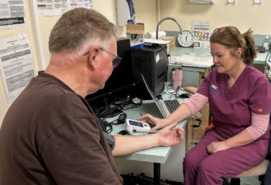
We have done 700 blood pressures in 350 people and use the lowest reading for analysis. 40% had high blood pressure of whom 60% were not known to be hypertensive, additionally 3% had an irregular heartbeat.
The test costs less than £7 per individual and we can provide blood pressure machines to qualifying men for less than £30. This offers a significant saving compared with the NHS Community Pharmacy Blood Pressure Check Service which costs £15 per blood pressure check, £45 per blood pressure machine and yields a case rate less than half of ours.
|
What’s the bottom line?
Preliminary data, therefore, suggests that using the aneurysm screening programme to measure blood pressure costs has been more effective than previous projects.
Scaling Up for Greater Impact
The positive outcomes from our pilot have set the stage for scaling up the programme. With plans to include additional point-of-care tests including those for mental health and deafness as well widening out to include other screening programmes, we believe this innovative approach is a game changer that could redefine how we detect and manage long term health conditions in our community and ultimately save both limbs and lives.”
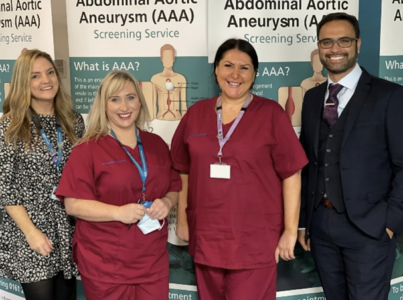
Photo top (left to right): Angela Aldridge (programme manager), Michelle O’Rourke (vascular screening technician), Claire Butterworth (vascular screening technician), Naseer Ahmad (clinical director MARS and AAA Screening). Picture above: Clare Murray (vascular screening technician) with patient.
|

Easy access referral for women launched
To support improved access to the Healthier You NHS Diabetes Prevention Programme (NDPP), women with previous gestational diabetes can self-referral through a new online portal without the need for a GP referral.
GP practices simply need to send the sign-up link to people who are eligible, allowing them to self-refer to this life changing support.
The Primary Care Referral Toolkit includes a text template and guidance on running system searches to identify eligible individuals.
Gestational diabetes is one of the strongest risk factors for the subsequent development of type 2 diabetes with up to 50% of women diagnosed with gestational diabetes developing type 2 diabetes within 5 years of the birth.
The Healthier You programme helps women who have had a diagnosis of gestational diabetes at any stage to not only lose weight gained during pregnancy, but also to lower the risk of developing type 2 diabetes.
|

A day of reflection, planning and learning
The Maternity Network held two events in one day, bringing together stakeholders to discuss both pre-term birth and perinatal loss.
The 3rd annual Preterm Birth Study Day brought together GM providers to discuss the journey of preterm birth services to date, as well as future plans.
The team was joined by Dr Lydia Bowden, a consultant neonatologist, to show the true collaborative nature of the work of the preterm birth services, as well as inviting a Greater Manchester provider to demonstrate their work within the preterm prevention clinic.
Guest speaker Dr Angharad Care, from Liverpool University, showcased how we could do more to accurately predict those at risk of premature birth.
The feedback from the event has been very positive with all attendees enjoying the interactive and open discussions that were possible.
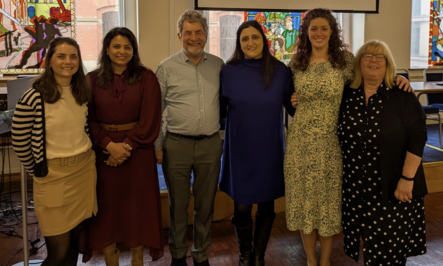
(Pictured above: Speakers at the preterm session, left to right: Dr Angharad Care, Dr Stephy Mathen, Peter Elton, Ghazia Saleemi, Dr Lydia Bowden, Eileen Stringer.)
|
Later, the 11th annual perinatal loss study day got underway, also hosted at the Mechanics Institute in Manchester.
The varied programme included talks from each of the seven GM and Eastern Cheshire maternity provider sites about an aspect of bereavement care which the maternity unit wished to share.
The presentations demonstrated the dedication, compassion and collaborative working of the bereavement midwives and Rainbow Clinic staff.
The patient feedback and stories showed how much families value the care, support and continuity offered by these services.
There were also talks by three invited speakers. Kate Navaratnam, consultant in maternal and fetal medicine at Liverpool Women's Hospital, gave an update on the new regional guideline for termination for fetal anomaly, while Zoyah Sheikh, PhD student from the University of Manchester, presented her work on the maternity care experiences and psychological support needs of Black and Pakistani women following perinatal loss.
Gabby Cocking, midwife and senior project manager from NHS England, and Victoria Holmes, bereavement matron at Manchester Foundation Trust, spoke about their involvement in piloting a bespoke digital clinical placement in bereavement care for 3rd year midwifery students.
The Network would like to thank the presenters at both events, as well as organisers and delegates.
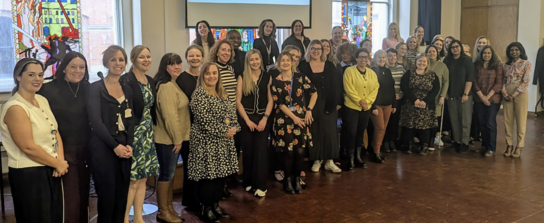
(Photo above: attendees from both sessions.)
|
Changes to local maternity system
From April 1 this year, maternity services in Macclesfield will leave the Greater Manchester and Eastern Cheshire Local Maternity and Neonatal System and join the neighbouring body in Cheshire and Merseyside.
Historically, services within East Cheshire Trust (Macclesfield Hospital) have aligned to Greater Manchester due to the flow of women requiring additional services within the our city region’s footprint.
Now Integrated Care Boards (ICBs) are more mature and have responsibility for commissioning and assuring maternity services, the time has come for East Cheshire Trust to align back to the commissioning footprint of Cheshire and Merseyside LMNS/ICB.
The SCNs’ director, Julie Cheetham, said: “The Greater Manchester LMNS team has done a sterling job supporting East Cheshire to re-establish its maternity services following the suspension of them during the Covid 19 pandemic.
“Full maternity and neonatal services are now fully operational. We would like to wish the teams at East Cheshire every success and thank them for continued input into the quality improvement they have undertaken with us.”
Local maternity and neonatal systems are partnerships of people involved in maternity and neonatal services, working together to improve services, make them safer, more personal and kinder to people who use them.
New report shows fall in northerners smoking
A new report has found that between 2006 and 2024 smoking rates in the north of England fell faster than the national average, with initiatives like Greater Manchester’s Smokefree Pregnancy programme playing a key role.
The Society for the Study of Addiction’s research shows a reduction in geographic inequalities in smoking prevalence and that the North is being brought into alignment with other regions.
Delivered between NHS Greater Manchester, including the GMEC Strategic Clinical Networks, local authorities, NHS foundation trusts and technology partner, Accenture – Greater Manchester’s Smokefree Pregnancy Programme has successfully reduced smoking at time of delivery by more than 40% and led to more than 6,000 additional babies being born smokefree, since launching in 2018.
Jane Coyne, assistant director - Population Health, NHS Greater Manchester Portfolio –Treating Tobacco Dependency, said: “I am so proud to be part of this cultural shift in reducing the harms from tobacco, the work we have undertaken in NHS Greater Manchester alongside our other Northern colleagues shows the passion and determination to protect our citizens from the harm of tobacco.
“Together we can do more!”


Safe fasting guide for Ramadan
The Network has produced a leaflet (pictured left) to help equip health professionals, especially those in General Practice, with the information needed to support safe fasting in patients with chronic health conditions such as diabetes during the Holy month of Ramadan.
The guide was formulated through its health inequality workstream and in collaboration with the British Muslim Heritage Centre.
It highlights the importance of making healthier choices and consulting a GP or health practitioner when considering fasting whilst living with a chronic condition.
The key messages in the leaflet are:
- It is important to consult your GP when considering fasting when suffering from pre-existing health conditions to ensure it is safe to do so
- Fasting against the advice of your health care practitioner can lead to serious complications and can worsen disease severity and prognosis.
You can download the leaflet in three different languages by clicking on the links below:
|
Annual training report published
The Network has collated its training outputs from 2024 and published them in an annual report. You can download the report from the website.
Key achievements for the year include:
- 2 online webinars and 10 in person training events including the annual conferencewhich was also live streamed on YouTube
- 508 people attended face to face and online events
- Co hosted cardiorespiratory training with GM Active
- Our portfolio of >100 YouTube videos were viewed 8,242 times for over 905 hours,with 96 new subscribers bringing the total to 493
- Videos have now been watched over 32,500 times since channel launch in 2020
- The most popular video of the year was “What does a Neuropsychologist do?” with1,596 views
- “Understanding FND” is the most popular webinar of all time with 2,739 views.
You can find out more by visiting the Network’s training webpages.
Yearly conference open for registration
The Network will be holding its next annual conference on Tuesday, June 10, at the AJ Bell Stadium in Eccles.
The event includes both stroke and neurorehabilitation specialties and is open to professionals in health and social care and from other organisations such as the voluntary sector, industry and academia. You can download the draft programme.
Tickets are now available to purchase on the events page.
We are also launching our poster competition with prizes awarded in each category.
The deadline for abstracts is May 2, 2025, and you can find out how to enter here.

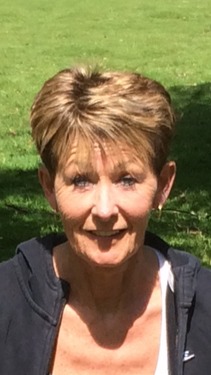
Goodbye and good luck Gill!
We bid a sad farewell to Gill Bailey (pictured left), senior project manager for our Palliative and End of Life Care Network, who retires at the end of this month.
Gill joined the team in March 2021, with more than 30 years of health and social care experience.
Her early work in institutionalised care settings motivated her passion for personalised and person-centred care, and throughout her career she has published numerous articles and journals.
Gill has been devoted to the development of person-centred practices and their practical application for individuals in the health and social care system, leading many successful projects whilst also delivering training and education to upskill the workforce.
She will be greatly missed in the team, but we wish her a wonderful and healthy retirement.
She is planning to spend time with her family, taking many long walks with her dogs and watching her beloved Manchester City.
|
|