|
In this issue
- New exhibition Mortimer at Sewerby Hall
- Sewerby Hall's dementia friendly workshops
- Beverley Art Gallery staff visit artist Phil White
- News from the Treasure House
-
Through the eyes of a Georgian gentleman at the Guildhall, Beverley
-
Goole by Barge - new exhibition at Goole Museum
- Call for artists for Goole Open Art Exhibition
- Visitor survey
- Christmas card competition winner
- ....and finally, Ghost on Trial
New exhibition Mortimer at Sewerby
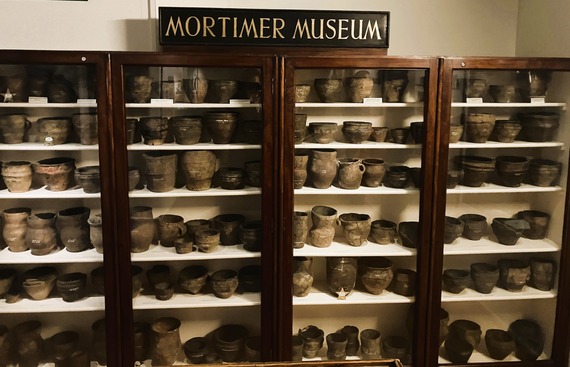
John Robert Mortimer was born in Fimber in 1825. He was a prolific antiquarian, archaeologist, author and curator who built the first purpose-built museum in the county to display his vast collection of finds from excavations on the Wolds. Nearly two hundred years after his birth, our exhibition Mortimer celebrates his life and times as an important figure in the archaeological firmament.
Mortimer is currently showing at Sewerby Hall's West Wing Gallery until 14 April.
Sewerby Hall dementia workshops
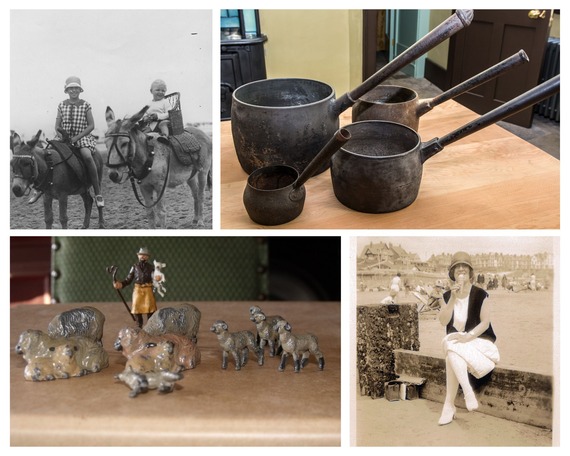 Sewerby Hall and Gardens have always welcomed visitors living with dementia and have launched a new offer for dementia groups visiting the museum. Four new Sewerby Evergreen workshops have been created using handling collections. The workshops are aimed at encouraging reminiscence and conversation and are titled Royalty, Seaside Holidays, Toys and Childhood and Domestic Life.
Royalty uses royal souvenirs as a starting point and invites participants to share their recollections and memories of jubilees, coronations and royal encounters.
Seaside Holidays aims to rekindle memories of past holidays through amateur tourism films, advertising brochures and objects such as buckets and spades and penny licks (for selling a penny’s worth of ice cream!).
Toys and Childhood focuses on the Sewerby Hall nursery and handling collection. Participants can play with the toys and use them to aid recollection of their own experiences of toys as children or parents.
Domestic Life might include a visit to the Edwardian Kitchen where everyday cookery utensils are on open display. Although most of the utensils are over a hundred years old, many have changed little over the years. The kitchen is one of the best rooms in the Hall for encouraging conversation and spontaneous memory.
Sewerby Evergreen workshops are designed to last between 30 minutes and an hour. For more information about visiting the Hall or booking a workshop go to
Beverley Art Gallery staff visit artist Phil White
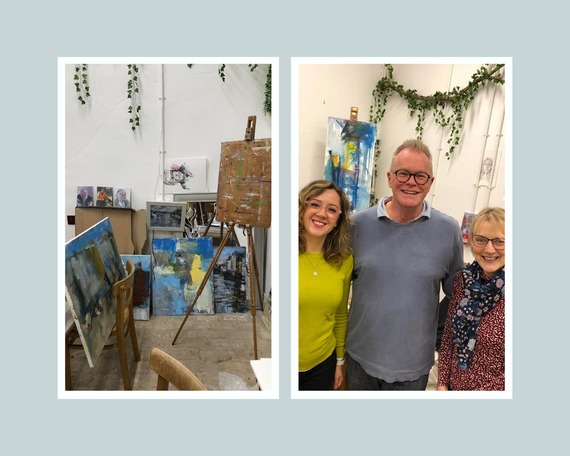 Curator Hannah and Technician Penny went to meet artist Phil White at Wassand Hall last week to chat about plans for his coastal-inspired exhibition at the gallery in 2025.
Phil is currently working in a studio space in the Courtyard at Wassand Hall where he is also busy with new project Wassand Art Adventure with artist Charlotte Eldred
News from the Treasure House
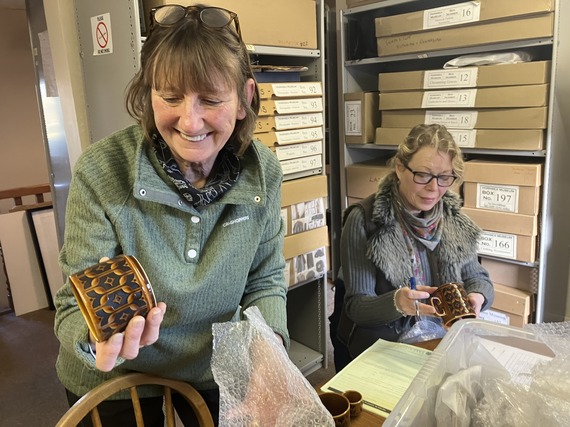 For many readers, no trip to the East Yorkshire coast in the 1970s and 80s was complete without calling in at the Hornsea Pottery visitor centre with its zoo, rides, factory tour and seconds shop. We’re working with Hornsea Museum to bring the story of the visitor centre to life in a new case display in the Treasure House Museum. Pictured are Denise (left) from Hornsea Museum and Debbie helping with Treasure House displays. Hornsea museum have kindly loaned items from the iconic Hornsea Heirloom range to the Treasure House. We look forward to sharing our new displays with you when we open in the autumn.
Georgian exhibition at the Guildhall, Beverley
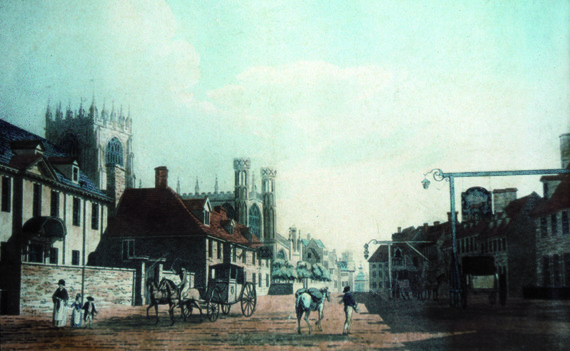 Beverley is a largely Georgian town, but how much do you know about Georgian times? The new Guildhall exhibition Through the eyes of a Georgian gentleman uses the diary of a Beverley gentleman, John Courtney who lived here from 1734 to 1806, to illustrate how life in Georgian England was experienced by real people in Beverley.
Fiona Jenkinson, curator of Beverley Guildhall said “The Georgian period was a time of great agricultural and industrial change, dominated by class, culture and consumerism. Fashion, society, and leisure were key to people like John Courtney, who travelled extensively around England and took part in much of the social life of Beverley, York and London. He also spent much time searching for a suitable wife, and his diary is full of accounts of unrequited love, giving us an insight into romance and courting during that time. We would like to thank Susan and David Neave for allowing us to draw on their book featuring transcripts and annotations from Courtney’s diary.”
Through the eyes of a Georgian gentleman opens at Beverley Guildhall on Wednesday 6 March and runs until 28 June 2024. The Guildhall is in Register Square, off Cross Street, and is open from 10am to 1pm on Wednesdays until 30 April, then Wednesdays 10am to 4pm, and 10am to 4pm on all Fridays (except Good Friday). Admission to the building is free
Goole by Barge
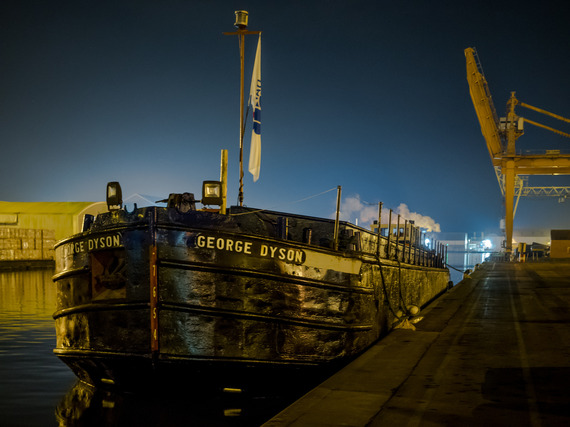 Goole by Barge is a new exhibition by Rich and Lou Duffy-Howard which launches on 9 February at Goole Museum. This exhibition of photographs, videos and music, documents their two-day journey on the working barge, the George Dyson, from Hull’s Albert Dock to York city centre via the Port of Goole. Rich photographed the journey from the barge and explained: “Taking photographs in low light without a flash is always a challenge but at night on a moving barge, it’s something else. Goole docks at night from the quaysides was different again and I’ve tried to capture the stillness and silence away from the daily bustle”. As well as sixty of Rich's photographs, visitors can enjoy three videos and soundtracks made by Lou: The Goole Captain, The George Dyson Entering Ocean Lock and The Scenic Route to York, which is accompanied by their Loudhailer Electric Company track, Night Heron.
Goole by Barge runs from 9 February to 13 April
Call for artists for Goole Open Art Exhibition
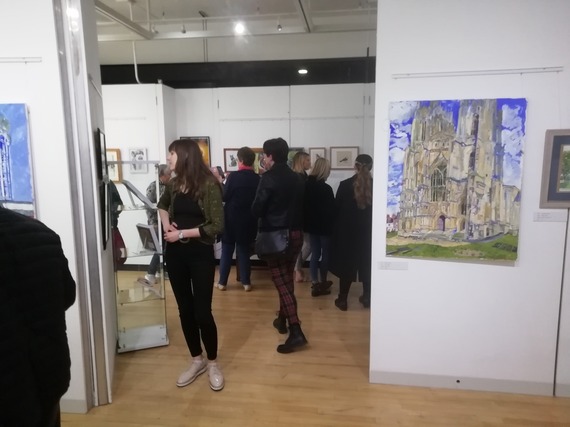
Goole Museum’s annual Open Art Exhibition will return from 20 April to 22 June, 2024. The museum is currently looking for artists and creative people living in and around Goole to submit artwork. The exhibition, which is in its tenth year, celebrates the creativity of local amateur and professional artists, and provides an exciting opportunity for members of the community to display and sell their artwork. Previous exhibitions have seen a fascinating array of artwork, including impressive paintings and photography. Textiles are also welcomed, as well as sculptures, ceramics and digital entries.
Download an entry form below or collect a form at Goole Museum. You can also email goole.museum@eastriding.gov.uk and ask for a form or call 01405 768963 and the museum will send one out.
The dropping off dates for artwork are 2-6 and 9-13 April, from 10:30am - 4pm.
Visitor Survey
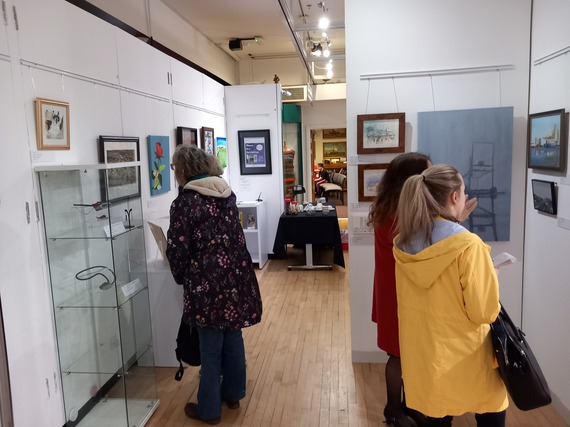 East Riding Museums is delighted to receive funding from Arts Council England. To make sure we are providing the best services that we can, we are keen to find out about our audiences. If you have visited Goole Museum recently, please take a few minutes to fill in our short visitor survey.
Christmas card competition winner
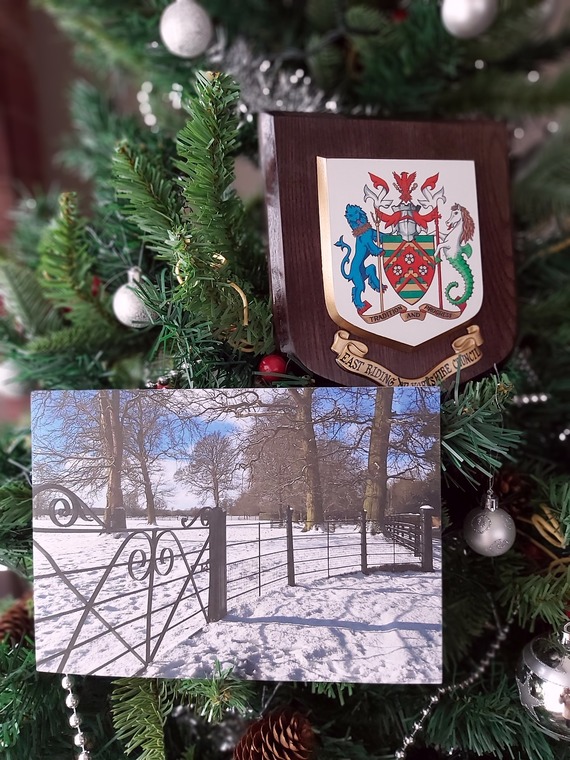 East Riding Museums technician Penny Barron had a lovely surprise just before Christmas. Arriving home from work, Penny was delighted to find that her photograph of Cherry Burton in the snow had been chosen by John Whittle, Chairman of East Riding of Council for their 2023 Christmas card. Pictured are Penny’s photograph and plaque. Well done Penny!
.....and finally, Ghost on Trial
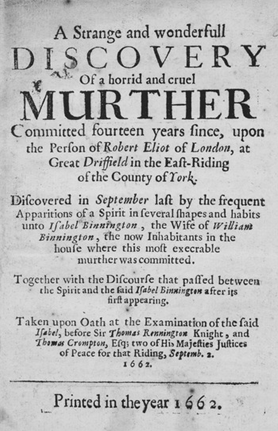
Whilst searching for interesting stories to include in a talk to a group of Driffield residents, Caroline Coath, assistant curator for community engagement, came across this story which she thought might be of interest to readers.
In spring 1662, Isabel and William Binnington moved to a cottage in Driffield. Some weeks later Isabel whilst cleaning the mud floor dug up some human bones Perhaps such unpleasant discoveries were common in 17th century villages, because no fuss was made of it at the time.
A few nights later, Isabel was sitting by her hearth fire when a young blond man, barefoot and dressed all in green, appeared before her. Her first thought was that the stranger was a traveller seeking lodgings but as he moved closer in complete silence, she became afraid and demanded what he wanted
The visitor had quite a story to tell! His name was Robert Eliot a Londoner by birth. Fourteen years earlier, he had been robbed and murdered in that very cottage by local women Mary Burton, Alice Colson and Anne Harrison. Robert had been compelled to haunt the location ever since and the discovery of his secret grave inspired him to beg Isabel to see that his murderers paid for their crime.
Over the following days, Robert’s ghost provided extensive information about his life, birthplace, family, and the particulars of his murder. Isabel related all of it to local JPs Sir Thomas Rennington and Thomas Crompton.. Although these details were startlingly specific (including his mother’s maiden name, the names of his sisters and the street where he had been born,) the authorities were understandably uneasy about launching a murder trial where the sole witness was a ghost. Isabel continued to press the matter to the authorities, providing additional evidence about Robert, as well as demands that the village church offer prayers for his murderers to be punished.
Then things got strange. Isabel told the JPs that the ghost had warned her of an assassination plot being hatched against Charles II. The ghost identified two men (a father and son named Jenkins) in the King’s household as the primary conspirators and was able to say exactly how they communicated with their confederates. If the judges did not act on her information, the King might die and it would all be their fault! Intriguingly, two men with the surname Jenkins were part of the Royal household at the time, suggesting that this alleged conspiracy may well have existed.
One has to have some sympathy for the JPs who were caught between a legal rock and a hard place. If they acted on the say-so of a ghost, they ran a very good risk of looking ridiculous. If they ignored Isabel’s allegations, they risked letting a murder go unpunished, not to mention the possible assassination of their king.
Perhaps this dilemma is why our narrative ends on such a frustratingly unresolved note: although two pamphlets were distributed nationally at the time, there is no record of what (if anything) the JPs did next....curiouser and curiouser
|