|
February 2025
We want to make sure that this newsletter is as helpful and engaging as possible, so over the coming months we've been sending two different versions at random to subscribers to gather your thoughts on how the content is presented.
One has short articles with buttons to read the full article on the SEND Local Offer news webpage, the other has longer and include more of the full story within the newsletter.
Please let us know how you prefer the content to be presented by taking part in this quick poll using the button below. There's only one question and your opinion will help shape our 'new look' newsletter!
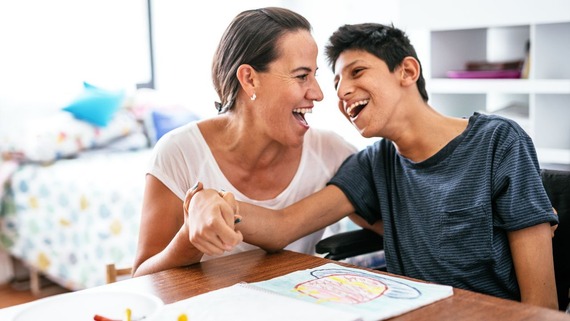
Devon County Councillors have agreed a 5.5 percent increase in the budget for children’s services for the coming year, and an additional £5 million specifically for children’s social care.
Councillor Lois Samuel, Devon County Council’s Cabinet Member for Children's Special Educational Needs and Disabilities (SEND) Improvement Services, welcomed the new budget, adding that council finances with regards to SEND remains very challenging, driven by demand and increasing costs.
Devon received 2,400 requests for Education Health and Care Plans (EHCPs) in 2024, roughly twice that of 2019. In the last 12 months, the council has issued an additional 946 EHCPs, an increase of 11 percent since December 2023. And the number of young people in Devon’s population with an EHCP has doubled since 2020.
It means that the council is facing an overspend on SEND by around £50m this year, which is more than it had anticipated, with additional demand year on year driving additional costs. But behind the overspend figure lies another story about young people’s lives.
Councillor Samuel explains:
"This is spending that supports 10,000 young people with SEND across the county, helping them to achieve and thrive. For example, in the past year alone, this includes supporting an additional 1,000 children at a cost of roughly £20 million, to access the education they need. Clearly there is more to do, but we must not lose focus on both investing and doing the right thing for our young people with SEND."

Figures can fluctuate, but the latest data available from Devon County Council at the beginning of February gave a snapshot that showed that progress on the timeliness of assessments and reviews is being made.
It showed that for that reporting period, no family was waiting longer than a year for an assessment. The number of young people waiting more than 20 weeks for an Education Health and Care Plan (EHCP) assessment had fallen by 15 percent over the last year, with the backlog steadily falling. And the number of annual reviews that were overdue (for a review) had also fallen by 15 percent in a year.
Looking ahead, Devon County Council is creating over 200 additional places in special schools this year, and has already secured over £20 million of additional funding for mainstream places. It’s creating an additional 300 SEND places in its mainstream colleges, using a further £8.5 million secured from the Government. It’s investing in 100 additional places in existing mainstream secondary schools through Resource Centres and other partnership programmes. And it’s working with early years settings and primary schools to support young people to stay in mainstream provision and help schools to meet pupils’ needs.
Councillor Lois Samuel, Devon County Council’s Cabinet Member for Children's Special Educational Needs and Disabilities (SEND) Improvement Services, said:
"It's not a quick fix. Support for young people with SEND in Devon is a partnership responsibility, requiring everyone to do their part.
"We need schools to work with us around the inclusive provision that they make ordinarily available to all pupils including those with additional needs.
“We want to work with our health colleagues to improve support for those with speech and language needs entering school, with around six percent more children in Devon entering schools with a higher need than the national average.
“And we want to work with parents through better use of mediation and other resolution approaches to reduce the number of decisions that go straight to tribunals.”

The Government has confirmed the latest new special school in Devon will open in September 2025, run by The Special Partnership Trust who already run several special schools in Cornwall and Devon.
Castlebridge School will have two sites. The main site will be in Ivybridge and a smaller hub site in Tavistock. The main site will provide specialist provision for 120 pupils aged between seven and 16 years old (Year Three to Year 11) with high functioning Autistic Spectrum Condition (ASC) who are unable to access mainstream schools because of physical, medical, or sensory needs or difficulties with communication, anxiety, attachment, relationships, and behaviour.
It’s designed for pupils who have had a challenging experience in mainstream school and may have developed school or learning avoidance to help themselves feel safe. In many cases this will have impacted on their educational progress and self-esteem and for some pupils, also resulted in behaviour that is challenging to others.
The first cohort of learners will be educated at satellite hub in Tavistock in September 2025 which is currently having a significant refurbishment planned. It will remain as a satellite from the main site supporting children and young people in the Tavistock area and west of the county. The main site in Ivybridge aims to open during the 2026/27 academic year and will be built by the Department for Education.
Read the full story on the news page of the SEND Local Offer website.
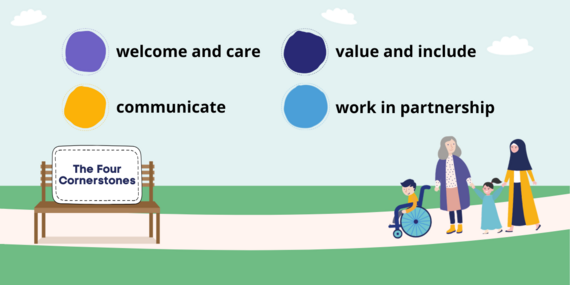
We are changing how we do things so that we can improve the outcomes and experiences for children and young people with SEND and their families in Devon.
To help us do this we’re working with Genuine Partnerships, a not-for-profit community interest company from Rotherham made up of practitioners, parent carers and young people working together as equal partners. They developed ‘The Four Cornerstones Approach’ based on research involving children and young people with SEND and their families. It’s known to help build the trust needed for good quality co-production, so we’re using it to help us embed a new culture which focuses on positive relationships. You can find out more about this in the new Devon Local Area SEND Strategy on the Local Offer website.
Your voice is valuable, so to make sure we’re making the right changes, we want to hear about your experiences of our health, care and education services (including schools, colleges and other settings). We would be grateful if you could share you feedback with us using this online form.
This form asks you to consider your experience based on The Four Cornerstones (the questions explain what these are) and share with us any comments or examples of what went well and what needed to be better. Your feedback is invaluable to us, and because this form is anonymous, you can share your thoughts openly and honestly without reservation.
We really appreciate you taking the time to do this, thank you.

In recent months there have been some changes in how we've asked you to contact the SEND Statutory Team. We’ve made these changes to make it easier to get a response. Here’s a reminder about the best ways to get in touch.
Calling the team
If you’re trying to reach someone by telephone the number is the same as before, 01392 380434. This dedicated SEND line is now open weekdays from 9am to 5pm, and calls are answered more quickly than previously. You will be able to speak to an advisor in the Customer Service Centre team who may be able to provide you with general advice or will arrange for a call back booking with a Case Officer.
Emailing the team
If you wish to email you should always send it to educate.specialeducationcommunications-mailbox@devon.gov.uk. We can automatically redirect your message to the Case Officer if you either reply directly to an email sent from this address or you put the EHC Hub number in the subject line. Don’t worry if you don’t know your EHC Hub number because the mailbox is monitored every day. This means any emails that don’t automatically redirect, are moved on manually. The Case Officer will get an alert, and we aim to respond within five working days but mostly we get back to people much more quickly.

Earlier this year we told you about the next steps in our work to improve our systems to help our SEND Statutory Team progress EHCP requests and reviews more consistently and efficiently. Recently we've been focussing on understanding what exactly needs improving in relation to EHCP reviews so that we can design a digital system that works well.
So far, we’ve identified that we need a system that can better support schools (who are responsible for leading most review activity), identify schools that are completing good reviews and support schools to improve with the right tools and training. We will also be able to improve the quality of EHCPs, understand the EHCPs that haven't been amended over longer periods of time and ensure good quality information is available to support when decisions are being made.
We also want to automate some of the more time-consuming manual tasks, such as notifying schools or other settings when EHCP reviews are approaching, and to support with good communication through the steps of the EHCP review process, to allow more efficient use of the team’s time.
These improvements are all ‘behind the scenes’, so there will be no change to how families use the Hub. We’ll continue to keep you updated about our progress with this project and the improvements we’re making to our digital systems, in future editions of this newsletter.

Children and Family Health Devon has published a series of articles about invisible disabilities. The latest one see's their Equality Champions hear from Toby, a parent who is ADHD and autistic.
Their daughter is also ADHD and autistic. In a conversation with CFHD Participation Worker, Robin Tay, Toby reflects on their experience both as an ADHD and autistic adult and as a parent of a neurodivergent daughter.
You can read it on the Children and Family Health Devon website.

The second round of Devon County Council's popular Autism and Us programme kicks off in March, with a free four-week course and one-off workshops.
It offers support for families of children and young people who are either on the neurodiversity assessment waiting list or who have received a diagnosis of autism. Parents and carers can develop their understanding of autism and look at practical solutions to managing and supporting their child’s presenting needs, whilst also connecting with other parents or carers.
The free four week ‘live online’ programme involves weekly two hour sessions on Microsoft Teams, each focussing on a different topic starting with an overview of autism, then communications needs, understanding and supporting behaviour and sensory needs.
There's also popular themed or topic based workshops, which lead on from the course, covering things like managing stress and anxiety, vulnerability and online safety and demand avoidance.
Full details, including course dates and how to secure your place, are available on Devon County Council's website.
 We’re seeking parents’ experiences of independent special and alternative education placements in Devon
We want to make sure that all children in Devon get the best possible education and start in life. To help us to achieve that, we are looking at how we buy education placements within independent special schools, non-maintained special schools, and independent special post-16 settings to support children and young people with Education, Health and Care Plans (EHCPs).
We’re also reviewing how we buy packages of support that help children continue to learn at other locations – not at school – for some time, hopefully with the aim of them returning or reintegrating into school. These packages can support children with Special Educational Needs and Disabilities (SEND); children who have been excluded from school; or children who cannot attend school due to medical needs.
We are writing to parents and carers to ask for their experience and find out what difference the services are making for their children and families; what the services are doing well and what could the services do differently to better support their children’s learning. We will use the feedback to help inform our decisions about these services in the future.
Please look out for the letters, which will be arriving by post or email over the next two weeks. If you don’t receive a letter or email, but feel you have experiences which are relevant to these services, please email us at childsc.sendimprovementprogramme-mailbox@devon.gov.uk.
Read more in the full story on the news page of our website.
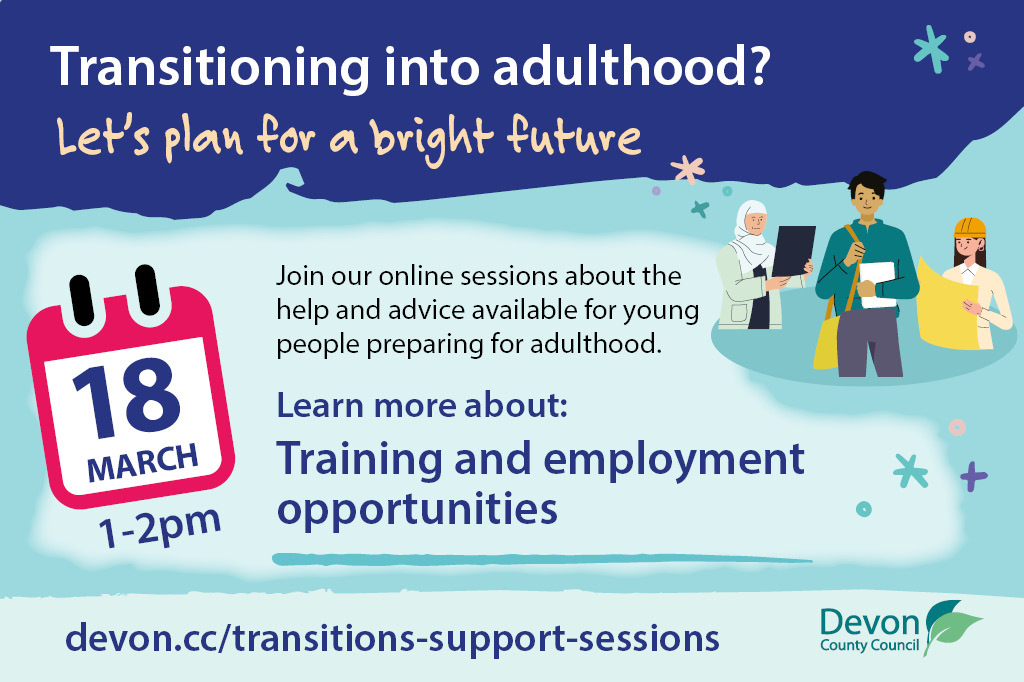
Would you like to know more about the support and advice available for young people transitioning into adulthood? Why not join one of our online support sessions?
The sessions, which young people and parents are invited to, are led by subject matter experts and are covering topics such as:
- independent living and housing options (aimed at young people)
- mental capacity and decision making (aimed at young people)
- money management (aimed at young people)
- good mental health and resilience (of interest to both young people and parents and carers)
- support for parents and carers (aimed at parents and carers)
Our next session is on Tuesday 18 March at 1pm, and is focused on training and employment opportunities. We'll be exploring the various options available for young people who are transitioning into adulthood, and also helping attendees to learn about vocational profiles - how they can support planning and career development and how to access these resources effectively. This session is open to all, but is specifically aimed at young people.
- Date: Tuesday 18 March
- Time: 1pm to 2pm
- Location: Online through Microsoft Teams
To book your place, please visit the Devon SEND Local Offer website.
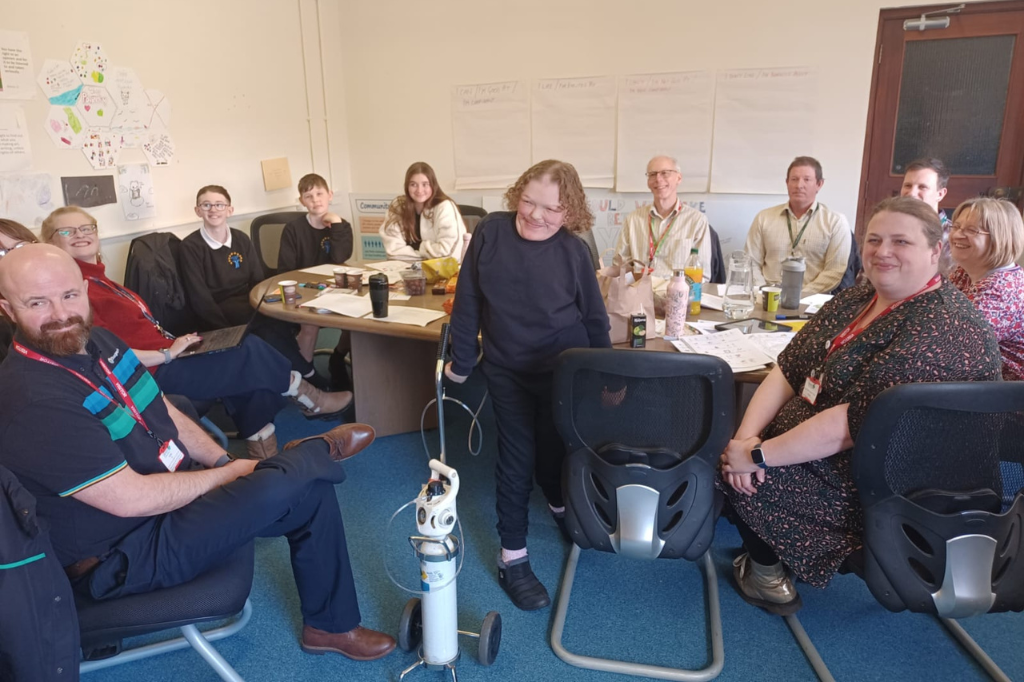
This week the Champions for Change met with members of Devon County Council transport services, professionals from Stagecoach and Devon Communities Together, to continue their work on improving transport in Devon.
The Champions shared their views on what can make travel difficult for them, as well as providing an extensive list of what makes for an enjoyable journey to school.
This feedback will be used in developing training to ensure that school journeys are always enjoyable, while a survey to find out more about the barriers of using public transport more generally is currently being created.
There was also further discussion about finding possible way to enable multiple wheelchair users to travel together.
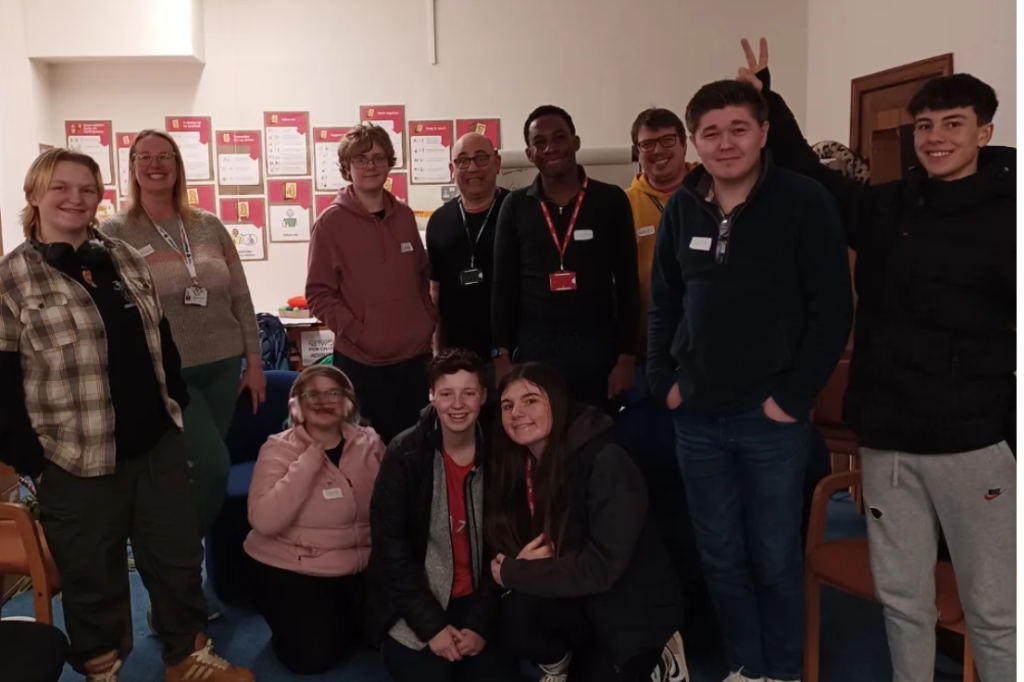
Earlier this month the Devon Youth Council had their first full meeting of the year, and members of our Network for Change were in attendance.
The group were preparing for the Make Your Mark youth ballot that will take place in March, sorting through hundreds of different issues to create a shortlist of the top ten issues that most impact young people in Devon.
Voting will open on Monday 3 March and will take place throughout the month. The ballot is for anyone aged 11 to 19 years old (up to 25 for young people with Special Educational Needs and Disabilities), and voting will primarily take place in schools.
Details of how to participate online will be shared via the Devon Youth Council website and Instagram.
Devon County Council's SEND Network for Change aims to create opportunities for young people with special educational needs and disabilities (SEND) to get involved and have their voice heard!
There are lots of different groups and projects going on, run by our SEND Participation Team. If you are a young person with SEND in Devon, whatever you want to say, we want to hear it!
You can contact the team by emailing participation@devon.gov.uk or amy.bickford@devon.gov.uk or visit our website to find out more.

Devon Information Advice and Support (DiAS) offer training to help parent carers understand some of the most important information and the most useful skills to develop when supporting a child with Special Educational Needs and Disabilities (SEND).
'Making Sense of SEND' explains the basics about special educational needs (SEN), the SEN support available and how the SEND system works and helps parents to feel more confident about speaking up for their child and working with professionals.
Sessions are held online, using Microsoft Teams, or in person.
The online session takes place in two parts:
- Part one: About SEND and school - Wednesday 12 March 2025 from 1pm to 2:30pm
- Part two: How to take part and share what you know - Wednesday 19 March 2025, from 10am to 11:30am
In-person session:
- Wednesday 2 April 2025 from 9:15am for a 9:30am start to 12:45pm at Cullompton Community Centre, Pye Corner, Cullompton, Devon, EX15 1JX
To find out more, and book your place, please visit the DiAS website.

Children, young people and their families who need support with both physical and mental health will soon be able to get the help they need under one roof.
This March, Children and Family Health Devon (CFHD), which provides joined up health and care services across Torbay and Devon, is co locating services that were previously held at its Bull Meadow clinic in Exeter to one site, Evergreen House on Victoria Park Road.
The move will mean that young people and their families who use CFHD’s services in Exeter, will now use one location for their healthcare needs. It is also hoped that bringing services together in the same place will also help reduce waiting times and referrals as people will have quicker access to specialists and support, improving service delivery.
The new space will offer a range of services, including speech language and communication therapy, physiological therapy and occupational therapy, allowing CFHD to respond more swiftly and effectively with a more integrated approach. The move will see both the Devon Partnership NHS Trust and Torbay and South Devon NHS Foundation Trust invest funding into renovating Evergreen House, to improve patient experience, staff wellbeing and create a welcoming environment for everyone.
Read the full story on the Children and Family Health Devon website.

Safer Devon is running a free webinar to explore digital spaces that young people engage with, how these may influence their choices and expose them to risks and practical tips and guidance to support young people to keep safe.
The free webinar will explore:
- why the digital world is a valuable space for many neurodivergent young people
- how the online content young people interact with can shape their choices and may expose them to risks and harmful behaviours
- practical tips and guidance on creating safe and supportive online spaces for young people
This session will be led by Alistair Barfield, who is AuDHD, and a leading expert in neurodivergence and digital harms.
It will take place online on Thursday 27 March at 7pm to 8pm.
Please visit the Safer Devon Eventbrite page to book your place.

If you enjoy our newsletters please forward this one to your family and friends and encourage them to sign up.
If there is anything you would like to see in future editions, or if you have any other feedback about this newsletter, please email .
|