|
Welcome to this latest edition of
the Industrial Strategy Bulletin. In this edition, we highlight the ways you can get involved in Green GB Week, the successes of the Zero Emission Vehicles Summit, and the award winners of the first Nesta Inventor Prize.
Latest blog posts
On our Industrial Strategy Blog, we have heard from the National Farmers' Union about the benefits of food and farming for jobs and our economy as well as the benefits innovation could bring for the environment.
KPMG's Head of Brexit and Industrial Strategy, James Stewart, has written about the opportunities that gripping the boom in artificial intelligence could have for sectors such as healthcare.
On our Ageing Society Grand Challenge, the chief executive of Legal & General’s Retail Retirement Division explains how the company is rethinking retirement in the context of people living longer.
Yorkshire Universities' executive director writes how universities can be facilitators for place-based Industrial Strategies, following on from our announcement that every place will have its own Local Industrial Strategy.
Ben Houchen, Mayor of Tees Valley, explains how a Local Industrial Strategy will help his community power up its blossoming renewable energy market.
Bulletin subscriptions
Please do continue to share this
bulletin with your colleagues and stakeholders and invite them to
subscribe. All they need to do is sign up
here or email stakeholders@beis.gov.uk.
The only information we
ever store is your email address and we will only ever use it for the purposes
of sending our newsletter.
If you wish to stop receiving our bulletins, you can unsubscribe by clicking on
the link at the bottom of the bulletin at any time.
The first Green GB Week, which is being organised to raise awareness of climate change and clean growth, will take place from 15 October - and we're inviting you to take part.
The week was committed to in the government's Clean Growth Strategy and will see events taking place all over the country to raise awareness of what clean growth is and offer suggestions to consumers and businesses on how they can be more green.
Clean growth has been identified in the Industrial Strategy as one of the four Grand Challenges that the UK can lead in solving.
We're asking stakeholders in all places and sectors to set up events to talk to their customers, employees or community about how they can help cut their emissions and seize the opportunities of clean growth.
Events are logged on this website to help people find activities close to them, wherever they live.
CBI and WSP will jointly host a business webinar on ‘Growing your business with green innovation’ on 16th of October from 12.30pm to 1.30pm. Details will shortly be on our Eventbrite page.
We've also been working with Edie.com, who have today launched a website for organisations, communities and people to make pledges on how they will contribute to reducing their impact on the planet. Please do make a pledge in support of Green GB Week if you can and we may include your contribution to promote the week.
The Green GB Week stakeholder toolkit includes advice for setting up events and ideas for further ways you can support Green GB Week.
To keep to-to-date on Green GB Week news, you can follow the action on our new Facebook and Instagram channels.
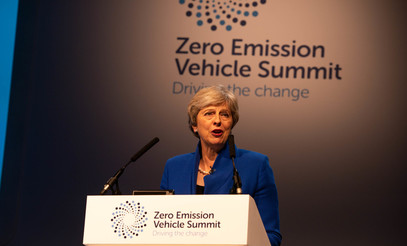
The UK held the world’s first Zero Emission Vehicle (ZEV) Summit this month to bring together representatives from more than 40 countries to support and collaborate on a zero emission future for transport.
Ministers, officials and business leaders were in Birmingham and Bedford for the two-day event, which sought to accelerate investment in both zero emission technology and infrastructure.
Prime Minister Theresa May told delegates she wants to see Britain “leading from the front and working with industries and countries around the world to spearhead change”.
To help meet the Grand Challenges relating to Clean Growth and the Future of Mobility, as set out in our modern Industrial Strategy, the government used the summit to pledge £106 million for research and development in zero emission vehicles, new batteries and low carbon technology. This will be bolstered by over £500 million worth of investment, creating over 1,000 jobs across the UK.
Read more about the summit here.
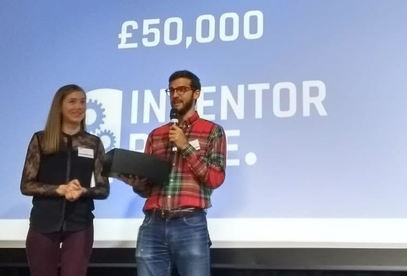 Inventors of a hand training device to help stroke survivors with their rehabilitation have been awarded the first ever Nesta Inventor Prize, which includes £50,000 of funding.
Neurofenix Limited, founded by Guillem Singla Buxarrais and Dimitris Athanasiou, put forward the winning invention.
Nesta, the innovation foundation, awarded the prize, which is funded by the Department for Business, Energy and Industrial Strategy.
The Inventor Prize supports the Industrial Strategy’s objective to encourage entrepreneurship and innovation, by inviting budding inventors to develop innovative products that can benefit society.
Ten finalists were awarded £5,000 funding and bespoke mentoring to develop their inventions into marketable products.
Cambridge-based Urologic, led by Nawar Al-Zebar, which received the £15,000 second prize for its NuCath catheter device.
Ed Rogers from Bristol Braille Technology CIC received the £5,000 third prize for the Canute 360 Braille e-reader.
Find out more about all of the shortlisted entries.
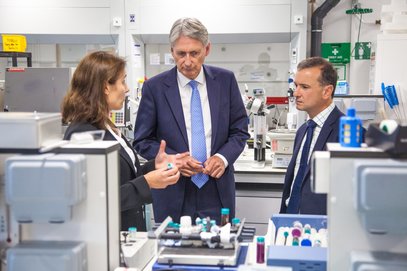 More than £36 million of UK government funding will be provided to Swansea to support cutting-edge building materials which generate electricity, the Chancellor announced this week.
The green technology uses light and heat to make energy, and has the potential to power homes, workplaces, schools and hospitals.
These materials could replace conventional walls, roofs and windows, generating electricity which is stored and released by a smart operating system.
The announcement supports the Clean Growth Grand Challenge mission to at least halve the energy use of new buildings by 2030. Making buildings more energy efficient by embracing smart technologies will cut household energy bills, reduce the demand for energy, and boost the UK’s economic growth whilst meeting targets for carbon reduction.
The funding will go to a consortium led by Swansea University, which develops new building materials and coatings which generate electricity from light and heat.
Find out more about this announcement.
NHS is key to securing UK's position in AI race, report finds
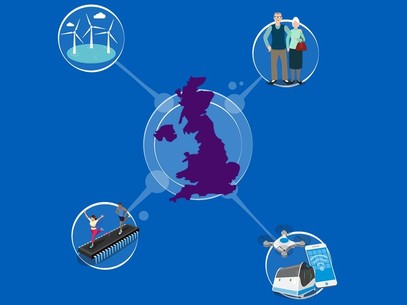 The NHS could play a key role in securing the UK’s ambition to remain a world leader in artificial intelligence (AI), polling by KPMG has found.
The accountancy firm published its report, named 'How the UK can win the AI race', at the start of this month. It highlights how the country can stay ahead of the curve and lead the world in the AI and data revolution.
The report highlights how the government's modern Industrial Strategy has identified AI and data as one of the four Grand Challenges for our economy and society and advises on how businesses and the country can meet that challenge.
The report also includes insight from Business and Energy Secretary Greg Clark, who outlines his determination to see inclusive application of AI for all.
Read the full report.
 Did you know maths is the most popular A Level, taken by a quarter of A Level students? Universities UK reports there has been a 30% increase in maths degree subject take-up since 2006-7.
Adults with higher numeracy skills earn higher wages and are more productive. This is why improving maths is a key part of our Industrial Strategy.
Already this month, we have expanded our network of maths hubs to widen the reach of the Teaching for Mastery in Maths programme.
We have also launched the new £16 million Advanced Mathematics Support Programme aimed at increasing participation and quality of provision in level 3 mathematics, and introduced the Advanced Maths Premium, a funding boost to help increase the number of 16–18 year olds studying advanced mathematics post-16.
Building on this, talented young people in the North West are set to benefit from world-leading maths education with a brand new specialist school backed by University of Liverpool.
A new centre for research to develop a new generation of medicines that will transform the lives of people living with diabetes has opened in Oxford.
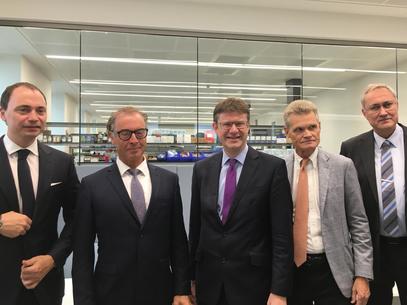
Greg Clark, Secretary of State for Business, Energy and Industrial Strategy, attended the opening of the Novo Nordisk Research Centre, along with Danish Science Minister Tommy Ahlers, last week.
The centre will collaborate with the University of Oxford using its scientific excellence to conduct new research. The government's modern Industrial Strategy set the ambitious target to reach 2.4% of GDP investment in research and development by 2027.
In December 2017, the Life Sciences Sector Deal was announced to maintain the UK’s place as a world leader in developing innovative research into future treatments and pioneering medicines.
Read more about the centre.
 New laws to arm small businesses against unfair contracts that stop them raising money from unpaid invoices have been proposed by the government.
Currently a small supplier’s contract with a larger company may prevent it from securing invoice finance from providers such as banks and other investors.
The new measures are expected to provide a long-term boost to the UK economy estimated to be worth almost £1 billion.
The move is part of the government's wider commitment in the Industrial Strategy to reform the country's business environment.
Find out more about these proposed changes.
|