 |
|
We are delighted to welcome Tracey Evison to the team as our new EYIO.
Tracey has a passion for Early Years with extensive experience supporting schools and settings, working in a similar role for North Lincolnshire. Tracey is passionate about helping every child get the best possible start in life and supporting practitioners to grow in confidence and expertise.
|
Outside of work, Tracey enjoys spending time with her daughter, exploring the great outdoors and has recently started an allotment plot. Tracey will be based in the North of the County and looks forward to meeting you.

Ofsted Inspection Update: Key Trends and Actions from late summer 2026 to 5 October 2026 for Derbyshire providers.
Over the past inspection period, several common themes have emerged across Ofsted inspections of early years settings. We are delighted to say that while many providers continue to demonstrate strong practice, inspections highlight a consistent focus on safeguarding, children's welfare, curriculum intent, inclusion and leadership oversight. Ofsted's renewed framework places increasing emphasis on how these elements work together to improve outcomes for children.
Key Trend 1: Safeguarding remains the Golden Thread in every inspection across Derbyshire
Inspectors continue to view safeguarding as fundamental to all aspects of practice. Strong settings were able to demonstrate that staff understood their safeguarding responsibilities, recognised potential concerns and acted promptly when issues arose. There is also increased emphasis on safer sleeping, and eating and weaning arrangements, reflecting updates to inspection materials and EYFS requirements.
Actions for settings
- Regularly review safeguarding knowledge with all staff.
- Ensure safer sleeping and weaning procedures are understood and consistently implemented.
- Check that safeguarding records are accurate, timely and easily accessible.
Key Trend 2: Staff in Derbyshire understanding the curriculum
Inspectors are looking beyond planned activities and focusing on how practitioners understand the curriculum and children's learning. Strong settings could clearly explain why activities were offered, what children were learning and how experiences supported progression over time.
Actions for settings
- Discuss curriculum intent regularly within team meetings. Does everyone understand this in day to day practice?
- Support staff to articulate how activities link to learning and development.
- Ensure planning reflects children's interests alongside developmental goals.
Key Trend 3: Inclusion and meeting individual needs of every child in Derbyshire
Inspectors continue to recognise effective support for children with SEND, disadvantaged children and those requiring additional help. Evidence of early identification, partnership working and tailored support remains a strength in high-performing providers.
Actions for settings
- Review progress and support plans for children requiring additional support.
- Strengthen communication with parents and external professionals.
- Ensure all practitioners understand their role in promoting inclusion in their day to day practice.
Key Trend 4: Children's welfare and well-being
Settings achieving positive outcomes were able to demonstrate how they support children's emotional wellbeing, confidence, independence and sense of belonging. Inspectors continue to place significant weight on warm relationships, secure routines and responsive interactions.
Actions for settings
- Review key person arrangements. Do they meet children’s needs?
- Consider how daily routines support emotional security.
- Continue to promote children's independence through everyday experiences.
Key Trend 5: Leadership and quality improvement
Effective leaders were able to show a clear understanding of their setting's strengths and areas for development. Inspectors valued leaders who monitored practice, supported staff development and used self-evaluation to drive continuous improvement.
Actions for settings
- Maintain robust supervision and professional development opportunities.
- Use observations, monitoring and feedback to identify improvement priorities.
- Ensure self-evaluation is reflective and results in tangible actions.
Looking ahead
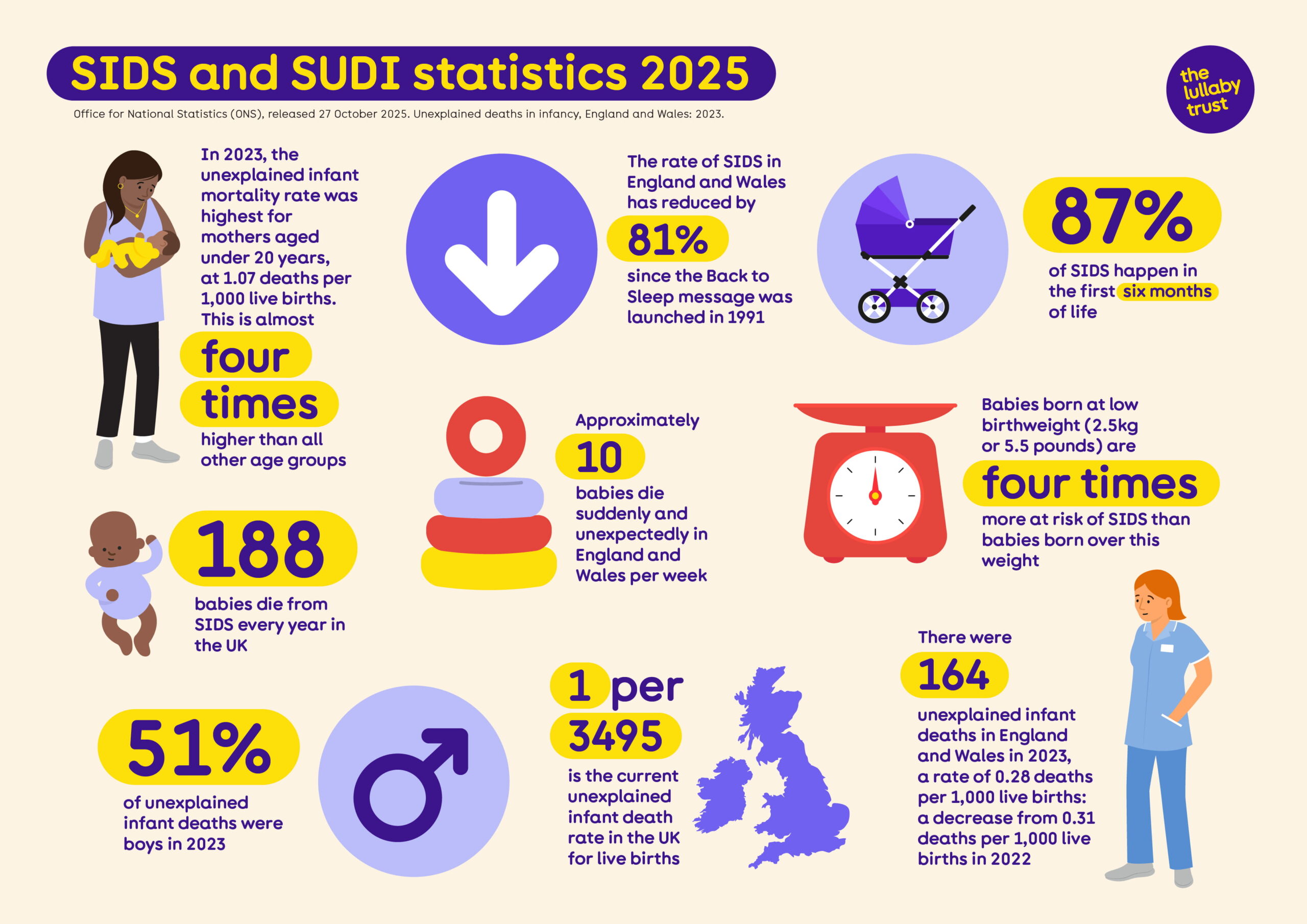
Recent inspection messages reinforce that high-quality early years provision is built on strong safeguarding, a well-understood curriculum, inclusive practice and effective leadership. Settings should continue to focus on developing staff knowledge, evidencing impact on children's learning and wellbeing, and ensuring all statutory requirements are consistently met. The increased attention to welfare is very important, such as safer sleeping, eating and weaning highlights the importance of reviewing policies and practice regularly.
A final question to ask yourself
Good outcomes are achieved when children are safe, happy, included and supported by knowledgeable practitioners who understand both the curriculum and the individual needs of every child. Does this happen where you work every single day?
Major changes launched
Over the summer, we saw a wave of safeguarding updates arrive through the EYFS Statutory Framework, Keeping Children Safe in Education (KCSIE), revised expectations around Information sharing, and important changes to regulated activity and DBS checking requirements. While it can feel overwhelming, the good news is that these changes are all designed with one goal in mind: keeping children safer than ever.
|
 |
|
Some of the key changes include strengthened safeguarding requirements within the EYFS, clearer expectations around safer sleep, greater emphasis on appropriate information sharing, enhanced DBS and barred list checks for volunteers, and tighter requirements around staff suitability and recruitment. Changes to regulated activity also mean many settings will need to review how volunteers and other adults are deployed and vetted. |
|
The reassuring news is that you do not need to navigate this alone.
There is now a wealth of new training, guidance, websites, templates and resources available, including support from the Early Years Improvement Team to help you understand what has changed and what action is needed. With the right support, these updates can become an opportunity to strengthen safeguarding culture and give everyone greater confidence in their practice.
|
|
 |
Five Top Tips for a Flying Start This Autumn
-
Refresh your safeguarding policies
Check your policies and procedures reflect the latest updates and expectations.
-
Review recruitment and DBS processes
Ensure staff, volunteers and committee members meet the latest suitability and checking requirements.
-
Update your safeguarding training
Confirm all staff understand the new expectations and know when and how to share concerns.
-
Audit your record keeping
Make sure safeguarding records are accurate, secure and support effective information sharing.
-
Use the support available
Take advantage of training, briefings, websites and support from your Early Years Improvement Officer.
The changes may feel significant, but they represent a positive step forward for children, families and practitioners. By taking small, manageable steps now, your setting will be well placed for a confident, compliant and safe year ahead. 🍂✨
 |
|
New screen use guidance for early years providers
This guidance has been developed with input from sector experts, including NDNA, the Digital Standards Early Years Action Group and the Early Years Screen Time Advisory Group, and provides evidence-based advice on using screens safely and effectively.
|
We know that screens can have a big impact on children and their development in the early years.
The guidance reminds us to:
- avoid screen use for under 2s and limit access to up to an hour a day for children aged 2 to 5.
- take a precautionary approach to using screens - use it carefully and intentionally, for specific learning and development aims.
- check that any content accessed is suitable, safe and is free of scrolling and autoplay features.
- consider children with SEND or English as an additional language who may need a more tailored approach to screen use.
- consider how you working collaboratively with parents and carers on this topic.
- reflect on screens and digital device use as part of your day-to-day role - screens for business use must comply with the EYFS statutory framework, data protection and security requirements, and we must model health attitudes to screen use.
Screens are a familiar part of children's lives, and rather than trying to turn back the clock, we need to think carefully about how they fit within the day. The key is ensuring screen use complements, rather than displaces, rich opportunities for play, exploration, communication and development.
Coming to Derbyshire
Derbyshire's first Best Start Family Hubs will open in Birdholme and Cotmanhay in Autumn 2026 as part of the county's Best Start in Life Programme, with further hubs planned across Derbyshire in the future.
The Family Hubs will build on Derbyshire's existing Children's Centre network, bringing together services, information and support for families from pregnancy through to starting school. Existing Children's Centres will continue to operate, with Birdholme and Cotmanhay forming the first phase of the Family Hub programme.
 |
|
The hubs aim to make it easier for families to access support by strengthening connections between education, early years, health, family support services and community organisations. The offer will continue to evolve, but current plans include activities for children and families, SEND support, guidance on childcare and early years funding, family information and advice, and opportunities for families to connect with local services and community networks. |
|
Early years providers and childminders will play an important role in the wider Best Start in Life network, helping families access information and support and strengthening local referral pathways.
Alongside the physical hubs, Derbyshire is developing a dedicated online hub, providing a single place for families to access information, advice, local services and resources.
|
|
 |
More information about the Family Hubs and wider Best Start in Life programme will be shared in the coming months. In the meantime, providers can learn more and explore the developing online offer at: https://qrco.de/DerbyshireBSiL
 By Natalie Kemp, Openwoodgate Preschool Manager
I was delighted to be asked to write a piece for the Early Years Newsletter about inclusion and what it looks like in our setting.
Inclusion is often misunderstood, much like British Values were when they were first introduced. Who else remembers sticking the Union Jack up and thinking, job done!?
I’ve been working in early years for 20 years now and, throughout that time, my knowledge and understanding have grown, but my passion and drive have remained unwavering. I truly believe that giving children the best start in life can have a lasting impact on their future.
I’m lucky to have a dedicated and passionate team who share the same ideas and ethos, alongside a supportive and knowledgeable SEND team who have received invaluable training and support from the EYSEN services.
Our role is so important. We want every child to feel empowered, understood, cared for and valued. When a child feels completely safe and secure, their learning and development across all areas can flourish.
Inclusion is often thought of as treating everyone the same. I personally blame this, in part, on inclusion so often being discussed alongside equality. Of course, the two go hand in hand, but I can see where the confusion comes from.
Inclusion is so much more!
Inclusion looks different for every single person. It can be something as small as knowing that someone dislikes a particular food. You will still offer it to them, but perhaps in a different way. It can be as significant as ensuring that someone with physical needs has the equipment and adaptations they need to access all the things everyone else can.
One of the biggest transitions an early years child will experience is starting at our setting. Some children may have previous experience of nursery or preschool, while others may not. Either way, they will all need support and inclusive practice to fully settle and feel safe and secure.
Every child’s transition to your setting will look different. Some children come for settling-in sessions that gradually increase, while others fly in and start full days with ease!
For some children, inclusive practice may look like parents staying for an hour, then nipping out for five minutes before returning, helping the child to make the connection that their parent will come back. Others may benefit from home visits and meeting their new key person in the safety of their own environment.
It is important to liaise with parents, build that relationship with them, and understand that when parents feel confident and supported, their child’s relationship with the setting can naturally follow.
It is about listening, adapting, working together and recognising that one approach will not meet every child’s needs.
Having an inclusive setting is key to supporting all children and you!
And the wonderful thing is, you may not even notice some of the inclusive practice you are already doing.
You may know a child likes a certain chair for lunch.
You may know they enjoy a particular story at circle time.
You may know they require a step to reach the sink.
You may know they like their parent to come into the room and stay for a few minutes at drop-off.
It’s all inclusive practice!
Inclusion doesn’t always require big changes or complicated processes. Sometimes it’s simply knowing the child in front of you, understanding what they need, listening to their family and making small adjustments that help them feel that they belong.
Every child deserves to feel safe, secure, understood, cared for and valued.
Thank you for reading, and I hope this article continues to support, inspire and encourage inclusion across early years.
Natalie
Spotlight at Little Learners

At Little Learners, nursery rhymes are fully embedded within our ‘Nurture, Nature, Nourish’ curriculum and form an important part of children’s everyday learning. Singing familiar rhymes helps to nurture children’s confidence, communication and sense of belonging, while supporting early language development, listening skills, memory and an awareness of rhythm and rhyme. Repetition helps children to anticipate what comes next, join in at their own level and build new vocabulary, while actions and movement also support physical development, coordination and body awareness.
|

By the time children reach preschool, their experiences are extended further through song spoons, action rhymes and the use of props to bring songs to life. Children are encouraged to remember words, follow increasingly complex actions, take part as a group and use their imagination. This progression means that rhymes grow alongside our children, from the earliest shared songs in the baby room to confident participation in preschool. Through singing together, we are not simply learning songs; we are nurturing relationships, nourishing communication and development, and giving children joyful learning experiences that become part of their nursery journey.
|

In our Under 2’s room, children are introduced to a selection of core rhymes through singing, repetition and shared experiences. A much-loved feature is our ‘Rhyme Rug’, which is displayed on the wall and has become so familiar to the babies that they will often point to it when they want it taken down. As children move into our Toddler room, they are introduced to a new set of core rhymes while continuing to revisit the songs they already know. Song spoons are used to encourage children to make choices, communicate their preferences, wait for their turn and listen to the choices of others, supporting both language and social development.
|
Spotlight at Church Gresley
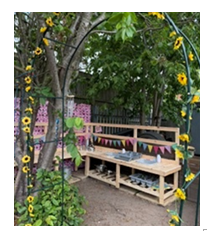
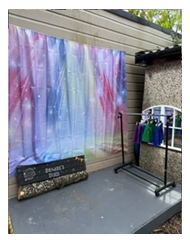
A very special outdoor learning space is enriching children's experiences every day at Church Gresley Preschool. Denise's Garden was created in memory of a much-loved practitioner who worked at the preschool for many years. A valued and much-loved member of the team, Denise's kindness, dedication and passion for supporting young children left a lasting impact on colleagues, children and families alike. The garden serves as a fitting tribute to Denise and has become a valued extension of the preschool's learning environment.
 |
|
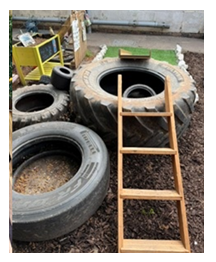
Children use the space daily to explore, investigate and learn through hands-on experiences in nature. Whether planting and digging, creating in the mud kitchen, sharing stories, using real tools, climbing and balancing, or simply enjoying the calm and beauty of the outdoor environment, the garden provides rich opportunities for learning and development. |
|
Manager Chelsea shared:
"Denise's Garden brings our curriculum to life. It provides opportunities for children to develop as Confident Communicators, Independent Individuals, Fantastic Friends and Exceptional Explorers. Outdoor reading and storytelling help nurture Brilliant Bookworms, while climbing, balancing and active play support our Amazing Athletes. The use of child-safe tools also helps children become Talented Tool Users, developing confidence, coordination and fine motor skills."
|
|
 |
 |
|
Outdoor learning is a fundamental part of the preschool's approach, supporting children's physical development, emotional wellbeing, communication skills and understanding of the world around them. Denise's Garden is a wonderful example of how a thoughtfully designed outdoor environment can support a broad and engaging curriculum while fostering children's curiosity, creativity and sense of belonging. |

PSHE Matters is a PSHE scheme of work funded by Derbyshire Public Health and free to Derbyshire primary schools. Updated in June 2026, it supports the personal, social and emotional development (PSED) of children in EYFS settings in line with the Early Years Foundation Stage Statutory Framework and Development Matters. The resource is organised around 12 topics that can be integrated throughout the EYFS curriculum and everyday practice to facilitate age-appropriate learning. The topics reflect current safeguarding themes, including keeping safe, understanding feelings, seeking help from trusted adults, healthy relationships, screen time and respecting differences.
PSHE Matters EYFS section frames the topics around EYFS principles: A Unique Child, Positive Relationships, Enabling Environments, and Learning and Development. Practical activities and 'Top Tips for Supporting PSED in Early Years' enable practitioners to embed PSED through play, routines, stories and everyday interactions, while promoting the Characteristics of Effective Teaching and Learning. Progression tables illustrate the progression of learning across these topics from EYFS to Upper Key Stage 2.
The resource is available through an e-learning course aimed at infant, junior and primary schools. Contact EIS@derbyshire.gov.uk to access the course and accompanying resources.
|
A Rumble in the Jungle
Author - Giles Andreae, Illustrator - David Wojuowycz
Rumble in the Jungle
“There’s a rumble in the jungle,
There’s a whisper in the trees,
The animals are waking up
And rustling the leaves.”
This was my go-to book for sharing with my class and then years later it became a favourite bedtime story with my little girl.
|
|
 |
I just love the sheer enjoyment it can bring and we would read it together over and over again. Those repeated story experiences are so valuable in developing a genuine love of books and reading. If you like this one, you’ll most likely enjoy ‘Commotion in the Ocean’ too!
The catchy rhymes, repetition and colourful illustrations make it instantly engaging for young children and encourages them to join in with the story. It’s a fantastic book for developing early language and communication skills that I would happily recommend to any early years setting.
By Tracey Evison
Early Years Improvement Officer
 |
|
The Tiger Who Came to Tea
Written and illustrated by Judith Kerr
I remember asking my mom to read this story to me again and again as a little girl - she would make all the noises as the tiger slurped all the water from the taps, and jingle her keys and make the doorbell sounds for the ring at the door. I especially loved the voices she put on for the tiger. I can remember the gasp of shock I made when the tiger ate all the cakes from the table and drank all the tea in the tea pot!
|
Revisiting this story as an adult with children today makes me smile - especially when the children ask me about the milk float the milkman has and how different the cars and shops look from today.
My favourite part is when Daddy and Mummy take Sophie to the cafe for tea and head out in the dark with the street lamps lit. It reminds me of the nights drawing in on a crisp autumn evening - I also used to pretend what I would have for tea if I went to the cafe too.
Judith Kerr stories always have a special place in my heart and, for me, are a must on a bookshelf!
Sarah Taylor
Early Years Improvement Co-ordinator
Summer Reading Challenge
Once again Derbyshire libraries ran the Reading Agency 'Summer Reading Challenge' which saw 4574 children taking part and a total of 131,693 books being read!
'Read to The Beat' held 155 free events across the county, with 2105 children and 1184 adults attending.
Thank you for signposting this fantastic event and for taking part!
BookTrust packs
Through the library service, BookTrust delivers book packs to all babies across Derbyshire through Health Visitors. Packs are also delivered to toddler and pre-school children in targeted areas, and libraries organise these deliveries to early years settings and nurseries.
We also have SEND packs to gift to children with additional needs. These packs are held centrally for distribution to individual families and practitioners.
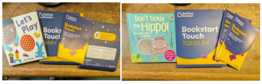
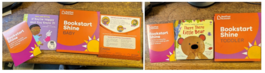
Bookstart Baby and Toddler packs
Did you know there are varying packs for children with additional needs? Bookstart Touch are for children with a vision impairment. |
|
 |
 |
|
There are also packs for children who are deaf or hearing impaired - Bookstart Shine Baby and Bookshine Toddler. |
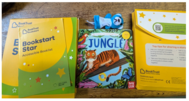
Bookstart Star packs are also available for those babies and children with conditions that impact or delay the development of their fine motor skills. |
|
 |
If you know of a family or child who would benefit from one of these packs, or you are able to distribute them to relevant children and families, please contact trudy.lowen@derbyshire.gov.uk or ask.libary@derbyshire.gov.uk who will arrange for you to collect the packs or possibly have them delivered for you to gift to children in your provision.
The Library Service also hold a large collection of dual language baby and pre-school books that can be gifted to families and children you work with. Contact the above emails, stating which language you would like to gift.
Trudy Lowen, Library Manager
 |
|
Have you seen the Maths Champion programme offer from the National Day Nurseries Association? (NDNA) This is a 12-month evidence-based offer that aims to build staff knowledge and confidence to boost impact and outcomes for children's early maths development. |
The programme consists of 9 steps which comprises online training with support and materials throughout the programme.
This offer from the NDNA is open to private, voluntary and independent nurseries, as well as maintained and school based nurseries. To meet the criteria you will also need:
- two level 3 members of staff (one to become the Maths Champion and Deputy Champion).
- your setting should include children who are aged 3-4 and attend 15 hours per week.

Derbyshire and Nottinghamshire Early Years Stronger Practice Hub are pleased to introduce their new Early Years Learning Lead roles in Early Language, Early Maths and Personal, Social and Emotional Development (PSED).
Learning Leads will work alongside early years practitioners and leaders to build confidence, strengthen practice and support positive outcomes for young children through free professional development and tailored support.
The offer includes Early Years Stronger Practice CPD for practitioners working with 2–4 year olds, alongside Early Language and Early Maths CPD for those working with children under 2. Settings can also access up to three days of bespoke support over a term, shaped around their individual priorities and include coaching, reflection and action planning.
The support is available to PVI settings, school-based nurseries and childminders. The 2–4 year CPD is aimed at practitioners qualified at Level 3 or above, while the under-2 CPD is aimed at practitioners qualified at Level 2 or above.
Our first cohorts will commence in November, with new cohorts following in January.
Please speak to your Early Years Improvement Officer who will be able to offer more information.
|
What do we have for you this AutumnTerm?
Don't forget to head over to our Derbyshire Early Years Service Eventbrite pages to check out our training offer. We have already launched our Autumn training programme and have more safeguarding training planned for the remaining part of the Autumn term including DSL refresher, Safeguarding Babies and Safeguarding in Practice.
|
Keep an eye out for part 2 of the EY Professional Dialogue sessions which will be held both in person and online. The Spring session will be focusing on summative assessment in the EYFS.
Don't forget, we take bespoke booking requests too! Please email cs.eys@derbyshire.gov.uk.
EYSEN Helpline: EarlyYears.SENhelpline@derbyshire.gov.uk
Targeted level of the graduated response
EYIF: Early Years SEN Inclusion Fund - Derbyshire Local Offer
Outreach team referrals: SEMH Outreach Service - Derbyshire Local Offer
Specialist level of the graduated response
EYIF: Early Years SEN Inclusion Fund - Derbyshire Local Offer
Specialist support referrals: Early Years SEN Panel - Derbyshire Local Offer
Applying for a statutory EHC needs assessment: Apply for an assessment - Derbyshire Local Offer
Here to support your families
As many of you know, the Families Information Service (FIS) is always on hand to support parents and carers across Derbyshire. If you’re working with families who may need a little extra help, whether that’s understanding childcare funding, exploring their eligibility, or finding local childcare options, our team is here to guide them.
FIS offers free, impartial information to families with children aged 0–19 (or up to 25 for young people with SEND). We can help parents navigate childcare choices, access funding, and connect with local providers like you.
|
If you have families who would benefit from our support, please feel free to signpost them to us:
If you have any questions or would like more information about our services, please feel free to get in touch!
Thank you for continuing to share our service with the families you work with. Together, we can make sure every family gets the information and support they need to thrive.
Early Years Service general enquiries: CS.EYS@derbyshire.gov.uk
Early Years Service - info on Schoolsnet
Funding & contract queries: cs.enquiries.groupcare@derbyshire.gov.uk
OR cs.enquiries.childminders@derbyshire.gov.uk
OR cs.enquiries.schools@derbyshire.gov.uk
|