Two new faces
In April the Early Years Improvement Team welcomed two new members to our team. Kelly joins the North Team and Lianne is based in the South Team - both bring a wealth of experience and a shared passion for early years.
All about Kelly!
Hi there everyone - I’m super excited to be joining the EY team! I love the outdoors, holidays and all things food-related—which means I have try to keep myself active too!! I bring 24 years of teaching experience across the primary age range, mostly in Nursery and Reception, have a background in SEND, EYFS leadership and above all, a real passion for teaching and learning. I’m always keen to take on new challenges and keep learning – every day is a school day as they say!
All about Lianne!
I am so excited and privileged to be a part of the Early Years Team! I have been a teacher for around 16 years, and have been an Early Years Lead for around 11 years. I just absolutely love Early Years and the effect good Early Years practice can have on a child’s learning experience! When I’m not being a crazy treasure hunting/witch chasing/dragon riding Mummy, I love to play sports! I was really into playing football but have called that a day and I now play netball and cricket.
Don't 'snooze' the updates
|
Following a letter issued to all early years providers from the Minister for Early Education in April 2026, safer sleep guidance has been published. Changes are expected to the EYFS Statutory Framework in September 2026, however, safer sleep procedures should be in place now.
Providing a safer sleep environment for babies and children helps reduce the risk of sudden and unexpected deaths. For babies under 12 months, this includes reducing the risk of Sudden Infant Death Syndrome (SIDS), and for children over 12 months, Sudden Unexpected Death in Childhood (SUDC).
|
|
 |
 |
|
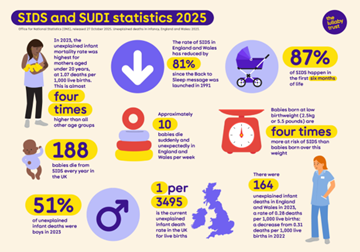
Derbyshire sadly has some of the highest rates of SIDS, and certain factors can increase the risk. These include premature birth, low birth weight, exposure to smoking during pregnancy, and unsafe sleeping practices such as sleeping on sofas or chairs with adults.
Creating a safer sleep space helps prevent hazards like suffocation, entanglement in soft bedding, or becoming trapped in soft furniture.
|
Following recommended safer sleep guidance is essential to ensure the safest possible sleep environment for every baby and every child in your care., so what else can you do?
- Review the information within the letter issued in April 2026 and read this alongside the additional guidance EYFS Safer Sleep requirements – Frequently Asked Questions and Help for early years providers : Safer sleep
- Complete a check on your sleep equipment to ensure they meet the British Safety Standards - you can find further information about product safety and recalls on the Office for Product Safety and Standards.
- Review your current safer sleep practices and speak to staff - are you confident that you are all consistently meeting the requirements? Would you challenge unsafe sleep practices?
- Do you know who your premature babies are?
- Head to Derbyshire SchoolsNet Early Years page to find a handy reflective questions prompt (keep your eyes peeled for updates to the model policy and safeguarding audit once the EYFS Statutory Framework is updated)
|
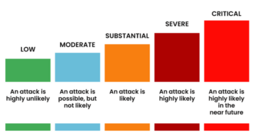
On 30 April 2026, the UK National Threat Level was raised to Severe - but what does this mean to you?
Terrorism threat levels are designed to give an indication of the likelihood of a terrorist attack. We know that remaining alert to the danger of terrorism and reporting any suspicious activity is vital regardless of the national threat level.
|
|
 |
The Department for Education Regional Contest Coordinator Sam Slack has shared some possible considerations:
- Review your current Prevent action risk assessment/action plan to determine if any measures need to be updated or re-emphasised.
- Ensure that wider members of your setting are made aware of the change
- Ensure that physical premises security measures are operating effectively
- Consider communicating to staff the recent threat level change, offering appropriate protective advice and reassurance
For further advice on what to look out for head to: Trust Your Instincts and Report | Action Counters Terrorism
 |
|
Have you seen the major changes in allergy and medical condition safety following the introduction of Benedict’s Law, which has now formally become law? The new statutory guidance, Supporting Children and Young People with Medical Conditions and Allergy, strengthens expectations around allergy awareness, training and safeguarding across education.
|
From September 2026, schools will be expected to have clearer leadership, policies and procedures in place to protect children and young people with allergies. This includes appointing an allergy lead, nominating a governor or trustee with responsibility for allergy needs, maintaining accurate records and Individual Healthcare Plans (IHPs), and recording and reviewing allergy incidents and near‑misses so learning is embedded.
The guidance also emphasises inclusion to ensure that children with allergies are not disadvantaged, and a whole-school allergy awareness which goes beyond a 'blanket policy'. Settings are also expected to minimise and manage risk throughout the whole school day and to hold spare adrenaline auto‑injectors, which can be used in an emergency for anyone experiencing anaphylaxis
Although the guidance applies directly to maintained schools and academies, early years settings and other education providers are strongly encouraged to adopt it as part of their wider safeguarding duties, helping to ensure children with allergies are safe, included and supported.
Further support, resources and webinars are available via Anaphylaxis UK to help you understand the changes and prepare for compliance.
 |
|
Did you recently attend the coffee break webinar, led by Lucy Lewin from Coram Hempsall, all about packed lunches? It explored the growing “noise” around food in early years settings, with new guidance on safer eating, allergies, and nutrition leaving many providers unsure of the best approach. |
The session highlighted how packed lunches and snacks have become routine, often relying on ultra‑processed foods due to cost, accessibility, and factors such as fussy eating or ARFID‑related behaviours, alongside parental concerns about children’s intake and control.
A key takeaway was that mealtimes in settings should be seen as a vital part of learning—and wherever possible, freshly prepared, setting‑provided meals (much like home‑cooked food) as the preferred approach.
These meals can be planned to provide a balanced diet, support children’s development, and reduce allergen risks, while also creating shared, positive experiences. Mealtimes offer rich opportunities to build communication, routines, and healthy habits, and to model positive behaviours. This is not about removing choice or creating conflict, but about giving providers the confidence to lead and recognise mealtimes as one of the most powerful, yet often underused, opportunities to support children’s development.
Have tablets replaced teddies?
New research commissioned by the 1001 Critical Days Foundation highlights a significant shift in babies’ early experiences — away from face‑to‑face human interaction and towards increased digital engagement.
A growing body of evidence shows that higher levels of screen use in infancy are linked to poorer developmental outcomes. These include an increased risk of obesity and short‑sightedness (myopia), sleep and behavioural difficulties, delays in language development, and later challenges in forming friendships.
 |
|
The research reveals that babies under the age of two are now exposed to screens at levels far exceeding current health guidance. Importantly, researchers are clear that this should not lead to blame or judgement of parents. Many parents described relying on screens as a way to cope with the pressures of daily life — whether to manage household tasks, deal with exhaustion, or make up for limited support. As one parent explained, screen time was simply “a survival skill in my house”. |
Despite parents’ clear concerns, the study found that 85% had received no advice or guidance about screen use from health professionals, including midwives, health visitors, GPs or early years educators.
The findings underline an urgent need to better support families during this critical period of development. The report calls for improved access to early years services, clearer and more consistent guidance on screen use for babies, and a review of how digital content aimed at infants is labelled and marketed to parents.
Advice for sharing information with parents and children
-
Create a space for discussion: encourage open, age appropriate conversations with children, and open, non-judgemental conversations with parents.
-
Recognise the signs: be aware of changes in sleep, language development, low mood or distraction. Do you ask 'what is your child's digital diet?' as part of your transition conversations?
-
Promote digital literacy: support parents and children to develop a better understanding of algorithms, misinformation and repeated content exposure
-
Be a good role model: openly demonstrate healthier use of screens for example 'we are eating now, we do not need a screen at meal times'
Summer Reading Challenge 2026
 |
|
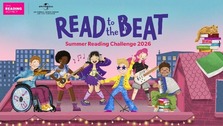
Derbyshire libraries will be running the Reading Agency “Summer Reading Challenge” and this year the theme is music and story telling “Read to the Beat”. This exciting theme will inspire children to explore reading for pleasure through music and rhyme, and will launch on Saturday 4 July, running throughout the summer, finishing on Saturday 12 September.
|
We encourage all ages to get involved and most of our libraries will be running at least one free activity to link with the theme. There will be stickers to collect when books have been read/shared with parents and carers, and a medal and certificate when completed.
For more information about the Summer Reading Challenge and to find your local participating library, visit www.summerreadingchallenge.org.uk.
Derbyshire libraries website: Home - Derbyshire will also offer up to date information on “Read to the Beat” as we get nearer to the Summer. You can also contact ask.library@derbyshire.gov.uk if you have any queries about the Challenge.
What else can your local library offer?
Visits and setting cards
Our libraries welcome visits from pre-schools, toddler groups and nurseries - you can also apply for a settings card. The card allows up to 24 books with no late fee. To arrange a group/class visit please email ask.library@derbyshire.gov.uk
Dual language books
We have an extensive collection of dual language picture and story books to gift to your families. If you have contact with a family who have babies, toddlers or pre-schoolers, with English as a second language; contact
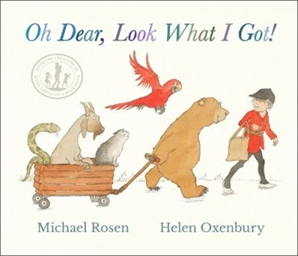
Oh Dear, Look What I Got!
Authors - Michael Rosen & Helen Oxenbury
One of the most wonderful things about being in Early Years is all the opportunities we get to immerse children in books! My favourite part of the day was always our end of the day story, watching all their little engrossed faces and when stories would make children laugh out loud or you could see their little brains thinking away about what was going to happen next!
The same goes for being a Mummy to my wonderful three little children, we absolutely love bedtime stories!
|
One of my children’s favourite authors is Michael Rosen! The rhyme and magic of rhythm he brings to stories make children want to come back to them again and again, and we do! My own children love that they can own the reading experience too as they can recall the rhymes and repeated refrains in his books and be the reader, even if they don’t yet know how to read words!
‘Oh Dear, Look What I Got’ is a wonderful story, using the repeated refrain ‘Oh dear, look what I got! Do I want that? No I do not!’ and getting children to predict what animal the boy will end up with next through thinking about rhyming words. My own children and the children I have taught have loved the hilarious outcomes and being able to join in with the story.
Lianne Mills
Early Years Improvement Officer

The Book With No Pictures
Author - B J Novak
A great one to have on your shelf in an early years setting is The Book with No Pictures by B.J. Novak.
At first glance, it really is exactly what it says on the tin—a book with no pictures. Which, let’s be honest, sounds like it could be a bit dull! But it turns out to be the complete opposite.
The whole point is that the adult reading it has to say everything on the page, no matter how silly. That means doing funny voices, making nonsense sounds, and fully committing to the ridiculousness of it all. The result is usually children in absolute hysterics
What’s lovely about it is how it shows that books are really about storytelling and interaction. It’s not just what’s on the page—it’s how you read it. The expression, the pace, the tone… it all makes a difference, and the children really feel that.
It’s also great from a learning point of view. It encourages children to engage with words and sounds in a fun way and helps them understand that the reader has to read what’s written. It’s brilliant for introducing concepts about print and giving them a sense of what an author actually does.
Definitely one that gets lots of laughs, but also supports early literacy in a really natural, playful way.
Kelly Darby
Early Years Improvement Officer
|
The magic of childminding
The theme of this year’s National Childminding week was the ‘Magic of Childminding’ highlighting how childminders play such a unique and important part of the early years sector, why they are vital to the children and families they support, and to share how the magic of their setting and practice changes a child’s life.
Take a look at what some of our Derbyshire childminders have been getting up to!
 |
|
Singing in the rain!
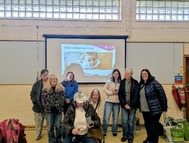
A group of High Peak childminders invited their Early Years Improvement Officer to celebrate National Childminding Week together. The morning was a wonderful mix of exploration and outdoor learning opportunities, with children fully engaged in a range of activities that sparked curiosity and creativity.
|
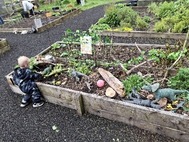
Wrapped up for the changeable weather, the children made the most of the outdoor space. A particular highlight was the imaginative play taking place in the allotment. A raised planting bed had been thoughtfully set up with natural resources, logs, and a collection of dinosaur figures, creating a rich, sensory space for storytelling and discovery. |
|
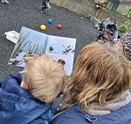 |
The morning showcased how outdoor environments can provide meaningful learning experiences through play, exploration and interaction with nature. It also highlighted the strong partnerships between practitioners, working collaboratively to provide the very best for the children in their care.
 |
|
The King and I
Demonstrating that anything can happen when Childminders are out and about on an adventure, one of our Childminders met the King earlier this year! Jodie, Nick and the children took the train into Manchester to visit the Museum, little did they know that King Charles had the same idea! The King spoke to the children and Jodie who talked to him about childminding. They made the local news and the radio!
|
Getting out into the local community, visiting museums and libraries in your local area is a wonderful way to expose children to experiences that they may not have experienced before and can be a vital way to remove any barriers to children’s learning and development; and who knows, you may bump into royalty!
Share your Magic
We love hearing about your adventures please keep sharing these with us. We also love to see childminders and their assistants at our training sessions, online and face to face, and hearing about how you have implemented the learning into your practice – please do get in touch if you would like to arrange some bespoke training for a group of childminder settings in your area.
|
|
 |
If you host childminder networks or playgroups, let your Early Years Improvement Officer know and we will come along and see the wonderful work you are doing to support each other.
Childminders are a vital part of Derbyshire’s early years family, helping to give children the best possible start in life. Thank you.
Developing our provision
Springfield Pre-School has been a part of the Sandiacre community for over 50 years - hear their story when their building was sold and they had to quickly move into a new premises.
|
"In 2019, we received the news that our building was to be sold, and we were required to vacate within just six weeks. Despite the challenges, we were fortunate to secure alternative premises within the local community, relocating to the local Scout and Guides hut.
While we were relieved to remain in the area, the move brought significant changes. Transitioning to a shared community hall meant adapting to a fully pack-away setting, which had a considerable impact on staff routines, children’s experiences, and our overall provision. Storage also became a major challenge.
|
|
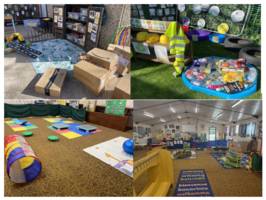 |
Over the following years, we worked hard to improve our provision and make the best possible use of the space available. Recognising the limitations of a shared environment, we sought creative solutions to maintain a welcoming and stimulating setting. We introduced foldable display boards...developed a zoned layout using fabric windbreaks and stands to create defined, purposeful areas within the room... helping to provide children with a sense of structure, security, and engagement despite the temporary nature of the environment.
Our most recent areas of focus for development have been our indoor physical area and our cosy/book corner. This has linked closely with our focus on supporting children’s emotional development and behaviour. We have also recently fundraised and purchased new equipment for our indoor physical area to further support self-regulation.
We are now in a place where we feel happy and confident in the provision, resources and activities we offer, as well as the high-quality teaching that underpins our practice. However, we remain committed to continuous improvement and are always seeking opportunities to further develop and enhance our environment and provision to ensure the best possible outcomes for all children.
Looking ahead, our long-term goal is to one day own a building of our own—creating a more secure, inspiring, and permanent space for our children.
 |
|
South Derbyshire childminder shares her great outdoors!
Outdoor learning plays a vital role in supporting children’s physical development, emotional wellbeing, and confidence. One local childminder, Gemma Simcox, shares how valuing nature and the outdoors can enrich children’s learning experiences every day.
“I believe children learn best through hands‑on, child‑led experiences. We love to be outdoors learning—being curious, exploring, and gaining confidence in a natural environment.”
|
|
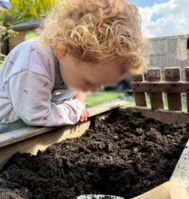
Children in Gemma’s care spend large portions of their day outdoors, where learning happens naturally through exploration and play. Activities include spotting and feeding birds, going on bug hunts, and taking nature walks to collect seasonal treasures, which are then used to spark discussion, curiosity, and language development.
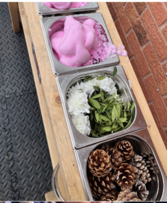
A key feature of the outdoor provision is a thoughtfully developed mud kitchen, complete with a self‑serve “pick and mix” of natural resources such as pine cones, shells, stones, and sticks. This invites imaginative play, independence, and problem‑solving, while allowing children to follow their own interests.
|
|
 |
 |
|
Children are encouraged to embrace mess and movement—jumping in muddy puddles, climbing, balancing, and engaging in appropriate risky play. These experiences support physical strength, coordination, resilience, and confidence. Risk is managed carefully, ensuring children are safe while still challenged and empowered.
Gemma shared that her aim is for children to feel connected to the world around them: She wants children to care for the earth and the creatures within it, developing respect, curiosity, and a sense of responsibility from an early age.
|
This practice is a powerful reminder that outdoor learning supports not only development and wellbeing, but also children’s sense of belonging and joy. With muddy hands, curious minds, and a love of nature, children are given the space to thrive.
South Normanton Nursery School spotlight article
Over the past 6 years, South Normanton Nursery School have taken part in Modeshift Stars Education. The STARS Education scheme recognises schools and other educational establishments that have shown excellence in supporting cycling, walking and other forms of sustainable and active travel. The nursery has been supported by Rob Bounds Senior Transport Officer at Derbyshire County Council. For the past two years, the nursery has won the Modeshift Stars Midlands Early Years Setting and is due to go to the national awards in London in March.
 |
|
The nursery offers “Scooter Smart” and Balanceability training for all children and invites parents to join their child and develop their own scooting and biking skills. They have also taken part in events such as “Bling your wheels”, where children brought their scooters into nursery and dressed them up with shiny materials or as part of a theme such as super heroes. |
The nursery also looks at road safety and sustainable travel through local walks and visits from the school crossing patrol, as well as provision of cycle and scooter storage, encouraging physical confidence and safe travel habits. These activities not only develop balance and coordination, but also cultivate a lifelong love of active, sustainable travel with daily practice of cycling and scooting reinforcing skills that are both fun and purposeful.
The nursery has also taken part in Clean Air Day activities and events. Parents and carers were invited in to nursery to help create masks and shields for the children to become Clean Air Day superheroes. The day saw huge support from parents and carers engaging them in a fun activity with an important message about active travel choices and not idling vehicle engines.
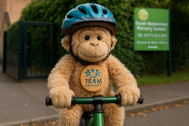
The nursery has also adapted the use of the monkey they use as a transitional object, which all children receive when they start on entry. This has seen the creation of ‘Modeshift Monkey’ an AI generated mascot that was used over the Christmas period to promote sustainable travel. This was combined with the nursery taking part in The Primary Engineering Award, where an engineer came to talk to the children about their job and resulted in all the children designing their own way of making Santa’s sleigh fly when all of the reindeers went on holiday. |
|
 |
If you are interested in taking part in the Modeshift Stars Award, then please contact Rob Bounds for more information at rob.bounds@derbyshire.gov.uk
It is free to take part in and Rob can support in looking at activities that would support your setting.
 |
|
Calm grows from connection
The Nurturing Relationships in the Early Years project clusters have explored how moving from noticing emotions to building connection supports co-regulation and wellbeing.
Like teaching a child to ride a bike, we match our support to their skill, eg we would find the right surface, use stabilisers, hold the seat to enable the child to be successful. We wouldn’t push them down a steep hill or leave them to it, and this is the same for supporting and teaching behaviour - providing the right conditions and guidance so they can succeed safely and confidently.
|
Hear from some of the cluster schools and settings about the impact of this project:
"Our nursery has been working closely with a family to support their 2.5-year-old son, who has experienced difficulties settling into the Toddler Room. Following concerns raised by the child’s mum, staff worked collaboratively with her to explore possible causes. In response, the team rewards positive behaviour at regular intervals and provides opportunities for one-to-one time with a trusted adult. A daily home–nursery communication diary was also introduced to strengthen consistency and support meaningful conversations with the child. Building a strong partnership with the parents has been key to supporting the child more effectively." (Killamarsh Village Day Nursery)
"With these principles in mind, the Nurturing Relationships Cluster has helped us to foster regulation through connection. In our nursery we strive to support our children’s social and emotional journeys using the principle of 'connection before correction'. We’ve moved away from simply managing behaviour to creating an enabling environment that fosters genuine self-regulation." (Killamarsh Infants School)
Practical strategies for supporting children during big emotions
-
All classrooms throughout EYFS and KS1 have a designated calm space/calm corner to give children space to go to when they need to regulate their emotions using their preferred resources in their individual calming box. (Dronfield Infants School), (Bolsover First Steps)
-
One simple way in which we encourage children to take ownership of their environment is by using our nursery mantra of "choose it, use it, put it away" - the children develop a sense of responsibility and respect for their shared surroundings and each other. (Killamarsh Infants School)
Identified approaches and consistency
-
Using the PACE approach when children display their big emotions. This helps in de-escalating emotions and behaviours allowing the child time and space to regulate. (Dronfield Infants School)
-
Communication Friendly Setting (CFS) principles underpin our practices; even the simplest of things such as the '10 second rule' to give more thinking time can have the biggest impact on regulation. (Killamarsh Infants School)
-
Jabado movement area has been a big win to help children regulate. (Bolsover First Steps)
-
Sensory breaks are a cornerstone of our daily routines; by turning off the lights and encouraging slow, intentional movements, we provide children with the vital opportunity to reset their nervous systems throughout the day. (Killamarsh Infants School)
Using nature and outdoor space
-
Whether it’s the simple joy of rolling down a hill to support vestibular system development or the freedom to explore the open space, we believe nature provides the perfect environment for children to regulate through movement and discovery. (Killamarsh Infants School)

What do we have for you this Summer Term
Don't forget to head over to our Derbyshire Early Years Service Eventbrite pages to check out our training offer. We are busy preparing for our Autumn training so maybe now is the perfect time to start to think about what your training priorities for 2026-2027 will be.
|
We have some NEW training courses coming your way with our 'Introduction to Wraparound Care', an IN PERSON session 'The Great Outdoors - teaching without walls', and back by popular demand 'Supporting Children's Risk and Play' all available to book on throughout the summer.
We also continue to have our Safeguarding offer with our Being a DSL, Safeguarding in Practice and Safeguarding Babies all available in the summer term.
Don't forget, we can also take bespoke booking requests too! Please email cs.eys@derbyshire.gov.uk
RISE are pleased to announce that they will be hosting their next series of Reception webinars during the summer term 2026.
These sessions will focus on EYFS profile assessment, transitions into Reception, and preparing high quality Reception provision, offering practical, evidence‑based support aligned with recent guidance:
- Mastering the EYFS Profile Assessment – Wednesday 10 June 4pm
- Setting up for Reception success ahead of September – Wednesday 17 June 4pm
- Supporting smooth transitions into Reception – Wednesday 24 June 4pm
To register for these webinars, please use this .
Who Healthier Futures can help
Healthier Futures supports families across Derbyshire and is ideal for parents and carers of children aged 0-12 years and families who may benefit from support.
|
|
 |
We support parents and carers to improve family health and wellbeing by exploring topics such as:
- Building parenting confidence
- Healthy meals and snacks
- Creating calmer mealtimes
- Conversations about positive body image
- Childhood healthy weight support
- Moving more as a family
- Improving sleep
- Creating healthy routines
- How to help with fussy eating
The service provides:
- Client led, strength based one‑to‑one support over Microsoft Teams, emails or phone
- Access to wider Live Life Better Derbyshire services such as physical activity, adult healthier weight or smoking cessation
- HENRY 8‑week programmes delivered online
Families can sign-up or be supported by professionals to access the programme. Referrals are quick and easy, and the programme is free.
🔗 Sign up to find out more: Healthier futures - Live Life Better Derbyshire
What's launching?
On 26th May the DfE launched a series of tools to empower parents to search for local childcare, estimate childcare fees, and check what support they're entitled to.
The three tools will be connected to the existing Best Start in Life site, and provide families with access to:
-
Updated Childcare “Entitlement Checker” (national) – helping parents understand what support they may be eligible for, building on the existing checker available on Best Start in Life
-
Childcare “Cost Estimator” (national) – providing childcare cost estimates by region and childcare type
-
Childcare “Find a Provider” (available in West of England Combined Authority) – enabling parents to search for childcare providers in their local area
Head over to: Best Start in Life - Best Start in Life
EYSEN Helpline: EarlyYears.SENhelpline@derbyshire.gov.uk
Targeted level of the graduated response
EYIF: Early Years SEN Inclusion Fund - Derbyshire Local Offer
Outreach team referrals: EYSEN Outreach team - Derbyshire Local Offer
Specialist level of the graduated response
EYIF: Early Years SEN Inclusion Fund - Derbyshire Local Offer
Specialist support referrals: Early Years SEN Panel - Derbyshire Local Offer
Applying for a statutory EHC needs assessment: Apply for an assessment - Derbyshire Local Offer
Here to support your families
As many of you know, the Families Information Service (FIS) is always on hand to support parents and carers across Derbyshire. If you’re working with families who may need a little extra help, whether that’s understanding childcare funding, exploring their eligibility, or finding local childcare options, our team is here to guide them.
FIS offers free, impartial information to families with children aged 0–19 (or up to 25 for young people with SEND). We can help parents navigate childcare choices, access funding, and connect with local providers like you.
|
If you have families who would benefit from our support, please feel free to signpost them to us:
If you have any questions or would like more information about our services, please feel free to get in touch!
Thank you for continuing to share our service with the families you work with. Together, we can make sure every family gets the information and support they need to thrive.
Early Years Service general enquiries: CS.EYS@derbyshire.gov.uk
Early Years Service - info on Schoolsnet
Funding & contract queries: cs.enquiries.groupcare@derbyshire.gov.uk
OR cs.enquiries.childminders@derbyshire.gov.uk
OR cs.enquiries.schools@derbyshire.gov.uk
|