Important updates
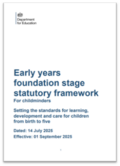
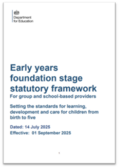
On 1 September, new versions of the EYFS frameworks came into force. These new editions were first published for information in July. The changes have strengthened the safeguarding and welfare requirements in section 3 especially around safeguarding children, staff accountability and recruitment.
|
What's new?
The updated framework contains both revisions and new additions. In particular you will find updates including:
-Whistleblowing
-Child absences & emergency contact information
-Safer recruitment – staff references
-Safer eating & nutrition guidance
-Safeguarding training
-Safeguarding policies
-Experienced based qualifications
-Nappy changing and toileting
|
|
 |
Things that may help!
The Early Years Team have been busy over the summer to ensure that we can support you to implement the revisions and changes. Don't forget we have:
- Safeguarding and child protection model policy: Safeguarding
- Safeguarding welfare audit: Early Years
- regular safeguarding slots at Leaders and Managers
- wide training offer in line with Annex C requirements
- Safeguarding network in Autumn 2
- Safeguarding update video:
Don't forget you also have the support from the Early Years Team. You can email your named EYIO directly or cs.eys@derbyshire.gov.uk
|
|
 |
There is no requirement to put physical security measures in place, however The Department for Education have confirmed that even if you fall out of scope (less than 200 people on site) you should, at a minimum, to have preparedness plans in place: Protective security and preparedness for education settings - GOV.UK
Practical Steps for Early Years Providers (even if not required by law):
-
Include security and emergency planning in your general risk assessments.
-
Practice lockdown, invacuation and evacuation drills appropriate to the age group.
-
Ensure visitor management and site security are robust.
-
Keep communication systems up-to-date to contact parents quickly in emergencies.
- Sign up for updates to the Home Office, attend lunch and learn webinars and review the guidance and factsheets.
 |
|
Recommended reads from the Early Years Service
You may remember that we shared with you our recommended reads from our team in a recent newsletter - in conjunction with the Library Services you can now find our posters and copies of the books in a library near you! We will continue to share book reviews of some of our favourite stories but we want to hear from you! If you have a book review which you would love to feature in our next newsletter please email cs.eys@derbyshire.gov.uk
|
Fox's Socks
Julia Donaldson and Axel Scheffler
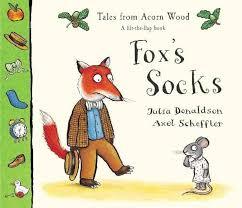
Fox's Socks, part of the Tales from Acorn Wood series, is a charming lift-the-flap board book which I have always found to be perfect for engaging young readers. The story follows poor old Fox as he searches for his lost socks, asking readers to help him check various places around his house by lifting flaps and peeking inside cupboards, chests, drawers and underneath mats.
I love the rhythm of story, alongside the repetitive and rhyming text, which make the story perfect for children to join in with.
This delightful ‘hide-and-seek’ story is wonderfully interactive. The detailed illustrations provide plenty for young eyes to explore and add to the charm of the story. Children love to point out familiar objects in the illustrations - my own children loved to talk about what the little mouse was doing on each page, and to count how many ducks they could find throughout the book!
Sam Longley
Early Years Improvement Officer
|

The Magic Porridge Pot
Alan Macdonald
This is one of my all-time favourite stories and brings back such happy memories of hearing it as a child. I was amazed by the idea that the pot would not stop making porridge! I remember wanting to hear it again and again — that sense of wonder and repetition was magical.
It’s also a story I’ve loved sharing with my classes. Watching the joy on their faces as they learned about the nonstop bubbling porridge pot was always a highlight. We would act out being the porridge as it overflowed from the pot and spread through the town, which caused much excitement and laughter!
The repetition in the story — with refrains like "Cook, little pot, cook" and "Stop, little pot, stop" — makes it perfect for young children to join in and feel part of the storytelling. It’s a wonderful blend of rhythm, fun, and just the right amount of silliness.
Aimee Allen
Early Years Improvement Officer
|
 |
|
We know that Physical Development is a vital foundation for young children’s overall growth, supporting not only their health and coordination but also their ability to explore, learn, and thrive in every area of the early years curriculum. |
This year we will shine the spotlight on physical development and the ways you can consider optimising your physical offer for children.
Meet Tamsin, a Physical and Nutrition Co-ordinator (PANCo) in a Derbyshire setting, who will share her role with us.
What is a PANCo and what are your goals?
"My overarching role is to support and oversee the implementation of the
physical criteria of the Early Years Foundation Stage. Our goal as a setting is to create an environment where children can actively explore and play as well as make their own choices. We aim to plan, create and implement activities that are going to challenge the children to reach their full potential. This role was developed at our setting because in our area we have a high deprivation rate and as part of our COVID recovery response, we have seen a decrease in the activeness and physical development of children".
|
|
 |
"We believe that physical development is crucial and helps to support all areas of the children’s development. Through PANCo we have been able to advance all our outdoor provisions and evaluate our indoor provision, such as removing chairs during session time, introducing yoga and music and movement within our curriculum, and daily community walks, to help support the children to have a more active lifestyle. To support this further, we have also developed a new menu that promotes a no sugar, healthy and balanced diet. We have also undertaken whole setting training on toothbrushing and vaccinations to become more aware of how we can be supporting parents and becoming more knowledgeable on all areas of physical health".
So what does a day look like in a physically active setting?
"Children are not expected to sit on chairs or at table based activities throughout the day. The only
expectation for sitting is lunch and teatime, and small group times in our pre-school when
developmentally appropriate. Whilst stories and singing and small group times do happen throughout
the day, children are not made to leave their activities and sit for these on a carpet for example; we
instead either read stories at bedtime, sing at lunchtime when children are already seated and awaiting pudding or we enjoy interactive stories and rhymes, where we all join in with actions, narrate and act out stories such as Bear Hunt, and use props and puppets. We have a large outdoor space which we use to its full potential.
Our patio areas are set up with continuous provision areas which enhance but don’t replicate the indoors. For example, we have mud kitchens with herbs and flowers growing and a range of tools and scissors to chop and harvest independently. We have water play and water walls to encourage core strength when lifting and transporting and coordination when tipping and pouring down funnels and drainpipes. We have syringes and squirty bottles to develop fine motor skills. Indoor provision offers a range of activities supporting gross motor, fine motor and self-care, such as finger gyms, tummy time, yoga, large physical equipment".
What has been the impact?
"Having an onsite PANCo has allowed us to plan, adapt and review our teaching and environment very closely to support the children better. It’s also allowed us to monitor and observe children’s physical development. We have found that it allows us to identify and respond to any gaps in their development much quicker and embed Derbyshire’s ECAM response package thoroughly, therefore children make quick steps towards outcomes and gaps are closed quickly. Staff understanding and knowledge has been a key area of impact, and staff are skilled in supporting children and their families to lead a healthy, active lifestyle".
“Children benefit from having different genders in a setting and this can contribute to a more holistic nurturing environment. Male educators provide opportunities for children to experience emotionally supportive relationships with emotionally available men - something many may not encounter at home.”
Pete Moorhouse, Froebel Trust Travelling Tutor and early years education advocate
In a profession often seen as female-dominated, the voices of men working in early years settings offer fresh perspectives, powerful stories, and valuable insights. This month, we’re shining a light on male practitioners who are making a difference in the lives of young children and asking them to share their journey, challenges, and advice.
Nick is a Childminder Assistant in an Outstanding setting in the High Peak area of Derbyshire, he works with Childminder Jodie and is passionate about working in Early Years. We asked Nick about his journey into Childminding and advice he would give other men looking to pursue a career in the Early Years.
What inspired you to pursue a career in early years education and childcare?
I’d seen first-hand how much joy and fulfilment my partner found in being a childminder. Watching the impact she had on the children and families really made me think about giving it a try. I wanted to find something new, meaningful and rewarding, and the role instantly appealed to me.
Did you face any challenges or barriers when choosing this profession? How did you overcome them?
At first, I wasn’t sure how it would feel stepping into a field where men are still in the minority. But I’ve had so much support and encouragement that it’s felt very natural. Starting training early on and being open to learning has really helped build my confidence.
What do you enjoy most about working with young children?
I love that every day is completely different. The children’s imaginations and energy make the job so exciting. We enjoy lots of outdoor play, exploring new places together, and I really like all our outings we get to have.
Can you share a memorable moment or breakthrough you’ve had with a child or group?
A really special moment was on my birthday when I introduced the children to my favourite hobby - golf. We took some children's golf sets to the field and I taught them how to play. They had such a great time giving it a go and it was lovely to share something I enjoy with them and see how quickly they picked it up.
What skills or qualities do you think are most important for men in this field?
Patience, creativity, and a willingness to join in with the children’s play. I think it’s also about being open-minded and not worrying about stereotypes - children just see you as someone who’s there to care for and play with them.
What would you say to other men who are considering a career in early years but are unsure?
Go for it. It’s such a rewarding career, and children benefit from having different role models. Every day feels fresh and full of opportunities.
Are there any misconceptions about working in childcare that you’d like to challenge?
Some people think it’s “just playing with children,” but there’s so much more to it. It’s about supporting children’s development, helping them grow in confidence, and building strong relationships with families.
What training or support helped you feel confident in your role?
Doing short courses early on helped me get to grips with the basics, and I’m now looking forward to starting my Level 3 qualification. Having a supportive mentor to learn from has also made a huge difference.
How can settings and communities better support and encourage men to join the profession?
By showing how valuable male role models can be and offering the same encouragement and opportunities to men as to women. Networking with other childminders locally has been really positive, and I think sharing men’s experiences in early years helps break down barriers.
Thank you so much to Nick and Jodie for sharing their experience with us and being so open to representing the experience of men in the Early Years. Whether you're considering a career in early years or supporting someone who is, we hope Nick’s experience helps to support your decision and demonstrates the impact men in Early Years can have. For more inspiration, information or support:
Quality Improvement Principles (QIPs)
 |
|
Have you heard about QIPs?
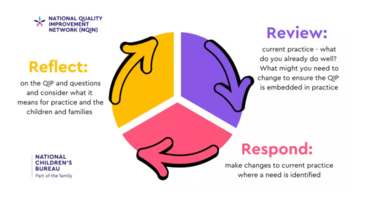
Quality Improvement Principles (QIPs) have been developed to support and enable you to improve the quality of your early years provision. With a Review, Reflect and Respond approach it aims to provide opportunities to to think about current practice and make changes where appropriate
|
What are the six principles?
There are six principles which are explored in depth which can be applied to different contexts and cohorts of children, leading to a continuous cycle of improvement over time.
Principle 1: Embedding values and principles into practice
We know that at the core of your early years provision lies a clear set of values and principles that guide your work with children and shape everyday practice, but does everyone understand and embrace these values? Do they recognise their origins and the vital role they play in creating a nurturing, inclusive environment?
This principle explores induction (for both staff and families) and explores how collaboration is key especially when reviewing or refreshing your values, inviting all voices to the table so that your shared principles truly reflect the community we serve.
So what's the impact?
You can look at the website: Quality Improvement Principles (QIPs) and start your journey with principle 1. Using the principles and the 'reflect, review, respond' can be applied to different contexts and groups of children, and this can lead to a continuous cycle of improvement over time
Walter's impact
After attending our training session – The Science of Active Storytelling in the Early Years; several of our childminders in the High Peak have jumped from the nest and soared!
|
|
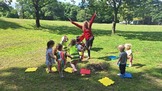 |
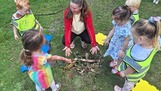
Marie began implementing the principles of active storytelling (combining Motor and Language Development activities in an outdoor environment) with her children straight away. She used the resource pack provided and got the children outside and learning all about Walter the Owl.
 |
|
Marie said, “it was brilliant, they all loved it” and intends to use the principles of this approach with other stories and resources within her setting; and is inspiring her parents to use storytelling combines with physical activity at home too. |
A network of Childminders who attended the training met recently in a community garden to implement the knowledge they gained and the resource pack with their children, They made playdough and brought books about owls, using natural resources to inspire the children and made a language rich environment in the garden using laminated words from the stories and visuals of real life owls and other creatures from the stories.
If you would like to attend the active story telling training course this year, please see Eventbrite or talk to your Early Years Improvement Officer for more information.

New to Derbyshire - New Provider Training
If you are new to Derbyshire, don't forget to look out for your 'Welcome Information' which outlines our funded training offer for the first 12 months of operation - these include Safeguarding; Principles into Practice, as well as training sessions for the prime areas of learning and inclusion.
|
Quick Tips for Communication and Language
 |
|
In this edition of our newsletter we wanted to consider the ways we can apply the Five to Thrive approach with Communication and Language. Thanks to Ruth Crofts who has created these top tips:
1. Storytelling Connects Us
Collective storytelling sparks connections in the brain. Begin your day by sharing something simple from your own morning, such as, “This morning I heard a bird singing outside my window. Did anyone else hear any sounds before coming here?” Encourage the children to make their own noises or gestures to show what they heard or saw, supporting them as they share in their own way. This helps even very young children feel included and valued and lays the foundation for building language and connection.
|
2. Value Everyday Moments
Celebrate a positive, unexpected interaction—like a child’s smile or a friendly greeting. These small moments boost well-being for everyone.
3. Relationships First
When supporting children’s Communication and Language skills, always keep the social function relevant to each child’s world. For example, during snack time, sit beside a three-year-old and say, “I saw you hanging up your coat when you came in this morning. Do you help your mammy or daddy with your coat at home too?” This invites the child to make connections between their setting and home life, encourages them to share their own experiences, and shows that you value their world. By focusing on what matters to them, you are strengthening both your relationship and their communication skills.
4. More Than Words
The first four stages of Five to Thrive are nonverbal—respond, engage, relax, and play. These stages engage the social and emotional brain, laying the foundation for talking, which engages the cognitive brain. If a child is upset, use eye contact, get down to their level, and offer comfort before talking. Nonverbal support lays the groundwork for communication.
5. Build on Strengths
Notice and celebrate each child’s unique ways of joining in or adapting. Share these strengths with your team. For example, if a child is new to the setting and seems quiet, notice and celebrate their ability to observe and adapt. Share with the team, “I’ve noticed how carefully they watch what’s happening before joining in—that’s a real strength.”
6. Practise the Five to Thrive Sequence
When challenges arise, openly RESPOND with curiosity or interest (no talking), ENGAGE by closing the emotional and physical space and noticing their need with compassion (still no talking), RELAX our physical stance and regulate our fears/frustrations enough to enable us to let them relax (still no talking), meeting their needs by showing care through PLAYful slow nonverbal interaction switching on the social and emotional response of the child/family, TALK and narration now has a purpose and context of meeting their need.
 |
|
Inspiring the next generation: exploring careers in the Early Years
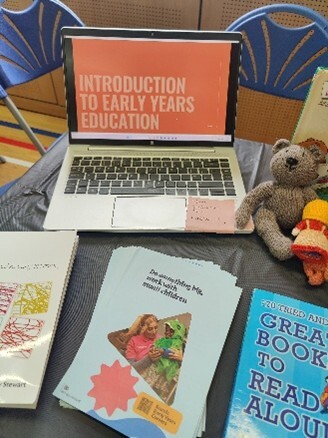
Last month, our team had the pleasure of attending a vibrant Careers Day event aimed at Year 11 students exploring their future career paths. Among the many stalls and opportunities on offer, our Early Years careers stand stood out as a hub of creativity, curiosity, and conversation.
With the goal of showcasing the rewarding and impactful nature of working in Early Years education, we invited pupils to engage in a hands-on activity: creating something imaginative out of play dough. This simple yet powerful task sparked discussions around child development, creativity, and the importance of play in early learning.
|
|
As students sculpted animals, food items, and even self-portrait sculptures, we talked about the wide range of roles available in the Early Years sector, from nursery practitioners and childminders to early years teachers and support staff. Many were surprised to learn how varied and fulfilling these roles can be, and how they contribute to shaping the foundations of lifelong learning.
The play dough activity not only brought smiles and laughter but also helped students reflect on the skills needed to work with young children - patience, imagination, empathy, and a genuine passion for helping others grow.
|
|
 |
We were thrilled to see so many young people engaging with the idea of a career in Early Years and asking thoughtful questions about qualifications, training routes, and day-to-day responsibilities. It was a fantastic opportunity to plant the seed for future educators who will one day make a real difference in children's lives.
Thank you to all the students who visited our stall and shared their creations with us. We hope we inspired them to consider a career where every day is an opportunity to nurture, support, and celebrate the wonder of early childhood.
If you would like to get involved in supporting recruitment, retention and training within the Early Years sector in Derbyshire, our Early Years Strategic Board would welcome representatives from Early Years providers on their “Developing a confident and capable workforce in settings” workstream – contact cs.eys@derbyshire.gov.uk for more details.
 |
|
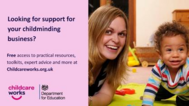
A fantastic hub of information and resources has been created by Childcare Works for childminders where you will find easy to use 'collections'. Here you will be able to access a wide range of free resources, information and videos to support you in delivering the childcare expansion programme. |
You can sign up for free webinars which are delivered by Childcare Works at the HUB and sign up to receive their newsletters too. Head to: HUB Resources - childcareworks.org.uk
|
We’re looking to set up regular face-to-face networking opportunities for childminders across Derbyshire. These sessions would offer a valuable space to share good practice, build supportive relationships, and strengthen our sense of community.
We know how important connection is - not just for professional development, but for wellbeing too. We want to make sure these networks work for you, so to help us plan effectively, we’d love to hear from you, your input will help shape a network that truly meets your needs.
|
|
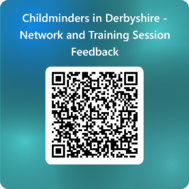 |
Please let us know your thoughts by scanning the QR code. We look forward to hearing from you.
 |
|
DACES Early Years Professional Bootcamp
If you are 19+ and would like to take the first steps towards becoming a qualified Early Years Practitioner or Childminder, you may be interested in attending one of our free 8-week Early Years Professional Bootcamps.
|
You will gain:
- Paediatric first aid
- Food safety level 2
- Learning towards the Early Years Educator apprenticeship standards
- DBS
For further information please complete the form to register your interest or scan the QR code
Household Support Fund (HSF7) is running until March 2026. As part of the HSF7 distribution plans there will be:
- a further round of grocery vouchers (expected to be distributed in January 2026)
- continued opportunities to apply for Children's Professionals Grants (will remain open until 27 March 2026 or until allocated funds spent)
As with previous HSF periods, our Children’s Services staff and professional colleagues working in our partner organisations such as schools, nurseries, charities etc can assess and refer families with children for grants from the fund. Please remember, each family/household can access a max of 3 HSF grant payments between now and 27 March 2026 via the Children’s Professionals route.
When making your referral please remember to only make and submit applications for families you have already assessed to be eligible for funds.
What else can I do?
For more information, please contact the team via email on cs.hsfduty@derbyshire.gov.uk
For further information please follow our channel General | CS Household Support Fund | Microsoft Teams where you can find information about the grants and roadmaps to further support families in Derbyshire.
A date for your diary
On 1 April 2026, the the short-term Household Support Fund (HSF) will be replaced with a multi-year Crisis Resilience Fund (CRF).
We are still yet to receive full details, including guidance delivery for CRF but once we have this, we will share how we in Derbyshire expect to deliver.
EYSEN Helpline: EarlyYears.SENhelpline@derbyshire.gov.uk
Targeted level of the graduated response
EYIF: Early Years SEN Inclusion Fund - Derbyshire Local Offer
Outreach team referrals: EYSEN Outreach team - Derbyshire Local Offer
Specialist level of the graduated response
EYIF: Early Years SEN Inclusion Fund - Derbyshire Local Offer
Specialist support referrals: Early Years SEN Panel - Derbyshire Local Offer
Applying for a statutory EHC needs assessment: Apply for an assessment - Derbyshire Local Offer
The Early Years Improvement team are saying goodbye to two of our Early Years Improvement Officers this year, and welcoming a new arrival to the team.
Firstly, Jill Copeland, who leaves us after nearly 20 years of service. Jill has most recently launched Walter the Owl with our brilliant Active Story Telling project and we know that whilst Walter is here to stay, we will certainly miss Jill.
Also flying the nest is Emma Wilson, who leaves us after nearly 5 years service in the South Team.
And a big welcome to Aimee Allen, who joins our South Team bringing over 18 years of teaching experience across the primary and early years phases. Most recently, she has led and managed a large Early Years setting, served as a trust lead, offering training, support, and guidance to early years professionals. She is passionate about the value of nature and outdoor learning, recognising the significant benefits it brings to young children.
Aimee is also trained as a baby massage instructor and has worked as a peer supporter in antenatal care. She has a deep interest in infant development and is dedicated to ensuring all children have the best possible start in life.
 |
|
Are you following us on X (formally known as Twitter)?
Make sure that you don’t miss out on accessing the most up to date information, safeguarding updates, training reminders, and more!
To follow the Derbyshire Early Years Improvement Service on X, search for @DerbyshireEYFS
|
Helping Families Thrive with Reliable Information & Support!
The Families Information Service (also known as FIS) provides free, impartial information and guidance to any family caring for children or young people aged 0-19 (or up to 25 years, for children and young people with SEND).
FIS can support you with:
- finding the right childcare and information on eligibility for childcare funding schemes.
- finding family support services locally and nationally for parents at every stage, from infancy to adolescence.
- information on maintaining family health, supporting mental well-being, and finding healthcare resources.
- information about local family activities and events across Derbyshire.
- Plus, much more...
|
Please share the FIS website and social media pages with the families you work with. It’s a simple way to offer them support and keep them informed.
You can find us here:
If you have any questions or would like more information about our services, please feel free to get in touch!
Early Years Service general enquiries: CS.EYS@derbyshire.gov.uk
Early Years Service - info on Schoolsnet
Funding & contract queries: cs.enquiries.groupcare@derbyshire.gov.uk
OR cs.enquiries.childminders@derbyshire.gov.uk
OR cs.enquiries.schools@derbyshire.gov.uk
|