
Important updates
We know that keeping up to date with changes in the world of safeguarding can be a big job in itself, so a reminder that you can sign up to the update service from the DDSCP who will send you a handy email whenever there is an update to a document on their procedures or policies.
These updates can include vital revisions to key documents aimed at supporting practitioners and caregivers in safeguarding our youngest and most vulnerable children, so ensure you have the latest changes at your fingertips.
|
 |
|
Best Practice Guides
You may remember the three best practice guides which can be used to support practitioners when working with children and families where child in need plans, personal health budgets or special guardianship orders are a feature.
|
|
These guides have been co-produced by front line staff, team managers and senior managers from a variety of agencies across Derby and Derbyshire.
The aim of the guides is to provide practitioners with a set of best practice principles to support and enhance direct work with children and families (in addition to using existing legislation and guidance) and to help achieve the shared multi agency aim of meeting the needs of children and increasing their safety and wellbeing.
If you have used these guides and have any feedback which you would like to be shared directly with the DDSCP we want to hear from you. Please email cs.eys@derbyshire.gov.uk
|
|
 |
The Terrorism (Protection of Premises) Act 2025
On Thursday 3 April The Terrorism (Protection of Premises) Act 2025, or Martyn's Law as it will be referred to, became law after gaining Royal Assent.
Whilst there is an implementation period of two years, and some of our early years settings may fall out of scope (please see the guidance as to the law and your individual setting size), you may want to start planning ahead to ensure your security practice forms part of your ongoing culture of safeguarding.
|
|
 |
Practical Steps for Early Years Providers (even if not required by law):
Even if your setting doesn’t meet the size threshold, it’s good practice to:
-
Include security and emergency planning in your general risk assessments.
-
Practice lockdown, invacuation and evacuation drills appropriate to the age group.
-
Ensure visitor management and site security are robust.
-
Keep communication systems up-to-date to contact parents quickly in emergencies.
 |
|
Guidance for group and school-based providers and childminders
We know that September 2025 will see new requirements in the safeguarding and welfare requirements of the EYFS, and in readiness for this, the Department for Education have published guidance to support providers to understand how to implement this.
With guidance for children from birth to 5, menu planning, example menus and snacks to support for communicating with parents or carers, allergies, intolerances and children with additional support needs, this guidance will assist you in developing your food and nutrition policy as well as ensuring that we are contributing to reducing health inequalities and setting the foundations for a lifetime of good health.
|
 |
|
Are you starting to plan ahead for your new intake or putting together those celebrations for your leavers as they take their next step onwards? Do you know already which new arrivals have an allergy or have you started to share your allergy action plans with the settings children are moving to? |
If you have answered YES to any of these questions look no further! Anaphylaxis UK have published top tips to support parents and schools as children are planning their next part of their children's allergy journey - this advice is perfect for us too in the Early Years: Preparing for primary school with an allergy | Anaphylaxis UK
The top tips include:
- maintaining allergy action plans and holding all important reviews
- reaching out to the school (if children are moving up) or finding out who else has been supporting the child before they arrive to your setting
- planning any training that might be needed
- planning additional transition visits
- considering your catering needs
- emergency planning
Preparing to travel over the summer break?
As families prepare for travel over the summer break, did you know that there is more chance for measles to be brought in from countries where there are outbreaks?
This is why the Derbyshire Health Protection Team have prioritised catching up children who missed out on their MMR vaccines to help prevent another rise in measles cases.
Take a look at, and share, the latest information from The UK Health Security Agency has released some useful material, which the Heath Protection team would appreciate if you could forward to parents, carers and staff in your setting. What is measles and why is it so important we’re all up to date with our MMR vaccine? – UK Health Security Agency
 |
|
Recommended reads from the Early Years Service
We know that children need to have the opportunity to see themselves and their community represented through the books they encounter and the authors, characters and situations they meet. We also know that having thoughtfully planned, high quality and developmentally appropriate reading materials will engage children's interests. To help support you with this, the Early Years Service have shared a selection of 'must haves' and created a core book list.
|
|
This core list is to support the richness of books you will already have - you might use this list to review your book stock or to simply discover your next favourite book. Whatever your review of your book stock and use suggests, we know these recommended books will add great value to your provision.
You may wish to use the posters to raise awareness with parents, or create your very own book reviews.
|
|
 |
Part 4 - A long developmental journey
Part 4 of our series into early reading and phonics explores reading comprehension and reading for pleasure. Language comprehension (necessary for both reading and writing) starts from birth. When adults talk with children about the world around them and the books they are reading with them, and enjoy rhymes, poems and songs together, they are exposing children to a wide range of words they would rarely hear or use - this in turn increases the child's knowledge of vocabulary and concepts to help them understand the world around them. Hearing and talking about these words in context help children to understand.
Oral language development is key to children’s development. Language development can be enhanced by the amount of spoken language a child hears and joins in with. Language comprehension is an important pre-requisite to children being able to understand what they read for themselves, when the teaching of phonics begins in reception. It’s also important to later success with writing composition.
Providing a wide range of reading experiences to help children develop a love of reading, curiosity and wonder by offering a variety of genres, lengths, including fiction, non-fiction books, poems, comics, articles, audiobooks, and even real-world materials like recipes or instructions, catering to different interests and to foster a love for reading across diverse audiences.

- Take and make time to share books with children.
-
When reading to younger children, help them ‘read the picture back’ by letting them grab the book or point to the picture.
- Provide a wide selection of reading material.
- Support children to choose books for themselves.
- Talk about why you like a book and share what the child likes too.
- Let the children explore how books open, while talking about what they see or feel.
- Encourage the children to ask or answer questions.
- Make the text come alive by using voices, exaggerate facial expressions and body movements to tell the story.
|
A Bit Lost
Author & Illustrator - Chris Haughton
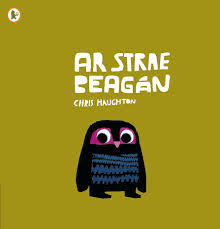
When deciding on a favourite book to review, I consulted with my family about which one too choose, and the responses were unanimous - "A Bit Lost" by Chris Haughton!
This is a lovely picture book that captures the essence of adventure and the warmth of friendships. It is a staple in my family, I have given it to many friends and family members to read with their children and I’ve included it in the book boxes at my settings.
The story follows a baby owl who falls out of its nest and finds itself lost in the woods. With the help of some friendly forest animals, the baby owl embarks on a journey to find its way back home.
The illustrations in this book are beautiful and use bold colours, the writing is simple and the emotion and expression are well written so a perfect read for all ages. Not only is this story endearing and warm, but it also includes humour. It kept my children entertained but also taught them about kindness, perseverance, and the importance of helping others.
This book became a firm favourite at bedtime for both of my children when they were younger. The voices that we use for each of the characters still bring a smile to their faces even now they are teenagers. We found this book recently when we were decorating my daughter’s bedroom and we all immediately said the title in the same voice we used for the baby owl and its edges are well worn! We all agreed that this book will be kept safe with some other family favourites and classics to hand down to future generations. A real classic.
Karen Entwisle
Early Years Improvement Officer
|

The Koala Who Could
Author - Rachel Bright Illustrator - Jim Field
Following the birth of my first son, a friend very kindly bought him the story book, The Koala Who Could, which soon became a firm favourite bedtime read of ours!
Set in the Australian outback, this heart warming story is about a little koala called Kevin who was terrified to try anything new. The reader goes on an enlightening journey with him and his friends and demonstrates how stepping out of your comfort zone can be both rewarding and exhilarating!
This story book soon made many outings into the settings I’ve worked in, with children immersed in the feel-good rhyming tale and the beautiful illustrations, which always sparked great discussion. I found this to be the perfect book to introduce to young children, especially those who were struggling to deal with change or to overcome worries.
Now part of a series of books from the fabulous author, Rachel Bright, keep your eyes peeled for some of her other ‘must reads’ including The Lion Inside, The Whale Who Wanted More and The Way Home for Wolf which all share valuable life messages for our little ones.
Rachel Neville
Early Years Improvement Officer
|
 |
|
The Playlist book recommendations |
It isn't just the Early Years Service who are recommending books, but recently The Playlist has shared their top 10 books all to do with growth.
In this month’s booklist, they have picked ten books that could lead to interesting conversations and inspire more exploration in your provision.
Making it to their top 10:
-
Errol’s Garden by Gillian Hibbs
- Little Seed by Hector Dexet
- The Extraordinary Gardener by Sam Boughton
- Luna Loves Gardening by Joseph Coelho and Fiona Lumbers
- One Little Egg by Becky Davies and Charlotte Pepper
- Who is in the Egg? by Alexandra Milton
- The Wonderful Things You Will Be by Emily Winfield Martin
- Welcome to the World by Julia Donaldson and Helen Oxenbury
- My Tree by Amy Sparkes and Fiona Lumbers
- All the Things You Will Do by Lucy Rowland and Neely Daggett
Summer Reading Challenge 2025
Once again Derbyshire libraries will be running the “ Summer Reading Challenge” and this year it is a great theme to get behind -Story Garden.
|
|
 |
This exciting new theme will inspire children to tap into a world of imagination through reading, exploring the magical connection between storytelling and nature.
The challenge launches in Derbyshire on Saturday 5 July and runs throughout the summer, finishing on Saturday 6 September. As ever, we encourage all ages to get involved and most of our libraries will be running at least one free activity to link with the theme. There will be a stickers to collect when books have been read or shared with parents and carers, and a medal and certificate when completed.
For more information about the Summer Reading Challenge and to find your local participating library, visit www.summerreadingchallenge.org.uk.
Derbyshire libraries website will offer up to date information on “Story Garden” as we get nearer to the Summer. In the meantime you can contact ask.library@derbyshire.gov.uk if you have any queries about the Challenge.
Trudy Lowen
Library Manager – Delivery & Development, Derbyshire County Council
 |
|
Speech and language therapists (SLTs) have diverse roles, supporting individuals from children with speech delays to adults recovering from strokes. SLTs improve lives not only for individuals but also for families and communities. They advocate for early intervention and accessible services, contribute to public health initiatives, and stay current with the latest research to provide high-quality care, making a significant difference in many lives. |
Career choices by Ruth Crofts, EY Consultant
When I was ready to leave school, I had no idea what carer would suit me, then a mum at church told me about her daughter’s speech and language therapy and my life started to change! The variety of subjects and expertise was mind-blowing, e.g. embryology, child psychology, phonetics, dental development, neurology, child development, stroke rehab. I studied at University for 4 years to gain my BSc in Speech Sciences and clinical practice certificate. It was certainly challenging but has allowed me to move around the country, work with children and adults, specialise in early years and although no longer practising as a therapist, it is an amazing carer.
The role of the SLTs
SLTs are trained to assess, diagnose, and treat communication and swallowing disorders in various settings such as schools, hospitals, clinics, and private practices. Key areas they focus on include:
- Paediatric Therapy: Helping children improve communication skills.
- Adult Therapy: Assisting adults who have lost speech or swallowing abilities.
- Voice Therapy: Restoring vocal function for those with voice disorders.
- Fluency Therapy: Helping individuals who stutter.
- AAC: Providing communication aids for non-verbal individuals.
Have you heard about SLT apprenticeships?
Becoming a Speech and Language Therapist (SLT) via an apprenticeship offers numerous benefits and a clear process. Apprenticeships combine practical experience with academic study, allowing you to earn while you learn.
- Earn While You Learn: Apprentices receive a salary, making it financially accessible.
- Hands-On Experience: Gain practical skills in real-world settings such as schools, hospitals, and clinics.
- Mentorship: Work closely with experienced professionals who guide and support you.
- Career Advancement: Apprenticeships can lead to full-time employment and career growth within the healthcare sector.
Visit the RCSLT website at Become a speech and language therapist | RCSLT for more information on speech and language therapy training and start your journey towards a rewarding career as an SLT.
|
On 2 May Pacey announced their partnership and name; Coram PACEY. Announcing this development Coram PACEY also launched its Childminding Week 2025 10 – 16 May 2025.
The theme for 2025 is ‘Unsung Childcare Heroes’
Building on the success of last year’s childminding week, the event aims to raise awareness of childminders, celebrate the incredible work they do, build a sense of community and involve more sector stakeholders. Childminding Week 2025 - PACEY
|
|
 |
How the Early Years Service supports Childminders in Derbyshire
- Network events and briefings held on different days and times
- Training and CPD courses offered in differing formats – online, evening, face to face, weekend conferences
- Dedicated Early Years Improvement Officers supporting with quality improvement, advice and guidance
- Termly attendance at Childminder Playgroups (if you would like your EYIO to attend your playgroup, please let them know at your next KIT meeting)
We would take this opportunity to celebrate the dedication, compassion, and professionalism of childminders who provide high-quality early years care and education in settings across Derbyshire. Thank you for everything you do for our children and families.
Parents as partners - getting transition off to the best start!
 |
|
A big THANK YOU to South Normanton Nursery School who have kindly contributed to this section of the newsletter this term.
"At South Normanton Nursery School, we understand that transition into nursery is hugely important. Good transition ensures that we know as much as we can about our children and their families, and it enables us to support them into getting the best start possible within our setting. We wanted to share with you our transition story and what it is like for our children and their families."
|
Meet Monkey
About half a term before a child starts in nursery, we visit them to drop off our ‘Monkey Pack’. Inside the pack is a soft toy monkey (transitional object), a story book about Monkey’s first day at nursery, as well as a range of activities that the parents can do with their child before they start with us. Peter, the Headteacher, drops these off personally to the children, so they have a face that they can recognise when they start nursery.
Comments from some of our parents:
‘It helped us to feel more prepared and begin making links to the nursery. It felt like a nice personal touch.’
‘Very useful, makes the children feel like they're taking a part of home to nursery with them.’
|
|
 |
What else is involved?
After delivery of Monkey and the activity pack, we then support our children and families with:
Children and their parents are invited to attend up to three sessions over a three week period to explore the nursery and become more familiar with the environment and adults in it. This helps towards building a positive relationship with parents, something that can be built on when their child starts nursery.
Home visits are an essential part of the transition process. Two staff members visit the child's home, where one engages with the child using a soft toy monkey, while the other talks to the parents about the child's development, interests, and needs. This helps build a relationship with the child and gather valuable information to support their transition into nursery. Parents have responded positively, appreciating the personal touch and the opportunity to meet nursery staff in a familiar setting.
Parents are invited to a meeting to hear all about how our Nursery works - this includes our expectations, partnership working and ways we can support at home.
- Meetings with Professionals
For children who have identified needs, we arrange transition meetings with parents and professionals at least 5 weeks before they start. This allows us to get to know the needs of the child and prepare what we need to put in place before they start. This is then supported through additional transition visits. This allows us to start to build a relationship with parents and get to know the child better. It also allows the nursery to put in bids for Early Years Inclusion Funding if needed and allocate staff that are to support the child.
So what's the impact?
We find that children settle quickly when they start nursery. They are familiar with the staff and we have a good understanding of their needs. This allows us to adapt what we do when they start, knowing what they like therefore getting a better bond. It also starts to build a positive relationship with parents and carers as we try to support them in ensuring their child gets the best start possible to their time in nursery.

What do we have for you this Summer Term?
As we continue through this Summer term in the hope that the sunshine returns we wanted to highlight the courses that would support you with developing your curriculum and planning in the outdoors.
“Outdoor environments as learning environments have the potential to empower children to let their imaginations and bodies roam free to transform their surroundings, to invent and create.”
Kiewra, C., and E. Veselack. 2016
|
 |
|
Walter is heading South
Walter the Owl set off on his maiden flight on the 14 May as we held our Active Story Telling face to face training at Lea Green Development Centre. Walter and our trainees explored the impact of combining gross motor and language skills in storytelling activities for 3-5 year olds.
|
We are preparing for Walter to fly South of the County - if you are interested in finding out about the power of combining story and physical activity to increase learning and engagement, in a fun and exciting way, please email cs.eys@derbyshire.gov.uk or speak to your Early Years Improvement Officer to register your interest.
Before heading South, Walter is flying to Litton on 2 July for an evening session of Active Story Telling. Please book onto this via our Eventbrite booking page.

Outdoor learning
Join us on 2 July 6.15pm as we explore ideas and inspiration for outdoor learning and opportunities for awe, wonder and curiosity, and will give you the time and space to reflect on your provision and practitioner interactions outdoors.
Sign up today and be inspired in how you can positively impact children’s physical and mental wellbeing by going outdoors (whatever the weather!).
|
Time is running out to book onto our Five to Thrive: Building and Maintaining Healthy Brains in-person training sessions, being held at venues across the county!
Don’t miss out on your chance to attend what we know will be an amazing training opportunity. These sessions are being offered for FREE and will be led by experienced trainers from KCA, experts in trauma-informed practices and early childhood development.
 |
|
For an introduction to what “Five to Thrive” has to offer, please watch the following video from Kate Cairns, founder of KCA training, here; The Story of Five to Thrive: From Idea to Impact on Vimeo
To book onto an event near you:
Five to Thrive (Ilkeston) Tickets, Tue, Jun 3, 2025 at 1:00 PM | Eventbrite
Five to Thrive (Matlock PM) Tickets, Wed, Jun 4, 2025 at 1:00 PM | Eventbrite
Five to Thrive (Swadlincote) Tickets, Thu, Jun 5, 2025 at 9:00 AM | Eventbrite
|
Five to Thrive (Chesterfield) Tickets, Fri, Jun 6, 2025 at 9:00 AM | Eventbrite
Five to Thrive (South Normanton) Tickets, Mon, Jun 9, 2025 at 1:00 PM | Eventbrite
Five to Thrive (Matlock AM) Tickets, Tue, Jun 10, 2025 at 9:00 AM | Eventbrite
Five to Thrive (Clay Cross) Tickets, Wed, Jun 11, 2025 at 1:00 PM | Eventbrite
 |
|
“Wellbeing is not a one-off activity. It needs to be placed at the heart of an organisation and be sustained”
The Anna Freud Centre, Early years staff wellbeing: a resource for managers and teams, 2021
|
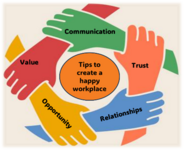
The EYFS framework places the wellbeing of all individuals in a setting—children and adults alike—at the heart of quality provision. While much attention is given to nurturing the development of young children, the wellbeing and inclusion of staff are equally critical.
Best Start in Life states that “a positive team culture and inclusive, approachable managers were strong motivators for staff to stay in the workplace in the longer term.” Best start in life part 1: setting the scene - GOV.UK
Below are some ideas on how you can ensure your setting supports wellbeing.
Teamwork makes the dream work
Establishing and retaining a great team provides staff with emotional security and supports their wellbeing. In an article by Mona Sakr, she writes that ‘trust’ is vital within early years’ practitioner’s relationships.
But what about if you work alone? How do you support your own wellbeing? Do you access support from local groups or other Childminders? Do you access online support?
High quality resources to support wellbeing
In 2021, The Anna Freud Centre created a wellbeing resource in partnership with NDNA and local authorities to support those that worked within the Early Years sector. The resource identifies four key areas that could make a difference to the wellbeing of staff:
- Supporting each other
- Supportive management
- The physical environment
- Outside support
Supervisions and staff meetings
Do you have the chance to get together and talk about non-work related matters, showing an interest in what is important to people outside of work?
Have you heard of Glimmers?
In mental health, "glimmers" refer to small, positive experiences that can help soothe and regulate the nervous system, acting as the opposite of triggers.
|
|
 |
They are fleeting moments of joy, connection, or safety that help individuals feel more grounded and at ease. The term was coined by Deb Dana in her book, The Polyvagal Theory in Therapy.
To support team bonding, ask your staff to consider what their glimmers might be and if they are comfortable to share with the rest of the team.
A fantastic hub of information and resources has been created by Childcare Works for childcare providers and schools who are working on the rollout of the expanded early years entitlements and wraparound childcare programme. You will be able to access a wide range of free resources, information and videos to support you in delivering the childcare expansion programme. |
|
 |
You can sign up for free webinars which are delivered by Childcare Works at the HUB and sign up to receive their newsletters too.
The resources cover areas such as:
Business Planning Finance and Funding Guidance for schools
Marketing and Promotion SEND and Inclusive Practice Supply and Demand
 |
|
New from March 2025!
March 2025 saw the circulation of our brand new termly newsletter for wraparound providers across Derbyshire!
|
Following the success of the National Wraparound Childcare Programme, a wealth of new providers have joined our already established out-of-school childcare sector. In order to ensure all of our providers are kept up-to-date and abreast of any changes, the termly newsletters will include a range of useful information, key updates, links and resources from a number of DCC Teams.
March’s edition shared successes from the Wraparound Programme Funding projects to date and emphasised that the funding stream was still open to new applicants looking to create or expand their provision.
There was information on:
- Tax Free Childcare (a government funding scheme to support parents)
- Signposting to Childcare Works’ new online Toolkit to support wraparound providers to start, grow and sustain their businesses.
- Updates from our Families Information Service (FIS)
- ‘Reading for Pleasure’ tips from the the Quality Team
- Safeguarding section, informing providers of key updates and top tips to consider!
If you are a provider offering wraparound services and wish to receive this termly newsletter, please sign up here Derbyshire County Council - Wraparound Childcare Newsletter
Getting it right from the start: how early years practitioners work with babies and toddlers
Ofsted has published a recent research report Getting it right from the start: how early years practitioners work with babies and toddlers - GOV.UK which delves into the practices and approaches of early years practitioners in caring for and educating babies and toddlers. The report, published on 30 April, 2025, aims to support leaders and practitioners in refining their methods to best support our youngest learners.
The research explores how EY practitioners understand and apply the Early Years Foundation Stage (EYFS) statutory framework in their work with children from birth to two years old, and draws on a series of visits to early years settings, a survey, inspector focus groups, and a literature review.
Some of the key findings include:
- The importance of practitioner experience and qualifications.
- Positive relationships with parents in supporting children more effectively.
- The need to strengthen physical development.
- Identifying misconceptions such as the belief that babies and toddlers are too young to be taught anything.
The report sets out recommendations for practitioners, managers, and policymakers to achieve the best possible outcomes for babies and toddlers, including support for professional development specific to this age group.
Check an early years qualification service – available now!
Early years managers can now use the new Check an early years qualification digital service to quickly verify whether staff qualifications meet the requirements for staff:child ratios in England.
This free GOV.UK tool allows managers to check a qualification’s approval status by entering key details such as:
- course start date
- level
- awarding organisation
At the end of the process, a clear outcome is provided, which can be printed for your records.
Why use the new service
Using the new Check an early years qualification service:
- saves time during recruitment and HR processes
- supports workforce planning ahead of the September 2025 expansion of funded childcare entitlements
- reduces confusion when checking qualifications
The service is tailored specifically for early years managers. All other user groups (for example practitioners) should continue to use the Early Years Qualifications List (EYQL) to check qualifications, and contact our supplier Ecctis if they are unable to find the qualification on the EYQL.
 |
|
Update from the Sufficiency Team
The Local Authority is working towards the Government ambition for all primary school aged children, who want it, to be able to access wraparound provision by September 2026 from 8.00am to 6.00pm every day. Since the programme launched in September 2024, over 1,000 wraparound places have been created in Derbyshire, which has provided valuable childcare for parents.
Wraparound Programme Funding is still available, and we are continuing to accept applications.
|
Please email the Sufficiency Team: CS.SufficiencyService@derbyshire.gov.uk, if you are considering setting up/expanding wraparound provision and would like to apply for funding or if you would like to find out more about the programme.
Sufficiency of Early Years and Wraparound Places in Derbyshire
If you are aware of any sufficiency issues in relation to the number of places available for wraparound places, please email the Sufficiency Team: CS.SufficiencyService@derbyshire.gov.uk.
Do you know what the Childrens Services Professional Grants are and who they are for?
Derbyshire County Council Childrens Services provides two components, Children's Professional Service Grants and Grocery Vouchers.
The grants are aimed at supporting financially insecure households with the costs of food, energy and other essential items. The grocery vouchers are proactively distributed to all children who receive benefit related free school meals and attend schools in Derbyshire.
If you are interested in how to refer a family in need and would like access to the form, then please email CS.HSFDuty@derbyshire.gov.uk
For more information about the Household Support Fund please follow this link
Household Support Fund - Derbyshire County Council.
EYSEN Helpline: EarlyYears.SENhelpline@derbyshire.gov.uk
Targeted level of the graduated response
EYIF: Early Years SEN Inclusion Fund - Derbyshire Local Offer
Outreach team referrals: EYSEN Outreach team - Derbyshire Local Offer
Specialist level of the graduated response
EYIF: Early Years SEN Inclusion Fund - Derbyshire Local Offer
Specialist support referrals: Early Years SEN Panel - Derbyshire Local Offer
Applying for a statutory EHC needs assessment: Apply for an assessment - Derbyshire Local Offer
 |
|
Are you following us on X (formally known as Twitter)?
Make sure that you don’t miss out on accessing the most up to date information, safeguarding updates, training reminders, and more!
To follow the Derbyshire Early Years Improvement Service on X, search for @DerbyshireEYFS
|
Helping Families Thrive with Reliable Information & Support!
The Families Information Service (also known as FIS) provides free, impartial information and guidance to any family caring for children or young people aged 0-19 (or up to 25 years, for children and young people with SEND).
FIS can support you with:
- finding the right childcare and information on eligibility for childcare funding schemes.
- finding family support services locally and nationally for parents at every stage, from infancy to adolescence.
- information on maintaining family health, supporting mental well-being, and finding healthcare resources.
- information about local family activities and events across Derbyshire.
- Plus, much more...
|
Please share the FIS website and social media pages with the families you work with. It’s a simple way to offer them support and keep them informed.
You can find us here:
If you have any questions or would like more information about our services, please feel free to get in touch!
Early Years Service general enquiries: CS.EYS@derbyshire.gov.uk
Early Years Service - info on Schoolsnet
Funding & contract queries: cs.enquiries.groupcare@derbyshire.gov.uk
OR cs.enquiries.childminders@derbyshire.gov.uk
OR cs.enquiries.schools@derbyshire.gov.uk
|