Special Practice Bulletin - COVID 19 Update - Issue 19

Adult Social Care and Health, Derbyshire County Council
side image

COVID 19 and General Update

Issue 19

Date 15 January 2021

In this issue:


COVID-19 Emergency Fund


Fund

The response to the COVID-19 pandemic has seen many organisations across Derbyshire working to ensure the basic needs of the most vulnerable residents are met, and it has become apparent that a number of community and voluntary sector organisations would benefit from additional resources to maintain their current level of response.

The COVID-19 Emergency Fund aims to support voluntary and community sector organisations with funding to allow them to them to continue to play a key role in the local response to COVID-19.

How much you can apply for

Formally constituted organisations can apply for a maximum of £2,000. Non-constituted organisations can apply for a maximum of £250.

Deadline for applications

Applications are reviewed on a regular basis. No date has been set for closing the fund, but it is recommended that organisations submit their application as soon as possible.  

Visit the website to find out more and download the application form.


Support Available for Carers in Derbyshire


Throughout the COVID-19 Pandemic, Derbyshire Carers Association have continued to offer vital support to carers and respond to the additional pressures many carers are facing.
The lockdown will bring new challenges for many carers and they will continue to review their services to make sure they are able to offer the most appropriate and necessary support.

For more information please see their poster.

Derbyshire Carers Association

Canary Kit


Canary Kit

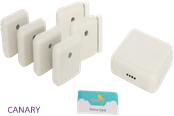
A Canary Kit is an activity monitoring system which is particularly beneficial when working with individuals who have difficulty communicating their needs to assessors, e.g. people with dementia or learning disability and useful for all services particularly short-term services e.g. Dementia Reablement service.

The Canary kit consists of wireless movement sensors paired with a receiver. The sensors are placed in an individual’s home at particular locations to detect patterns of daily activity, such as the number of times a person enters or exits a room, or conversely, a lack of movement.

The non-personal information gathered by the sensors is transmitted to a monitoring centre where it is collated and presented in a graphical format, which is made available to specified individuals. The data provides valuable information about a person’s movements and routines within the home which can be used to support the assessment process and inform decisions about the appropriate level(s) of care and support required to meet a person’s needs and installed for a short period of time in the home.

To request a Canary Kit, you must complete the standalone request form on mosaic and send an outcome to AC Bolsover Business Services- ASCH.BSBolsover2@derbyshire.gov.uk - who administer the Kits on a countywide basis. The worker requesting the Kit will be responsible for fitting it in the client’s home and monitoring their activity.

Further information about the Canary Kit, other Assistive Technology equipment and documentations such as Community Alarm and Telecare Practice Guidance and equipment Guide are available on Our Derbyshire via the link Adult Care policies section of the Our Derbyshire website

Any queries about this article please contact: ASCH.BSBolsover2@derbyshire.gov.uk


Brain in Hand Pilot Now Live and Open for Referrals


Brain in Hand

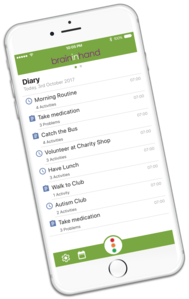
Available via an app on a smart phone, Brain in Hand is a support system that gives users easy access to personalised self-management tools and solutions to help them cope with anxiety, increase their independence and gain confidence. Via the app the user can also connect to a Brain in Hand support worker if they feel they need more help or guidance, for example in a crisis or unexpected situation.

Find out more about Brain in Hand and how it can be used by reading What is Brain in Hand? or watch this video which explains how Thomas has used Brain in Hand to manage his anxiety while isolating at home during the COVID-19 pandemic.

Use of Brain in Hand can help users achieve outcomes including living independently, managing employment or education, travelling independently, stepping down support and much more. Find out more about the outcomes Brain in Hand can help clients achieve, plus case studies, on their website.

Derbyshire Pilot update

We started a 12 month pilot in November and 19 clients have already been put forward for a licence which is great news! This means we only have 11 licences remaining and are seeking to allocate them to Derbyshire clients who would benefit from Brain in Hand as soon as possible.  

Brain in Hand can benefit clients who:

  • Have a diagnosis of autism, learning disability and/or mental ill health and are living in the community
  • Have a mental health condition that severely impacts on their independence and day to day life
  • Are open to the Derbyshire Disability and Employment Service
  • Are transitioning from Children’s Services with a diagnosis of autism and/or a mental health condition

Are you supporting a client who could benefit from Brain in Hand?

If you have a client that fits the descriptions above and you think access to Brain in Hand would help them achieve their outcomes/goals, you will need to:

  • Discuss Brain in Hand with the client and make sure they are interested
  • Check the client has access to a smartphone  – the app is available on Android or iOS.
  • Refer the client for a licence by completing this referral form

The Brain in Hand pilot aims to reduce demand on carers and/or formal support services. With this in mind, staff who refer a client for a licence will need to be involved in the initial set up sessions (carried out remotely) with the client, their family/supporter and Brain in Hand to ensure the solutions pre-loaded into the app work towards the outcomes identified on the client’s support plan or equivalent.

The Brain in Hand 12 month licences are transferrable. This means that if a client who is allocated a licence does not find the support useful, or after a few months no longer wants/needs it as they have achieved their outcomes, we can re-allocate the licence to another client for the remainder of the licence period.

If you have any queries please contact
asch.ac-commissioning@derbyshire.gov.uk to find out more.


Funded Nursing Care


Funded nursing care

Over the past few months, Derby and Derbyshire CCG has taken back responsibility for paying Funded Nursing Care (FNC) directly to providers (rather than Adult Social Care and Health paying the providers and then recharging the CCG).

This process has now been completed and from 1 January 2021 all Funded Nursing Care (FNC) payments are now made directly by the CCGs.

Therefore if any provider, client or client’s representative have any issues with FNC payments, can you please refer them to the relevant CCG for resolution.

Any queries about this article please contact: Graham Woodhouse, Head of Finance


Quality Conversations - Take 5 Minutes


Quality Conversations

When time is short and we’re under pressure, we can feel like we’re missing out on chances to learn and develop new skills. Unfortunately, this is also often the time when we’d really appreciate some new ideas to support us with our work.

Joined Up Care Derbyshire started this series of short communications to support you to keep learning about Quality Conversations. Each article will contain a link to an interesting video or article, which will take no longer than 5 minutes to read or watch.

So, why not grab a cuppa, and take 5 minutes for a Quality Conversation? You may well just find that golden nugget for that next tricky conversation….

It is important to look out for opportunities to help people improve their health. One useful concept is “teachable moments”. Research has identified those times when we are most receptive to reviewing how we are taking care of our health.

Click here for the article.

Quality conversations Website

This is where you can go for your Quality Conversations information – take a look at the website it has lots of information about health inequalities, bite size resources and useful links to other sites you might wish to use in signposting.


A reminder for Prevention and Personalisation Teams and Hospital Discharge Teams: The Short Term Intervention Review Work-step


Mosaic

The Short Term Intervention Review work-step has been created to prompt us to review interim support that we have commissioned for a person, and capture the outcome of this.

We work to support people to remain at home first. However, where a person has had to access a short term residential or nursing placement from the community or on discharge from hospital, we know that it is particularly important to review this short term placement in good time. We have seen that this helps more people get back to their own home; it makes a big difference to supporting people to be as independent as possible for as long as possible.

You should create a ‘Short Term Intervention Review’ as a next action from an Interim Service Provision, or by selecting ‘STC Placement used’ from a Hospital Discharge work-step.

You can find more information about the Short Term Intervention Review work-step here

“STC Placement used on discharge” - a note about Short Term Intervention Reviews from Hospital Discharge

Hospital Discharge Teams

When you are using a Short Term Placement on discharge, you will be prompted to select “STC Placement Used on Discharge” as a next action from your Hospital Discharge work-step. When this arrives to the Area Prevention and Personalisation (P&P) Team, they will see this as a Short Term Intervention Review

Select Next Action “STC Placement Used on Discharge”

  • For open cases – send this next action to the Allocated Worker.
  • For new cases - send this next action to the relevant Area Team, along with the Decision Required.

P&P Area Teams:

You will receive the Short Term Intervention Review work-step from the Hospital Discharge Team if a person you are working with has accessed a Short Term Placement on discharge. The Hospital Discharge Worker will send you this work-step, alongside your Decision Required or existing Assessment Spine.

This will prompt you to review the person’s Short Term Placement in good time to look at getting the person back home. It also enables you to record a Peer Group Discussion where the person remains in a Short Term Placement beyond the 3 week short term care period.

For further information please contact: Josie Hill, Design Lead P&P Area Taem


Matinée Outreach - Creative Project by Post and Phone for People Living with Dementia


Matinee outreach
  • Do you live with dementia, or care for someone living with dementia?
  • Have you felt socially isolated and not comfortable using online technologies?
  • Have you been frustrated over lockdown by the lack of activities you can do, and missed learning and trying new things?

As we find ourselves in another lengthy lockdown this is an invitation to take part in something creative and new from the safety of your own home. 

Matinée Outreach is a free arts-based project for people living with dementia (and their carers) who are isolated by COVID-19 and not comfortable with online activities.

  • Using the phone and post you will have 1:1 sessions with a professional artist. The sessions often centre around information from conversations on the phone with the artist focussing on topics and themes, and then often having some activities afterwards that you can try at home. The topics and themes will all be centred on the interests and motivation of the person living with dementia.
  • Our artists are both experienced in working alongside people living with dementia and are looking forward to working creatively and flexibly with you via telephone and post.

Please get in touch with Frances Watt on 07449 732322 or email admin@matineederbyshire.org.uk if you would like to know more or take part. 


Newsletters and Bulletins


Newsletter