|
Historical changes are made up of individuals like you, who contribute to the ongoing story of your community.
We're usually aware of any famous, or infamous, people associated with our local area, but there are often unsung heroes and less well-known people responsible for great achievements. Exploring local history resources can reveal hidden gems on our doorstep. Here are some inspiring stories from the community...
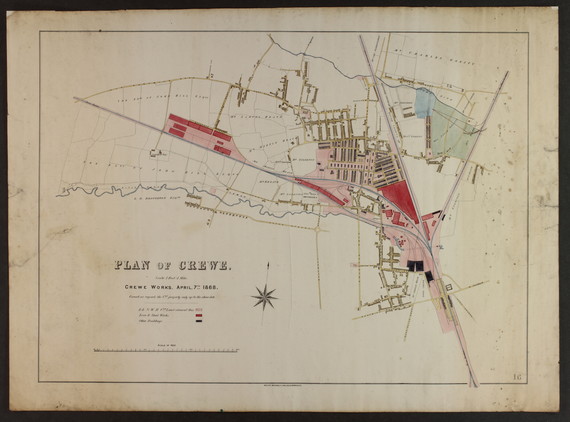
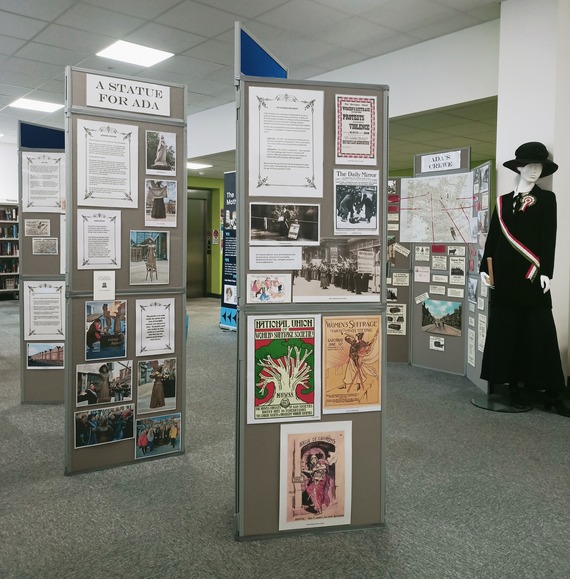
Ada was a huge campaigner, trade union activist, and supporter of women's suffrage, and yet so little is known about her, even within Crewe and Nantwich! All that is set to change thanks to the Cheshire Women's Collaboration, who are raising funds for a statue commemorating Ada to be erected in Crewe.
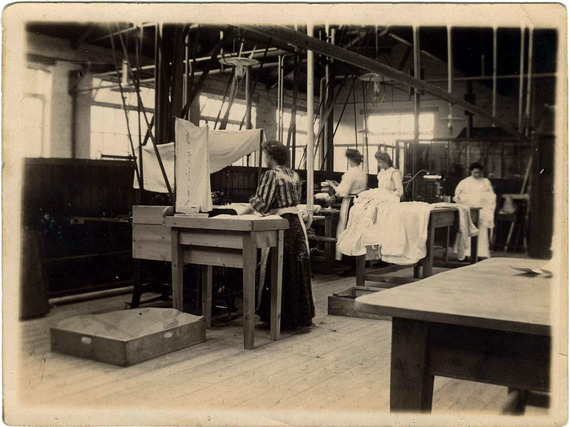
Ada campaigned for the advancement of rights for female workers, and improvements in conditions for the poor in Nantwich. She was an inspirational speaker and a brave voice for those who needed her. In 1894, she wrote a series of letters to the Crewe Chronicle about her experiences as a 'Crewe Factory Girl': "I propose then, ... that we, that is the factory girls of Crewe, and any other class of female workers who may like to join us, first organise ourselves into one strong united body..."
These letters were anonymous because Ada would have lost her job if revealed to be the writer. If you'd like to find out more about Ada and the shocking working conditions women endured, visit the exhibition at Crewe Library, which is dedicated to the memory of another strong local woman, Dorothy Flude. Dorothy was a school governor, councillor, mayor and more. She was Chair of Crewe Heritage Trust and made a significant contribution to local history.
A statue of another unsung suffragist, Elizabeth Wolstenholme Elmy, has recently been erected in Congleton. Elizabeth campaigned for girls’ education, for women’s right to own property and for their right to vote.
We're really pleased that the local studies resources at Macclesfield Library have been put to good use by the History Hunters, who are working on an exhibition for the Silk Museum:
"We are the History Hunters, based at Macclesfield Silk Museum, setting out to uncover stories hidden in the museum storerooms. Behind the scenes, we have discovered boxes of delight, full of fascinating objects with unfathomable names, carefully recorded notes in beautiful handwriting, and vibrant silks and ribbons produced by the people of Macclesfield. Our town had so many talented people, commended by their peers, but lost to us. Who were Annie, Edith and Amy? Why have we saved their letters, drawings and photographs?
We have photographs of old Macclesfield, but what made life in our town really ‘tick’? We can see something in the lives of three woman we discovered in the archives of the museum, revealed through personal items, letters and records accessed through the library.
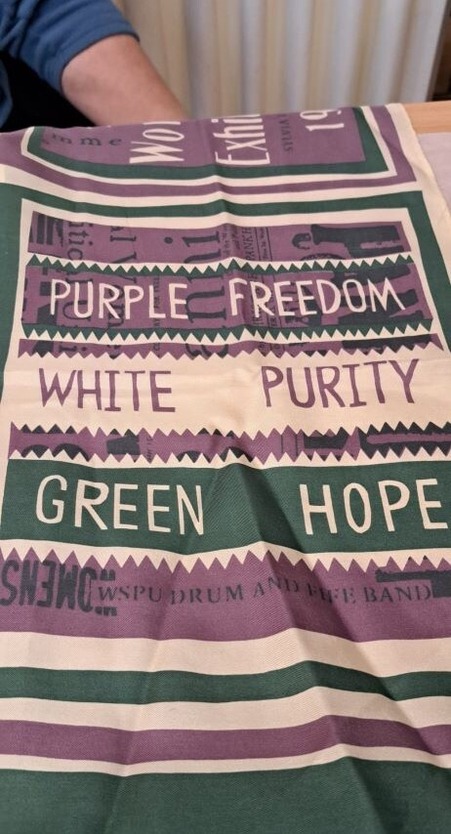
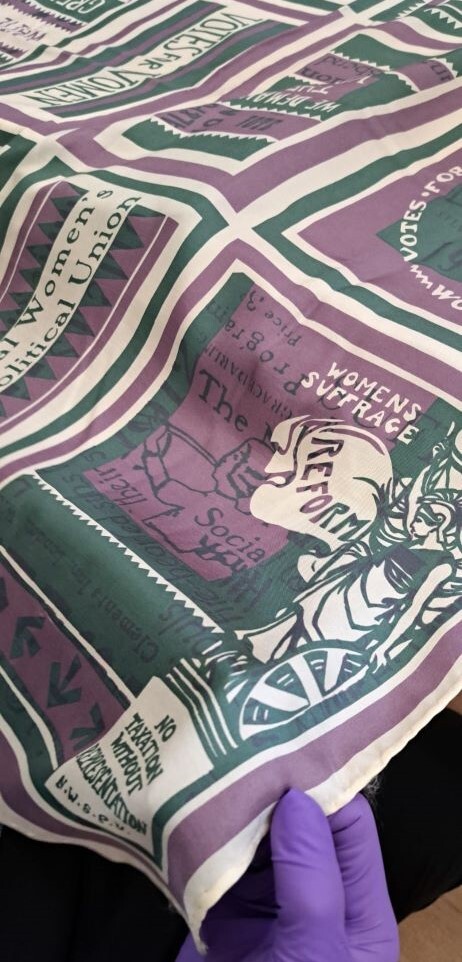
Suffrage Scarf: replica from the Macclesfield Silk Museum (Photo courtesy of the museum)
Using family history sites, we have learnt about the ‘three Annies’. They did not need to be heroes, as they were admired and respected by the people they worked and lived with. These have become our ‘found people’ and we have the privilege of knowing them through the treasures they saved, hearing their voices through the letters they wrote and glimpsing their personalities through newspaper reports and records accessed in the library resources.
The three Annies are women who shared the same name, came from very different walks of life, but were instrumental in many women’s lives in Macclesfield. As we discover their interests and influence, we invite you to enjoy a little glimpse of the three Annies:
Annie Sutton: artist, designer and embroiderer: We found some of her letters and delightful watercolour sketches, but trying to find out who Annie really was and why her personal belongings had been saved depended on newspaper reports and census information we found through the library archives.
She was born in Macclesfield in 1893 and lived in a small cottage in Steeple Street with her grandparents and brother and sister. Her parents lived next door. Her father was a stonemason and later owned quarries in Higher Hurdsfield. Annie was a star pupil at the prestigious Macclesfield School of Art and she was clearly a talented student, winning prizes and a scholarship to the Royal College of Art in South Kensington. As an adult, she shared her love of art and design with the women of Macclesfield, enabling them to create banners for their own special groups. Look out for Annie’s banners in St Michael’s Church in our town.
Annie Whiston: marching for women’s votes: Annie Whiston was born in Langley, daughter of William Whiston who was responsible for expanding silk production in the village. With the Macclesfield Suffrage Society, she attended the triumphal suffrage procession of women in London in 1911. She walked with the women of Macclesfield who embroidered the Macclesfield suffrage banner you can see here: https://www.youtube.com/watch?v=zP0jlR_zmXQ.
She encouraged and enabled women to strive for equality in a world where they were completely unrepresented in decision making for society.
Thanks to the library resources, we have been given a glimpse of a life that was not only committed to improving women’s lives, but adventurous. She travelled widely, with destinations as far apart as Bombay and British Columbia and as different as Egypt and New York City. These must have been worlds apart from Macclesfield, but I wonder what she brought back to the town when she returned?
Annie Ryle-Wright: much loved and admired: Annie Ryle-Wright was very much a Macclesfield woman. Born in 1863, her father was a silk manufacturer, so she must have seen the changing fortunes of people working in the silk industry as they faced continual boom and bust. Britain’s social and political circumstances were changing very fast, working life in the mills was often troubled and poverty was evident in the streets of the town. Indeed, her sister emigrated to America when she married the son of a Macclesfield man who had left our town to produce silk in a more favourable context.
How did Annie respond to the challenges she saw? Annie was passionate about the lives of woman, dedicating her time to the Macclesfield Branch of the Women’s Suffrage Society. We know very little about her contribution to the town, but her obituary notes that she was very active in supporting many worthy causes in the town and very much loved and admired.
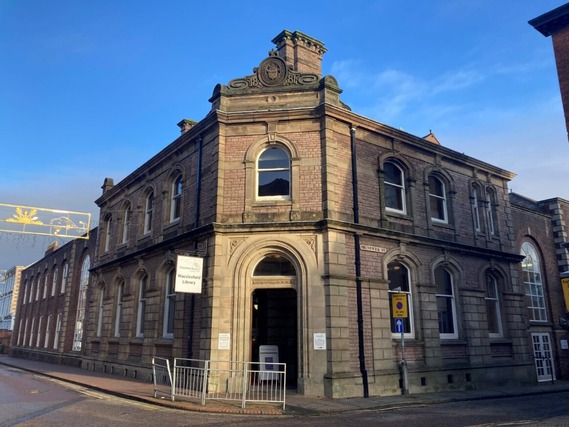
Without the resources available in the library, our three Annies would still be hidden. We were able to discover fragments of their lives through websites such as Ancestry, Find my Past and the British Newspaper Archives, available free at the library. We need to give a special shout out for Vicki and her team, who showed us the resources and provided valuable training and advice."
Find out more
Over many years, objects and memorabilia have been cherished by families in Macclesfield. Many have been gifted to the museum in the town. The History Hunters are privileged to be exploring these gifts and hunting the stories hidden within textiles, tools and notebooks. They are gradually piecing together the fragments of their lives and shining a light on the women who made Macclesfield.
The History Hunters meet each week at the Silk Museum. If you'd like to get in touch, email Sue at the Silk Museum.
Dive into the archives and you might discover other people who've played a significant but forgotten role in your community or more widely. Perhaps you'd like to learn more about people like St Margaret Ward, the English martyr born in Congleton in around 1550; or how about Mary Fitton of Gawsworth, who became a maid of honour to Queen Elizabeth I in 1595?
Recently, there's been a resurgence of interest in author Emma Frances Brooke, who was born in Macclesfield in 1844, and lived at Limefields in Bollington in the mid-nineteenth century.
|