|
|
K-12 STEM Vision in Texas
To learn more about the K-12 STEM vision in Texas you can watch the recorded session from the College and Career Readiness School Models Leadership Summit.
Texas Lone Star STEM: Texas STEM Landscape & Vision for the Future Presenter: Michelle Sedberry
Proposed New K-8 Science TEKS
At the September 2021 State Board of Education (SBOE) meeting, the SBOE approved for first reading and filing authorization proposed new science Texas Essential Knowledge and Skills (TEKS) for kindergarten-grade 8. The SBOE is scheduled to consider the proposed new TEKS for second reading and final adoption at its November 2021 meeting.
The official public comment period for the proposed new K-8 science TEKS is scheduled began October 7, 2021. To view the proposed revisions and submit public comments once the public comment period is open, visit
Proposed Revisions and Public Comment
Please be sure to include the grade level on which you are commenting, the number of the knowledge and skill statement, and the letter of the student expectation for which you are providing public comment if applicable. Public comments are shared with SBOE members and their content advisors each week during the public comment period. Specific, actionable feedback submitted early in the 30-day timeframe provides SBOE members with more information and time to consider the comment. Providing feedback early in the process is the best way to ensure that your feedback will likely impact the final draft.
Texas STEM Toolkit and Instructional Video Series
The Texas Education Agency has developed the STEM toolkit to support districts when developing a local STEM program that aligns with the high-quality indicators identified by the state. The STEM tools are designed to support a district in planning and implementing a PK-12 STEM program aligned to the Texas STEM Framework. An Instructional Series has been provided within the Toolkit consisting of six 15-minute videos covering each section of the STEM Toolkit. The instructional series helps users navigate the toolkit and understand the purpose of each tool. Find more information on the PK-12 STEM Webpage.
|
Events
T-STEM Information:
Sept. 10- Nov. 9: T-STEM Planning and Implementation grant application window
Sept. 24: Informational webinar for T-STEM Planning and Implementation grant
Recording Link
Oct. 1: Last day to submit T-STEM grant questions for the FAQ
To find grant information visit the Grant Opportunities page
Nov. 1- Dec. 15: T-STEM Planning application window
Nov. 1- Jan. 28: T-STEM Designation application window
T-STEM Webpage
Texas Mobile STEM Lab:
Sept. 13: Mobile STEM Lab kicks off the 21-22 school year in Region 16
K-8 Science TEKS Revision:
Oct. 7- Nov. 12: Public comment period
Nov. 17-19: State Board of Education Meeting
|
|

State-wide STEM Professional Development
Across Texas, Education Service Centers wrapped up their summer training as the 21-22 school year began. This month we are highlighting teachers and leaders from Region 10 and Region 4's STEM training.

Samantha Bradbury, Region 10's STEM Lead, led leaders through design challenges and how to use the STEM Toolkit. Dr. Thalia Chaney said her biggest takeaway was, "We aren't changing what we teach. We are changing HOW we teach it." Jobob Aanenson said, "In order to improve learning for all students, we must look at how we are teaching so that our students can experience learning and are able to connect the learning to the real world."
|
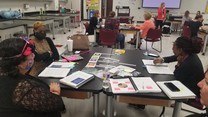
Region 4's Teacher training led by Jennifer Wellman and Hanna Roach included hands-on activities, interaction with the engineering design process, and opportunities to reflect on their own teaching and how they could "STEMify" what they are already doing.
|
|
|
Federal STEM Highlight
How States and Districts Used Title II, Part A Funds in 2019-2020 Title II, Part A of the Elementary and Secondary Education Act (ESEA) provides over $2 billion per year in funding to states and districts to support effective instruction through the preparation, recruitment, and training of educators, including STEM teachers. The 2015 Every Student Succeeds Act (ESSA), provided greater flexibility for states and districts in how they use Title IIA funds. Find out exactly how they are using these new options in this new Institute of Education Sciences (IES) report.
|
|
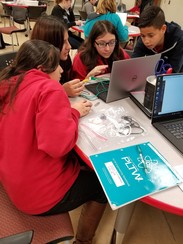
Sheldon ISD PK-12 STEM Program
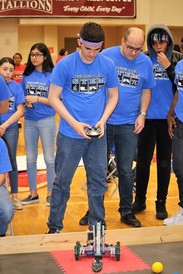
Sheldon ISD is a Title I district located in northeast Houston. They started their STEM program 4 years ago with 120 seventh graders, some really eager teachers, a couple of innovative administrators, and a good idea. Today, going into year 5, they have successfully implemented a district-wide STEM program that consists of a Baby STEM program for ages 0-3 in our Early Learning Center, STEAM labs in both of our PreK-Kinder campuses, 2 STEM Elementary Schools, and a designated T-STEM Academy for grades 6-12 that is made up of 707 very successful students. Their focus early on was to be the best STEM program they could be, while meeting the expectations of the T-STEM blueprint and offering their students a very supportive, advanced, fun, learning environment that was built on the Engineering Design Process and Project-Based Learning. Sheldon's journey began by touring successful K-12 STEM campuses across Texas. Next, Sheldon's Leadership trained all of their teachers with PBL works and started building a program with a solid foundation and belief that their “regular kids” could perform at an advanced level and be challenged. After 4 years, the "STEM kids" have the scores to prove the program works as they outperform their peers on almost all of the district assessments, STAAR results, EOC dual credit, and TSI tests.
|
In addition to teaching STEM/PBL in all of our core classes, they have incorporated a STEM AVID class and a STEM Lab class for students to be exposed to engineering and computer science on a daily basis as they build their skillset for STEM careers along the way. In the 5th grade, students enter the T-STEM Academy for middle school through a blind lottery. The T-STEM Academy serves 707 students made up of only 16% GT students while including 32 students labeled SpEd and the majority of our students are at-risk with a high population of ESL as well.
"These are OUR kids and we believe that all of them can achieve at a high level in the T-STEM Academy as we are dedicated to instilling confidence, skills, and grit into each one of our students so that they can be successful in a 21st-century workforce." Becky Zalesnik, Sheldon ISD STEM Coordinator |
|
 |
|
|
|
The Texas Education Agency will improve outcomes for all public school students in the state by providing leadership, guidance, and support to school systems.
|
|
|
|
|