Art Contest Winners
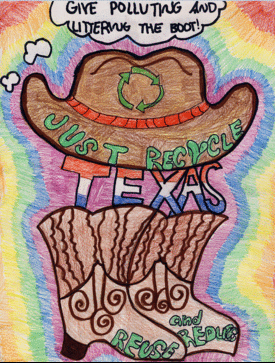
Grand prize winner Ava White, Age 10, from Frisco
The How Do You Take Care of Texas? Elementary
School Art Contest had over 2,600 entries!
While it was a tough decision, Take Care of
Texas and Samsung Austin Semiconductor are happy to congratulate Ava White
from Frisco as the grand prize winner of a Samsung laptop.
Congratulations to teacher Chelsea Young in San Angelo for
winning a Samsung tablet.
Teachers, if you would like to give your students certificates
for participating, you may download and print them from the Take Care of
Texas Art Contest website.
|
|
Thank you to all of our participants and to our generous sponsor Samsung Austin Semiconductor. We look forward to next year! |
The
first Earth Day was in 1970 when Senator Gaylord Nelson and over 20 million
Americans demonstrated their concern about environmental quality. Later that
year, Congress formed the U.S. Environmental Protection Agency (EPA), and in
the following decade, critical legislation was passed to help protect our air
and water.
Those early environmentalists show that people really can come
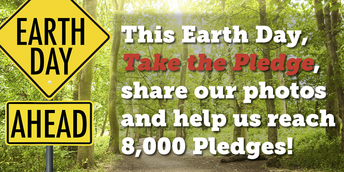
together to make a difference. Now it’s your turn. This April 22, support the
Earth Day movement, and encourage others to Take the Pledge to Take Care of Texas.
So far 7,714 people have pledged to turn off lights, adjust
their thermostats, check for water leaks, and maintain their vehicles. Help us
reach 8,000!
Visit takecareoftexas.org/earth-day-pledge to download our photo and share it on
your social media and encourage your friends and colleagues to Pledge to Take
Care of Texas.
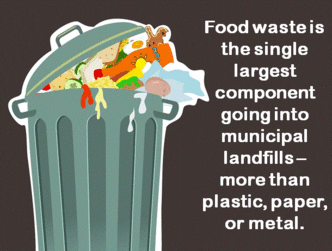
Does
your organization waste food?
Through
the Food Recovery Challenge (FRC), the EPA is partnering with organizations and
businesses to prevent and
reduce wasted food. Participants receive free technical assistance and resources for waste assessments
and strategies. The FRC emphasizes reducing the environmental impact of
materials through their entire life cycle, including how they are extracted,
manufactured, distributed, used, reused, recycled, and disposed. When you waste
food, you are also wasting the resources that made that food – water, fertilizer,
soil, labor, and energy.
The
program emphasizes source reduction but, as a next step, highlights the need to
donate food. See the Feed Families,
Not Landfills portion of the EPA website to learn where you can donate food
and how the Good Samaritan Act can protect your liability.
Success story:
Employees at The University of Texas at Austin measured the
amount of food wasted during lunch and dinner for five
days. They found students leaving an average of 5.7 ounces of edible food on
their plates. Food service staff then worked to engage the students with
signage and help them visualize their daily waste with symbolic trash bins.
Taste testing allowed the students to sample menu items before taking the dish.
Serving staff were also trained on portion control and tracking of pre- and
post-consumer waste. Later that year, another plate audit was conducted—this
time showing only 3.9 ounces of edible food waste. A year later, by going
tray-less, the amount of food wasted went down again, for a total 48 percent
reduction.
Strategies for reducing food waste:
- Plan ahead to help reduce over-purchasing. Know what you
have at home and what you really need. Use technology to your advantage. Many mobile
apps help you manage recipes and grocery lists.
- Know your audience’s taste, and adjust your menu. While
more relevant for a large organization, this can apply to a dinner party or
holiday meal.
- Improve how you store food. You can freeze or can surplus
fruit and vegetables. Canned foods are safe indefinitely as long as they are not
exposed to extreme temperatures.
- Pay attention to “sell-by” versus “use-by” dates on perishable
items. For example, eggs retain safety and taste three to five weeks after the
sell-by date.
- Compost food scraps, along with coffee grounds, leaves,
and tea bags, to nourish your soil. See last month’s newsletter
for more information on composting.
|