Tax Breaks on Efficient Products
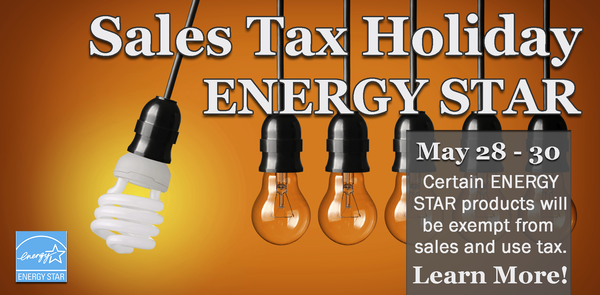
During Memorial Day weekend, all Texas shoppers will receive a break from state and local sales and use taxes on the purchase of certain ENERGY STAR products. This sales tax holiday will run from 12:01 a.m. on Saturday, May 28, through 11:59 p.m. on Monday, May 30.
See a list of products qualifying for the sales tax exemption on our blog.
There are also federal tax credits available for certain purchases in 2015 and 2016. Find out if you meet the qualifications for federal tax credits.
About ENERGY STAR
 ENERGY STAR is a widely recognized and trusted label on
products that meet strict energy-efficiency requirements set by the Environmental Protection Agency. Products that have earned the ENERGY STAR label will help you save energy and money without sacrificing features or
functionality. Today, the ENERGY STAR label can be found on over 65 different
types of products found in our homes and workplaces. Learn more about Energy Star.
|
Advanced Technology
Through advanced technology, ENERGY STAR products are able
to save money and energy without sacrificing performance. For example, ENERGY STAR certified
dishwashers have “smart” features that minimize water use and demand on the
water heater, and allow for less pre-rinsing. Sensors in these dishwashers are
able to determine the length of the wash cycle and the temperature of the water
necessary to fully clean the dishes. ENERGY STAR clothes washers also contain
sensor technology that controls water temperature and volume, which saves water
in each load.
With summer just around the corner, you might consider purchasing an ENERGY STAR thermostat or air conditioning unit. Both of these items are eligible for the Memorial Day weekend sales and use tax holiday. ENERGY STAR thermostats allow users to program their systems to
reduce heating and cooling in their homes when it isn’t needed. Users can
establish and adjust settings based on their family’s schedule.
Check out our blog to find out more ways to stay cool without increasing your energy bill this summer.
How Bikes and Cars Can Safely Share the Road
 Did you know that the number of Americans biking to work grew by about 60 percent between 2000 and 2012? There are many reasons people bike and there can be great personal and environmental benefits. However, biking also presents risks for both riders and drivers. Understanding and following the rules of the road reduces the risk of collision and makes it easier for bikes and cars to safely share the road.
|
Six Common Causes of Crashes
According to the Texas Transportation Code, a bicycle is considered to be a vehicle and cyclists have all the same rights and responsibilities as drivers. By being predictable, drivers and riders can make it easier for everyone to share the road. Being predictable means using signals, obeying the rules, and driving or riding as expected.
Both cyclists and motorists make mistakes, but it is the cyclist who is likely to be injured or killed in a crash. Children suffer 20 percent of all bicycle injuries. Here are six common ways that crashes occur.

- Motorist does not see or misjudges the speed of oncoming bicycle traffic and turns left in front of the rider.
- Bicycle rides out into the street without stopping or looking for oncoming traffic. Drivers expect all entering traffic to yield. Riders should look left-right-left before entering a road.
- Motorist turns right across the path of a rider. Motorists should merge with bicycle traffic when preparing to turn right.
- Rider turns or swerves suddenly into the path of a motorist. Cyclists should ride in straight, predictable lines and use hand signals.
- At a stop sign or red light, motorists often fail to yield the right-of-way to bicycle cross traffic and riders often fail to stop. At intersections, the right-of-way applies equally to motor vehicles and bicycles.
- Bicyclist rides in the wrong direction. Drivers do not expect traffic to come from the wrong direction. This type of crash is often deadly.
|
Road Rules Trivia
How savvy are you? Test your knowledge of the rules of the road with these three trivia questions. Check your responses on our blog!
- Are bikes allowed on sidewalks?
- Can bicyclists receive the same penalties for traffic violations as drivers?
- What do these bike hand signals mean?
 May is National Bike Month
National Bike Month was established to celebrate the many benefits of biking and to encourage people to try it. Communities across Texas are celebrating Bike to Work Day on various dates throughout May. Find out if any events are being planned in your community or check out this guide to learn how to start one.
 What is nonpoint
source pollution?
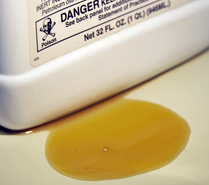
Nonpoint source pollution, also called runoff, results when contaminants from a variety of sources are carried by rainfall into surface water and groundwater
sources. Pollutants include fertilizers, herbicides, oil, sediment, and bacteria
and can come from natural and human‑made sources.
What is the TCEQ doing about
nonpoint source pollution?
The Nonpoint Source Management Program at the TCEQ plans and implements
voluntary projects to protect and restore Texas water bodies affected by nonpoint source pollution.
Success Story
Water Quality Improvements in the Concho River
In 2002, a five-mile portion of the Concho River failed to
meet water quality standards. Aquatic life in the river, which runs through San
Angelo, Texas, has been affected by urban
runoff as well as low water flow. Many organizations worked together to
implement best management practices and programs to improve the water quality
and reduce additional pollution. These efforts resulted in the removal of 3,273
tons of sediment and debris from the stormwater. In 2012, the river was removed from Texas’ list of impaired waters for,
once again, meeting water quality standards! Read more about the Concho River Success Story and TCEQ’s Nonpoint Source Management Program.
|
What can I do to reduce nonpoint source pollution?
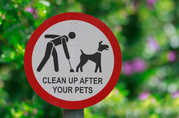 Pollutants come from the everyday activities of many different people, therefore it is difficult to control. In your yard, use only the recommended amount of pesticides and fertilizers as excess can be washed away into nearby waterways. Never pour oil down storm drains. Instead, locate a recycling center and take your oil there. Pick up your pet’s waste as the bacteria can contaminate water. Every three to four years, have your septic system inspected and pumped to prevent leaks. Find out more about how to reduce nonpoint source pollution.
|
|