|
 FWPD West Division Newsletter
April 2026
|
|
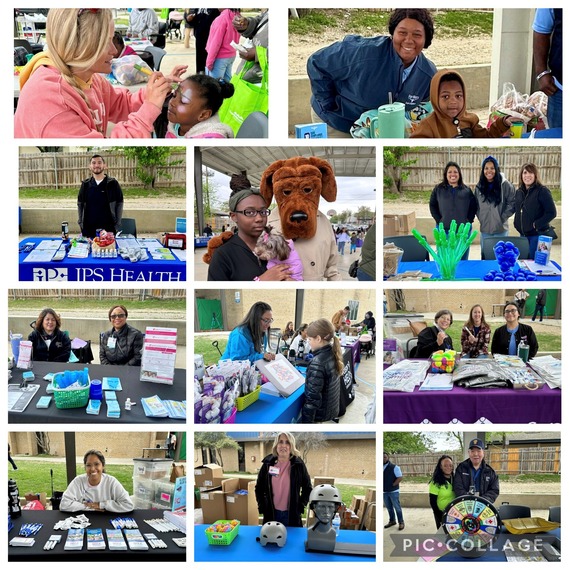
Cook Children’s, West Division, and LVT Rise Host 3rd Annual Safety Fair
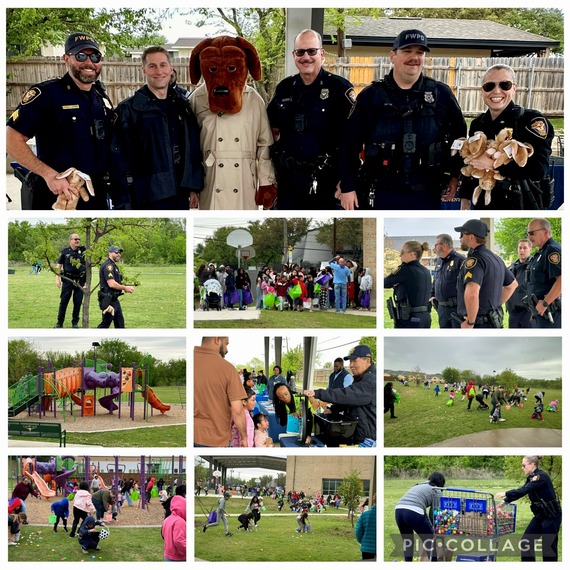
A cold, rainy afternoon did not dampen the spirits of the many families who came out for the LVT Rise Third Annual Safety Fair and Easter Egg Hunt. The weather couldn’t stop kids from racing to fill their baskets with Easter treats, including special Build-a-Bear Easter bunnies that were handed out by the NPOs. With more than 40 agencies on site, families collected valuable safety tips and resources for every member of the household.
|
|
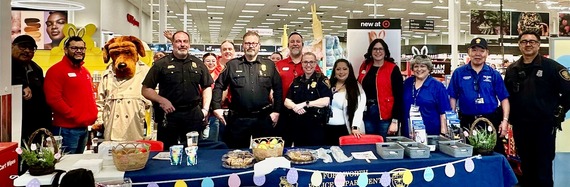
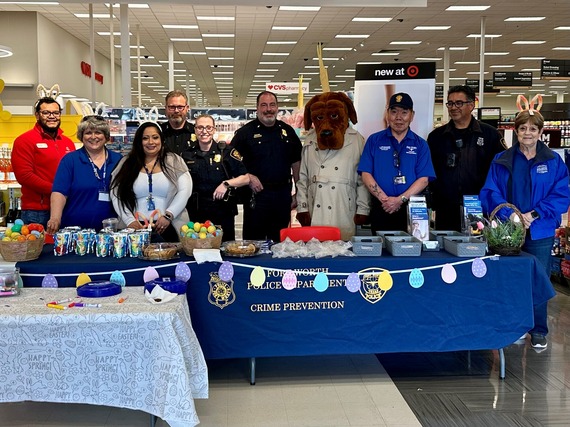
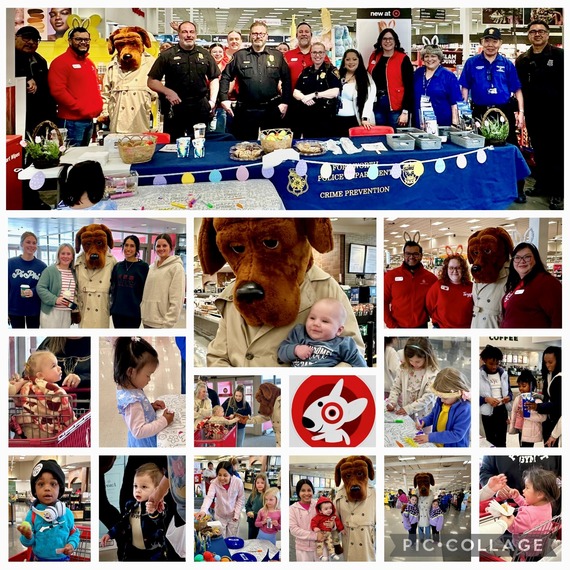
Target Host Jellybean Egg-Stravaganza
Target and the FWPD West Division kicked off Spring Break 2026 with a fun-filled Jellybean Egg-stravaganza on Monday, March 16! Families stopped by to meet Neighborhood Patrol Officers, Command Staff, and McGruff the Crime Dog, while kids enjoyed coloring an Easter-themed tablecloth and snacking on sweet treats and drinks.

|
|
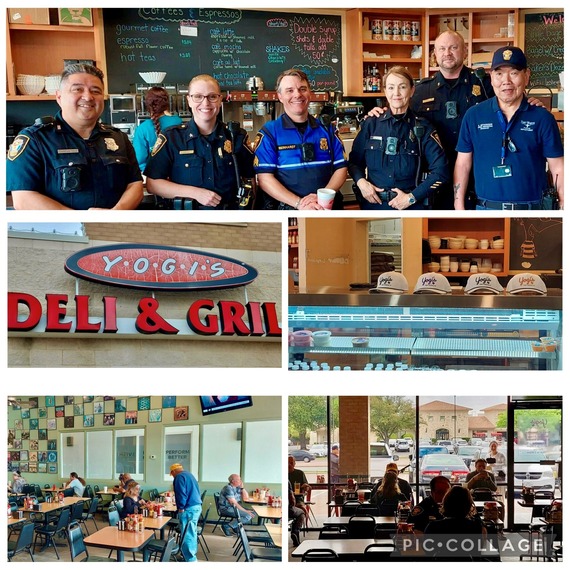
Yogi's Deli & Grill Hosts Coffee with a COP
West Division NPOs and Command Staff attended Yogi’s inaugural Coffee with a Cop on March 25, 2026. The event provided neighbors an opportunity to meet the officers who serve their area and enjoy coffee together in a friendly, relaxed setting, with no formal agenda, where they could ask questions and discuss any concerns.
|
|
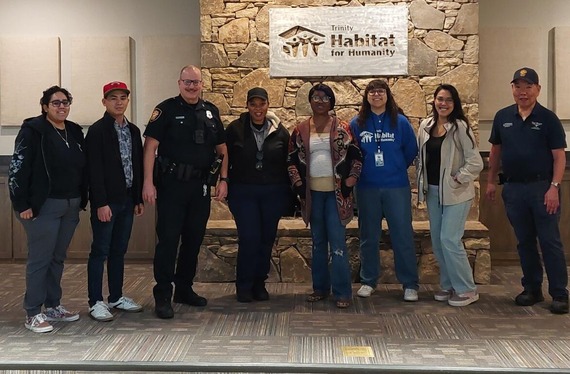
Habitat for Humanity
The first quarterly Crime Prevention Through Environmental Design (CPTED) session of 2026 was held on March 7, 2026. Prospective homeowners heard from NPO Grinalds and CPS Mitsuhashi about practical steps they can take to add layers of protection to their new homes—their largest financial investment—so that they and their property are less likely to become victims of crime.
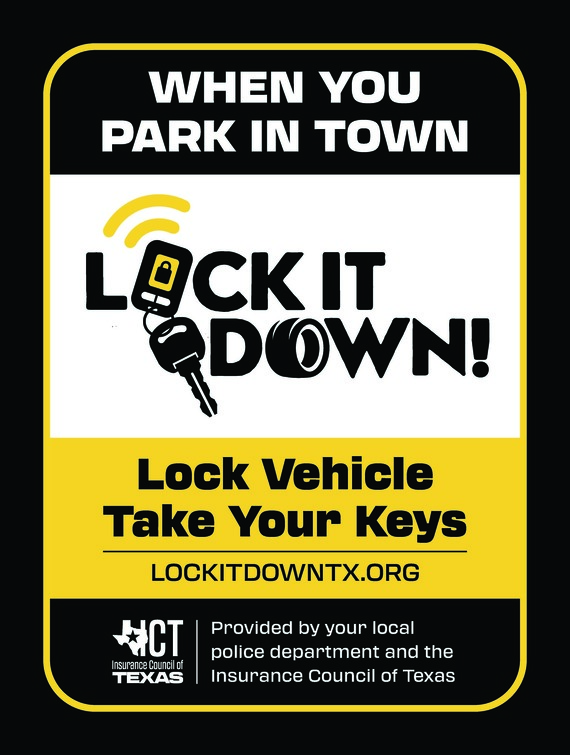
 Insurance Council of Texas Enhances Public Safety Efforts with New “Lock Your Vehicle” Signage
The Insurance Council of Texas has updated its public safety signage as part of ongoing efforts to reduce vehicle thefts and burglaries across the state. The previous “Hide, Lock, and Take” signs have been replaced with new “Lock-It-Down” signage to reinforce the importance of securing personal vehicles and valuables.
$1,724,507,324
Property crime value of motor vehicle theft in 2022
The property crime value of motor vehicle theft increased by 10.13% from 2021 to 2022, from a total value of $1,565,913,607 to $1,724,507,324.†
**Source: Texas Department of Public Safety’s Uniform Crime Reporting (UCR) database.
† Source: Texas Department of Public Safety – Crime in Texas Report, Index Crimes. Counties with over 10,000 in population.
|
|
Educational Opportunities
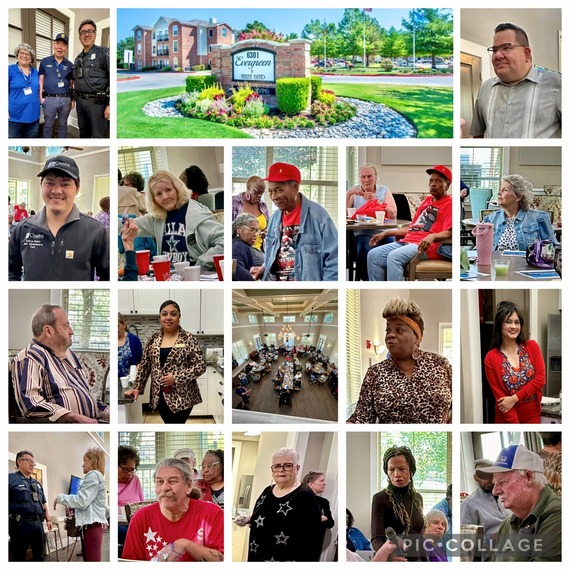
Evergreen at Hulen Bend
Following a luncheon, approximately seventy-five residents of Evergreen at Hulen Bend participated in an Internet Safety presentation on March 12, 2026. The session provided valuable information on the various types of online scams, methods for identifying fraudulent activity, and recommended precautions to prevent victimization. Management has requested that these instructional sessions be conducted on a monthly basis. Furthermore, the facility is preparing to host a National Night Out event in October and is developing plans to establish a Neighborhood Crime Watch program for the community.
 Ridgmar Place Lunch & Learn
Ridgmar Place held its second Lunch & Learn session on March 17, 2026. This month’s presentation, “Scams Affecting Our Seniors and How to Stay Safe,” is part of an ongoing series designed to help residents recognize fraud and scams so they can avoid becoming victims of crime. Also participating in the event was Guardianship Services (GSI) of Tarrant County, an organization formed in 1985 to care for at-risk adults in need of support. Nearly 40 years later, GSI now offers a portfolio of services that includes guardianship, money management, financial exploitation prevention, and benefits enrollment assistance.

|
|
Lights, Camera, Marquita: West Division Sector Becomes Movie Set
Neighbors gathered to watch as the Marquita Sector transformed into a movie set, bringing a touch of Hollywood buzz to the community.
The Marquita Sector took on a Hollywood atmosphere during the first week of March as it was transformed into a film set for the upcoming Yellowstone spin-off, currently known by its working title, Rio Palo. While the official title has yet to be confirmed, excitement is already building. The new series will feature Kelly Reilly and Cole Hauser reprising their iconic roles as Beth Dutton and Rip Wheeler, following the couple as they begin a new chapter of their lives after the events of the Yellowstone finale.

|
|
Crime Prevention Tip of the Month - Sliding Theft
A new type of auto-related theft is catching many drivers off guard at gas stations. Police are warning motorists to stay alert as criminals exploit one of the most common habits drivers have when refueling their vehicles.
The crime is known as “sliding.” It occurs when a thief quietly opens the passenger door of a vehicle while the driver is distracted at the gas pump. In many cases the driver is only a few feet away from the vehicle and does not realize the theft is happening.
The technique relies on a simple moment of distraction. Drivers typically park, turn off the car, step out, and begin pumping gas while leaving the opposite side of the vehicle unlocked. During this brief window, thieves approach from the passenger side and slide into the car to steal valuables.
Authorities say purses, backpacks, wallets, smartphones, and laptops left on seats are the most common targets.
The crime is simple but effective. According to police, the typical scenario unfolds in several steps:
-
A driver pulls into a gas station and exits the vehicle to begin pumping fuel.
-
The vehicle remains unlocked while the driver stands next to the pump.
-
A suspect approaches the passenger side of the car.
-
The suspect quietly opens the door, reaches inside, and grabs valuables from the seat.
-
The suspect quickly leaves before the driver notices.
In many cases, the theft takes only a few seconds.
Investigators say women are frequently targeted in these incidents. One reason is that handbags or backpacks are commonly placed on the front passenger seat while driving.
When drivers exit the vehicle to pump gas, these items remain clearly visible through the window.
For thieves, this creates an easy opportunity.
Gas stations attached to grocery stores or convenience chains are common locations for these thefts.
Police say preventing sliding theft is simple if drivers remain aware of their surroundings and take a few precautions.
Officers recommend the following steps:
-
Always turn off the vehicle and lock all doors before stepping away to pump gas.
• Keep purses, bags, and electronics out of sight, preferably in the trunk.
• Stay aware of your surroundings while refueling.
• Avoid using your phone while pumping gas.
• Remove earbuds or headphones so you can hear activity around you.
• If something feels suspicious, stop pumping and get back into your locked vehicle.
Even a quick door lock can eliminate the opportunity for a thief.
Police stress that sliding theft is rarely a random act. Criminals often watch drivers and wait for the moment someone leaves a vehicle unlocked with valuables visible.
Because the crime happens quickly and quietly, victims often do not realize anything was stolen until they get back into the car.
Authorities say awareness is the best defense. Drivers who take a moment to lock their vehicles and stay alert while fueling can dramatically reduce the risk of becoming a victim.
Fuel stops remain part of everyday driving, so motorists should treat gas stations the same way they would treat any busy public place. Staying alert and securing your vehicle can prevent a quick stop from turning into a costly mistake.
|
|
Scam Alerts
Dirty Dozen tax scams for 2026: IRS reminds taxpayers to watch out for dangerous threats
Annual list highlights evolving schemes; agency spotlights National Slam the Scam Day
IR-2026-30, March 5, 2026
WASHINGTON — The Internal Revenue Service today announced its annual Dirty Dozen list of tax scams for 2026 that threaten the tax and financial information of taxpayers, businesses, and tax professionals.
The Dirty Dozen is part of a broader campaign conducted through the Security Summit, a partnership among the IRS, state tax agencies, and the nation’s tax industry, and reinforced by outreach efforts tied to National Slam the Scam Day on March 5. These initiatives educate taxpayers about identity theft schemes and other forms of fraud, particularly during filing season.
“Today, Slam the Scam Day, provides a great opportunity to remind everyone to remain vigilant and watch out for scams because thieves continuously adjust the pitches they use to take advantage of honest taxpayers,” said IRS Chief Executive Officer Frank J. Bisignano. “For more than two decades, the IRS has used the Dirty Dozen list to flag emerging scams that taxpayers should watch out for.”
A notable change to this year’s list is the addition of abusive undistributed long-term capital gains claims as item #6, replacing prior fuel tax credit concerns, as the IRS sees an increase in overstated or fabricated claims tied to Form 2439, Notice to Shareholder of Undistributed Long-Term Capital Gains. The IRS advises all taxpayers to remain cautious year-round, as criminals will always be on the lookout for new ways to obtain money, personal identifiable information, and data.
The 2026 Dirty Dozen: 12 key scams to watch for
1. IRS impersonation by email and text (phishing + smishing). Scammers send emails, direct messages (DMs), and texts that appear to be from the IRS, often using alarming language and QR codes that direct taxpayers to fake IRS websites to “verify” accounts, enter personal information, or claim refunds. The IRS urges taxpayers not to click links or open attachments from unexpected messages and to report suspicious IRS-related emails, DMs, and texts. The IRS reported over 600 social media impersonators during fiscal year 2025.
As a reminder, never click any unsolicited communication claiming to be from the IRS, as it may install malware surreptitiously. These links may install malicious software, including ransomware, on a taxpayer’s personal device, potentially preventing access to their files or personal information.
2. AI-enabled IRS impersonation by phone (robocalls, voice mimicry, spoofed caller ID). Phone scams continue to evolve, including calls that use computer-generated tactics and spoofed caller ID to appear legitimate. The IRS reminds taxpayers that it generally contacts taxpayers by mail first and does not leave urgent, threatening prerecorded messages, call to demand immediate payment, or threaten arrest. Taxpayers should not rely on AI-generated responses to complex tax questions, and they should verify any calculations or information provided by artificial intelligence.
3. Fake charities. Fraudsters often exploit tragedies and disasters by creating fake charities to collect donations and personal information. The IRS is committed to preventing fraudulent nonprofits from taking advantage of the American taxpayer.
Taxpayers who give money or goods to a charity may be able to claim a deduction on their federal tax return if they itemize deductions, but charitable donations only count if they go to a qualified tax-exempt organization recognized by the IRS.
4. Misleading tax advice on social media. Viral “tax hacks” can push taxpayers to file returns with false information or claim credits they don’t qualify for, leading to refund delays, audits, penalties, or worse. The IRS continues to warn that social media-driven misinformation and disinformation remain a major driver of tax scams.
The IRS and the Coalition Against Scam and Scheme Threats warn taxpayers not to fall for these scams, and urge them to follow trusted advice from the IRS, tax professionals, and other reputable sources. The IRS reminds taxpayers who knowingly file fraudulent tax returns that they could potentially face significant civil and criminal penalties.
5. Identity theft involving IRS Online Account access. Criminals may attempt to use stolen personal information to gain unauthorized access to a taxpayer’s IRS online account or may pose as helpers to collect sensitive information during account setup. Taxpayers should create their account directly through IRS.gov and should not rely on unsolicited third parties offering assistance. The IRS provides official guidance to help taxpayers securely establish and protect their accounts.
6. Abusive undistributed long-term capital gains claims. The IRS identified an increase in the abuse of Form 2439. This form allows shareholders of certain investment funds or real estate trusts to claim a refundable credit for taxes paid on undistributed capital gains. Identified schemes involve overstated or fabricated Form 2439 claims, including claims tied to organizations that are not legitimate investment funds or real estate trusts. The IRS has also seen fake claims falsely linked to real, well-known organizations. Improper claims may result in refund delays, audits, penalties, or enforcement action.
7. Bogus “Self-Employment Tax Credit” promotion. Scammers use misleading claims about a broad “self-employment tax credit” to encourage inaccurate filings and generate improper refunds. The IRS reminds taxpayers to rely on trusted sources and qualified tax professionals, not social media promotions, when determining eligibility for credits.
Many taxpayers do not qualify for these credits, and the IRS is closely reviewing claims coming in under this provision, so taxpayers filing claims do so at their own risk.
8. Ghost preparers. A “ghost” preparer prepares a return but refuses to sign it and/or refuses to include a Preparer Tax Identification Number (PTIN). When a preparer refuses to sign or provide a PTIN, that is a major red flag; the taxpayer is legally responsible for what is filed. The IRS urges taxpayers to avoid preparers who will not sign the return and to choose reputable help. Taxpayers should never sign a blank or incomplete return. Instead, the IRS reminds taxpayers to use a trusted tax professional for help.
9. Non-cash charitable contribution schemes. Some schemes involve inflated appraisals of donated property using syndicated conservation easements or art. Promoters often promise to eliminate or substantially reduce tax liability. The IRS warns taxpayers not to file returns with made-up information and reminds taxpayers that it can hold refunds while verifying claims.
10. Overstated withholding schemes (fabricated wage/withholding data). Scammers encourage taxpayers to inflate withholding amounts (sometimes described as “other withholding”) to manufacture a larger refund by reporting zero or little income on incorrect forms. The IRS may delay processing while it verifies wages and withholding against third-party records. Inaccurate claims can lead to penalties and enforcement action.
There are multiple variations of the overstated withholding credit scheme, including those involving Forms W-2 and W-2G; Forms 1099-R, 1099-NEC, 1099-DIV, 1099-OID, and 1099-B, as well as the Alaska Permanent Fund Dividend, Schedule K-1 with Withholding Reported, and Unspecified Source of Withholding Credit Claimed.
11. Spear-phishing and malware campaigns targeting tax professionals. Tax professionals and businesses remain targets of “new client” or “document request” emails that deliver malicious links or attachments to steal client data or access systems. The IRS and the Security Summit urge preparers to remain vigilant and to strengthen their security practices.
Businesses and individuals, including tax pros, should always be cautious and look out for any suspicious requests or unusual behavior before sharing any sensitive information or responding to an email. Warning signs may include unexpected requests for sensitive information, mismatched or unfamiliar sender addresses, urgent payment demands, or links directing users to websites that do not clearly originate from IRS.gov. Be aware that by gaining access to a hacked email account, scammers can locate a genuine email from a previous victim's email account sent to their tax professional.
12. Aggressive or misleading Offer in Compromise marketing (“OIC mills”). The Offer in Compromise program can help certain eligible taxpayers resolve tax debt when they are unable to pay in full, but “OIC mills” often overpromise results and charge high fees to taxpayers who don’t qualify. Taxpayers can check eligibility using free IRS tools to avoid high-pressure sales tactics.
How to protect yourself and what to do if you get a suspicious message or call
-
Don’t click unexpected links or open unexpected attachments.
-
If you get a suspicious IRS-related call, hang up. The IRS provides guidance on what to do next, including how to report scams.
-
To report suspected IRS-related phishing emails or messages, send them to phishing@irs.gov and follow IRS reporting instructions.
-
If you think your tax identity has been compromised, visit IRS.gov/idtheft for steps to protect your account and recover.
Report abusive tax schemes and suspicious activity
The IRS encourages taxpayers, tax professionals, and the public to report suspected tax fraud, scams, identity theft, or other tax-related wrongdoing by visiting IRS.gov/SubmitATip.
The new online tool allows individuals to confidentially submit information using a smartphone, tablet, or computer. It consolidates IRS fraud-reporting options into one location and routes tips to the appropriate IRS office.
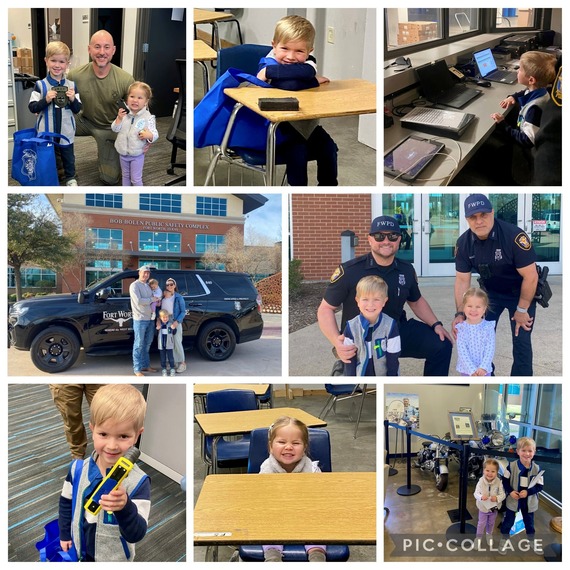
Montessori School auction winners enjoy behind-the-scenes tour of Police Academy with West Division NPOs
The Montessori School of Fort Worth recently held a fundraising event, with the Fort Worth Police Department donating a behind-the-scenes tour of its facilities as one of the auction prizes. Young George and his family won the bid and enjoyed an exclusive tour that included stops at the PIO Office, the Chief’s Office, academy classrooms, training deck, and historical displays. They also met with members of SWAT, the Taser Unit, the simulator team, mock village staff, and range personnel—all of whom were welcoming and accommodating. Before the tour began, Sgt. Vega greeted the family and presented the children with commemorative challenge coins. Lincoln NPOs Haddad (L13) and Pennington (L14) served as the family’s tour guides, ensuring a memorable and educational experience for all.

West Division NPO Receives Commendation
NPO Paul McEwan (L17) was recently recognized at the Police Awards ceremony with a commendation in the Group/Team Exceptional Performance category. He and his team earned this honor for their great work in developing new uniform standards.
|
King District NPOs Bring Helping Hands to Meals on Wheels
Meals on Wheels reached out to the FWPD Public Relations Office to see if any divisions would like to help deliver meals during the “March for Meals” campaign. King District NPOs Janzen, Johns, and Vasquez, along with Sgt. Stary, PIO Segura, and Police Department photographer Raymond Cervantes, happily stepped up to serve our homebound neighbors, as you can see in the photos below.


|
|
By having the Neighborhood Patrol Officers dedicated to specific geographic areas, the officers are not only able to become more familiar with the area than regular patrol officers, but they are also able to serve as a resource for and get to know area residents and business owners, learn about neighborhood concerns, and build working relationships with area Citizen on Patrol volunteers to work hand-in-hand in reducing neighborhood crime and promoting crime prevention tools.
Primary Duties:
-
Work with crime analysts to identify crime trends within assigned neighborhoods, maintain open lines of communication with detectives, and assist the Information Management Section and supervisors in planning appropriate actions to address issues.
-
Foster positive community leadership as a means to empower citizens within their neighborhoods by encouraging involvement in Citizens on Patrol, Citizen Police Academy, and Crime Watch to work collaboratively to reduce crime and promote crime prevention tools.
-
Maintain open lines of communication between residents, business owners and the police department by attending community meetings and events, including neighborhood association and other community meetings.
-
Recruit Citizen on Patrol volunteers, schedule them for training, and provide on-going training and correspondence to encourage and retain active memberships.
Enter your address on http://oneaddress.fortworthtexas.gov/ You will find your BEAT and NPO assigned as well as your nearest City Facilities, Services, and Crime Data.
211 Texas
Connecting People and Services
No matter where you live in Texas, you can dial 2-1-1, or (877) 541-7905, and find information about resources in your local community. Whether you need help finding food or housing, child care, crisis counseling or substance abuse treatment, one number is all you need to know.
|
|
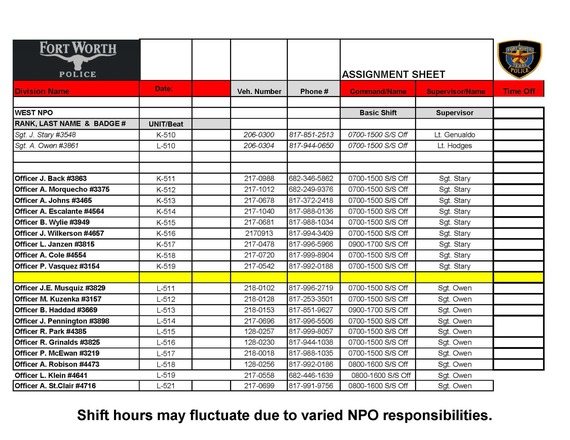
NPO Roster
|
|
Community News
LVT Rise Community Center

|
|
Thomas Place Community Center

|
|

The FWPD West Division Newsletter has gone digital.
To sign up for the newsletter, you have the option to scan the QR code to your right or you can press the subscribe button below.
|
|
|
|
|
|