|
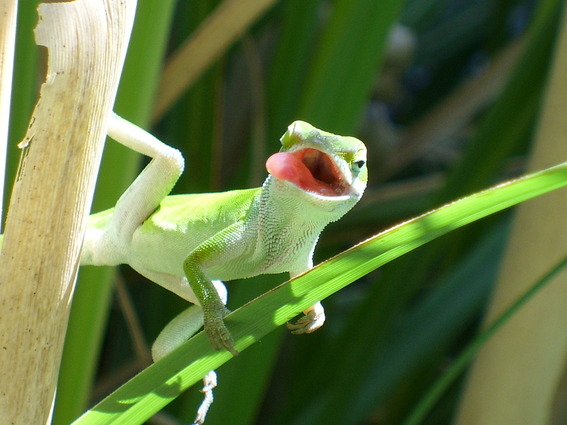 Critter Highlight - Anole (Anolis carolinensis)
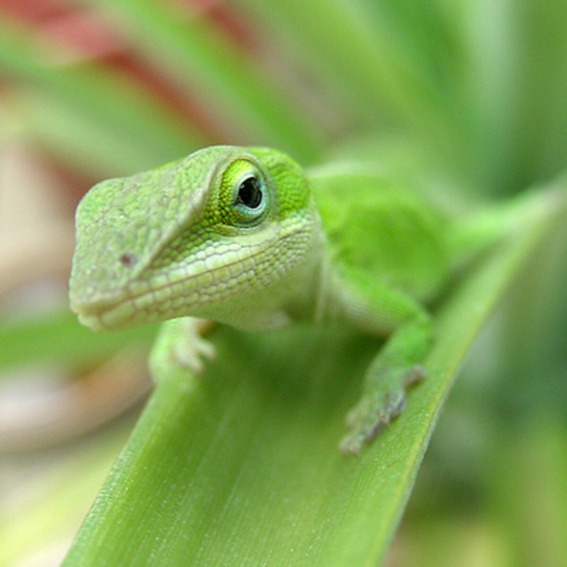
Anoles are small reptiles, related to the iguana, but with a more compact look. Different kinds of anoles can be found in southern states of the U.S., Cuba, Jamaica and the Caribbean Islands. They love warm, humid climates.
These little climbers love to spend their time crawling around on branches, walls, and other vertical planes.
Green anoles love a nice, toasty environment with plenty of moisture and ventilation. Their habitat should be warmer at the top and cooler towards the floor, so your anole can bask in the light or cool down as needed.
Here are a few interesting facts about Anoles:
- Male anoles are strongly territorial creatures. Some have even been witnessed fighting their own reflections in mirrors.
- An anole's diet consists primarily of small insects such as crickets, grasshoppers, flies, butterflies, moths, cockroaches, small beetles, and other arthropods, including spiders, as well as occasionally feeding on various grains and seeds.
- The Carolina anole is diurnal (which means they are active during the day, much like we are) and active throughout the year, peaking in spring and fall. Winter activity is dependent on sun and temperature.
- The anole changes its color depending on mood, level of stress, activity level and as a social signal. Although often claimed, evidence does not support that they do it in response to the color of the background.
For more information about this and other animals, click on this student safe resource.
The cute critters are available to check out for a 2-week period to help enhance teaching activities through the Living Science Material Center Co-Op page.
|
|
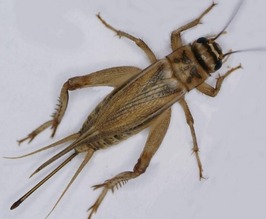 Crickets (arthropoda insecta)
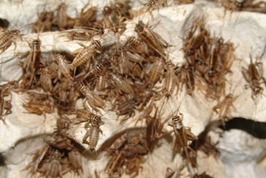
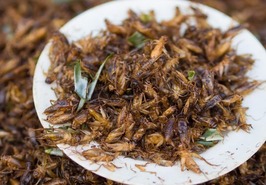
|
This month's spotlight is on "Crickets".
Crickets are insects somewhat related to grasshoppers and more closely related to katydids or bush crickets. They have somewhat flattened bodies and long antennae. There are about 900 species of crickets. They tend to be nocturnal and are often confused with grasshoppers because they have similar body structure, including jumping hind legs.
Crickets, like all other insects, are cold-blooded. They take on the temperature of their surroundings.
We provide crickets for feeding tree frogs, anole lizards, tarantulas, turtles, and leopard frogs.
Our crickets are gut loaded with High Calcium Diet Food.
To order these for your classroom pets, click on this link.
|
|
About Living Science

Our goal is to positively impact classroom curriculum through high quality materials and customer service.
For PUBLIC and PRIVATE/CHARTER school districts that have joined our CO-OP PROGRAM, the Living Science Center provides a variety of materials such as living organisms and non-living items giving teachers the ability to integrate into their lessons creating a fun, hands-on learning experience for students.
|
Living Science Shade House & Greenhouse
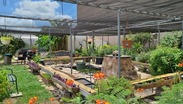
The Living Science Shade House is located behind building 2. The focal point of the Shade House is the Turtle Pond which is the home to over 40 Red Slider Turtles. These turtles are checked out on a 2 week basis to those schools which are members of our CO-OP PROGRAM.
|
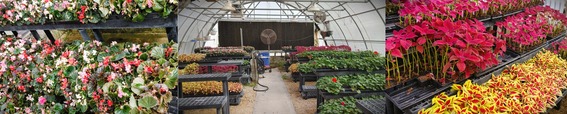
Next to the Turtle Pond is the Greenhouse. Here we house various plants which we provide to our clients. They include Geraniums, Begonias, and two varieties of Coleus.
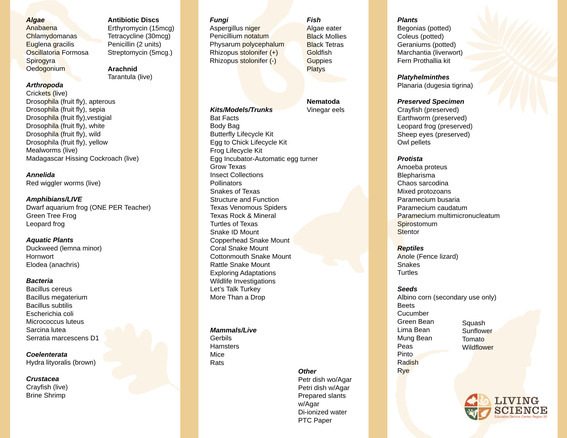
Available Materials
 Orders must be placed ONLINE before 3 p.m., 48 hours prior to delivery or 24 hours prior to pickup.
Labor Day, September 2
Thanksgiving, November 27-29
Winter Break, December 23-January 3
M.L. King Day, January 20
Spring Break, March 10-14
Good Friday, April 18
Battle of Flowers, May 2
Memorial Day, May 26
Independence Day, July 4
Holiday Cut Off Dates Reminder
Spring Break
The last day to order any 2 week check out animals before Spring Break will be Friday, February 21, 2025. We will resume deliveries on Tuesday, March 18, 2025.
End of Year (Summer Break)
The last day to order any 2 week check out for any item before End of Year will be Friday, May 9, 2025
UPCOMING CENTER TRAINING
SAVE THE DATES!
|
IN PERSON SESSION #101450
VIRTUAL SESSION #108393
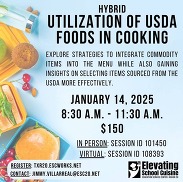
UTILIZATION OF USDA FOODS IN COOKING
(HYBRID COURSE)
|
|
 |
 |
|
SESSION #105263
BRINGING THE DAZZLE
|
|
SESSION #105453
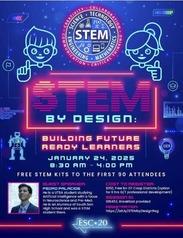
STEM BY DESIGN CONFERENCE
|
|
 |
 |
|
SESSION #101714
MASTERING YOUR UNDERSTANDING OF MATHEMATICS
|
|
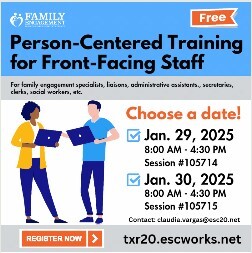
SESSION #105714
PERSON-CENTERED TRAINING FOR FRONT-FACING STAFF
|
|
 |
 |
|
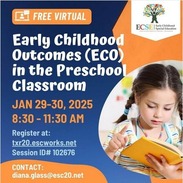
SESSION #102676
EARLY CHILDHOOD OUTCOMES IN THE PRESCHOOL CLASSROOM
|
|
SESSION #105627
4 THE LOVE OF LEARNING - CORE CONTENT CONFERENCE
|
|
 |
 |
|
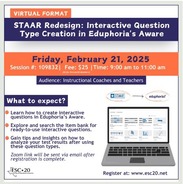
SESSION #109832
STAAR REDESIGN: INTERACTIVE QUESTION TYPE CREATION IN EDUPHORIA'S AWARE
|
|
SESSION #100360
THE O.N.E. CONFERENCE FOR EARLY CHILDHOOD/ECSE 2025
|
|
 |
|
|
Deliveries & Returns Information
Living materials are delivered within Region 20 by the ESC-20 Living Science Van on a weekly basis. Non Region 20 schools should check with their Regional Service Centers for delivery schedule.
|
|
|
|
|