|
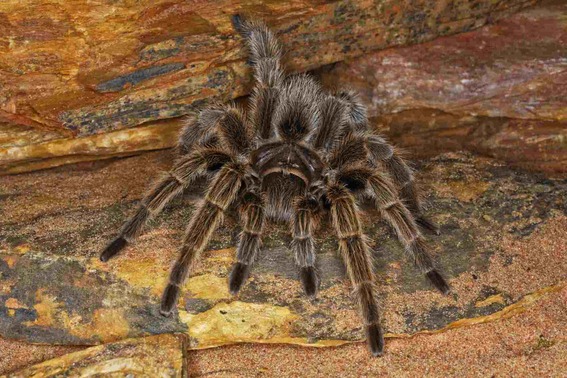 Critter Highlight - Tarantula (Theraphosidae)
Tarantula is the common name for a group of "hairy" and often large spiders, of which approximately 900 species have been found. Some tarantulas hunt prey in trees, and some hunt on the ground. All tarantulas make silk. They use silk to make shelters like tube tents in trees, to line burrows if they live on the ground, and they all use silk to wrap up prey before they eat it.
Tarantula Facts:
- Tarantula's jaws move up and down instead of side-to-side like most other spiders.
- They have 8 tiny eyes, which are able to notice the slightest movement.
- Male tarantulas may live as long as 10 years, while females can live for up to 30 years!
These creepy critters are available to order through the Living Science Material Center Co-op page to help enhance teaching activities, or even just to have as a temporary visiting classroom pet.
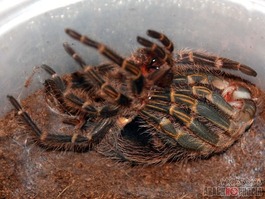
Tarantula molting habits:
To grow bigger, tarantulas need to shed their exoskeletons and grow a new one in a process called molting. They will usually make a silken web mat and lay on their backs on the web.
Molting can take from 15 minutes to a full day. However, their bodies are still vulnerable and soft for a few more days until their new exoskeleton hardens.
Click on the picture above to watch this time-lapse video of their molting in action.
|
|
|
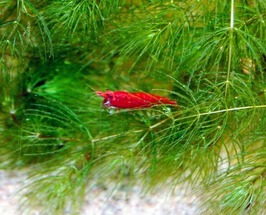
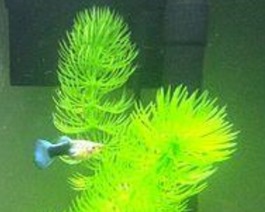
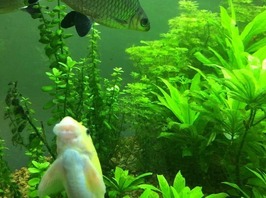
This month's spotlight is on Hornwort (Ceratophyllum demersum).
The Hornwort plant, also known as Coon tail, is an attractive aquatic plant popular among freshwater aquarium hobbyists as well as pond keepers and water gardeners thanks to its undemanding care requirements and vigorous growth. The semi-transparent nature of the Hornwort enhances its beautiful, vibrant green colorization. In fact, under bright light and in clear water, the Hornwort appears to be enveloped in a gorgeous green glow.
Hornwort also plays an important role in improving pond water quality and clarity. It is a fantastic oxygenating plant that efficiently processes dissolved carbon dioxide, converting it into oxygen vital to many species of pond fish.
In the wild, it is found free-floating in gently-moving and still waters or loosely anchored in muddy bottoms. The Hornwort grows quickly to provide much needed shade and protection for your pond fish. It can produce stems 24 inches or longer. Cuttings removed can be replanted to help manage growth and to propagate new plants.
Interesting facts about Hornwort:
- Hornwort secretes substances that inhibit growth of algae, and is compatible with all fish.
- It is a great food source and hiding place for smaller fish to use as protection from larger fish.
- It helps to clarify water with its oxygenating qualities.
- It's highly adaptable to different water types and can tolerate a wide range of temperatures.
|
|
About Living Science

Our goal is to positively impact student learning through high quality materials & customer service.
For PUBLIC and PRIVATE/CHARTER school districts that have joined our CO-OP PROGRAM, the Living Science Center provides a variety of materials such as living organisms and non-living items giving teachers the ability to integrate into their lessons creating a fun, hands-on learning experience for students.
|
Living Science Shade House & Greenhouse
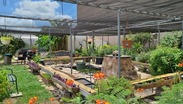
The Living Science Shade House is located behind building 2. The focal point of the Shade House is the Turtle Pond which is the home to over 40 Red Slider Turtles. These turtles are checked out on a 2 week basis to those schools which are members of our CO-OP PROGRAM.
|
Next to the Turtle Pond is the Greenhouse. Here we house various plants which we provide to our clients. They include Geraniums, Begonias, and two varieties of Coleus.

Available Materials
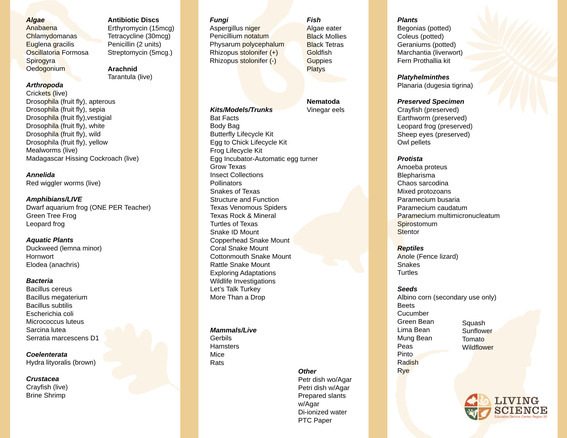 Orders must be placed ONLINE before 3 p.m., 48 hours prior to delivery or 24 hours prior to pickup.
|
|
Labor Day, September 2
Thanksgiving, November 27-29
Winter Break, December 23-January 3
M.L. King Day, January 20
Spring Break, March 10-14
Good Friday, April 18
Battle of Flowers, May 2
Memorial Day, May 26
Independence Day, July 4
Holiday Cut Off Dates Reminder
Thanksgiving Break
The last day to order any 2 week check out animals before Thanksgiving Break will be Friday, November 8, 2024. We will resume deliveries on Tuesday, December 3, 2024.
Winter Holiday Break
The last day to order any 2 week check out animals before Winter Holiday Break will be Friday, December 6, 2024. We will resume deliveries on Tuesday, January 7, 2025.
Spring Break
The last day to order any 2 week check out animals before Spring Break will be Friday, February 21, 2025. We will resume deliveries on Tuesday, March 18, 2025.
End of Year (Summer Break)
The last day to order any 2 week check out for any item before End of Year will be Friday, May 9, 2025
UPCOMING CENTER TRAINING
SAVE THE DATES!
SESSION #101608 GRILLED CHEESE: DIFFERENTIATED LEARNING UNWRAPPED
SESSION #102235 LEARNING IN LIBRARIES CONFERENCE 2024
|
|
Deliveries & Returns Information
Living materials are delivered within Region 20 by the ESC-20 Living Science Van on a weekly basis. Non Region 20 schools should check with their Regional Service Centers for delivery schedule.
|
|
|
|
|