|
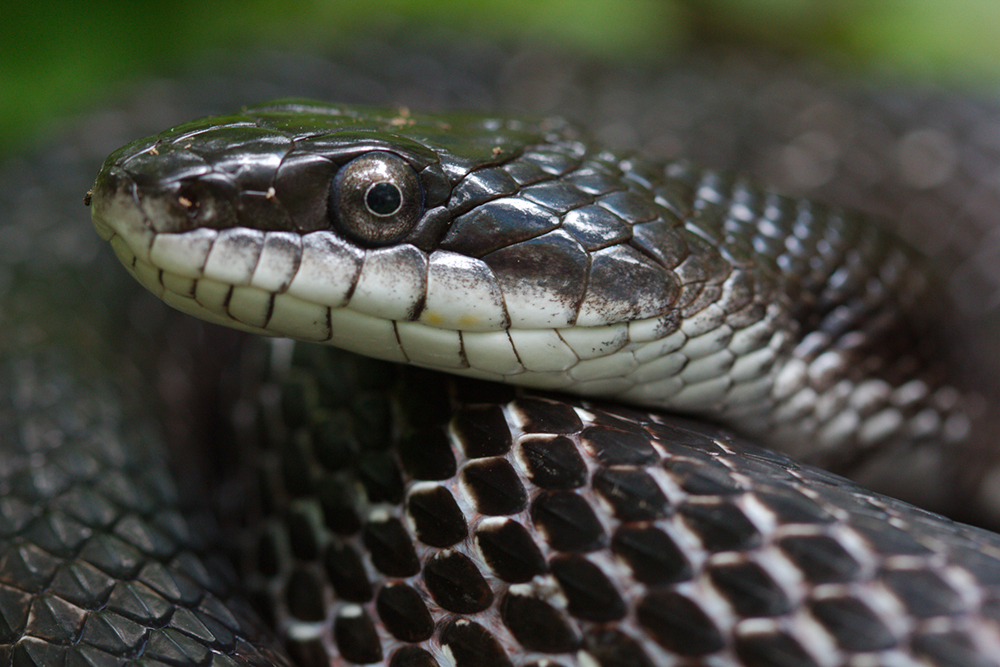 Critter Highlight - Rat Snake
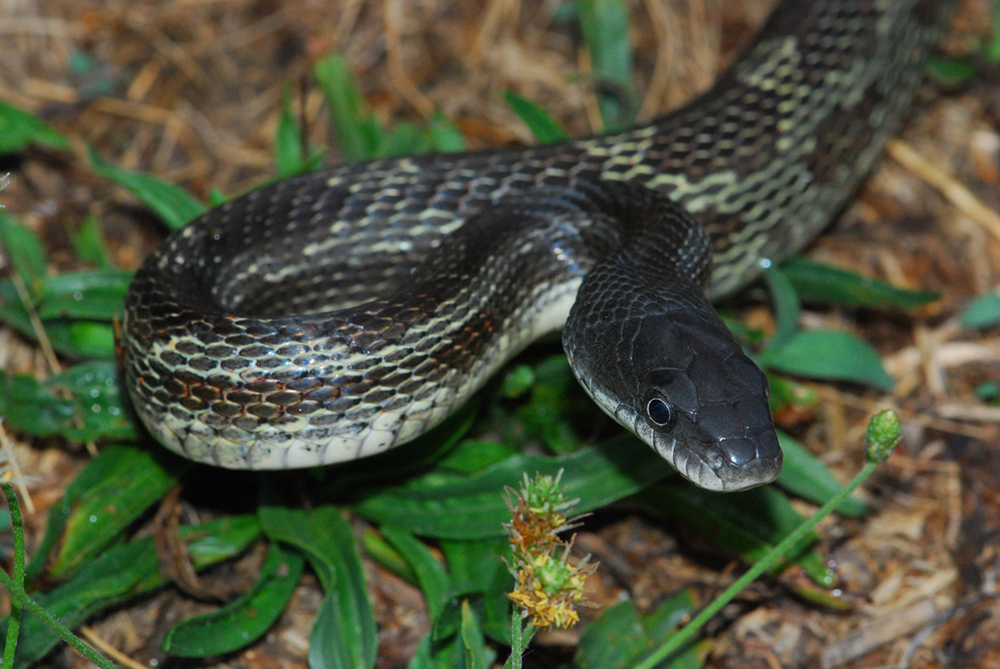
Rat snakes are medium to large snakes that can be found mostly in the Northern Hemisphere. They feed primarily on rodents and birds, and are on the top of some food chains.
Many species of rat snakes make attractive pets and are the most popular reptile pets in the world.
Like all snakes, they can be defensive when approached too closely, handled, or restrained. However, rat snake bites are not dangerous to humans.
Rat Snake Facts:
- The black rat snake usually is about 4 feet long, but may exceed 8 feet.
- When frightened, rat snakes may freeze, which is why many are killed on roadways.
- Rat snakes are semiarboreal, which means they spend some of their time in trees.
- While rat snakes are nocturnal in warm areas, they are still active during the day fairly frequently.
|
|
 Snakes of Texas
|
This month's spotlight is on "Snakes of Texas" kit. This is a 2-week check-out item for your classroom.
Kit includes:
- Transparencies and print material of the 4 major venomous Snakes of Texas, along with facts and habitats.
- 2 DVDs (one on snake handling).
- Venomous Snakes of Texas poster.
- 2 fold-out guides: "Snakes of Central Texas" & "Snakes of South Texas",
This kit explores the venomous snakes of Texas. Basic information about snakes, where they occur, what makes them look so different, characteristics and much more!...
A Few Common Snake Myths
-
Snakes always travel in pairs. False. Exceptions to the rule: during breeding season, you may see males and females together.
-
Cottonmouths cannot bite underwater. False. How do you think they catch water prey, such as fish?
-
Snakes won't cross a hemp rope. False. Snakes don't care about ropes. They will cross anything they can get over.
-
Most venomous snakes can jump at least 2 feet. False. Snakes don't have legs! They can't jump!
|
|
About Living Science

Our goal is to positively impact student learning through high quality materials & customer service.
For PUBLIC and PRIVATE/CHARTER school districts that have joined our CO-OP PROGRAM, the Living Science Center provides a variety of materials such as living organisms and non-living items giving teachers the ability to integrate into their lessons creating a fun, hands-on learning experience for students.
|
Living Science Shade House & Greenhouse
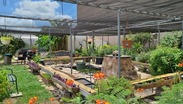
The Living Science Shade House is located behind building 2. The focal point of the Shade House is the Turtle Pond which is the home to over 40 Red Slider Turtles. These turtles are checked out on a 2 week basis to those schools which are members of our CO-OP PROGRAM.
|
Next to the Turtle Pond is the Greenhouse. Here we house various plants which we provide to our clients. They include Geraniums, Begonias, and two varieties of Coleus.

Available Materials
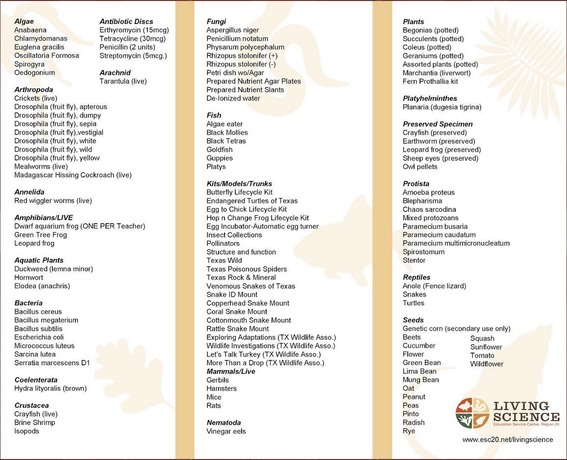 Orders must be placed ONLINE before 3 p.m., 48 hours prior to delivery or 24 hours prior to pickup.
|
|
Labor Day, September 4
Thanksgiving, November 22-24
Winter Break, December 20-January 2
M.L. King Day, January 15
Spring Break, March 11-15
Good Friday, March 29
Battle of Flowers, April 26
Memorial Day, May 27
Independence Day, July 4
Holiday Cut Off Dates Reminder
Spring Break
The last day to order any 2 week check out animals before Spring Break will be Friday, February 23, 2024. We will resume deliveries on Tuesday, March 19, 2024.
End of Year (Summer Break)
The last day to order any 2 week check out animals before End of Year will be Friday, May 10, 2024.
SAVE THE DATES!
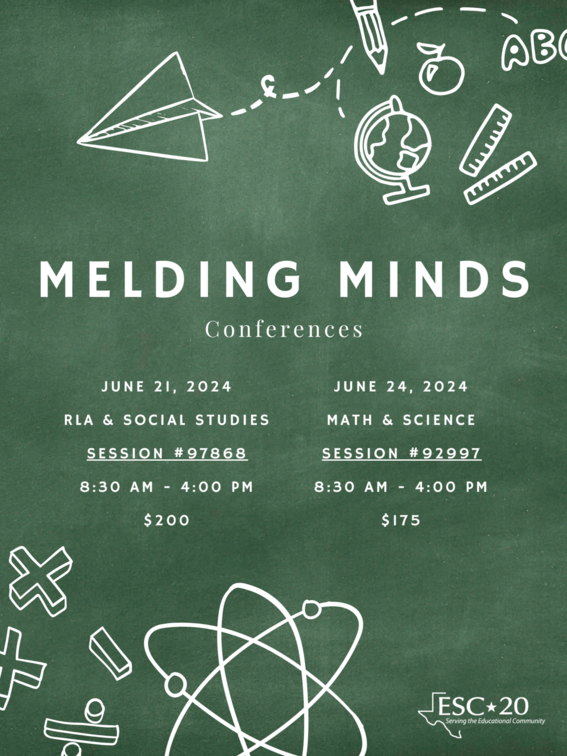
SESSION #97868 RLA & SOCIAL STUDIES
SESSION #92997 MATH & SCIENCE
|
|
Deliveries & Returns Information
Living materials are delivered within Region 20 by the ESC-20 Living Science Van on a weekly basis. Non Region 20 schools should check with their Regional Service Centers for delivery schedule.
|
|
|
|