|
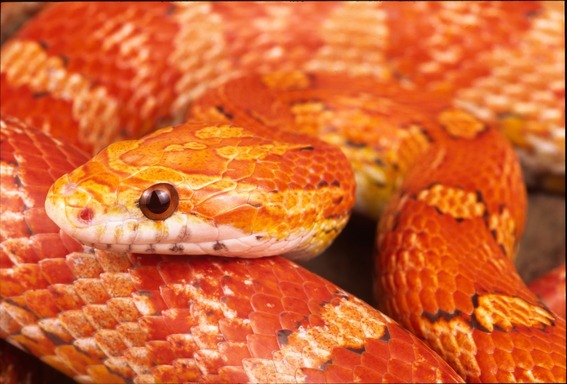 Critter Highlight - Corn Snake (Pantherophis guttatus)
Native to the southeastern part of the U.S., the corn snake, also known as the Red rat snake, has become quite popular within the pet trade due to its calm temperament. In addition, through selective breeding, many different color & pattern forms have come about with those that are raised in captivity.
This snake's name originated from the pattern of their belly scales, looking similar to the kernels of maize or "Indian corn". In the wild, the corn snake may vary in color, having dark orange or deep red saddle-like blotches that contrast with a gray or straw-colored background. Their patterns help camouflage themselves in leaf litter quite well.
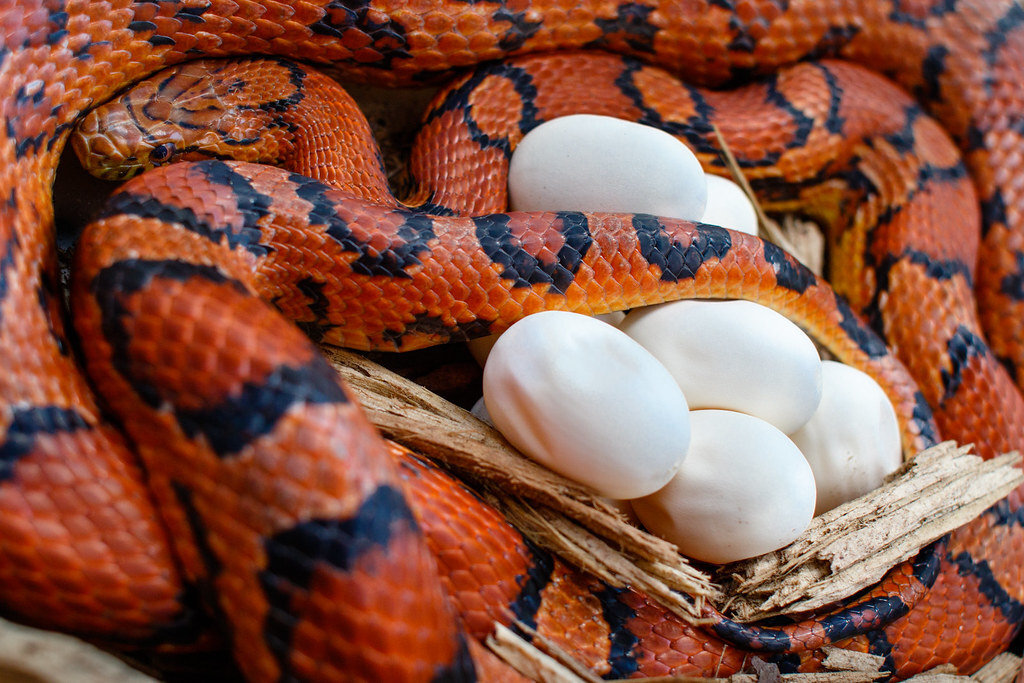
They are an egg laying snake, with clutches varying from 3 to 40 eggs. Their body is slender and muscular that can grow up to 5ft to 6ft in length. Their pupils are round and are mostly nocturnal, meaning they are most active at night.
Woodland fields and scrub areas are this snake's natural habitat, but is often found around places that may attract mice and rats (their main source of food) such as abandoned buildings and dumps on the outskirts of towns. They are powerful constrictors that feed on small mammals as well as other reptiles. When threatened, they are known to rapidly vibrate their tails and coil up in an "S" shaped-form, prepared to strike.
|
|
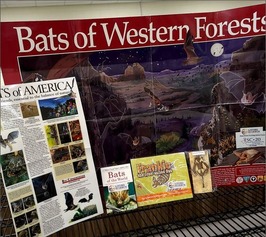 Bat Facts Kit
|
This month's spotlight is on the "Bat Facts Kit". This kit is a 2- week check-out and includes the following:
- Educator's Activity Book About Bats
- Golden Guide "Bats of the World" book
- "Frankie the Free-tailed Bat" children's book
- A bat skeleton plaque
- 2 posters on "Bats of America" and "Bats of Western Forests"
- Approx. 60 pages of printable material provided by the Texas Wildlife Association.
|
|
About Living Science

Our goal is to positively impact student learning through high quality materials & customer service.
For school districts that have joined our CO-OP PROGRAM, the Living Science Center provides a variety of materials such as living organisms and non-living items giving teachers the ability to integrate into their lessons creating a fun, hands-on learning experience for students.
|
Living Science Shade House
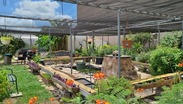
The Living Science Shade House is located behind building 2. The focal point of the Shade House is the Turtle Pond which is the home to over 40 Red Slider Turtles. These turtles are checked out on a 2 week basis to those schools which are members of our CO-OP PROGRAM.
|
Available Materials
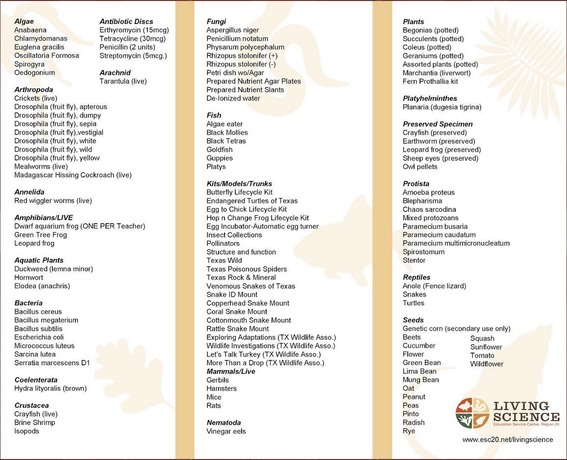 Orders must be placed ONLINE before 3 p.m., 48 hours prior to delivery or 24 hours prior to pickup.
|
|
Labor Day, September 4
Thanksgiving, November 22-24
Winter Break, December 20-January 2
M.L. King Day, January 15
Spring Break, March 11-15
Good Friday, March 29
Battle of Flowers, April 26
Memorial Day, May 27
Independence Day, July 4
Holiday Cut Off Dates Reminder
Thanksgiving Break
The last day to order any 2 week check out animals before Thanksgiving Break will be Friday, November 3, 2023. We will resume deliveries on Tuesday, November 28, 2023.
Winter Holiday Break
The last day to order any 2 week check out animals before Winter Holiday Break will be Friday, December 1, 2023. We will resume deliveries on Tuesday, January 4, 2024.
Spring Break
The last day to order any 2 week check out animals before Spring Break will be Friday, February 23, 2024. We will resume deliveries on Tuesday, March 19, 2024.
End of Year (Summer Break)
The last day to order any 2 week check out animals before End of Year will be Friday, May 10, 2024.
|
|
Deliveries & Returns Information
Living materials are delivered within Region 20 by the ESC-20 Living Science Van on a weekly basis. Non Region 20 schools should check with their Regional Service Centers for delivery schedule.
|
|
|
|