Vol. 2 | April 2025

To notify TDLR, or not to notify: that is the question. This month, we’re focusing on providing clarification on when you should notify the state (TDLR) about a mold remediation project.
Mold is everywhere. It’s outside, it’s inside, it’s in your car, in your house, even in your office, but you can’t aways see it or smell it. Sometimes a mold remediation project will fail clearance. It’s a good bet that there may be hidden mold that was missed during remediation.
Determining Whether To Report A Project
You’ll need to answer these questions to determine if a remediation project be reported:
- Does the estimated quantity of material to be removed or cleaned during the project meet the rule?
- What is the scope of work? Are you removing drywall, carpet, laminate flooring or wallpaper? Are you wiping surfaces or applying a biocide? There are many ways to remediate mold.
- Does the project’s scope meet the 25 contiguous square foot rule?
- Will the project require building containment areas?
|
25 Contiguous Square Feet Rule
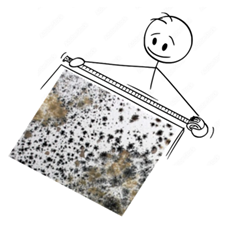
The “25 contiguous square feet rule” is often misinterpreted to read that a notification to the state is not required if the visible mold growth is less than 25 contiguous square feet. Let’s take a closer look at this rule. Remember -- there is a huge difference between “contiguous” and “continuous.”
Rule §78.110(a) states: “A mold remediation contractor or company shall notify the department or the department's representative or designee of a mold remediation, as defined in §78.10(29), when mold contamination affects a total surface area of 25 contiguous square feet or more.”
At this point, some of you are probably are thinking, “There it is in black and white: the threshold is 25 contiguous square feet. If the contamination is 25 contiguous square feet or more, you must notify the state. If it isn’t 25 contiguous square feet you do not have to notify TDLR of the project.”
Is that the correct interpretation? Let's look further at the rules, as they must be read in their entirety and §78.10 is often overlooked. Chapter §78.10 defines “total surface area of contiguous square feet” as “the contiguous area of surface material that needs to be cleaned or removed to remediate visible mold contamination.” This factor needs to be included in your determination of 25 square feet. Most jobs will meet this requirement.
|
But What Does "Contiguous" Mean?
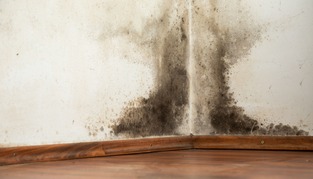
“Contiguous” means: In close proximity to; neighboring. Some may argue that contiguous means that there must be 25 square feet of visible, fuzzy, mold growth on a surface or behind a wall to meet the criteria, or that the areas must be touching at some point, or in the same room, or that the mold areas must be very close each other to count in the 25 square feet to be considered contiguous.
However, the real answer lies in the work that the Remediators are doing, as defined in Rule §78.10: Definitions:
(29) Mold Remediation -- The removal, cleaning, sanitizing, demolition, or other treatment, including preventive activities, of mold or mold-contaminated matter that was not purposely grown at a location. Preventive activities include those intended to prevent future mold contamination of a remediated area, including applying biocides or anti-microbial compounds.
Notice that the word “visible” is not in the definition of “Mold Remediation.”
|

What Are Remediation Activities?
Remediation activities include but are not limited to:
- Removing materials like carpet or other flooring items that are contaminated.
- Cleaning and wiping surfaces (for example, if your remediation is in a kitchen and there is an island in the kitchen that is 2’ x 5’, the top surface of the island is 10 square feet and should be included in the scope of work and in the estimated quantity of materials to be remediated along with everything else).
- Demolition, including removing sheetrock or paneling or ceiling tiles.
- One standard 2’ x 4’ ceiling tile is 8 square feet and it only takes 4 of those to make it a required notification to TDLR.
- Applying a biocide or anti-microbial compound -- the whole area is included in total square feet.
- Using a HEPA Vac means all areas count in the total square feet.
- Sanitizing areas to “prevent” mold from growing – again, the total area is included in the total square feet.
Even if you are only applying a biocide or anti-microbial compound to a surface, how big is that surface? It all counts in the total square footage when it comes to mold remediation.
If you build a containment area in a kitchen, laundry room, or closet to remove a 2’ x 4’ section of drywall and wipe surfaces inside the containment (floors, walls, and cabinets), you are well over the 25 contiguous square feet rule.
In the example above, the remediation is not based solely on the 2’ x 4’ section of drywall removed, but the overall area of remediation. For example, if you are remediating underneath a standard bathroom vanity that had a leaking faucet and the vanity is 3’ wide x 2’ deep x 2’ tall, the total inside surface area is 32 square feet and requires a notification to TDLR by rule and statute.
|
The Rules Still Apply
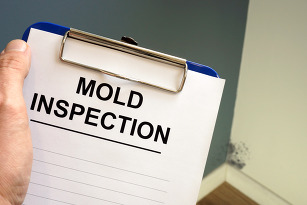
And remember – if you’re a license holder in Mold Assessment and Remediation, all the rules in Chapter 78 still apply – even if the project is indeed less than 25 contiguous square feet.
Every project requires:
- Mold Assessment Consultants Protocol
- Mold Remediation Contractor Workplan
- MRC must be reachable by phone in 10 minutes AND can be on-site within 1 hour
- TDLR Licensed or Registered workers
- Insurance
- List of workers
- Training records
- Fit test records
- Notice signs at all accessible entrances
Minimum Area Exemption
Is a licensed Mold Remediation Contractor (MRC) exempt from all the mold rules if they’re hired for a project where the mold contamination affects a total surface area of less than 25 contiguous square feet of visible mold? No.
The exemption in §1958.102(a) or (c) only applies to persons who are not licensed to conduct mold remediation and was meant to allow small projects to be handled more simply and economically. A licensed MRC performing a small mold remediation project (less than 25 contiguous square feet) is not exempt from the law and rules. Regardless of the size of the area affected by mold contamination, if a licensed MRC is hired by the consumer, the MRC must comply with the requirements in the law and rules, including the development of a work plan that follows a protocol developed by a licensed Mold Assessment Consultant (MAC). The MRC does not, however, have to submit a notification for the project.
|

To Notify, That Is The Answer. And Ask TDLR If You Aren't Sure
If you must do all that, the real question is ‘Why wouldn’t you notify?’ In this case, it’s better to notify TDLR about a project than to ask for forgiveness in the future.
Please remember that TDLR is the official source for interpretation of the Department’s rules. Don’t rely on the opinion of anyone outside TDLR for the meaning of a rule or law regarding mold remediation.
|
 |
|
Easy! Email the team at mold.inspections@tdlr.texas.gov and one of our Environmental Protection Specialists will be able to assist you with your questions. |

If you wish to file a complaint or inform TDLR of unlicensed activity or potential violations of the laws and rules, follow this link.
|

Sign up to receive automatic email updates from TDLR. Be sure to select the Mold program, and any other programs you may be interested in. Sign up to receive updates.
|
|
|