 The urban forest of St. Paul is carefully
maintained, but it is crucial to have people in succeeding generations to pass
off the baton to. The Youth Engagement in Arboriculture program (YEA) helps
secure the future of this valuable resource as it seeks to inspire young people
to pursue careers caring for trees.
The Department of Forest Resources at the
University of Minnesota, supported by the City of St. Paul, recently
implemented the program to educate youth anywhere from elementary school to
high school about arboriculture and urban forestry. YEA also strives to add
more diversity to the field by intentionally serving underrepresented groups.
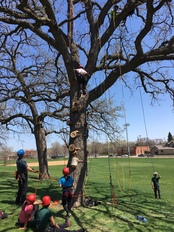
Each workshop provides opportunities for kids to climb trees like professional
arborists, while being given fun and rewarding challenges, learning about
proper safety and communication, and being encouraged to consider following a
career path that works with trees.
Games involving the rigging and suspension
systems allow youth to work and learn in teams, and each person is given
personal instruction from an expert during their chance to ascend a tree.
Certified arborists with St. Paul forestry often help UMN staff and other
professionals lead exciting YEA events where each individual can thrive.
The
City of St. Paul also assists the program by co-hosting many of the events at
city parks next to public schools. Many young people have never heard of urban
forestry or its plethora of benefits before coming to a YEA event, but through
their participation they receive a new perspective and exhilarating memories
that they will bring into their futures.
|
 Saint Paul Parks and Recreation, the Minnesota Department of Natural Resources (DNR), and many other organizations are teaming up for a national celebration of our public lands! Bring your family to the Mississippi River to try fishing, climbing, archery, biking, and more. Enjoy free outdoor activities with all equipment provided!
Bring your family to the Mississippi River to try fishing, climbing, archery, biking, and more. Enjoy free outdoor activities with all equipment provided!
Saturday, September 22
Hidden Falls Regional Park
11:00 AM- 3:00 PM
For more information click here.
 We
have some great volunteer opportunities for this fall! Back for the 2018
fall season…. Seed
Squad!
If you did not join us last year you have a great opportunity to come to one of
our drop-in events this year. You will be collecting seeds that will benefit
our pollinators and our wildlife. Seeds will be used to supplement natural
areas in need of increased plant diversity around the city. The collected seeds
will be used in frost seeding in late fall, propagated in our hoop house or
sown after the 2019 spring prescribed burn season.
Who: Individuals or
small groups. All ages are welcome, but may be best suited for ages 10 and up.
Must be able to navigate uneven terrain. No prior experience
necessary.
Where/When:
Registration: Pre-registration
is appreciated. Please register here.
For
more information about both event dates please visit bit.ly/seedsquad2018.
|
 The City of Saint Paul’s Gardening Program was
buzzing with excitement as they increased the presence of pollinator and
ecological habitat through the installation of three new perennial gardens. This
year, with the aid of a grant generously awarded by the Saint Paul Garden Club (SPGC), we utilized the funding to add three new pockets gardens on Saint
Paul’s East Side. These gardens blended the two worlds of natural resources and
horticulture by keeping aesthetics and the traditional elements of ornamental
gardening design. The first new garden is located around the sign at Burns Ave
Park in Saint Paul’s Battle Creek area. The second new garden is located at the entrance
to Swede Hollow Park off of Beaumont Street. The third and final site we added
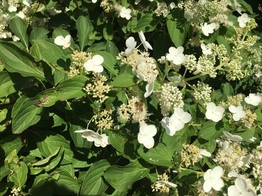
dwarf honeysuckle, panicle hydrangeas, and switch grass at the main entrance of
Trout Brook Nature Sancuary in Saint Paul’s North End neighborhood. These areas
have been planted with over 70% of them being ecologically friendly to
pollinators, insects, and birds! We introduced several native plants including
but not limited to coneflower, black-eyed susan, blazing star, dwarf
honeysuckle, prairie smoke, baptisia, columbine, salvia/sage and many more! Again,
this project has been made possible through the generous donation by the Saint Paul Garden Club. We thank them for
providing us with this opportunity to increase beauty and vitality to our parks;
in addition to helping us expand our ecological resources for native birds,
bees and insects.
|
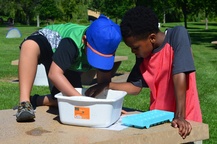 This year saint Paul Parks and Rec expanded our Mobile Camp
partnership with YMCA Twin Cities and other organizations to expand from one
day camp at Hidden Falls to a second at Lake Phalen.
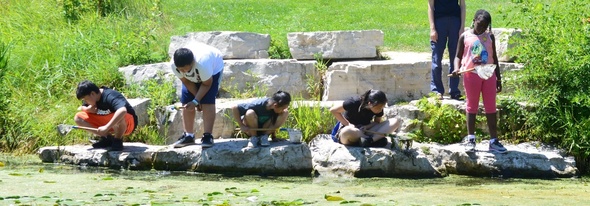
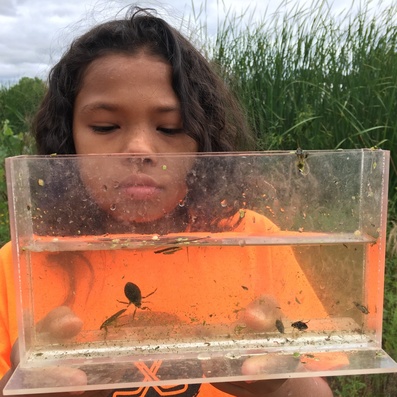
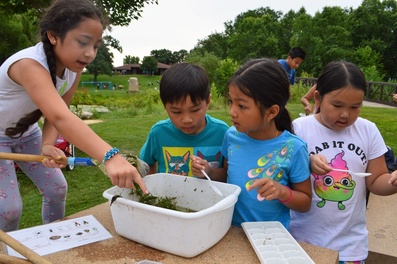
Youth at Phalen’s Lake Explorer’s Day Camp sampled aquatic macroinvertebrates
(water bugs) from the channel between Round Lake and Phalen and used what they
found to determine how clean the water was. Having a diverse assemblage of
living creatures in the water, as well as finding sensitive indicator species,
can tell us that the water is relatively protected from pollutants like those in
stormwater runoff.
The youth found SO MANY different species living in the
water – including pollution sensitive
caddisflies, stoneflies, and gilled snails – that they decided the water in
Lake Phalen must be pretty clean! They also found some garbage in the water, so
there’s room for improvement, but the native plantings around the shore and
other land management practices, along with sensible everyday action by people
across our city, are protecting our resources.
|
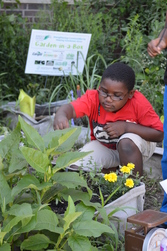 This summer was buzzing with activity for Saint Paul Natural
resources education team! Over the past three months, our educators managed to
engage over 1000 community members in gardening and pollinator-friendly
activities! Even though temps are
dropping, a large majority of our pollinators stay put throughout the winter.
Here are a few tips for ensuring that your garden stays pollinator friendly
past harvest season.
1. Many native bee species, like the aptly named
digger bees are solitary ground-nesters. The dig nests in the soil, creating
underground spaces that they fill with food for their young. Heavy mulch layers
make it difficult for bees to tunnel through. When remulching your landscaping
this fall, consider leaving a few bare patches or paths for the bees.
2. Some bee species prefer to nest in tunnels
aboveground. They nest in old stems and tree cavities. Instead of cutting your
perennial plants short, consider cutting them to around 12 inches.
3. Be neat, but not too neat. Many bees look for
protected sites when building their nests. If you leave a few brush piles
behind in the garden, you’ll create prime real estate for pollinator friends.
4. Move bird-feeders away from designated
pollinator spaces. If you hang bird feeders right next to the spaces you just
prepared for bees, you’ll likely find happy birds, but no bees. By keeping bird
feeders away from nesting spaces, you’ll ensure hibernating bees don’t become a
convenint snack for avian friends!
|
 |