|
Icons and Classics
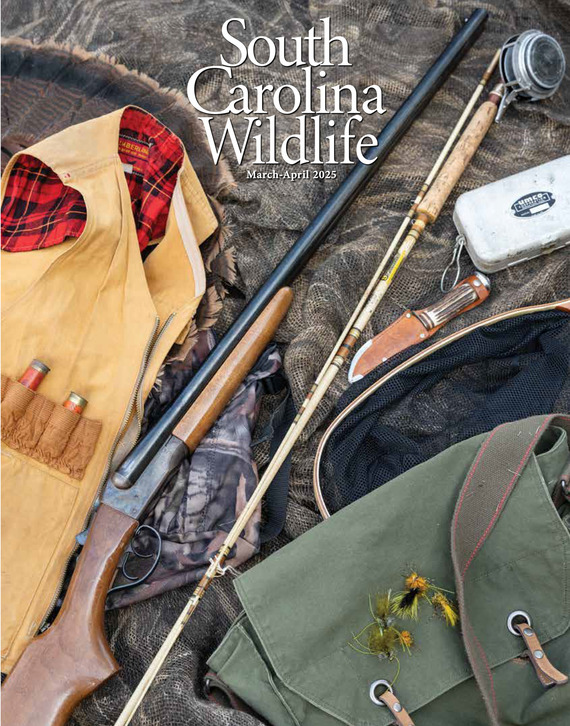
The March-April 2025 edition of South Carolina Wildlife magazine puts a spotlight on the vast array of sporting goods and gear we buy and collect over time. Like a movie reel of flickering outdoor memories, these collections bring us a sense of comfort. They also connect us to people, nature and priceless moments, strolling across fields and forestlands, wading through thickets and streams, or paddling quiet waters with a cane pole in hand.
Joey Frazier, executive editor of South Carolina Wildlife, shares the story of his prized hunting and fishing collection, and he also underscores how the purchase of sporting goods is vital to conservation efforts in South Carolina.
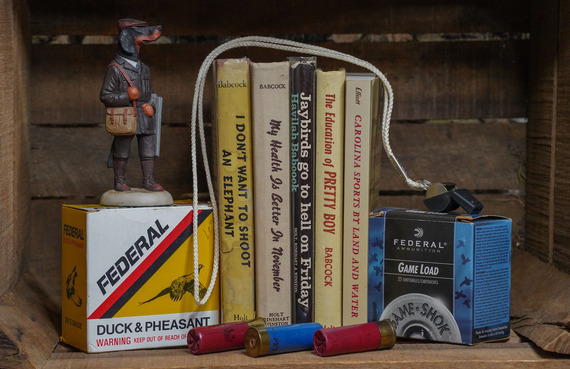 by Joey Frazier
In his feature story, "Icons and Classics," Frazier writes:
"Sport hunting, especially small game hunting, and freshwater fishing became increasingly popular outdoor recreational activities during the twentieth century, as evidenced by comparing the U.S. Fish and Wildlife Service’s 1955 and 1960 National Survey(s) of Hunting and Fishing. You should check it out. You might even consider the twentieth century the heyday of recreational hunting and fishing, as game and fish were plentiful and access to hunting land and fishing waters remained relatively easy. As many folks left family farms for better pay in the suburbs, more time and money became available for recreation including mass-produced firearms and fishing tackle. It was all part of a self-sustainable outdoor sports economy as federal taxes on some equipment went back to states for the conservation and management of natural resources through programs such as the Pittman-Robertson Wildlife Restoration Act and later the Dingell-Johnson Sportfish Restoration Act.
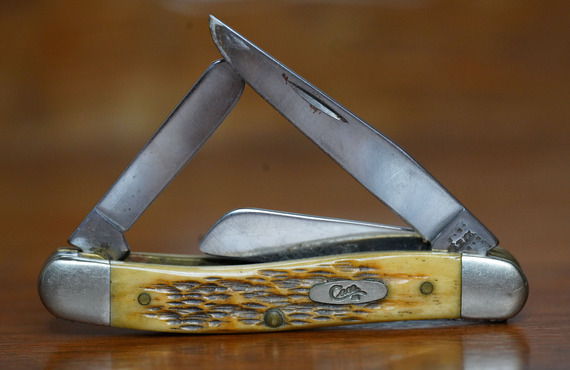 Case pocket knife, by Joey Frazier
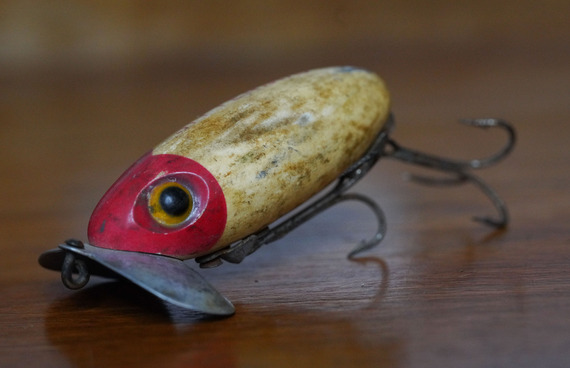 Vintage Jitterbug lure, by Joey Frazier
While this history of both laws is well documented and often retold within the pages of South Carolina Wildlife, the point of this story is a little closer to home – at least for me and I suspect for many of you, too. My brother and I grew up in the 1960s and 1970s at the end of the baby boom generation. Our dad hunted and fished every chance he got. He bought the best equipment, guns and tackle he could afford, many of the popular brands of that time. He owned Browning and Remington firearms, Shakespeare fiberglass rods and Mitchell open-face spinning reels. In his green Bakelite Plano 4200 tackle box he carried Hula-Poppers, Jitterbugs and Devils Horse wooden lures along with an assortment of various spinners, and when none of that worked, he might cut a long cane, hang it to dry and tie on some heavy monofilament to create a low-tech (even for the time) DIY cane pole. He kept bird dogs, including various pointers, an Irish Setter he called Baby and his favorite English Setter named Duke. My father's sporting dogs, well that's a story for another day . . ."
Don't miss "Icons and Classics" in the upcoming edition of South Carolina Wildlife!
If you are not already a SCW subscriber, please visit GoOutdoorsSouthCarolina.com or SCWildlife.com to subscribe today.
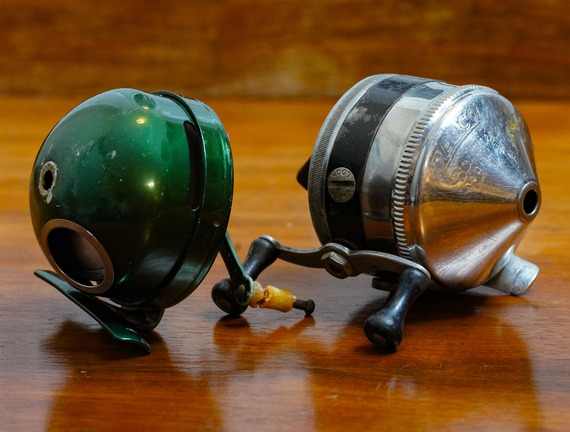
Shakespeare Model 1770 Wondereel and Zebco Model 33, photo by Joey Frazier
Check out the U.S. Fish and Wildlife Service fishing, hunting and wildlife-associated recreation surveys, which go back to 1955!
South Carolina Wildlife
Winter 1968
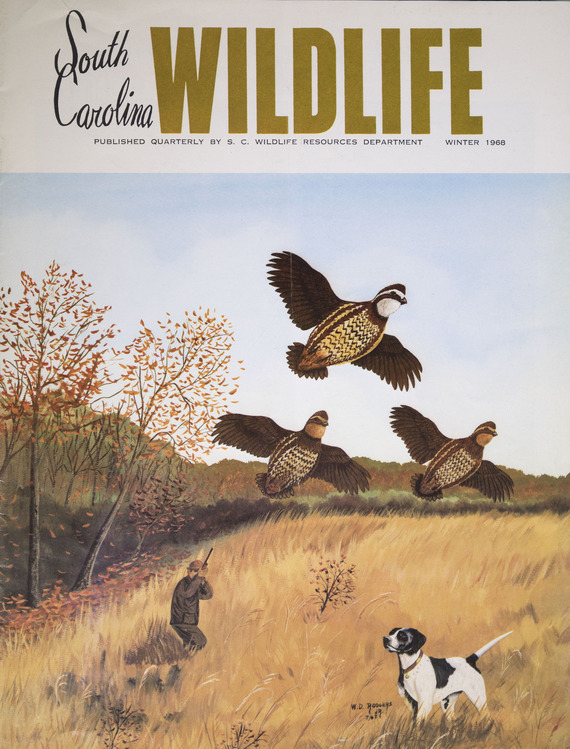 South Carolina Wildlife, Winter 1968. Painting by W.D. Rodgers Jr.
Thank you for supporting South Carolina Wildlife magazine, the flagship publication of the S.C. Department of Natural Resources. If you are not already a subscriber, please visit GoOutdoorsSouthCarolina.com or SCWildlife.com to receive bi-monthly editions of this award-winning magazine.
South Carolina Department of Natural Resources
South Carolina Wildlife magazine
P.O. Box 167
Columbia, SC 29202
|